BERBERY CAPARROZ

BERBERY CAPARROZ
EN
CERRARCLOSE
EstudioStudio
Estudio con base en Moreno, conformado por la fusión de las prácticas independientes Otro y Caparroz Arquitectura. Esta alianza busca ampliar las posibilidades proyectuales mediante la convergencia de conocimientos. Se definen como investigadores del ámbito material y su vínculo con la espacialidad, abarcando obras de diversas escalas sin ceder en la exploración técnica. Su interés radica en la tectónica y el estudio de los límites arquitectónicos como herramientas fundamentales para dar respuesta a las problemáticas del habitar contemporáneo. A studio based in Moreno, formed by the merger of the independent practices Otro and Caparroz Arquitectura. This alliance seeks to expand design possibilities through the convergence of knowledge. They define themselves as researchers of the material realm and its link to spatiality, covering works of diverse scales without compromising technical exploration. Their interest lies in tectonics and the study of architectural boundaries as fundamental tools to address the problems of contemporary dwelling.
EquipoTeam
Martín Caparroz
Arquitecto por la Escuela Superior de Arquitectura y Diseño de la Universidad de Morón (ESAD-UM), Argentina. Ha sido profesor en la misma institución en el Taller Integral de Arquitectura IV y en Teoría y Crítica, espacios donde consolidó su interés por el proyecto como investigación y por una arquitectura que piensa el habitar desde la experiencia y el sentido del lugar. Su trabajo se ancla en el conurbano, donde las tensiones del territorio se vuelven materia de proyecto. Architect from the Superior School of Architecture and Design at the University of Morón (ESAD-UM), Argentina. He has served as a professor at the same institution in the Comprehensive Architecture Workshop IV and in Theory and Criticism, spaces where he consolidated his interest in design as research and in an architecture that conceives dwelling through experience and the sense of place. His work is anchored in the Buenos Aires suburbs, where the tensions of the territory become the subject matter of the project.
Juan Pablo Berbery
Arquitecto por la Universidad de Buenos Aires y docente del área de Proyecto Arquitectónico en FADU UBA y en la EHyS de la Universidad Nacional de San Martín (UNSAM). Su trabajo se desarrolla en el cruce entre la práctica profesional, la construcción e investigación de un lenguaje arquitectónico en el conurbano bonaerense y la enseñanza del proyecto arquitectónico en el ámbito académico. Architect from the University of Buenos Aires and professor of Architectural Design at FADU UBA and EHyS at the National University of San Martín (UNSAM). His work develops at the intersection of professional practice, the construction and research of an architectural language in the Buenos Aires suburbs, and the teaching of architectural design in the academic sphere.

Casa Yaraví

Moreno, Buenos Aires
2017

CASA YARAVÍ

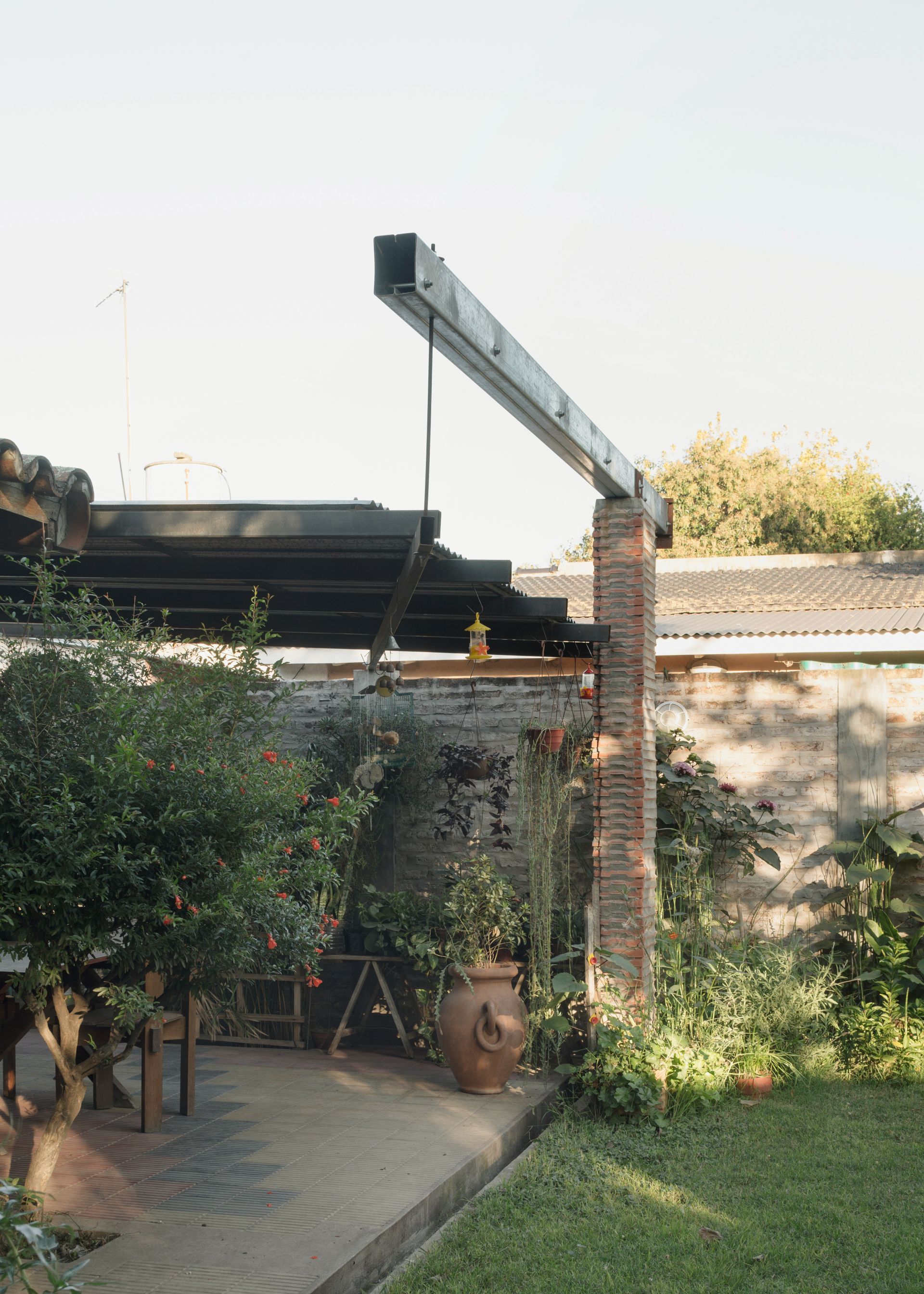
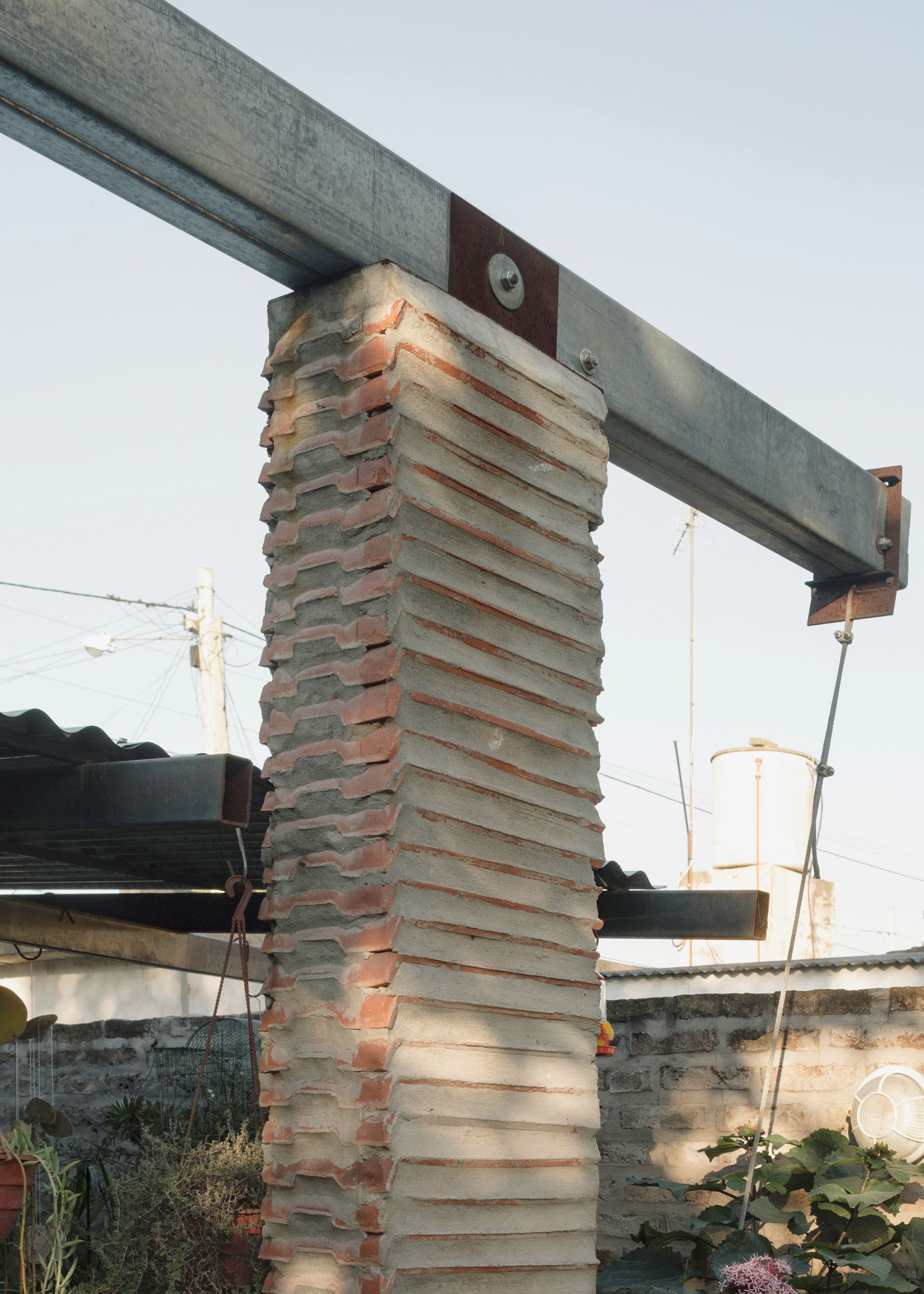
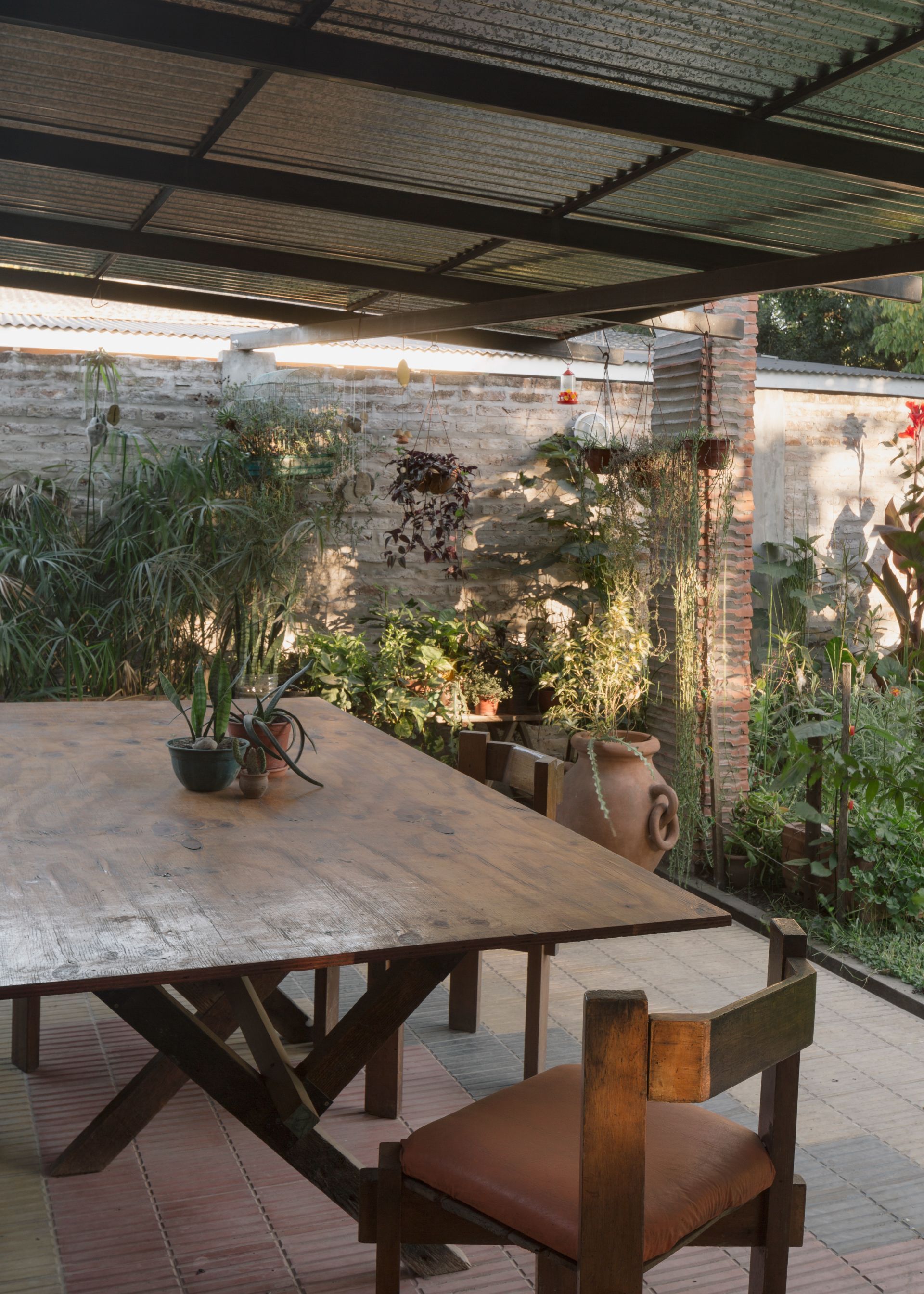
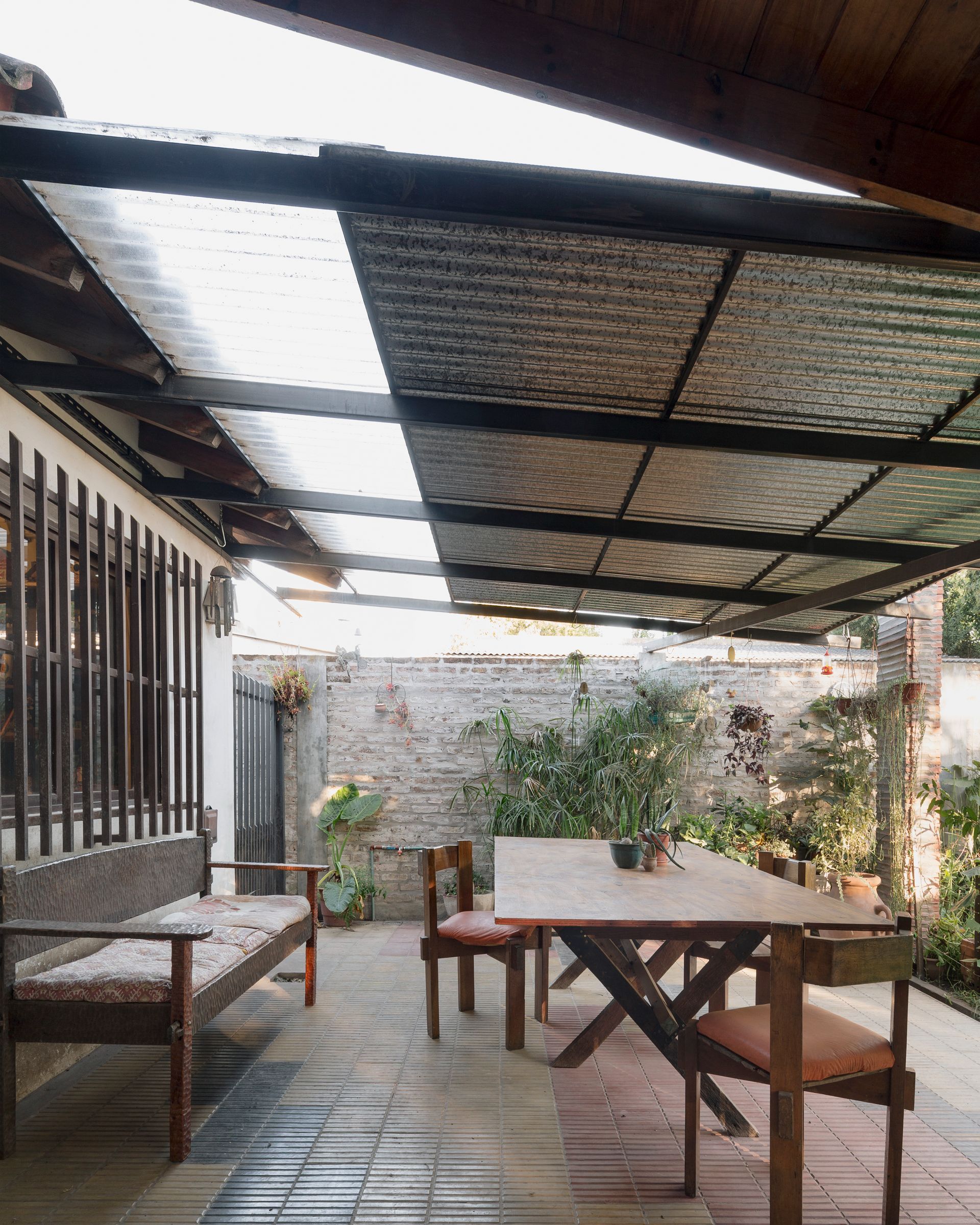
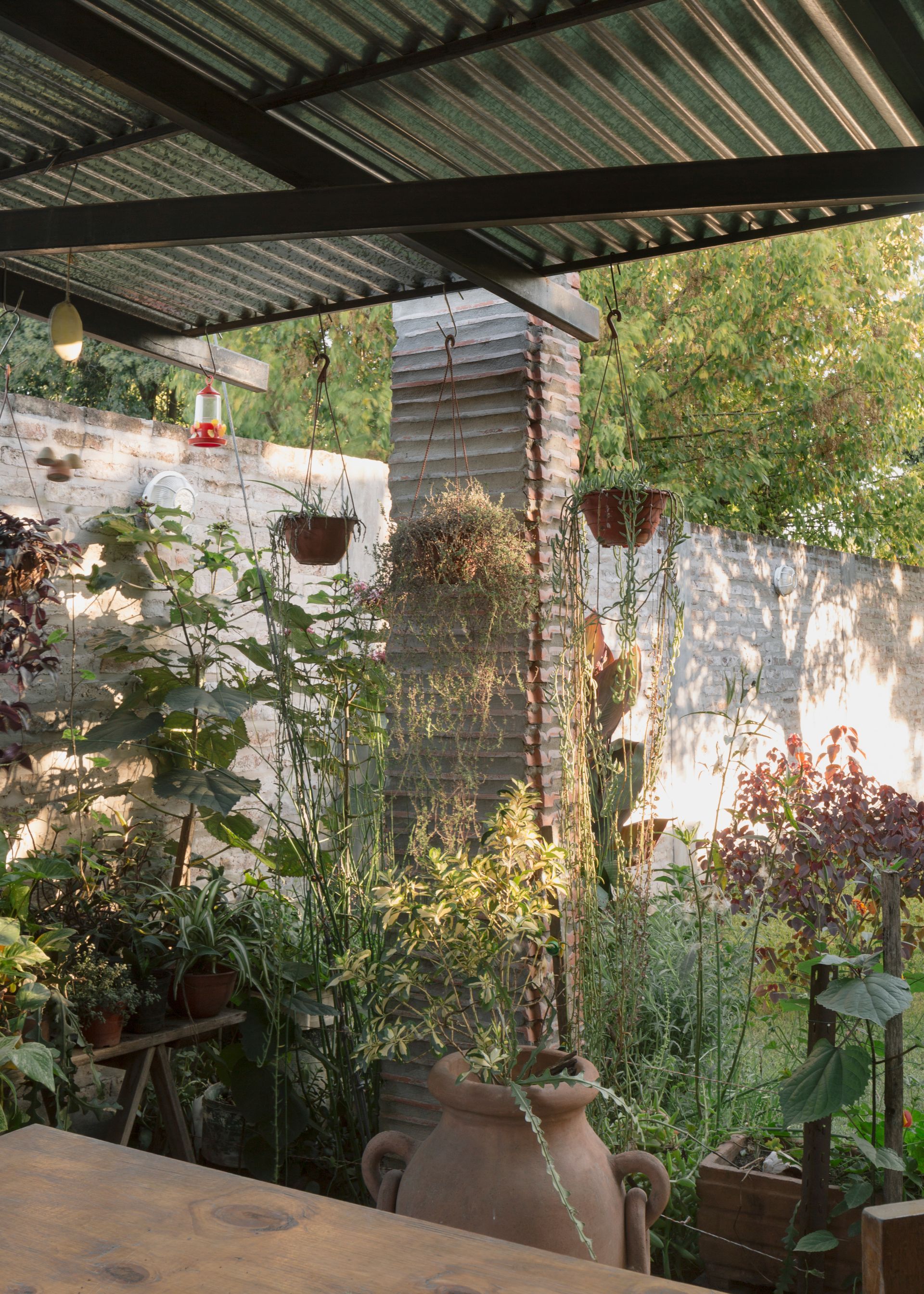
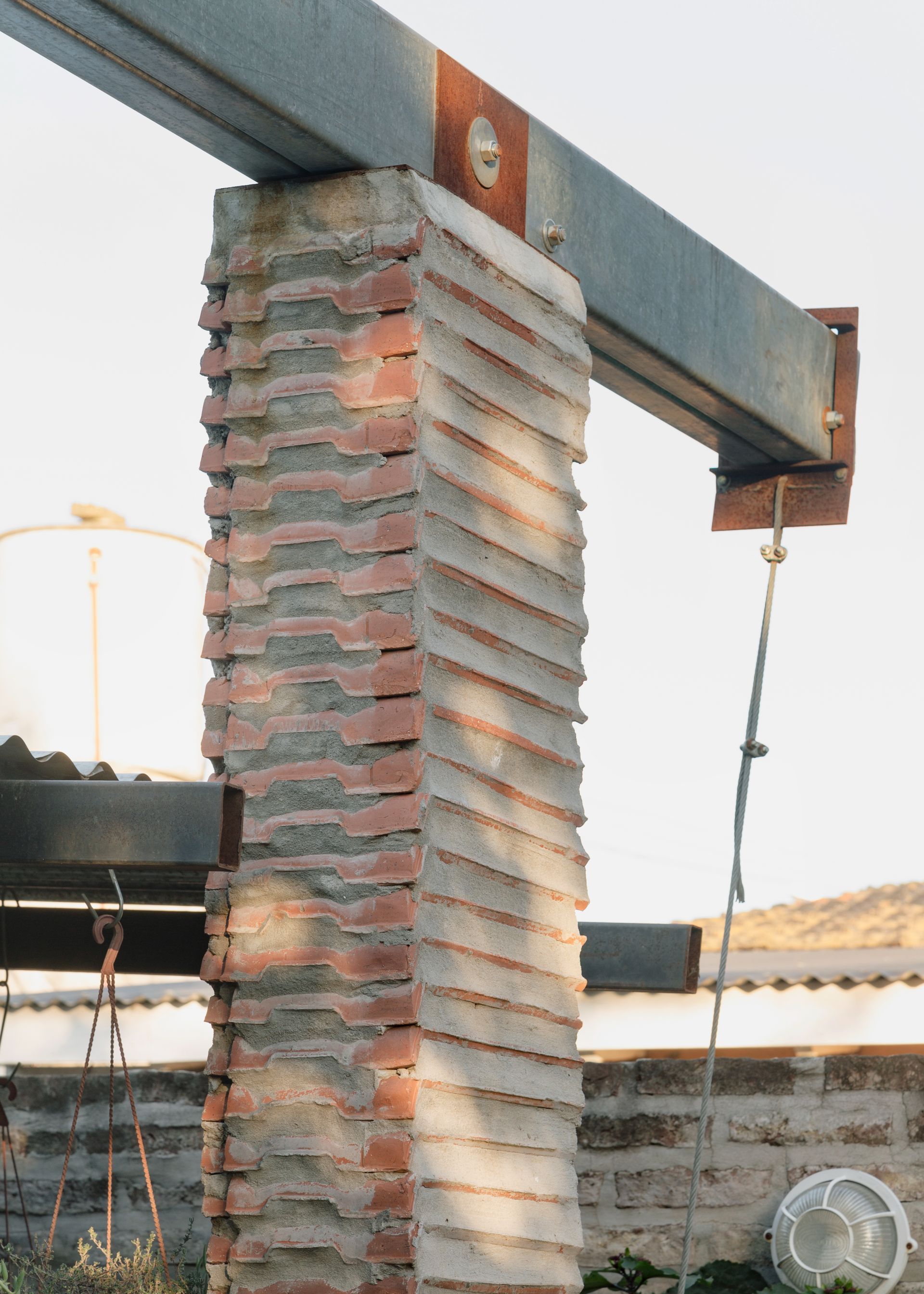
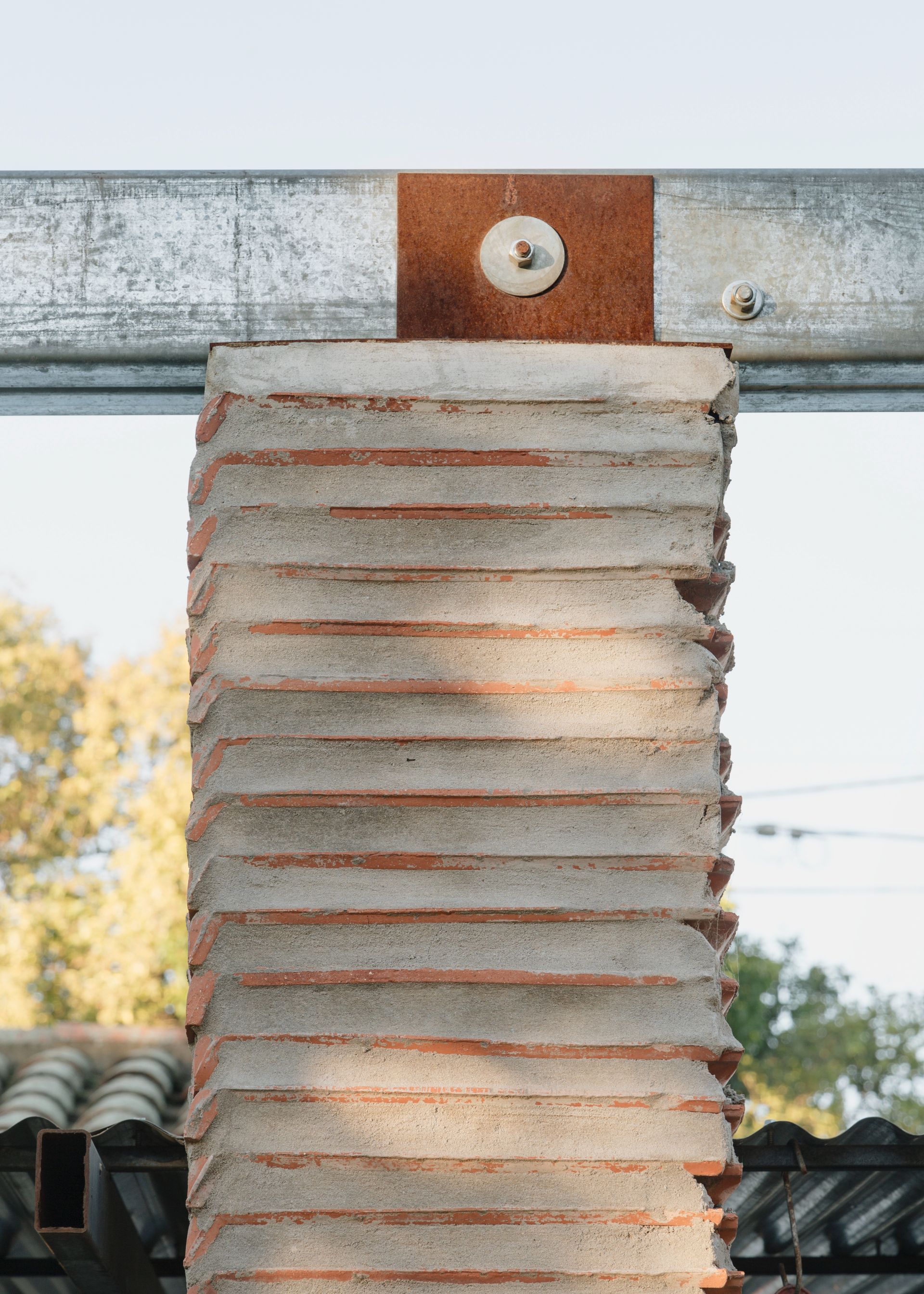
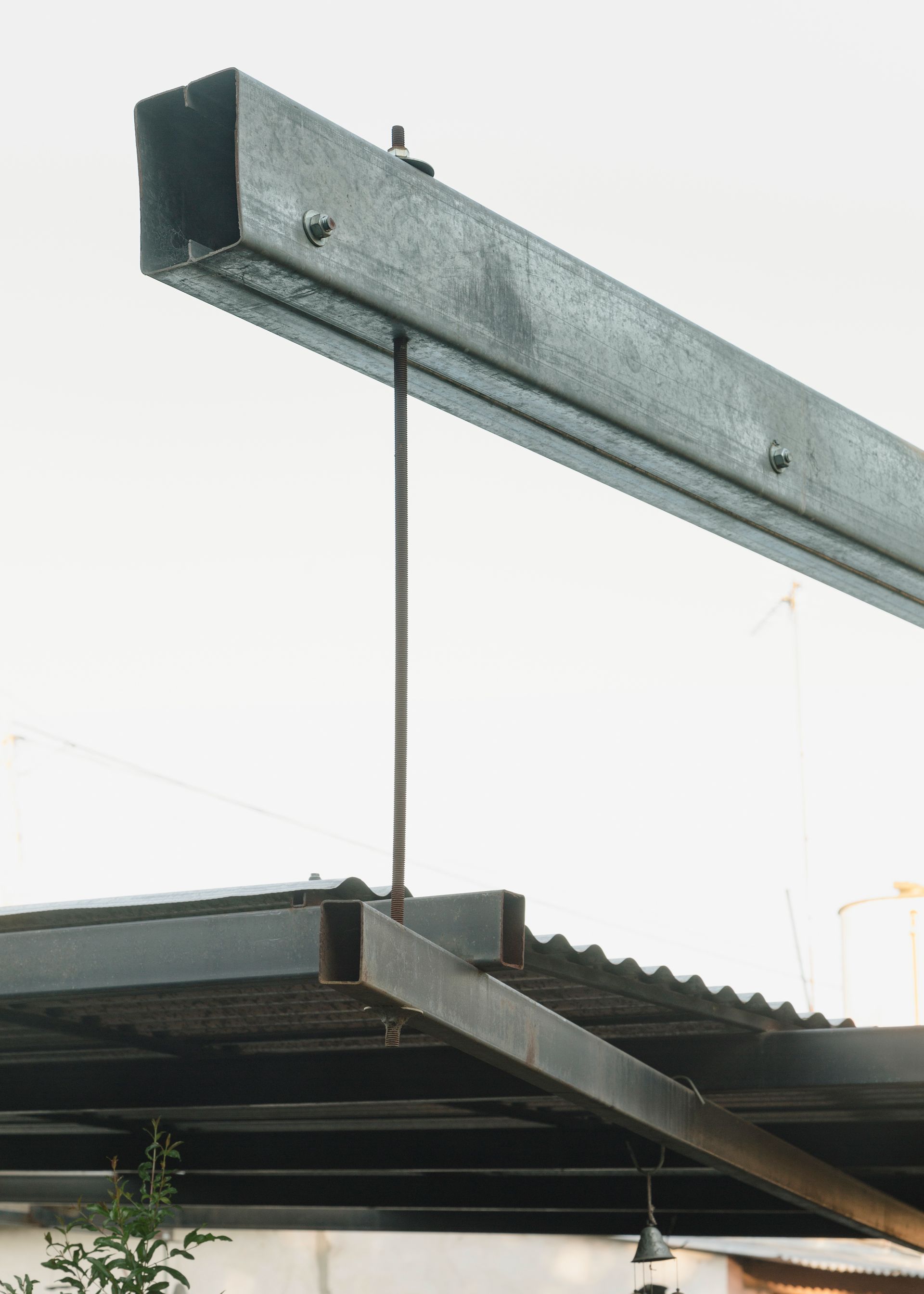
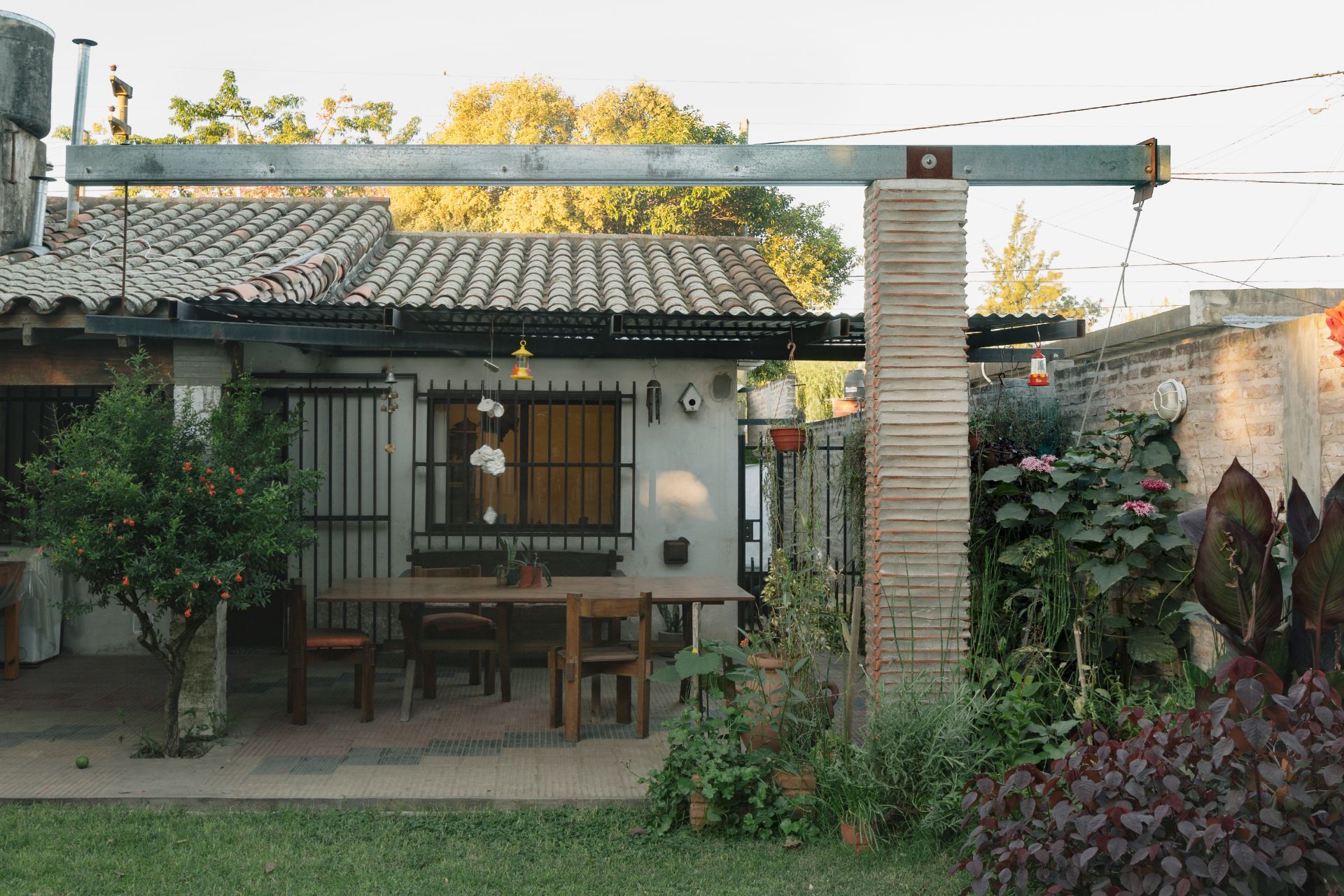
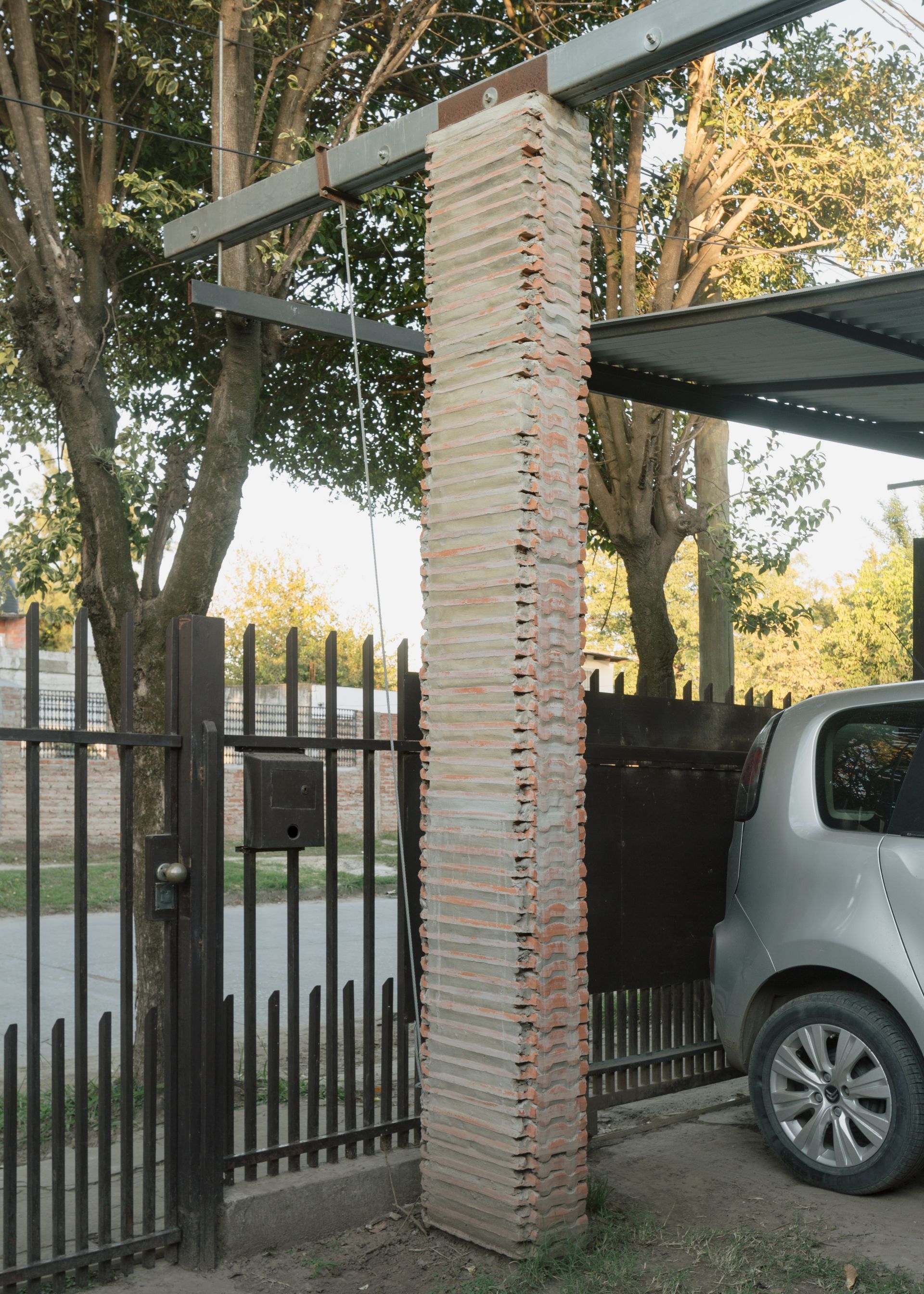
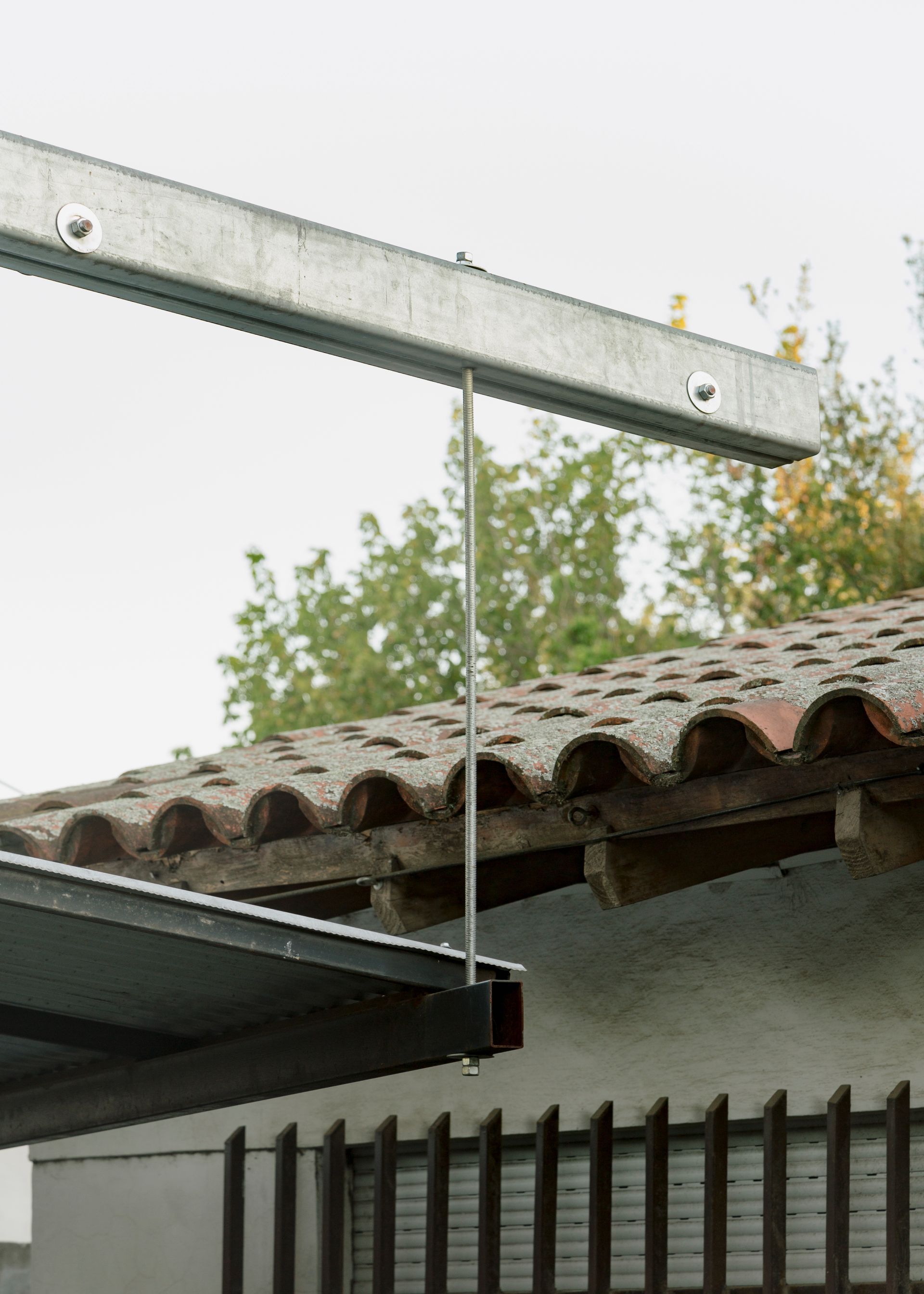
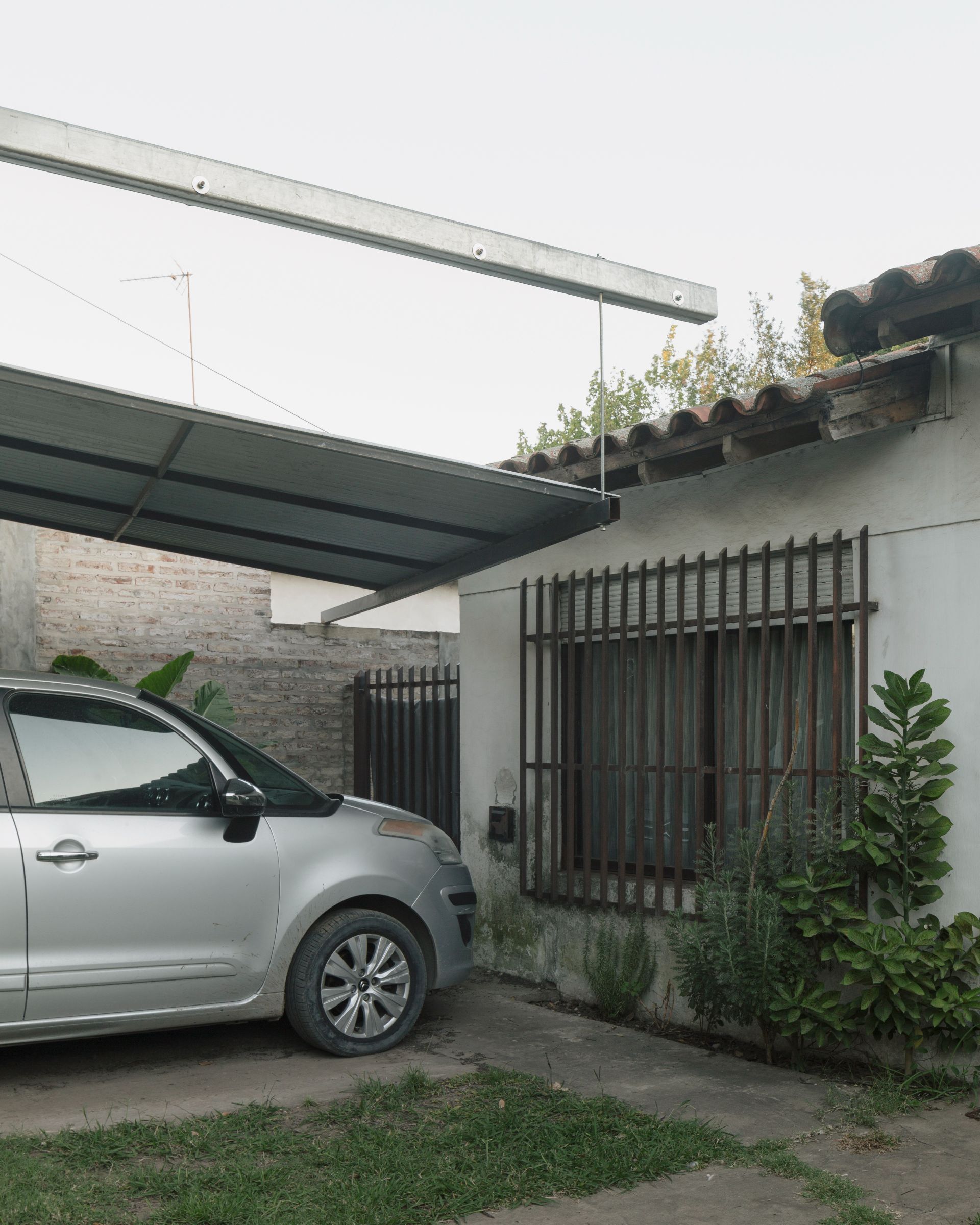
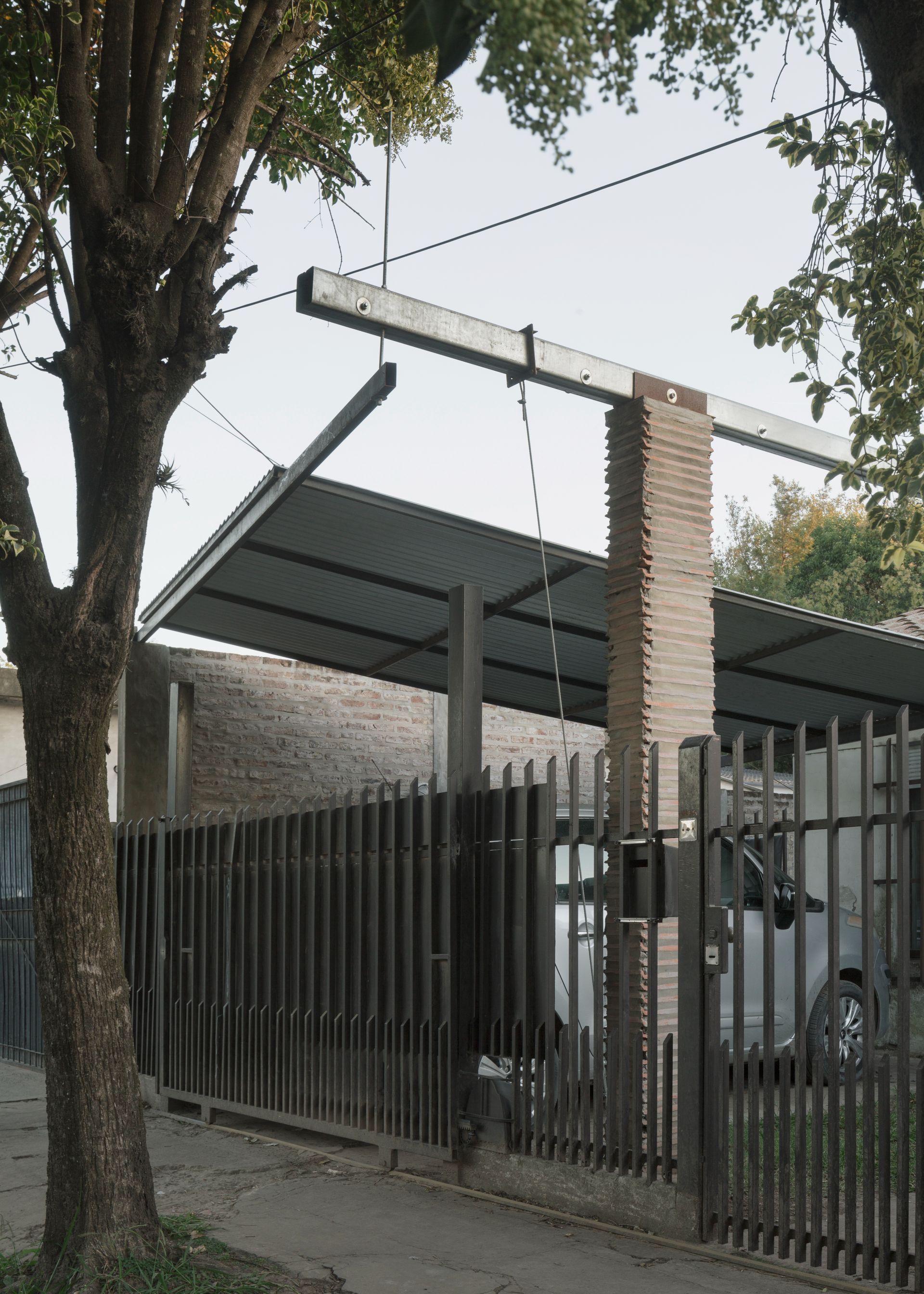
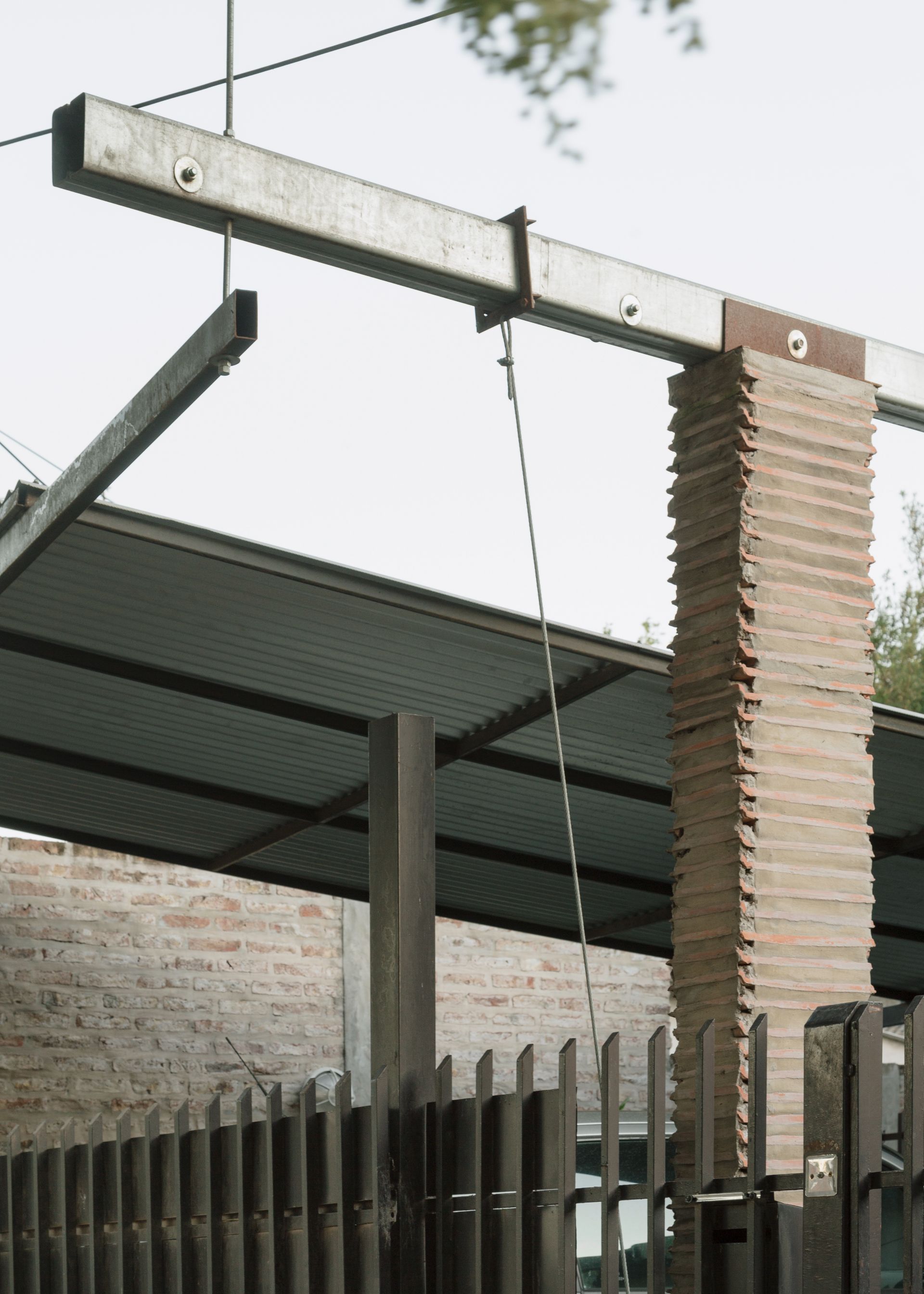
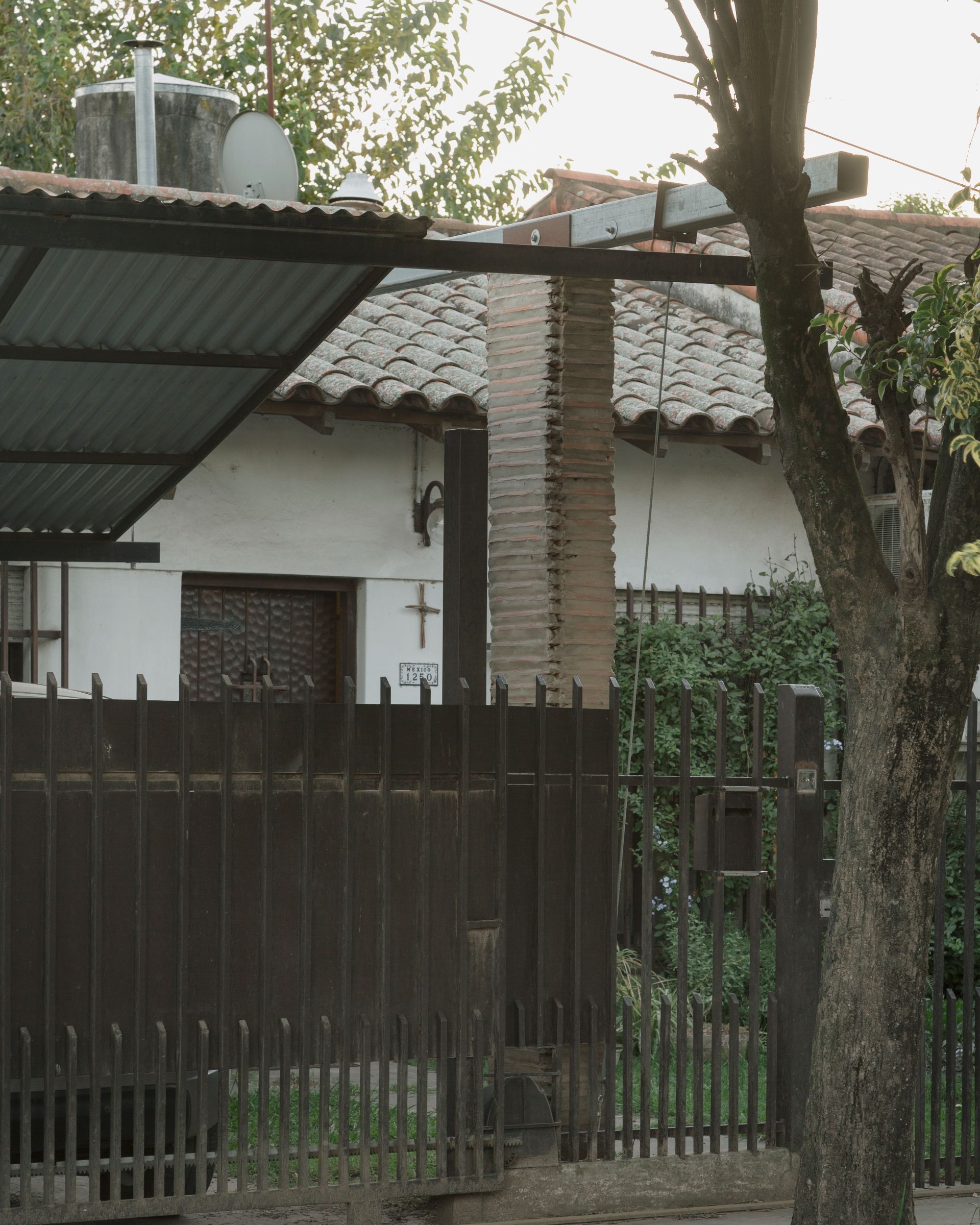
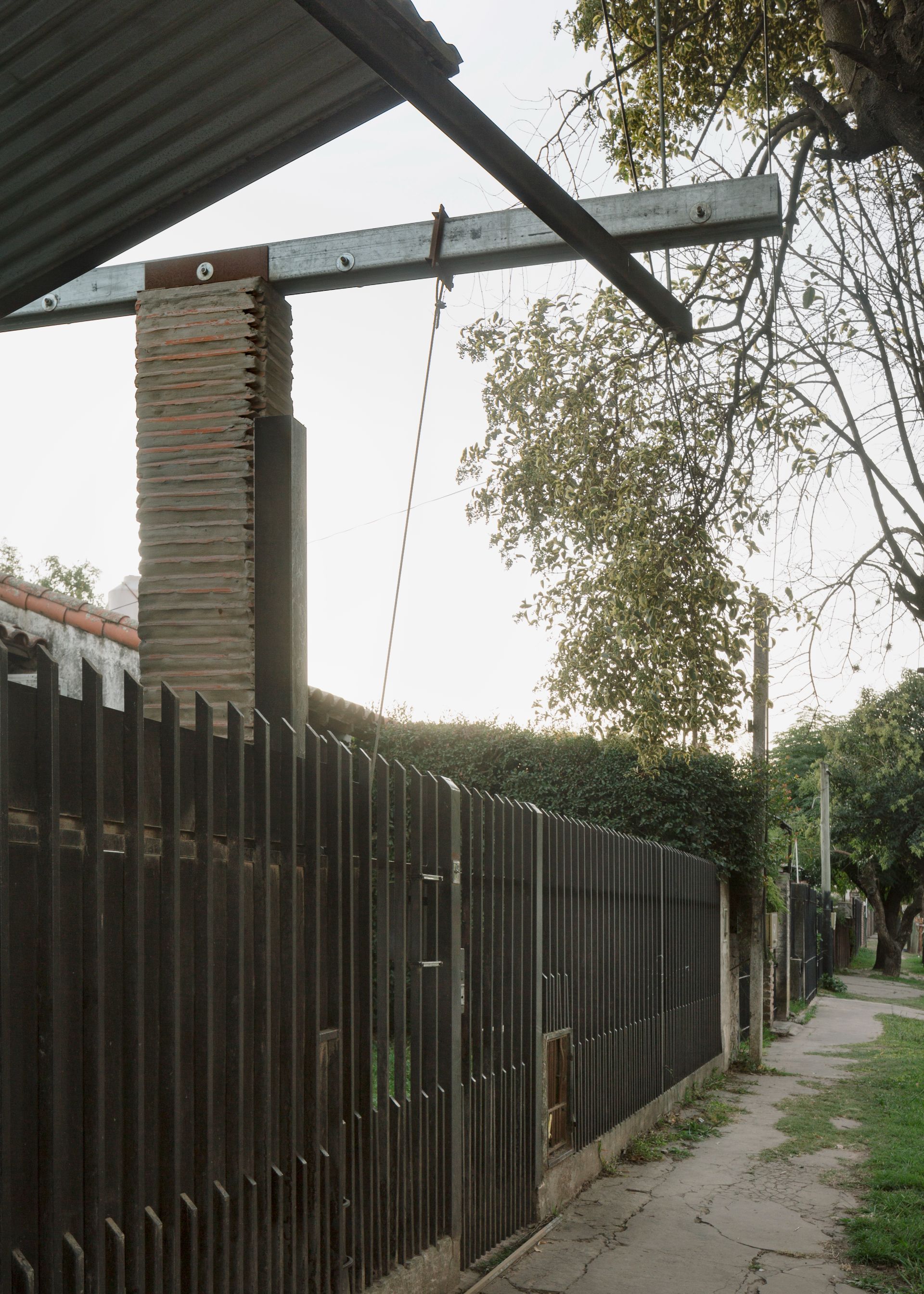
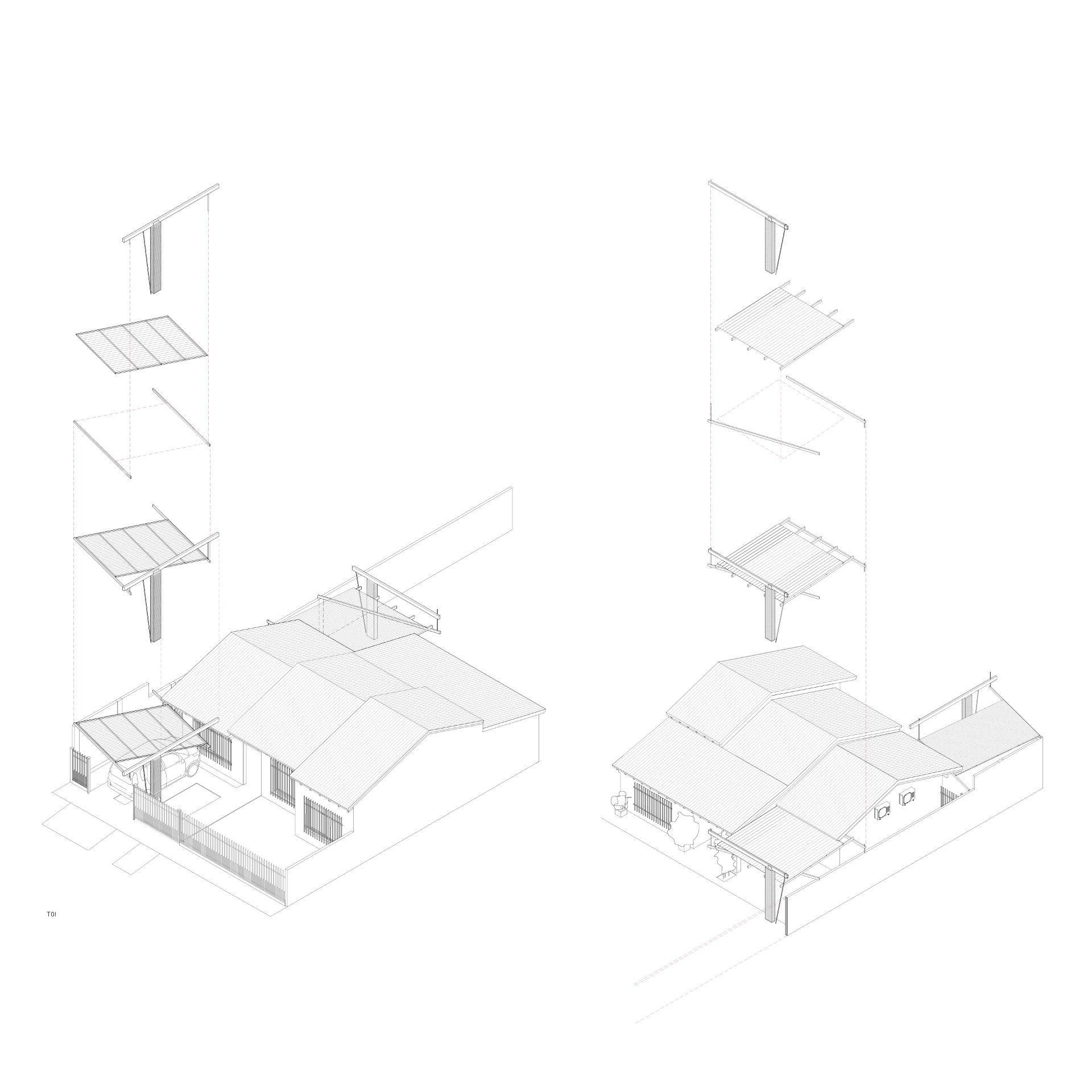
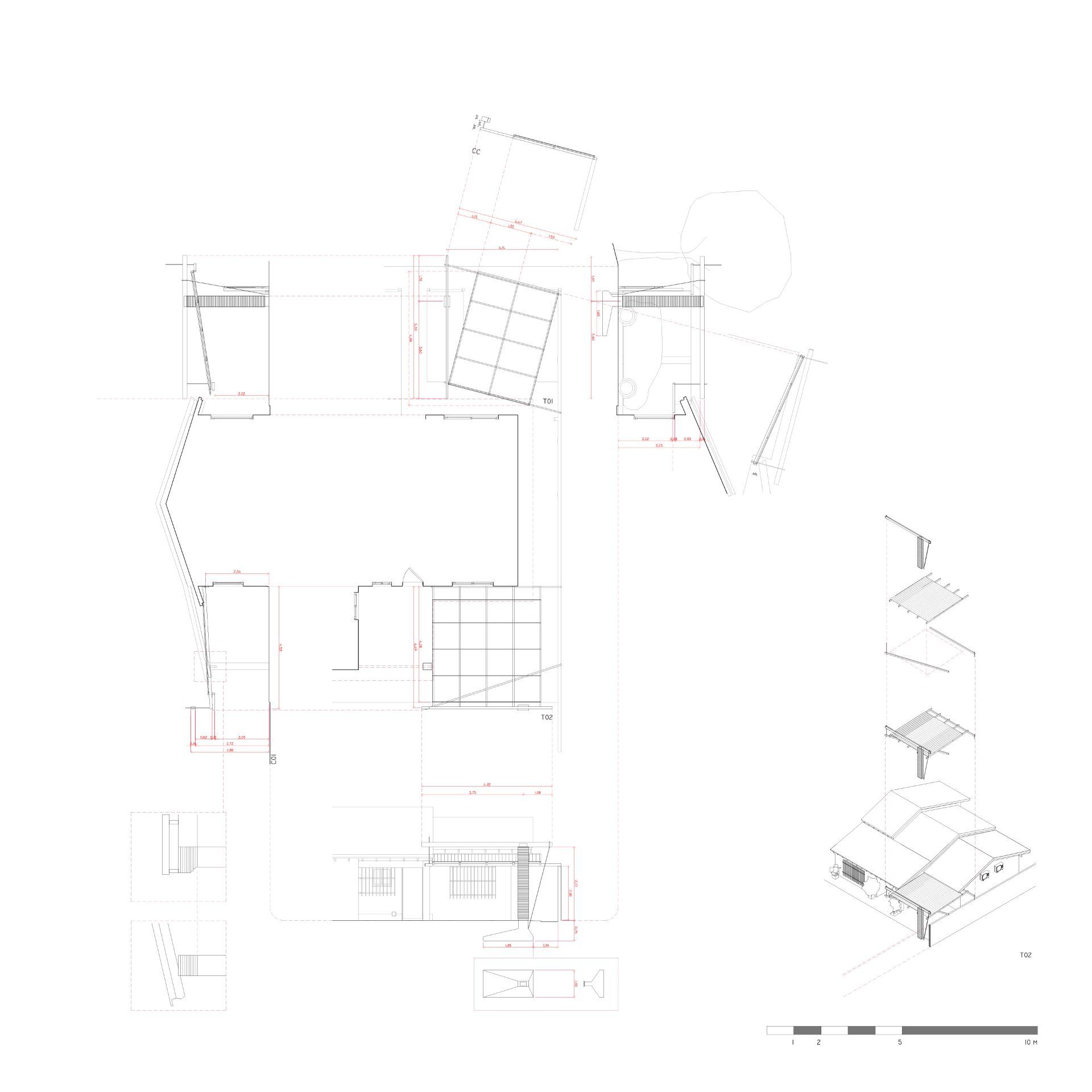
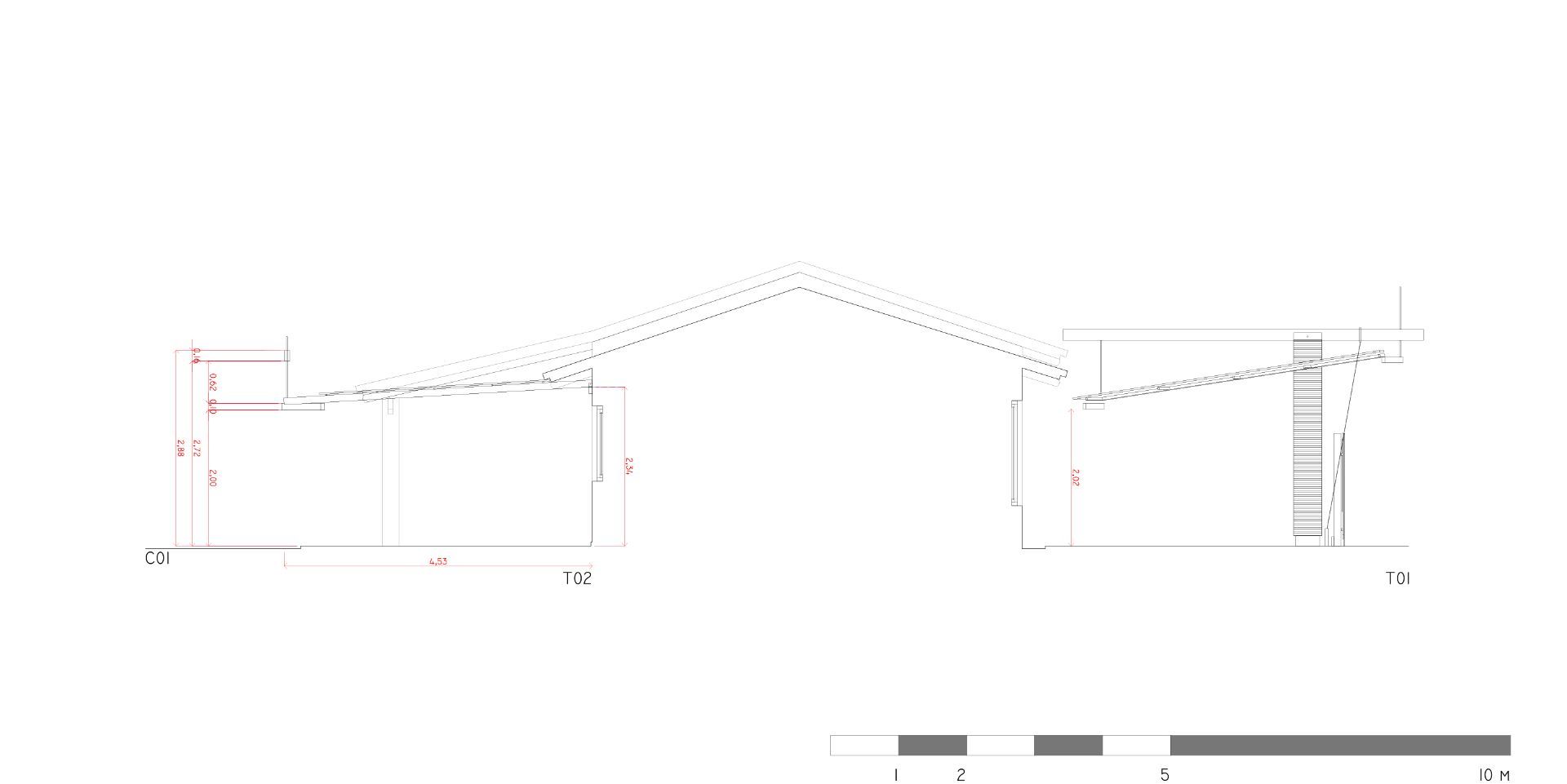
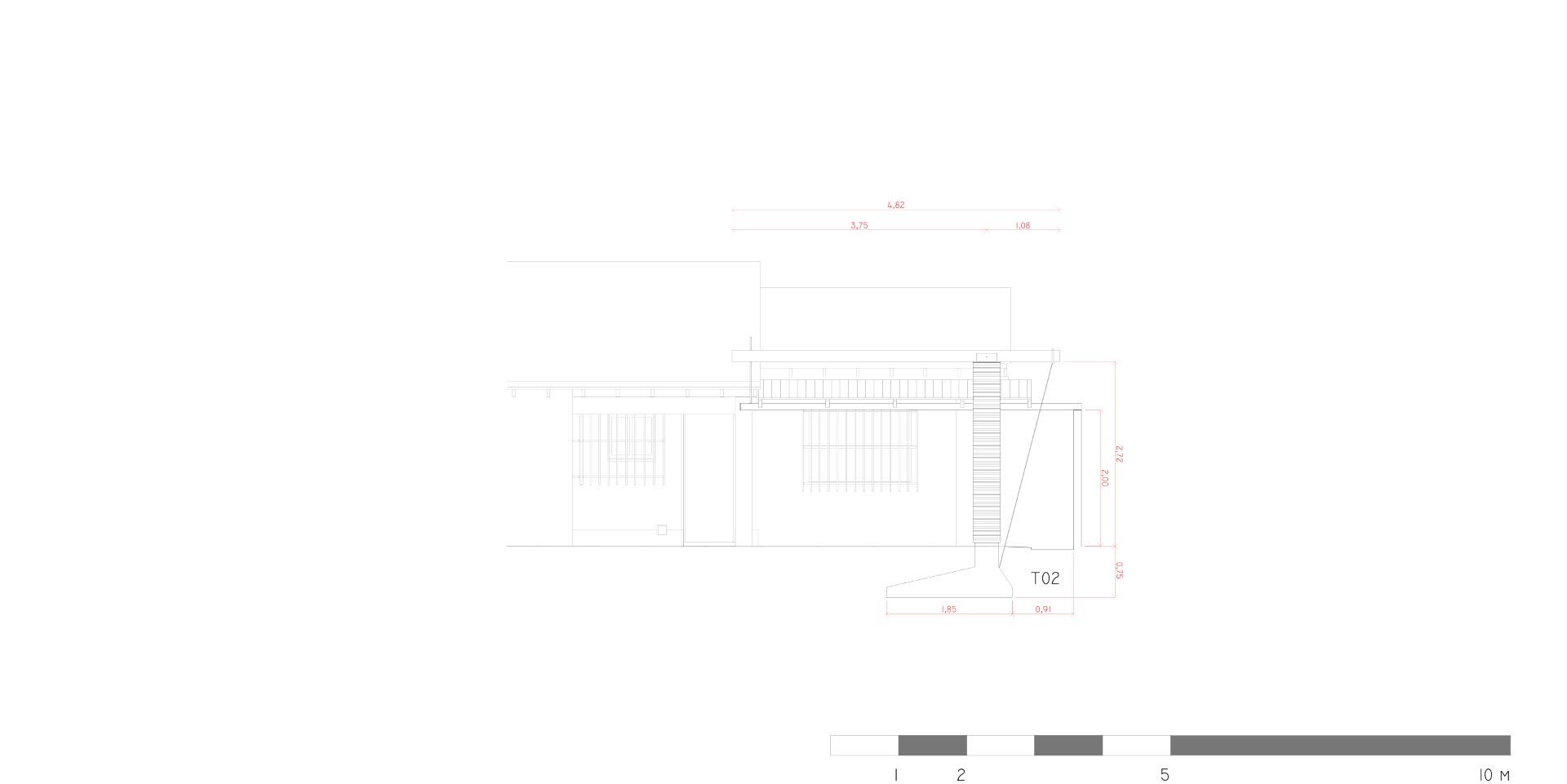
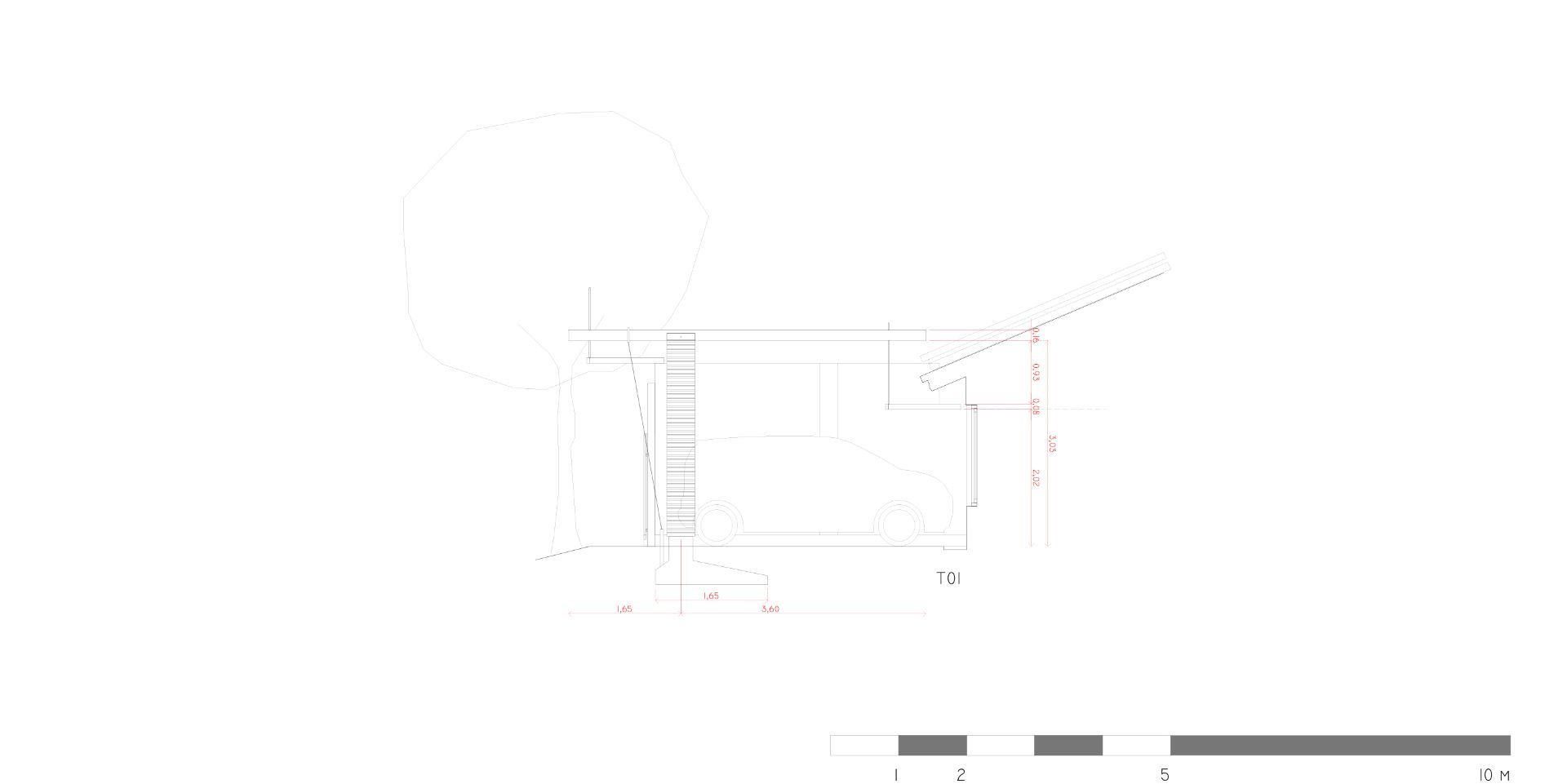
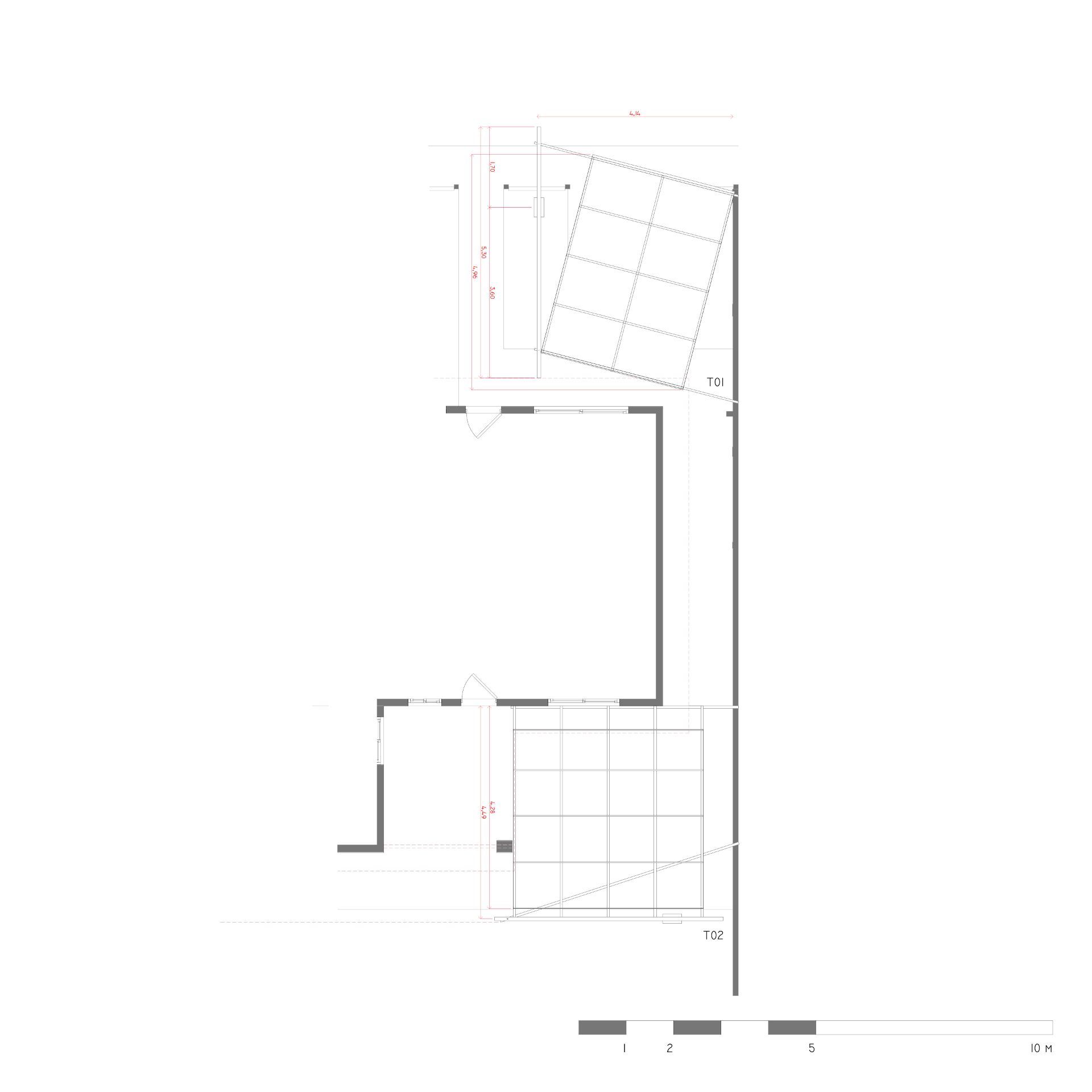
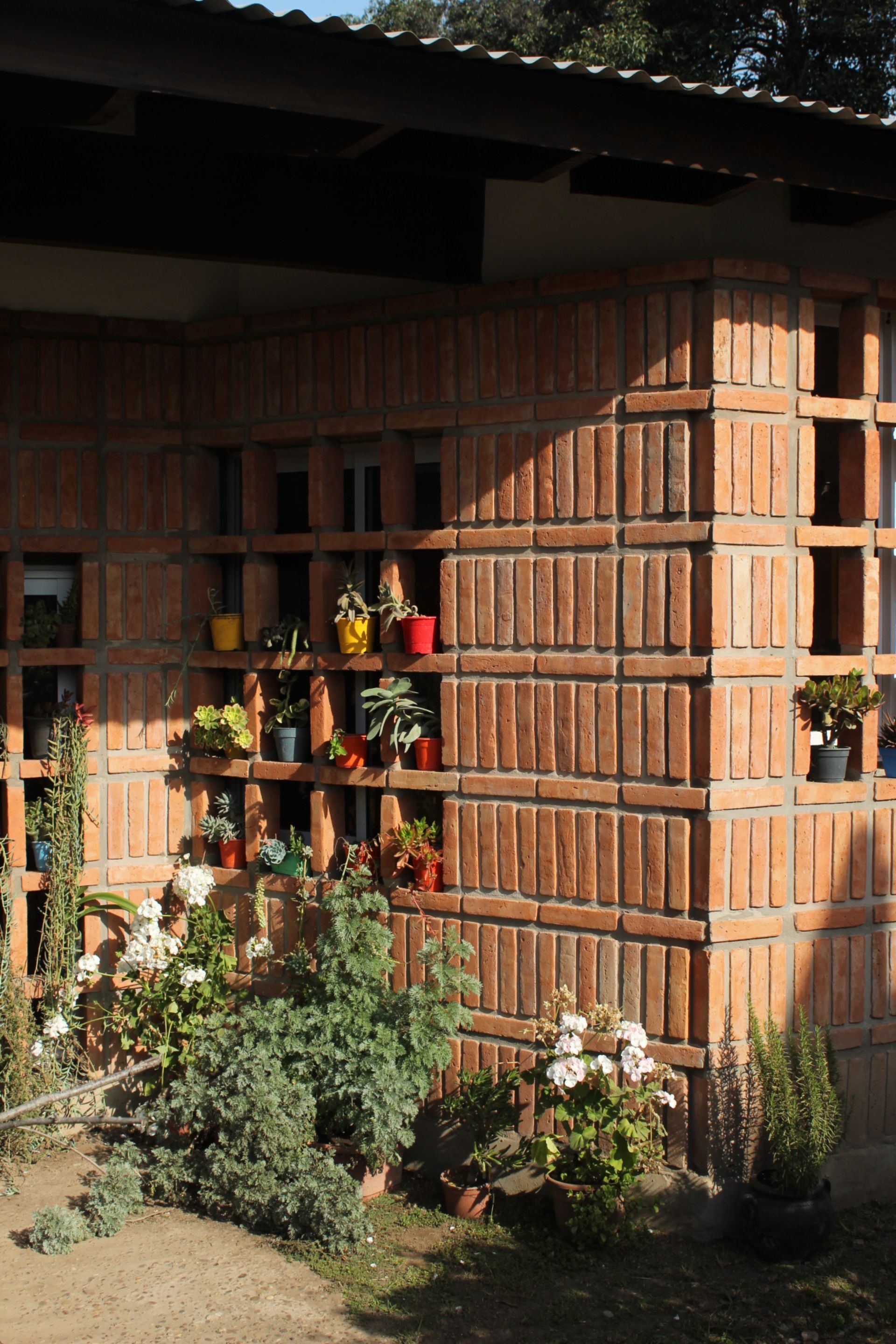
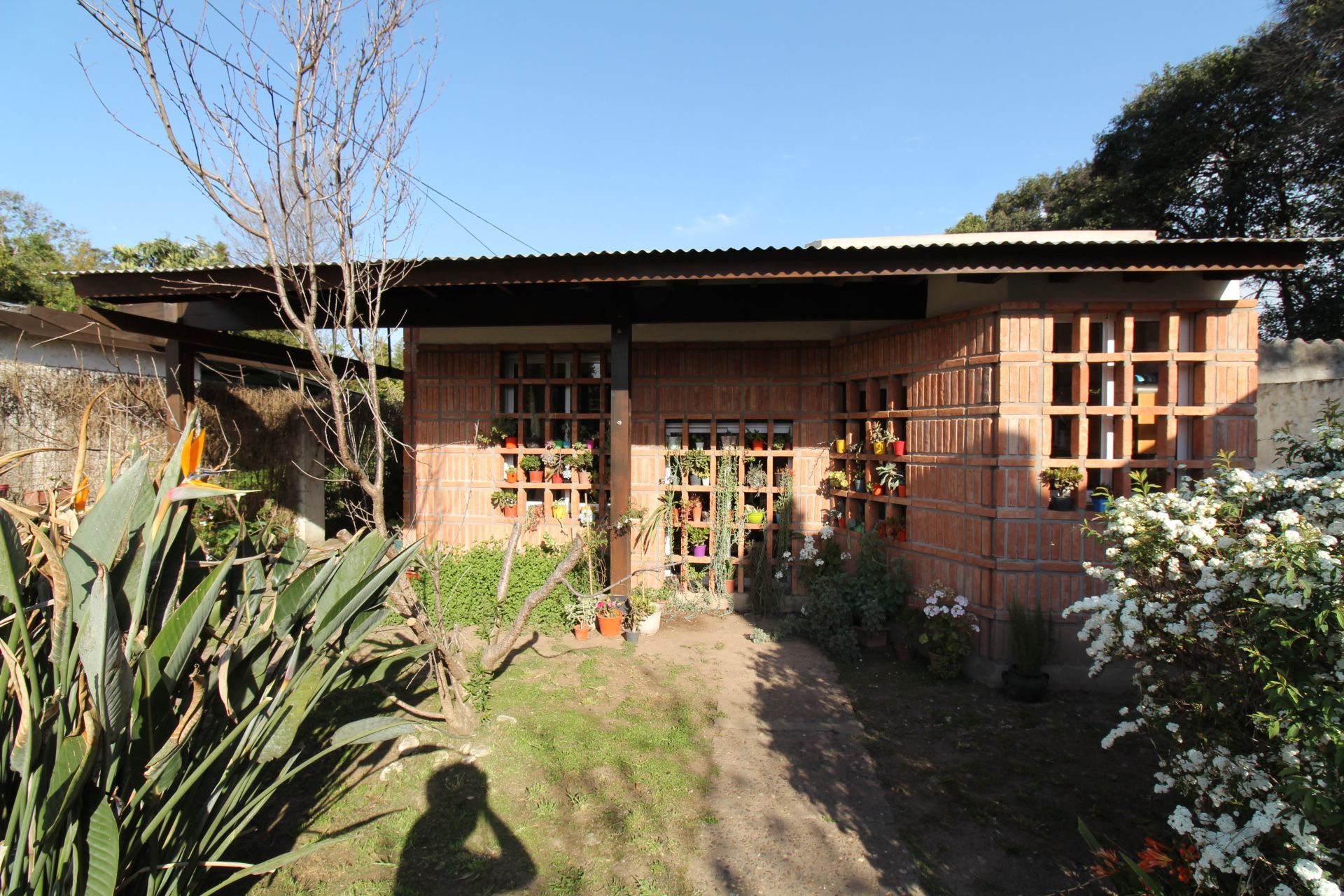
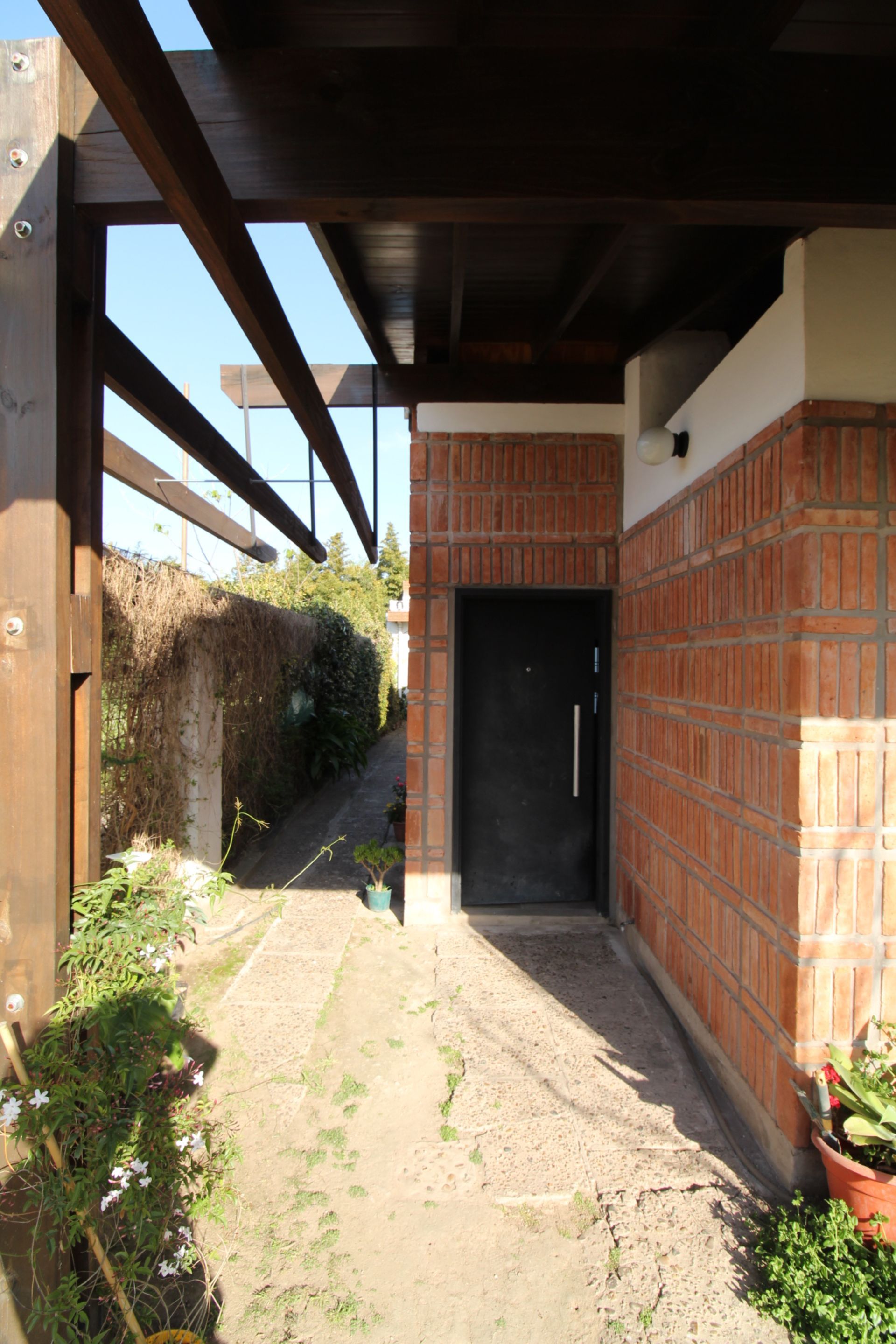
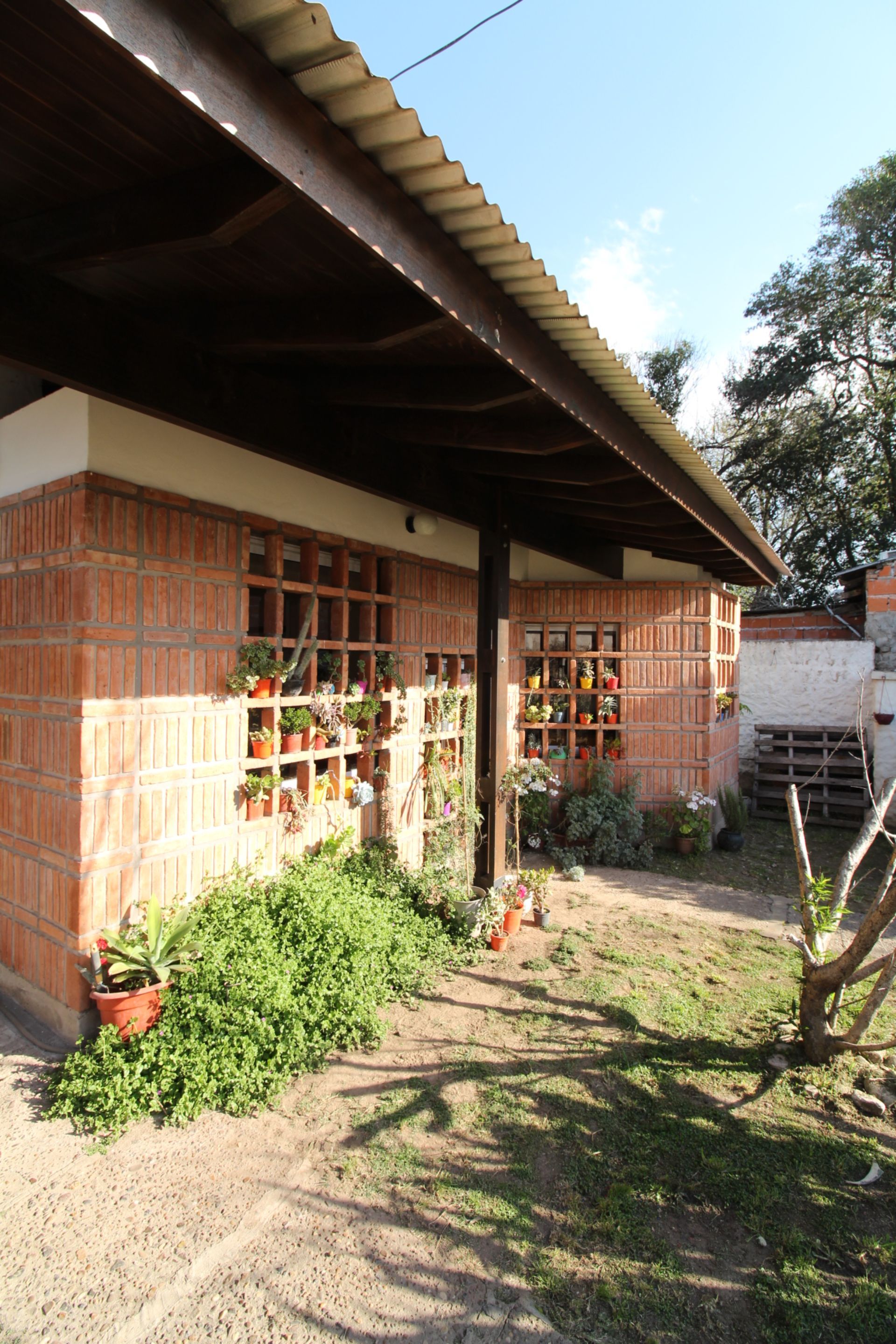
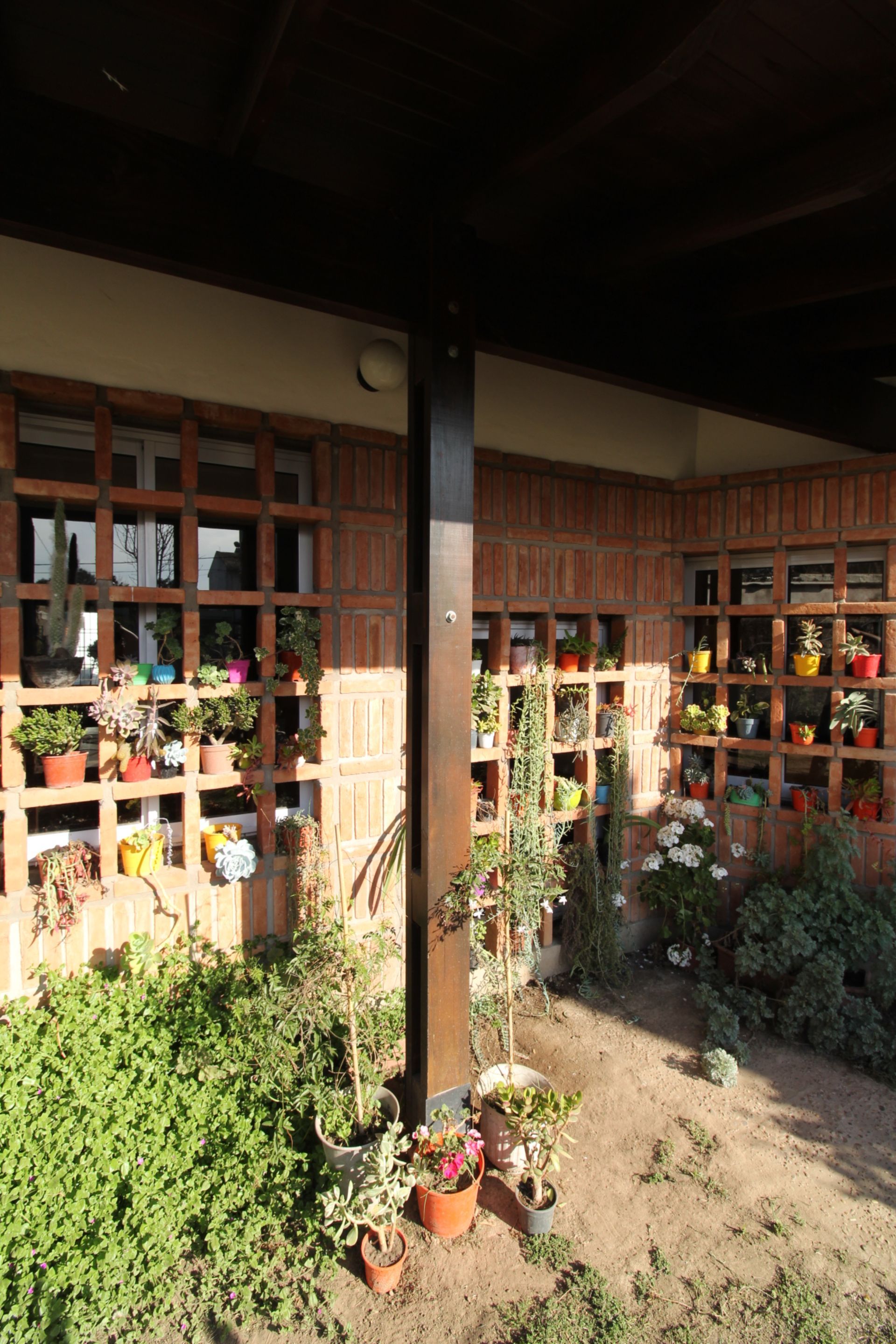
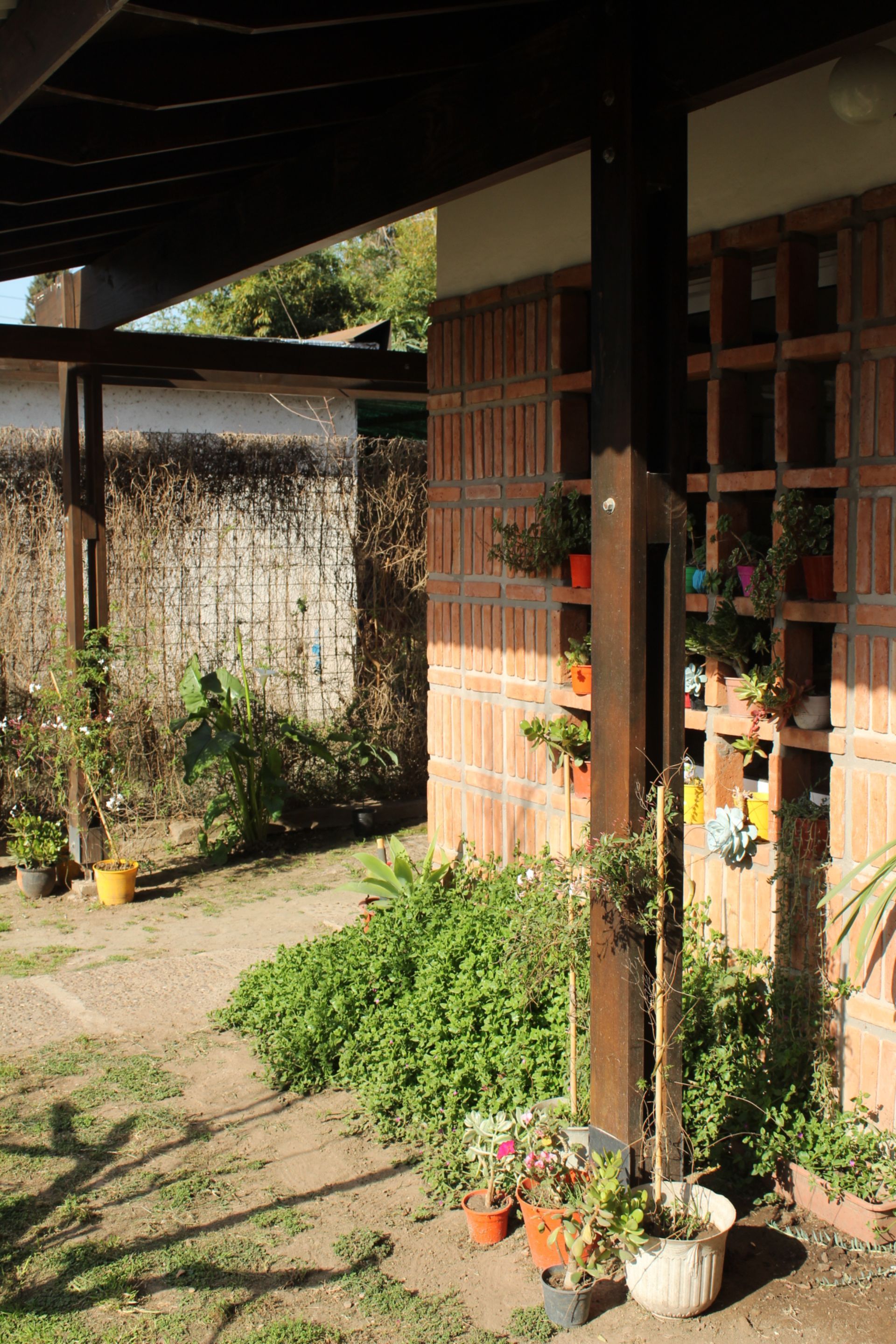
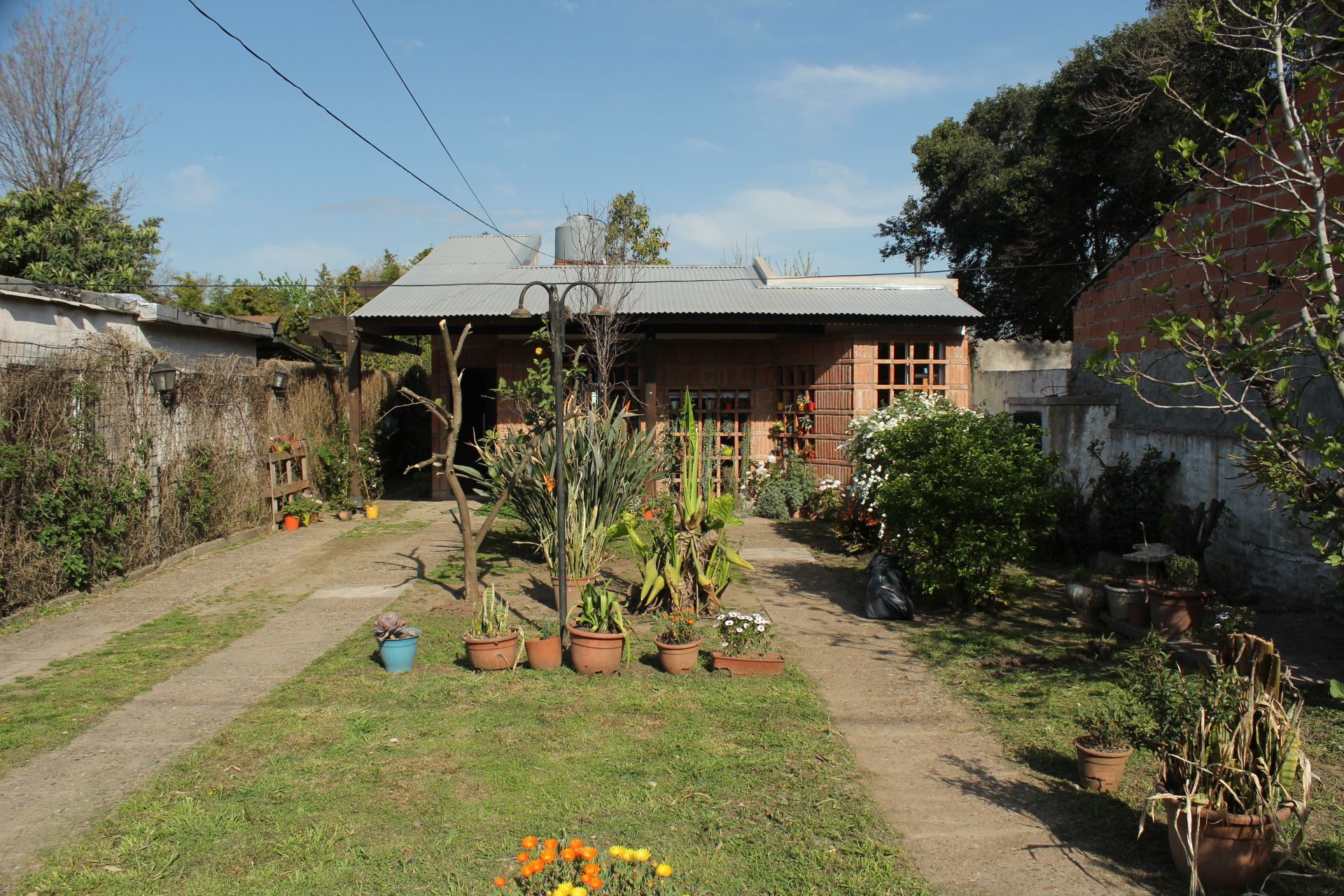
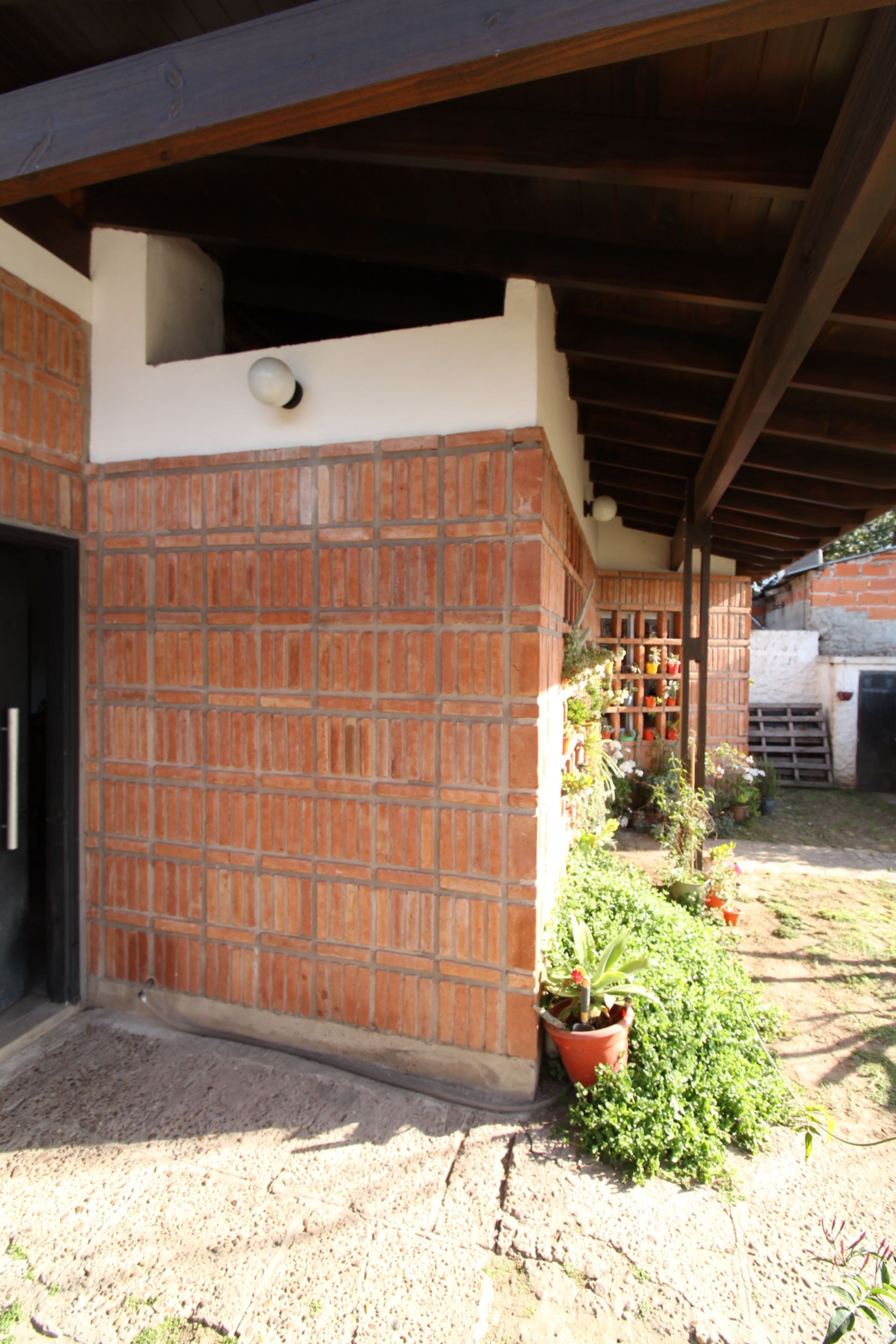
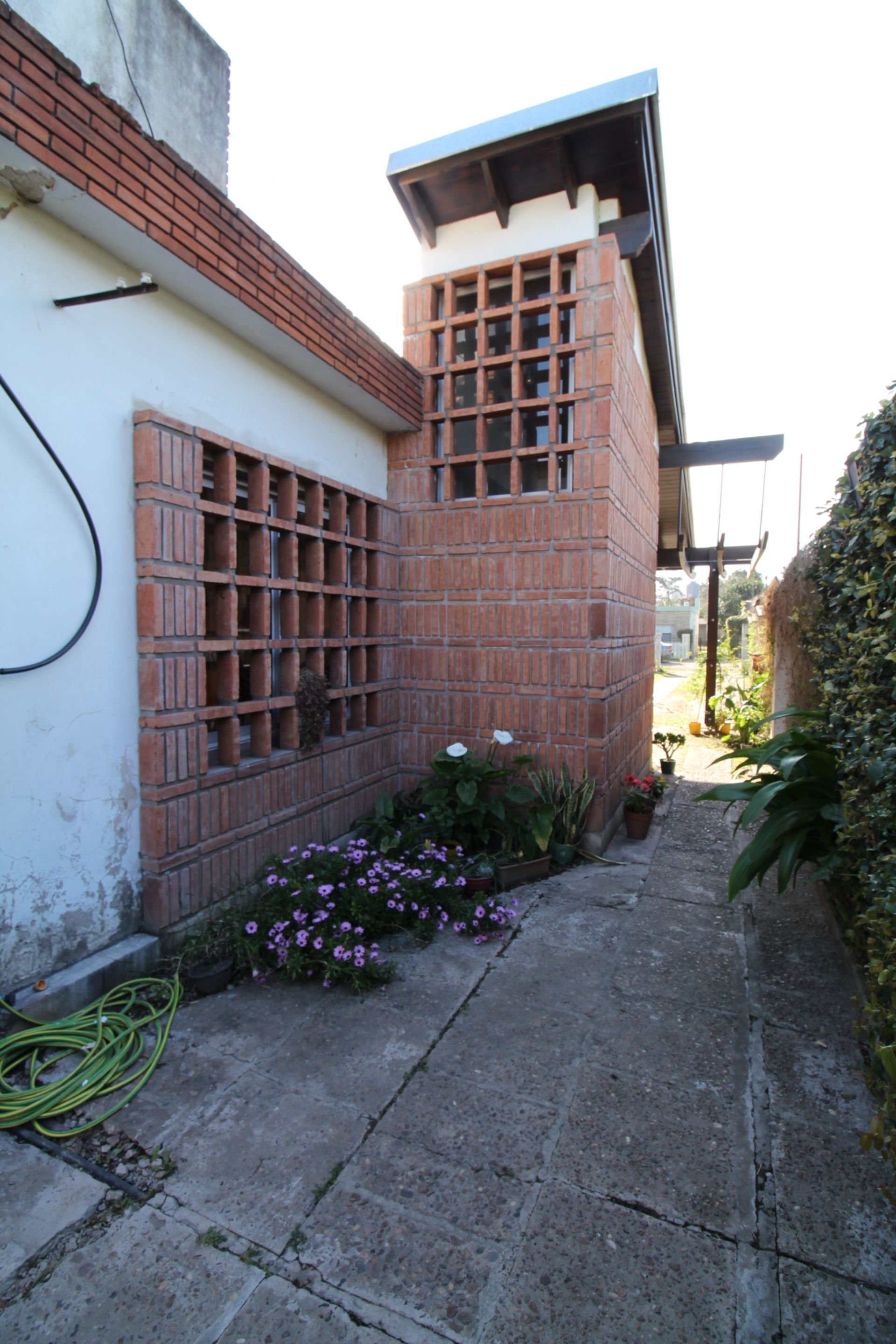
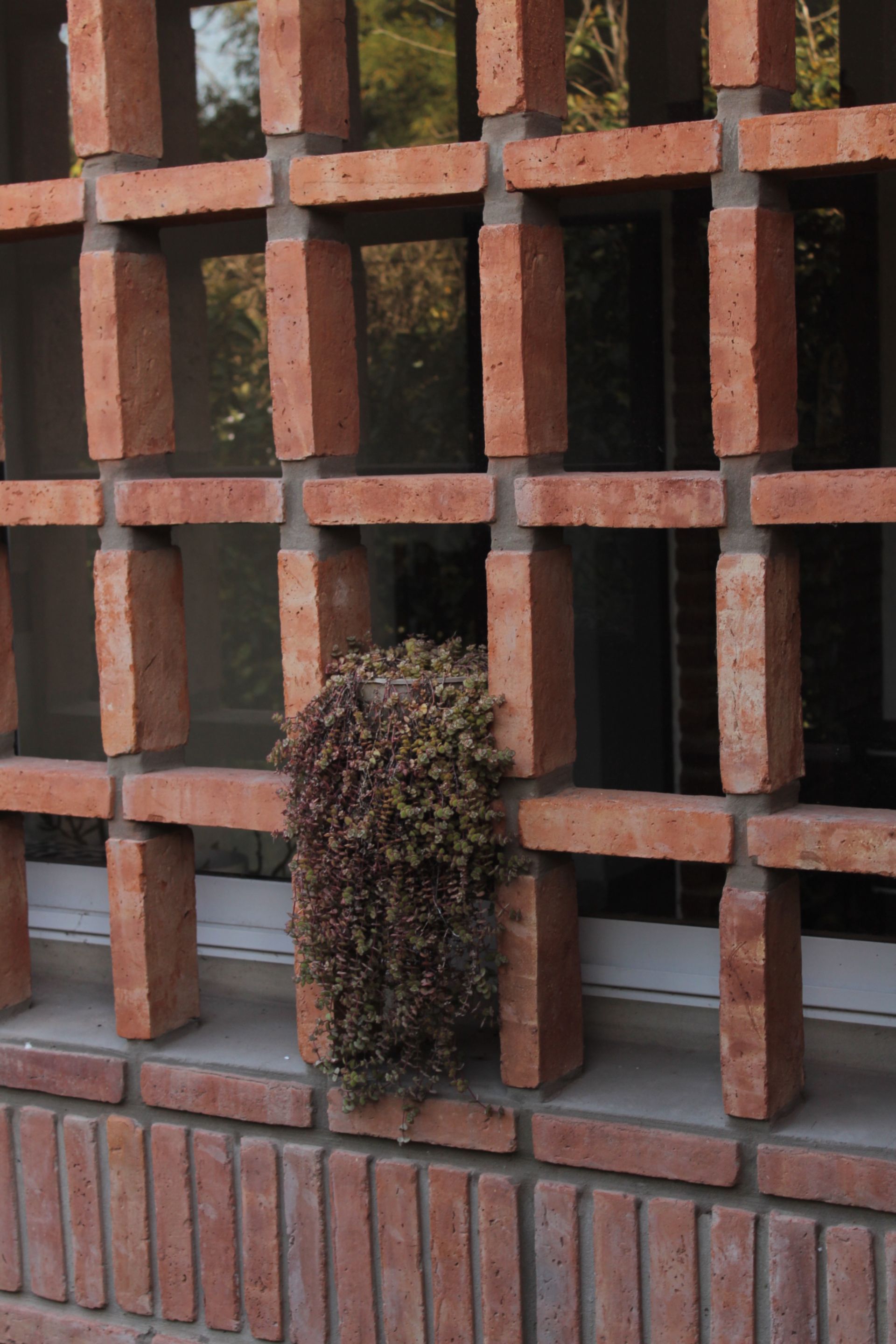
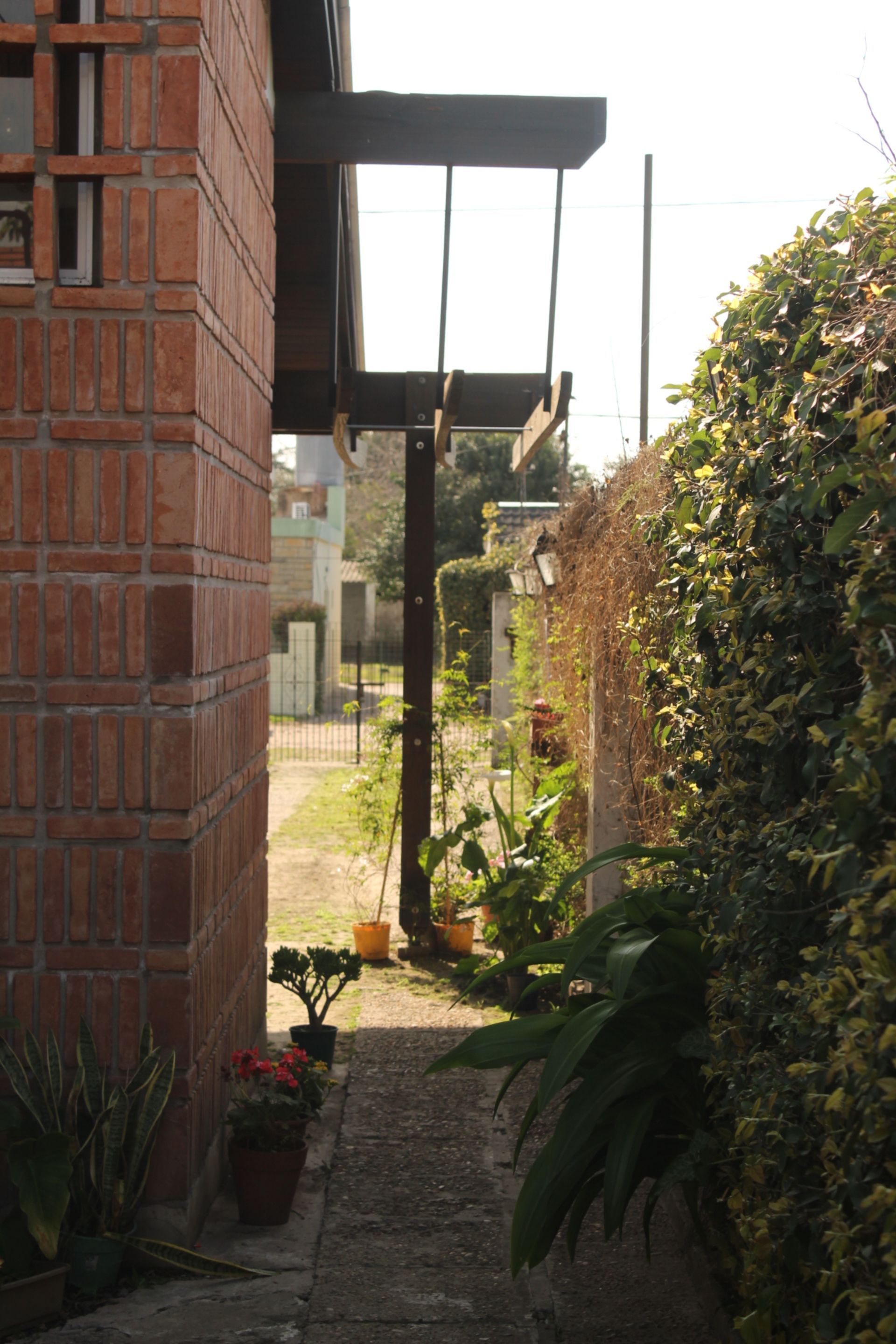
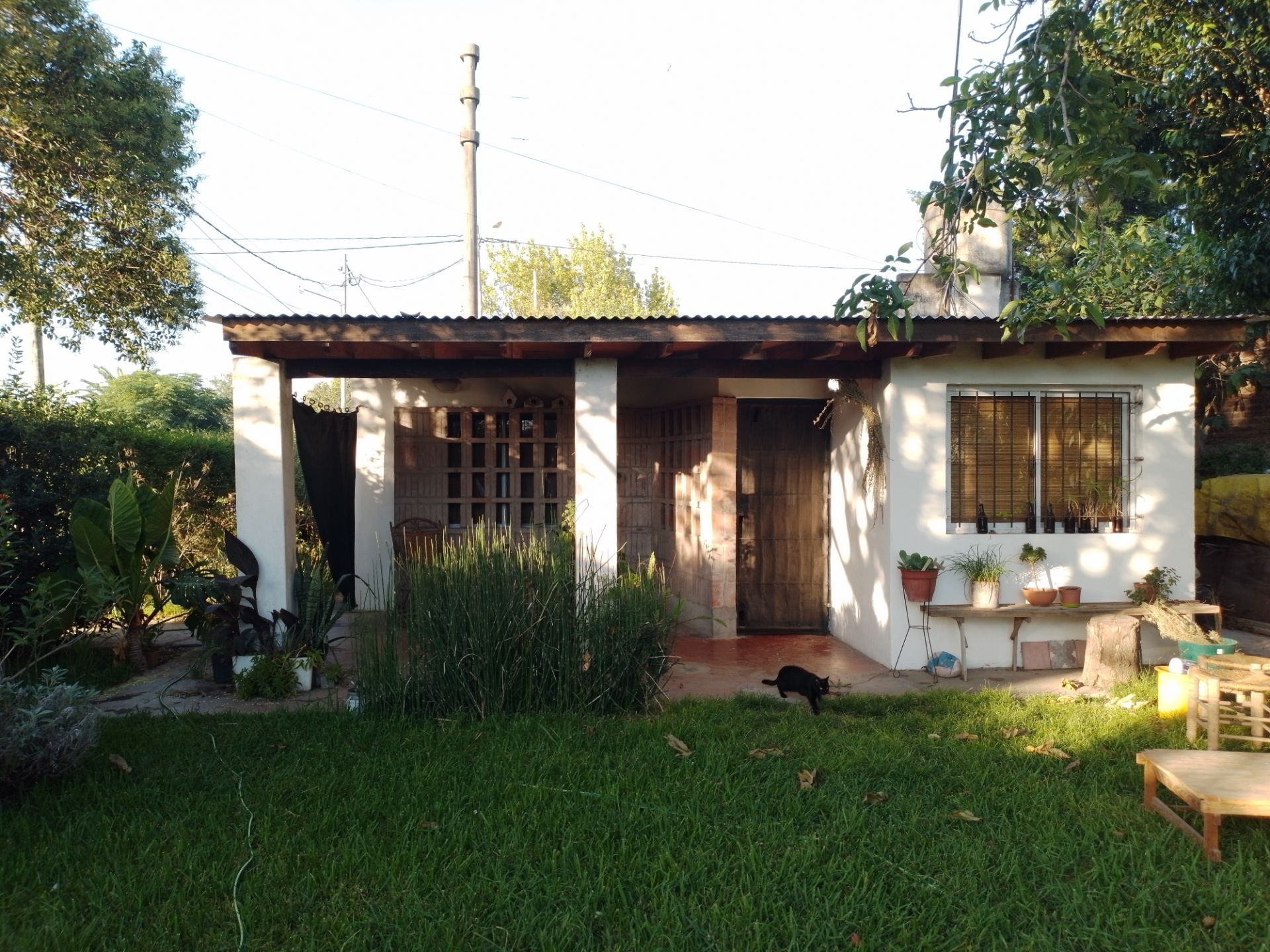
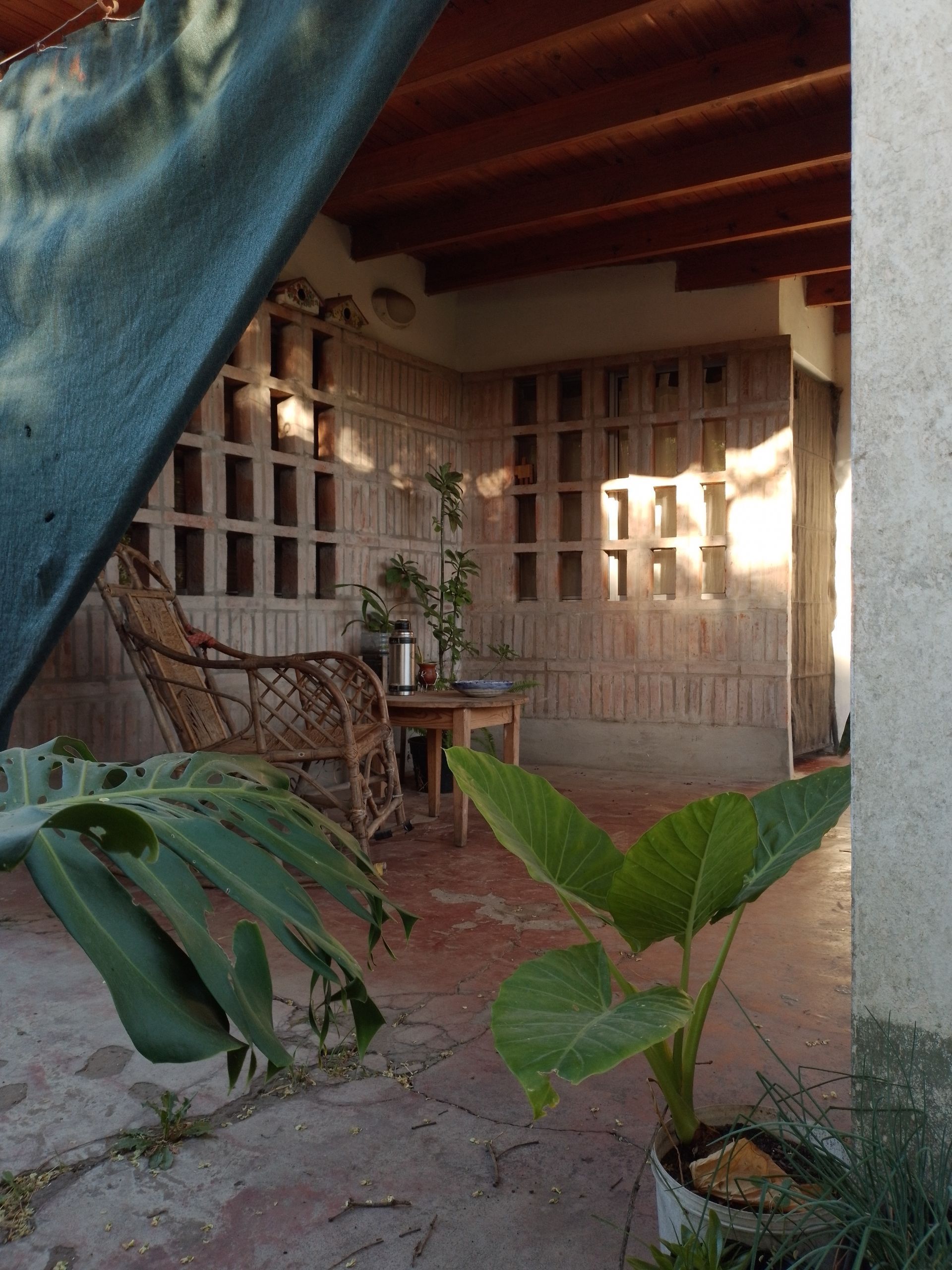
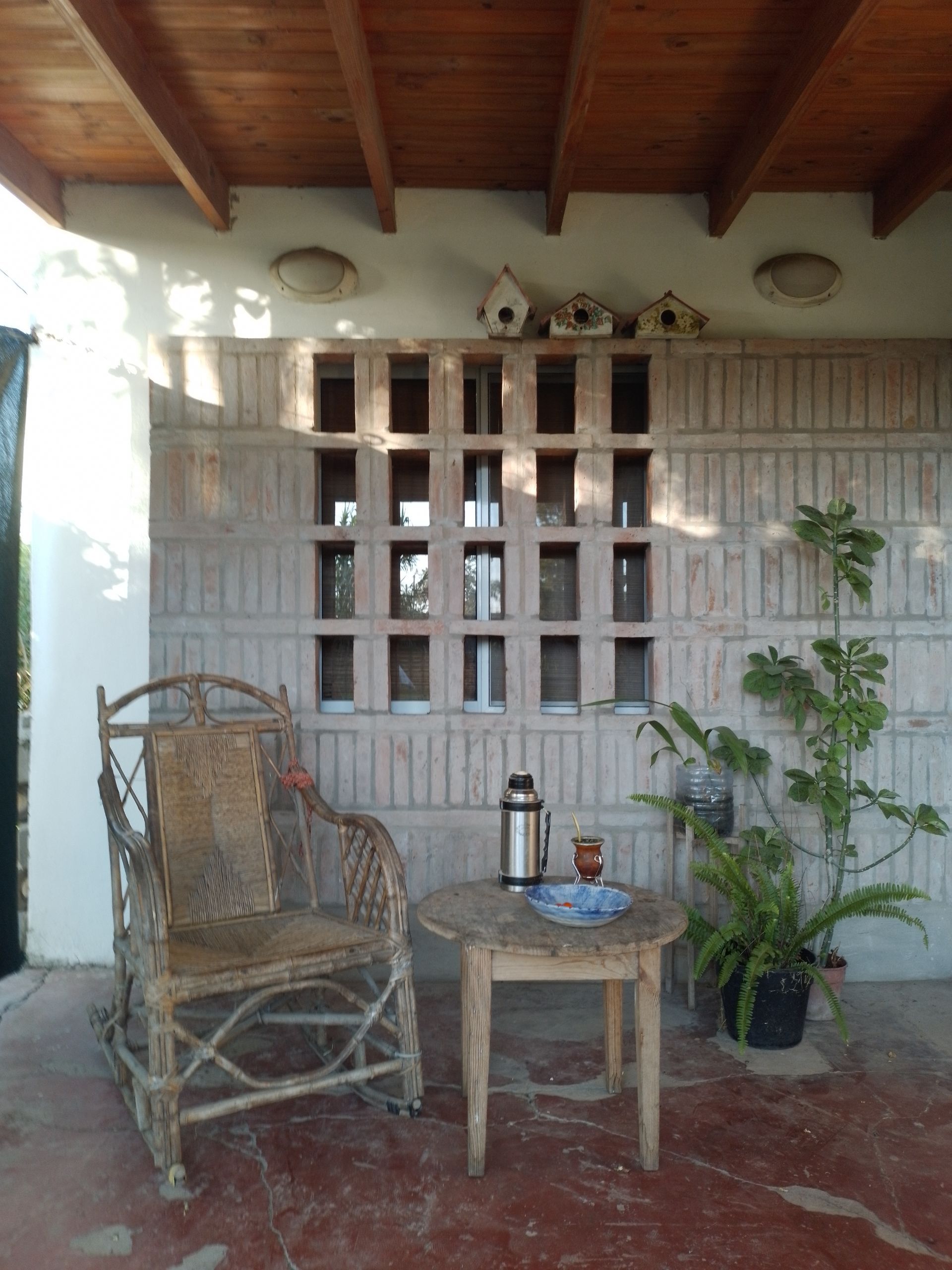
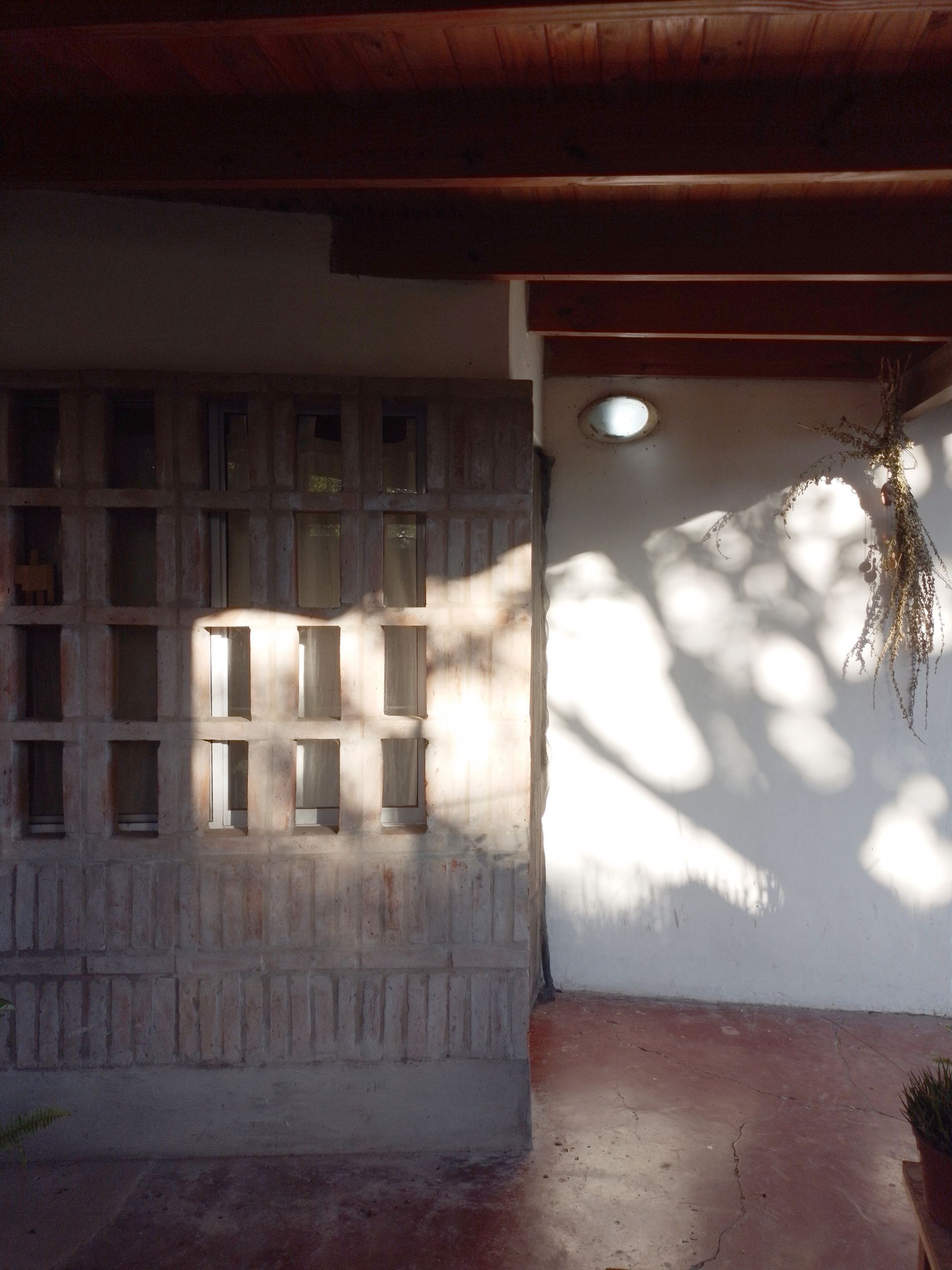
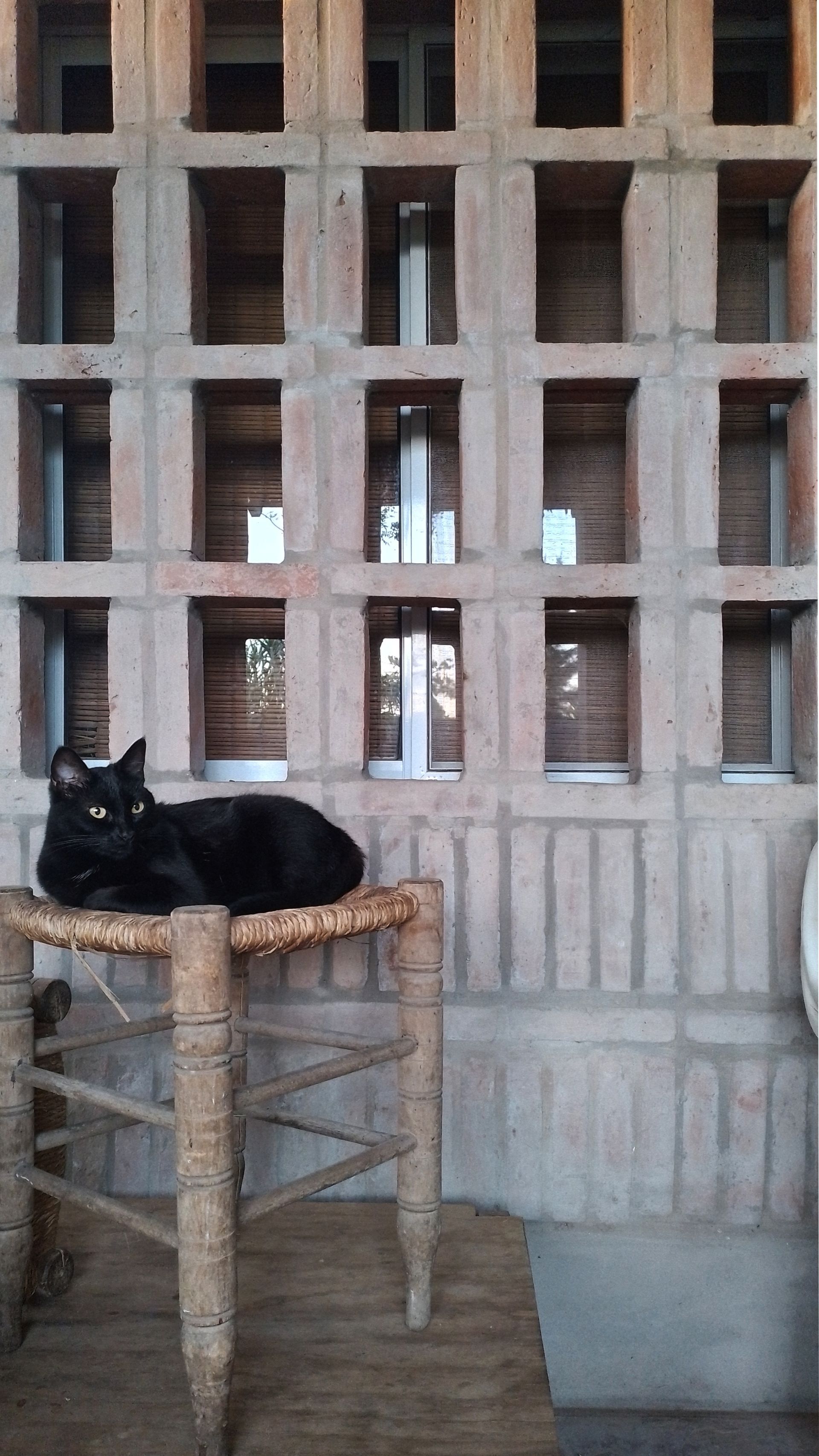
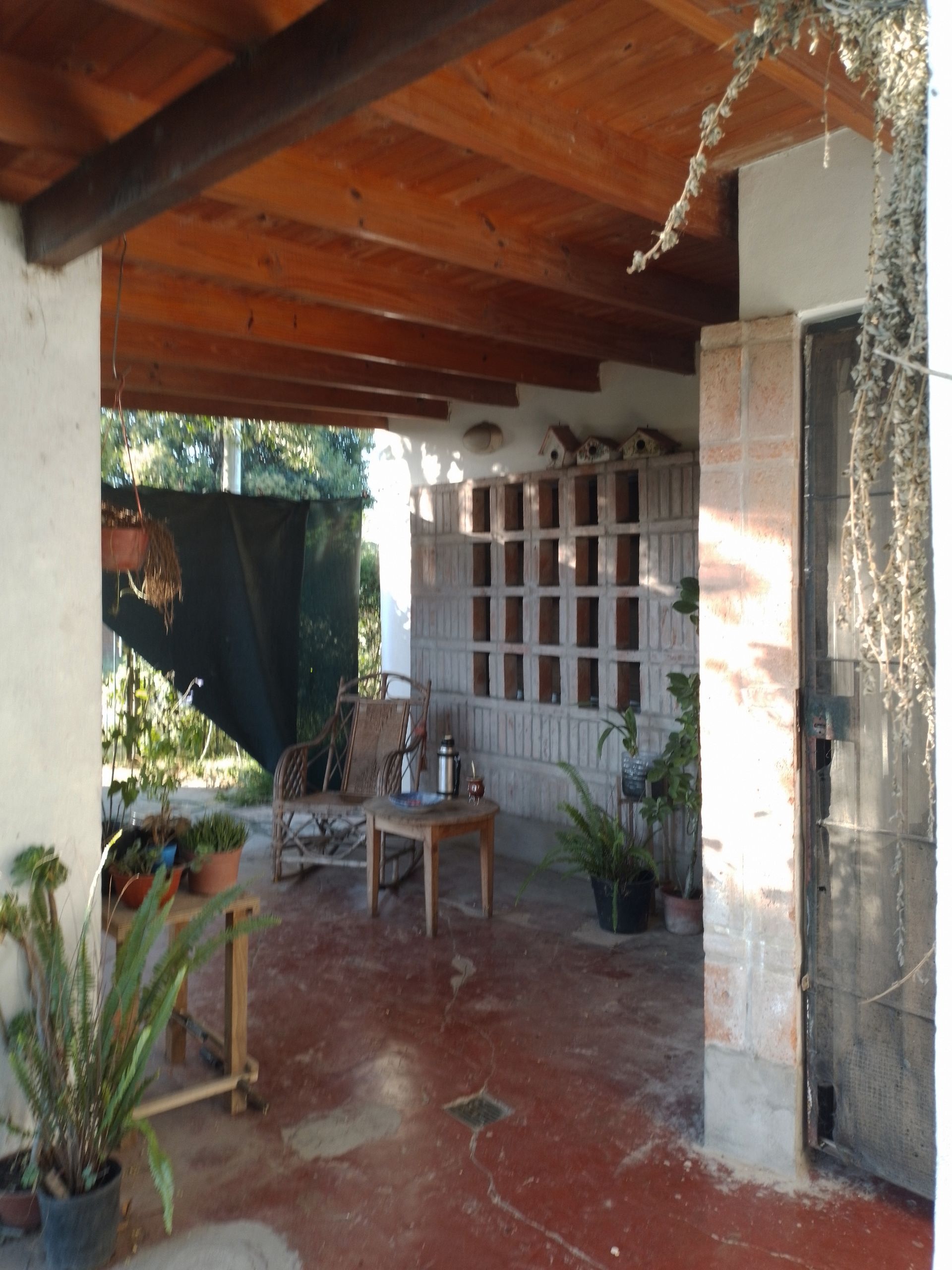
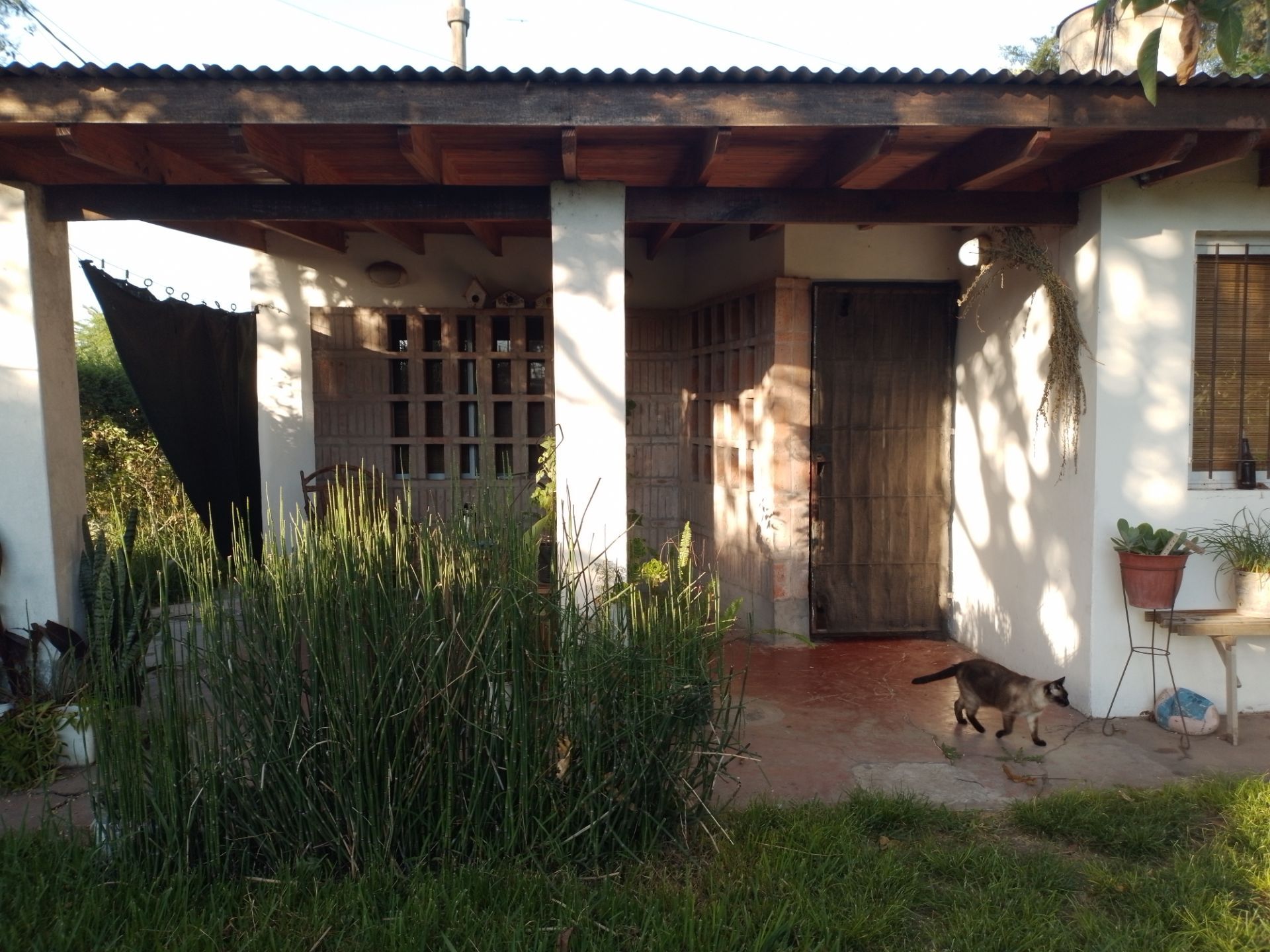
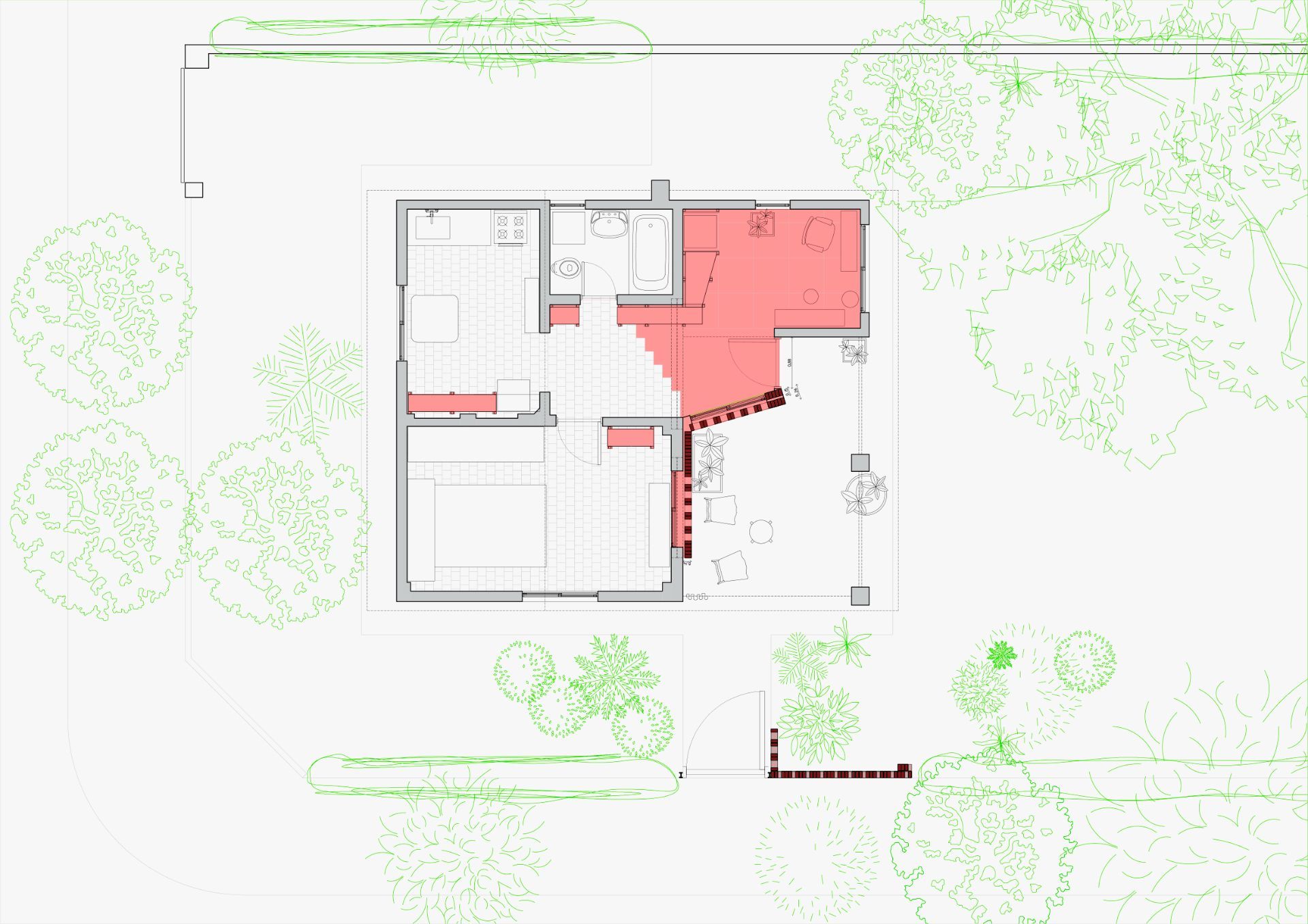
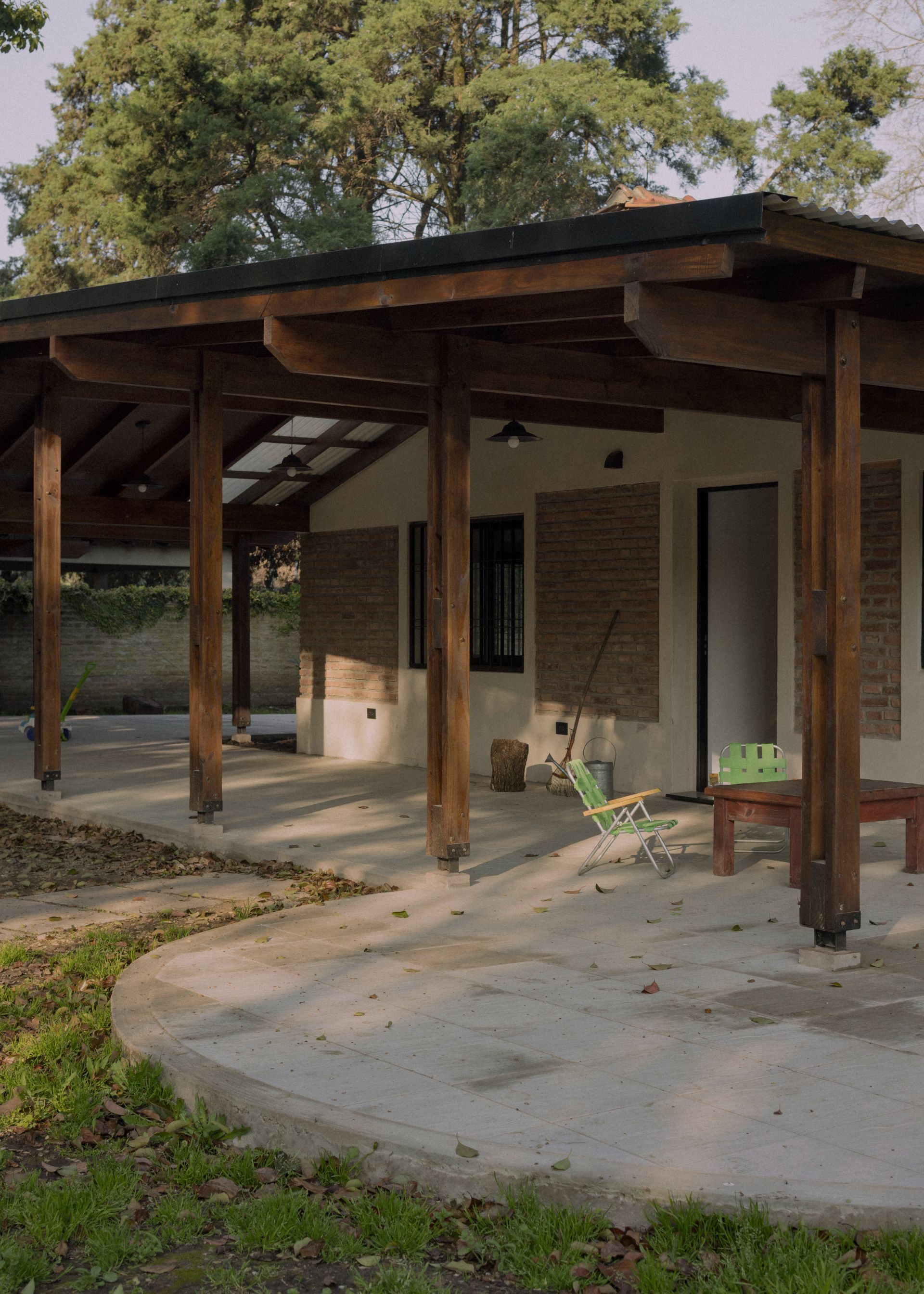
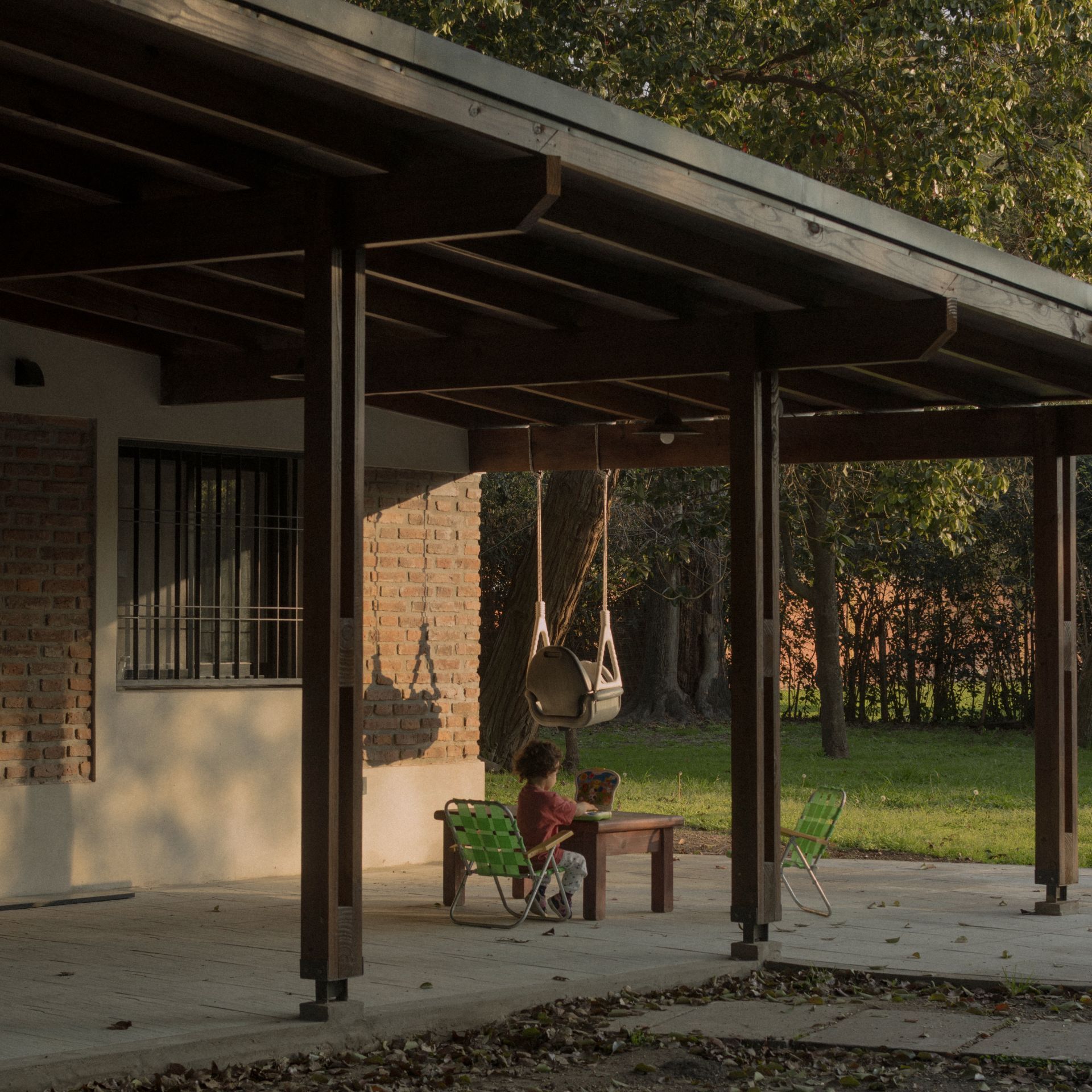
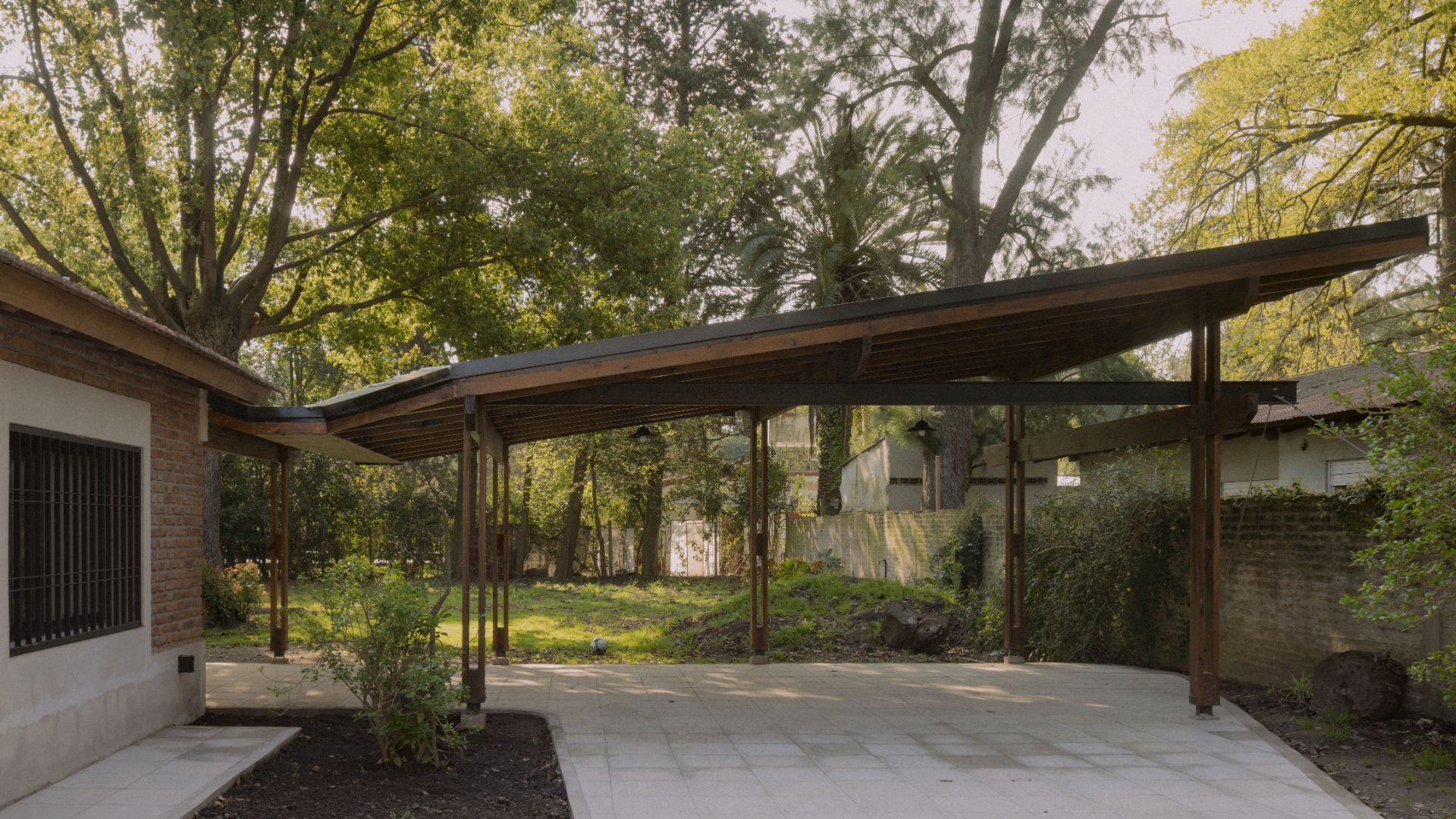
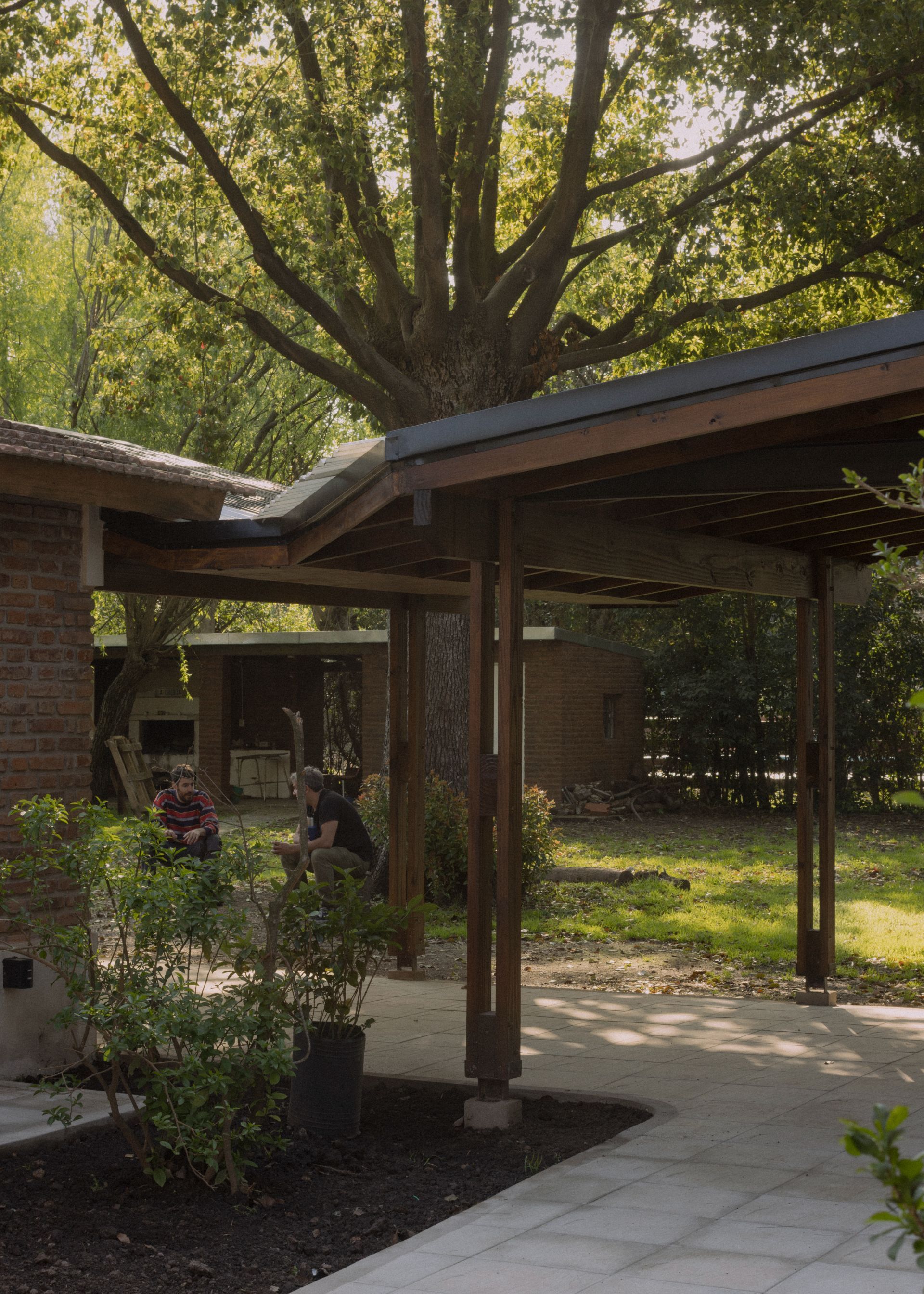
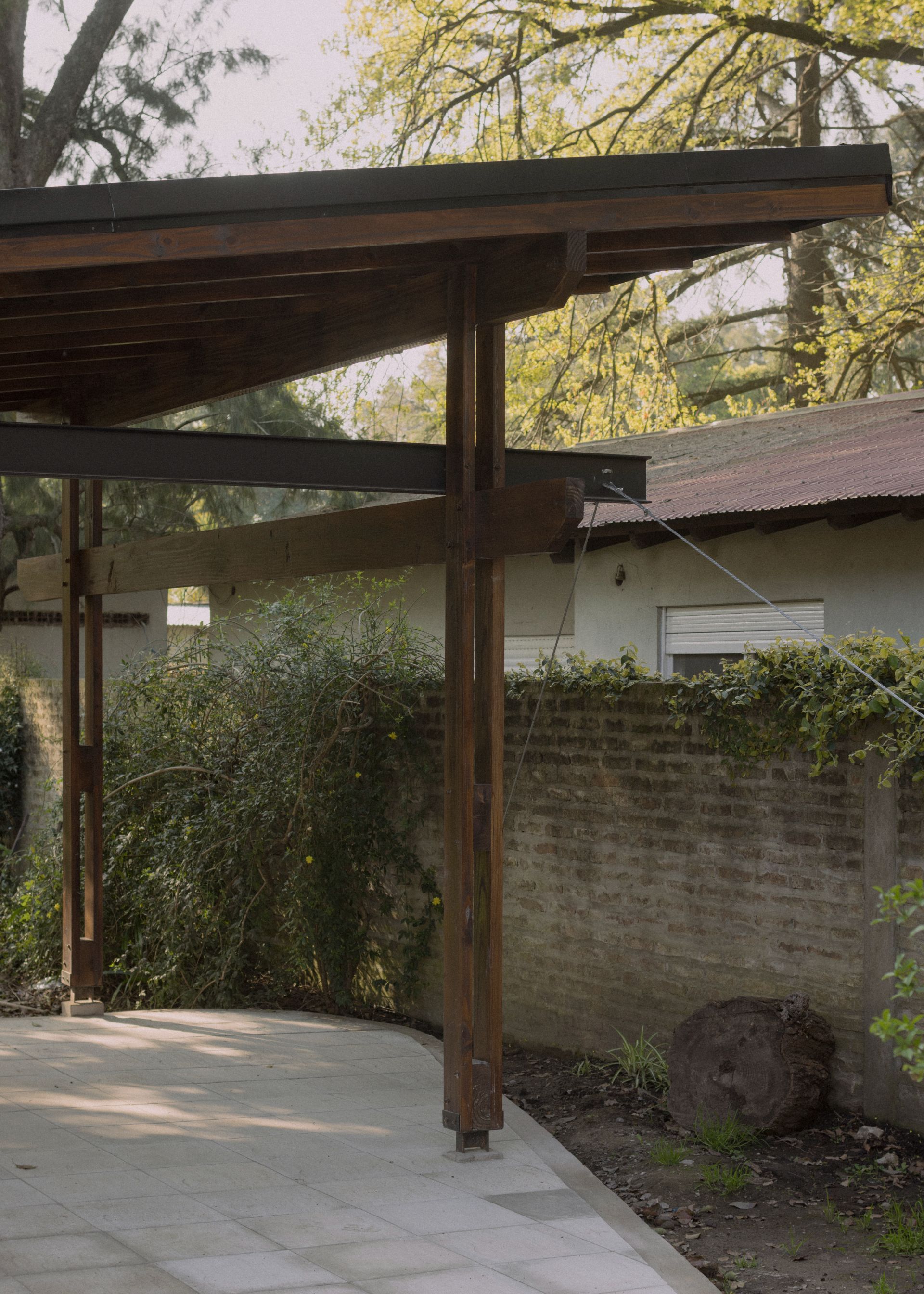
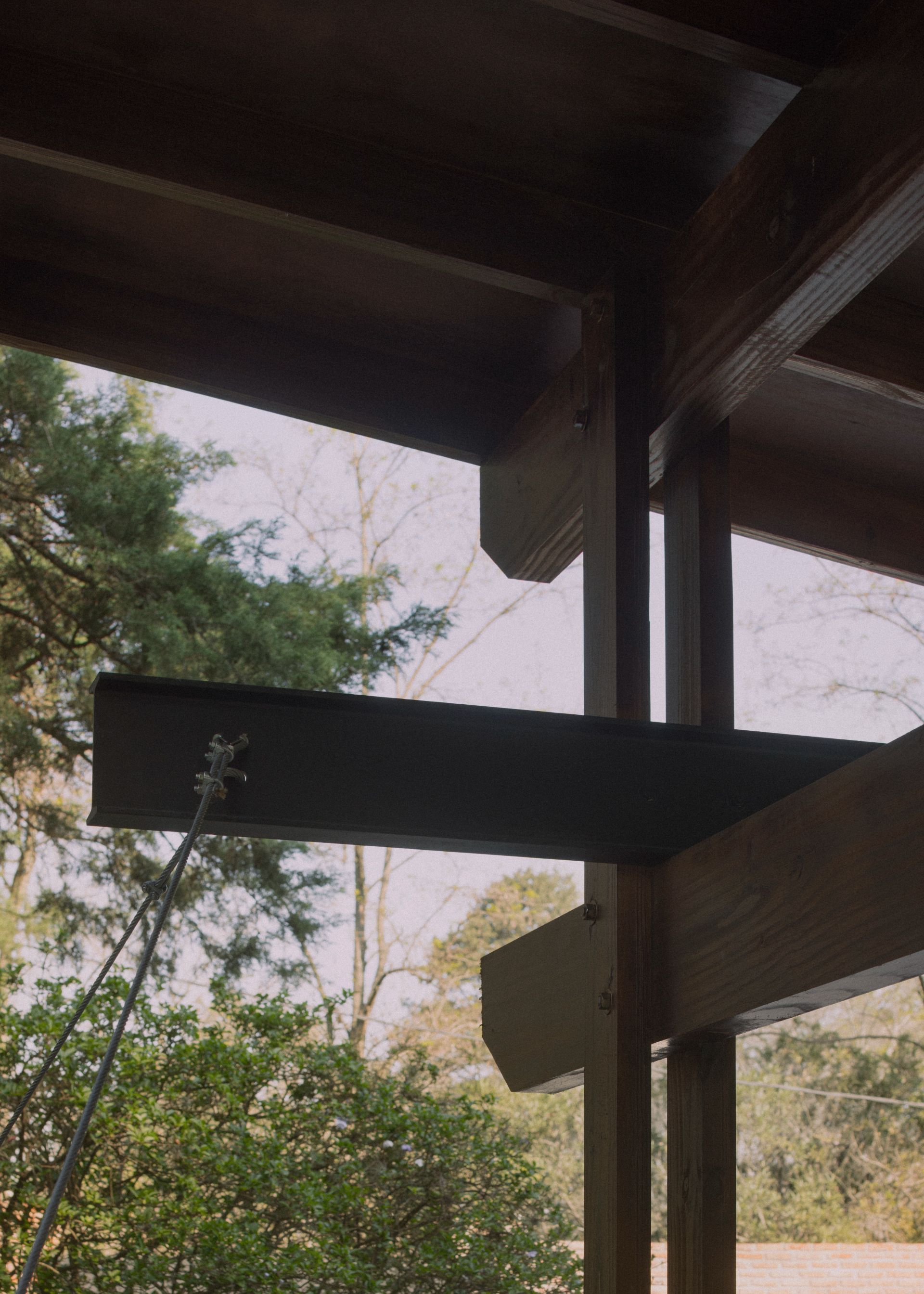
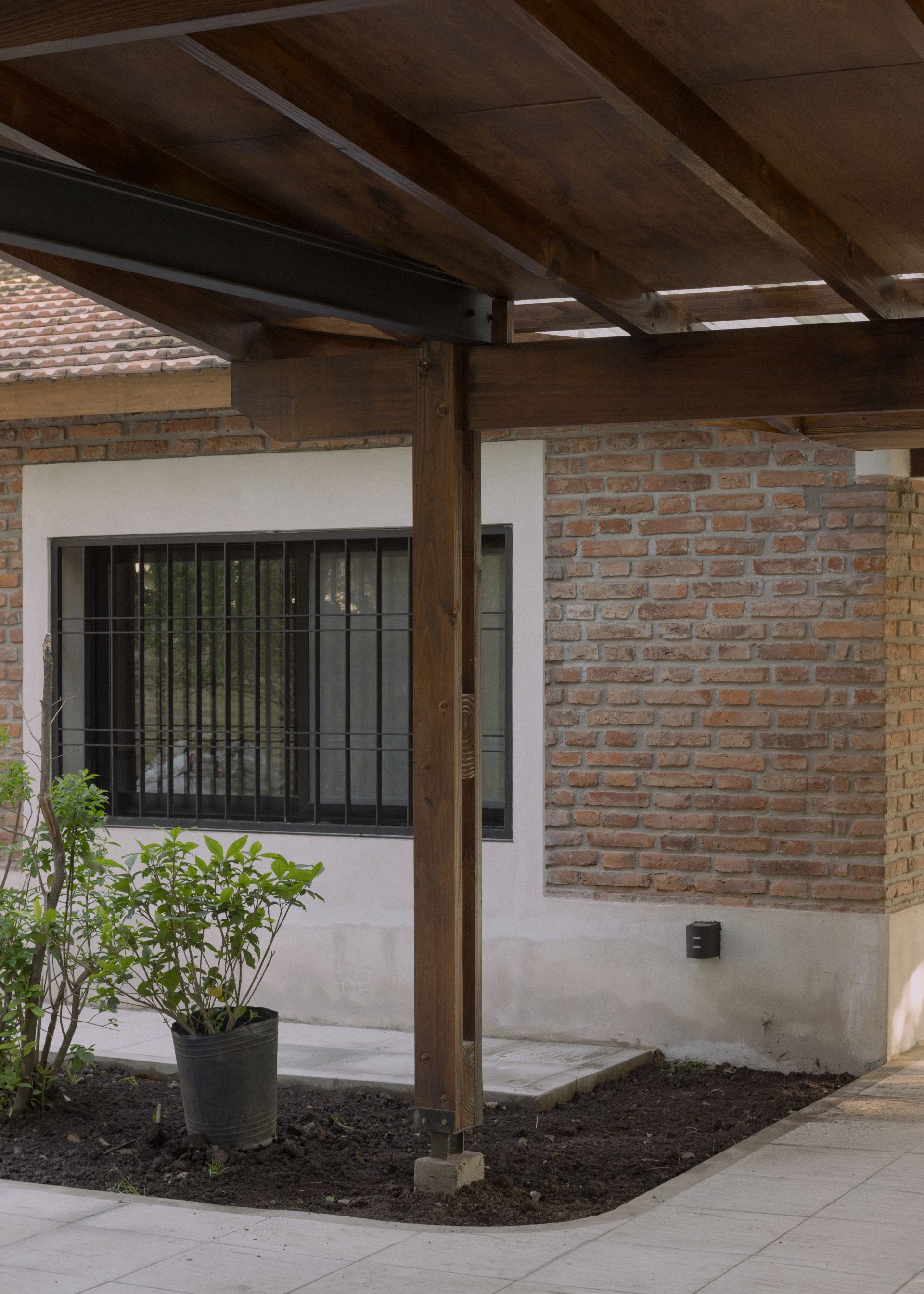
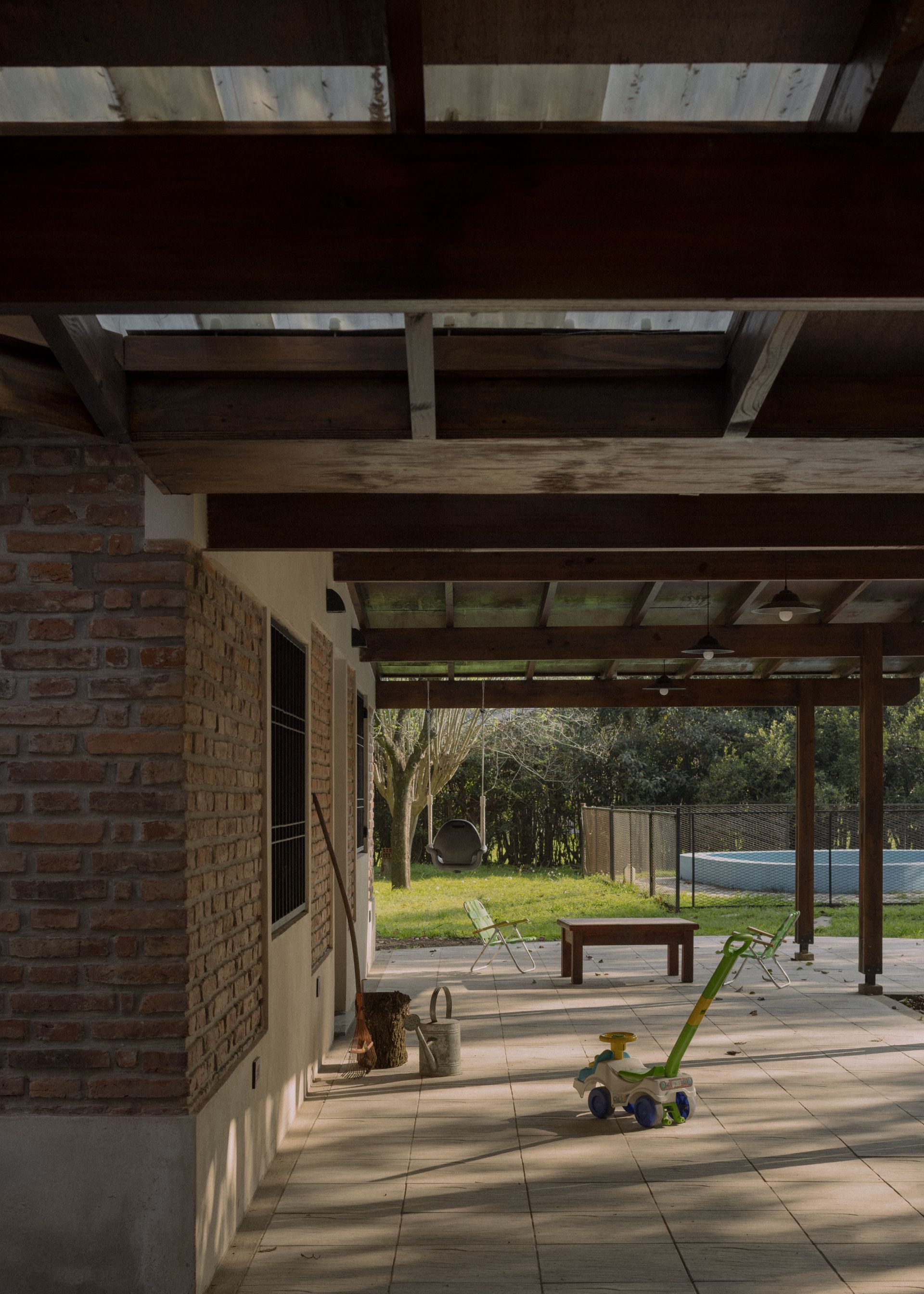
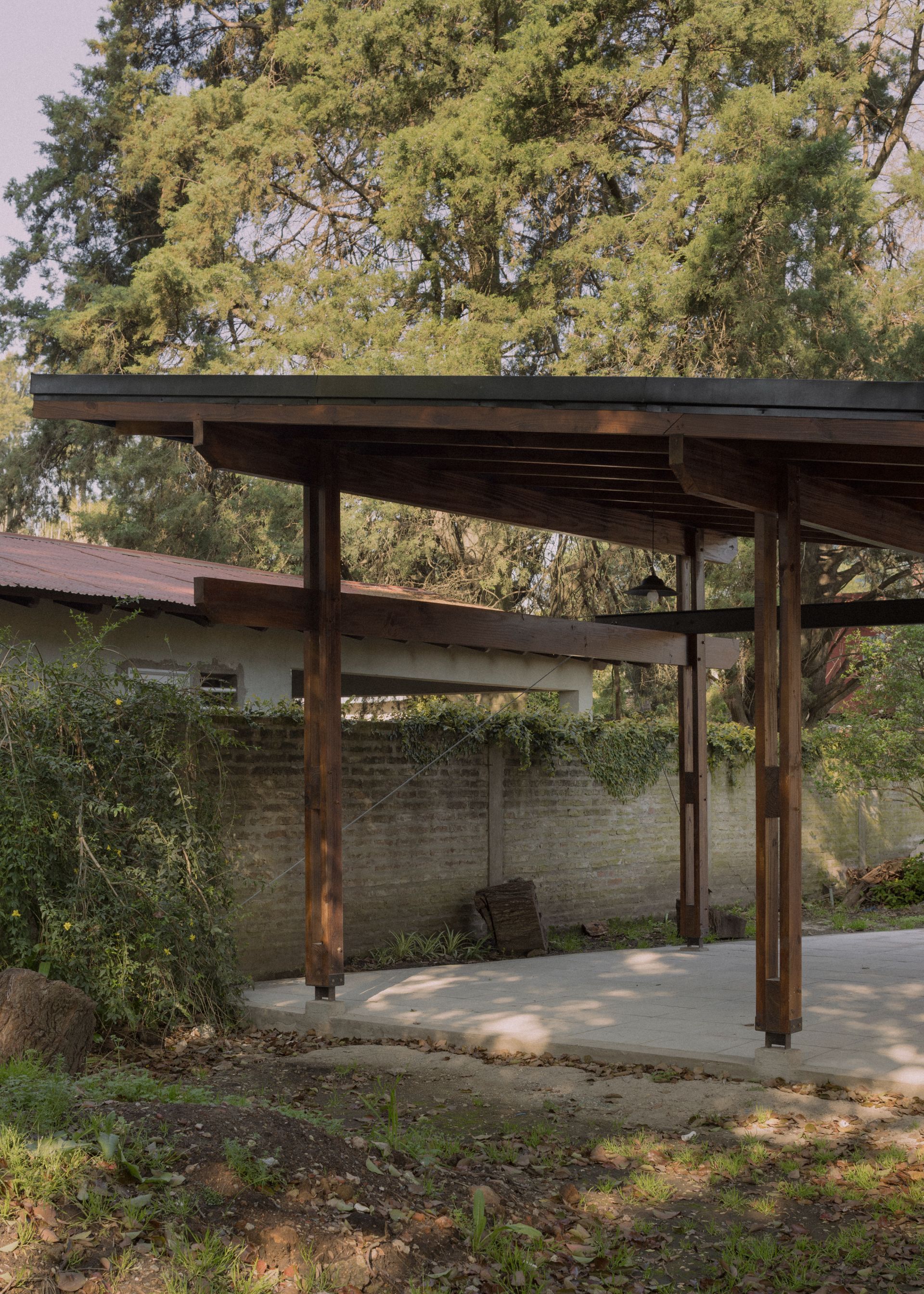
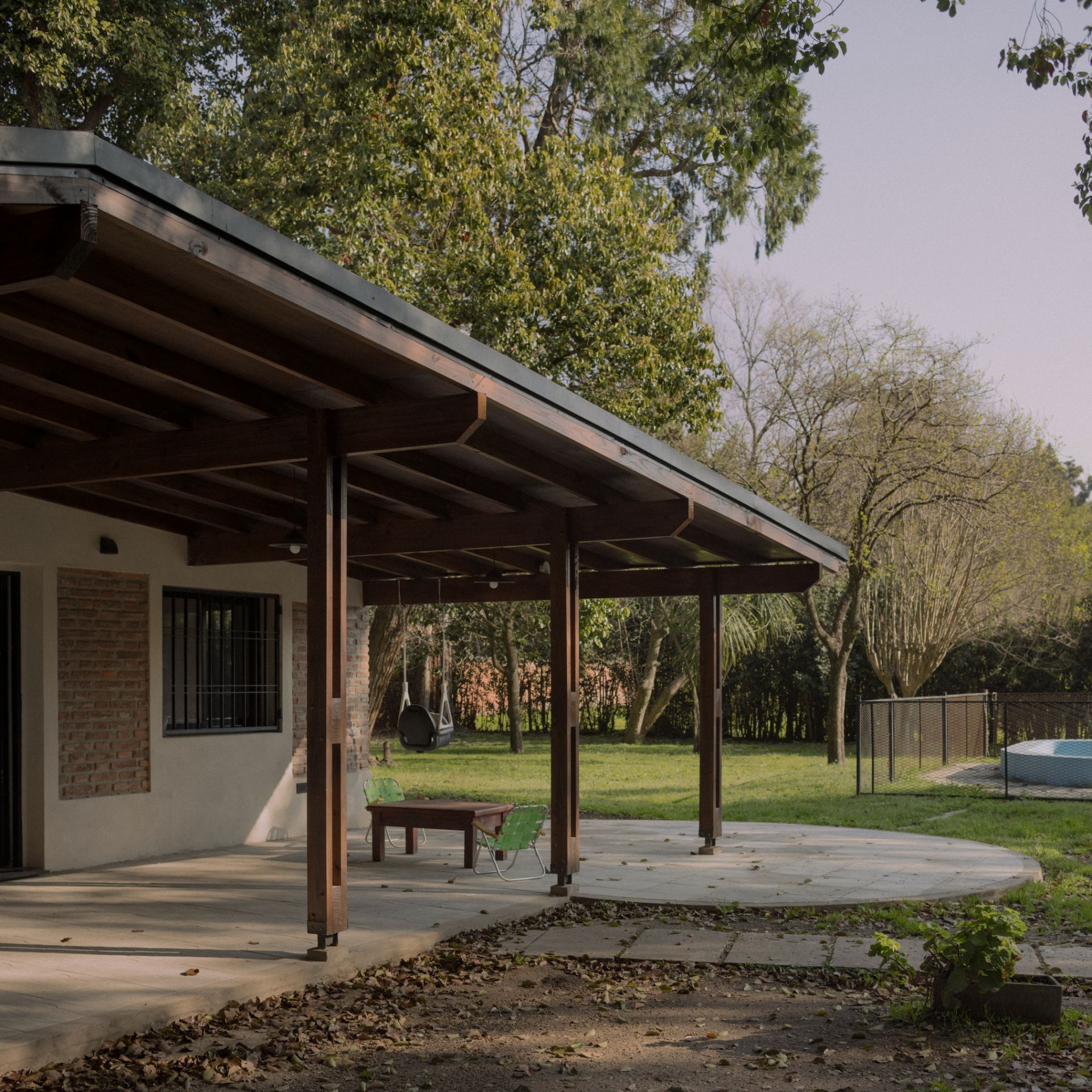
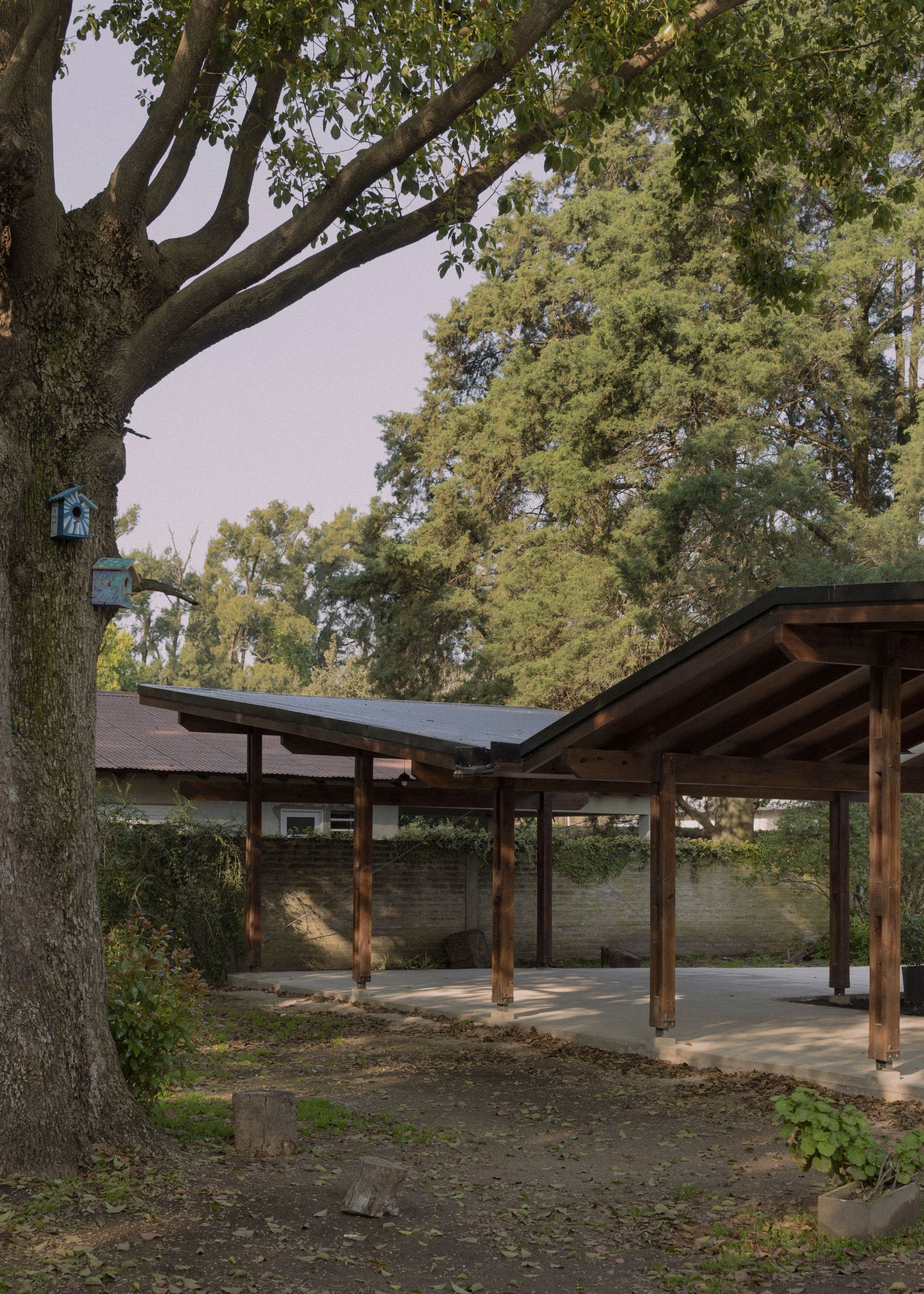
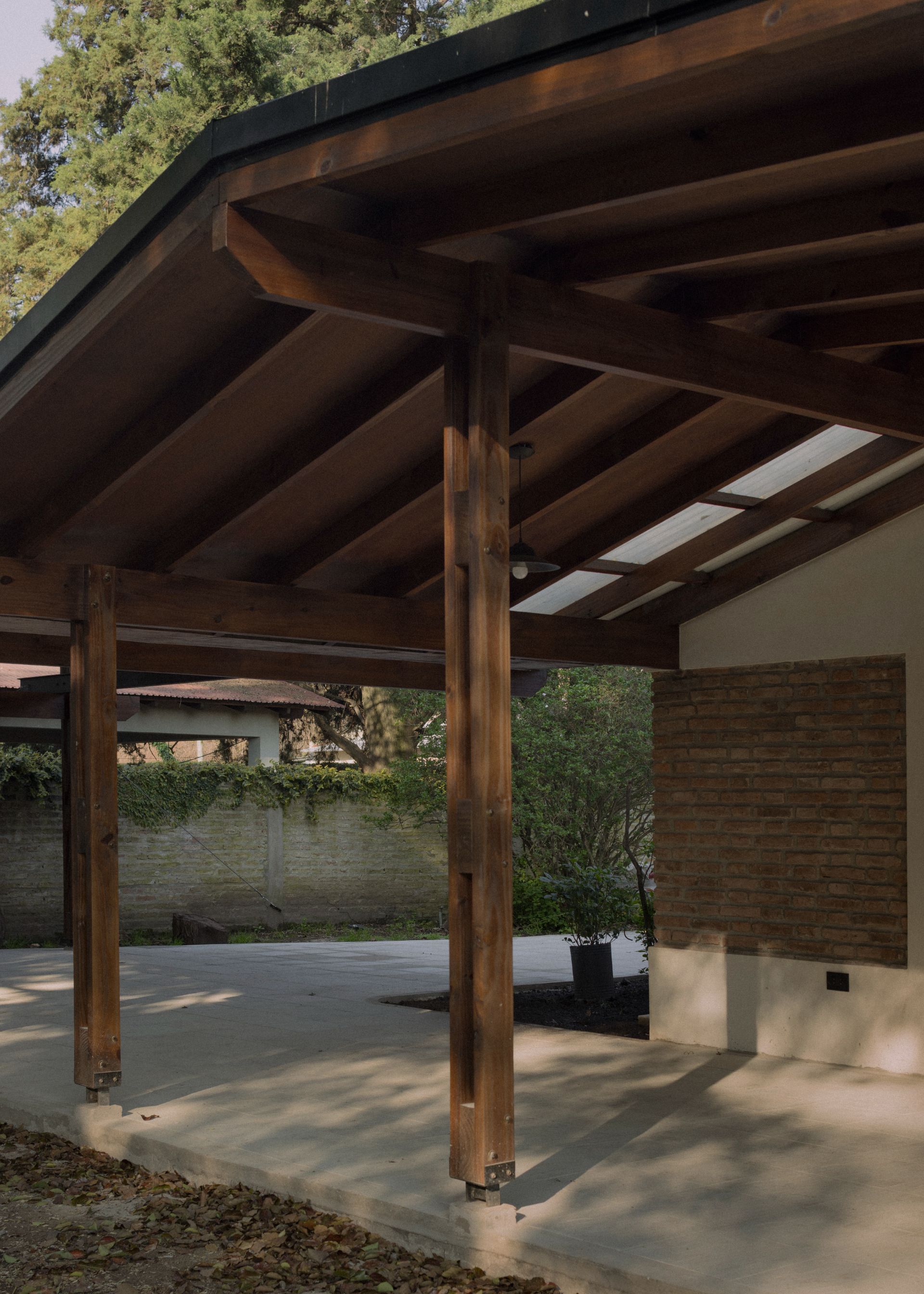
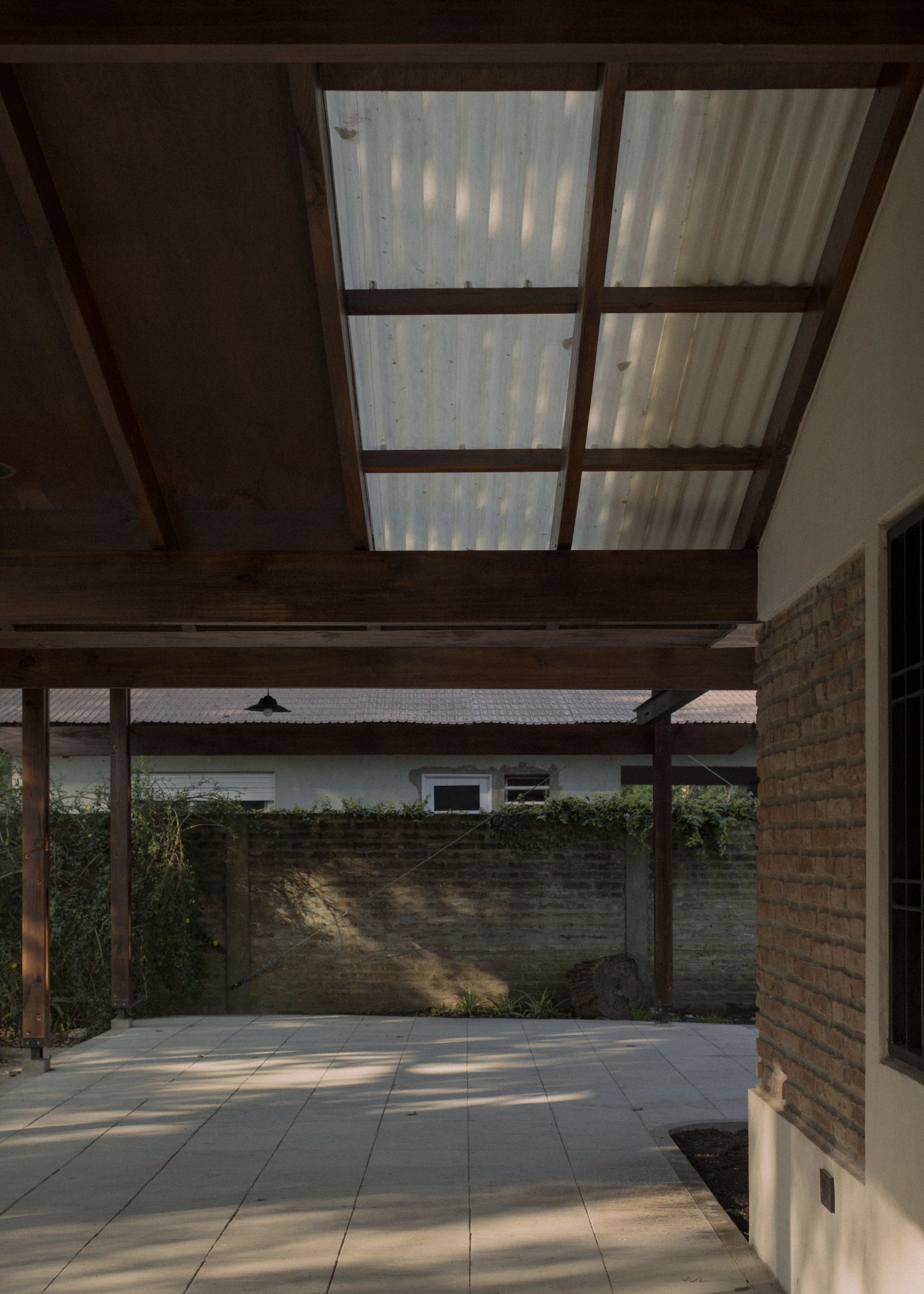
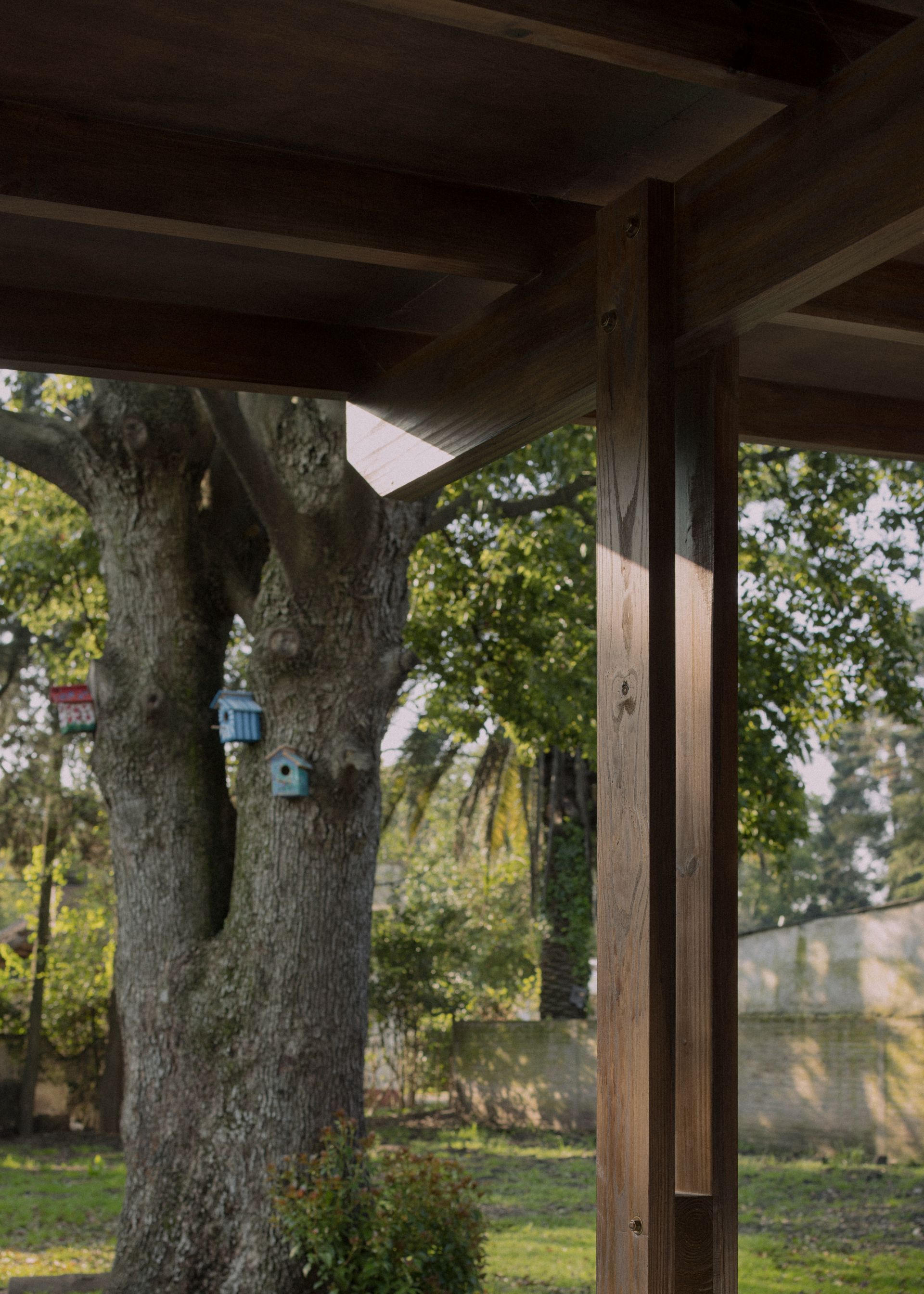
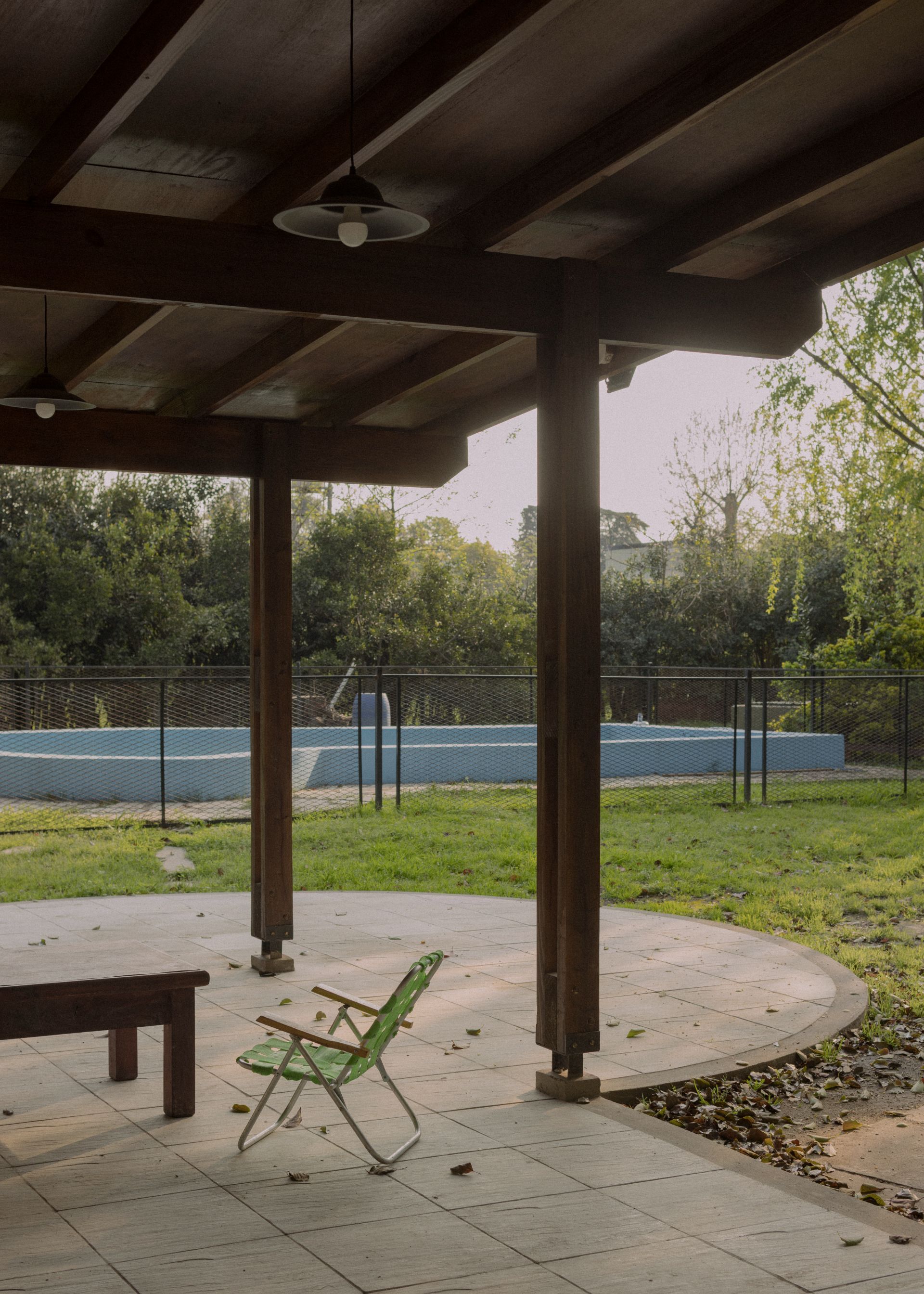
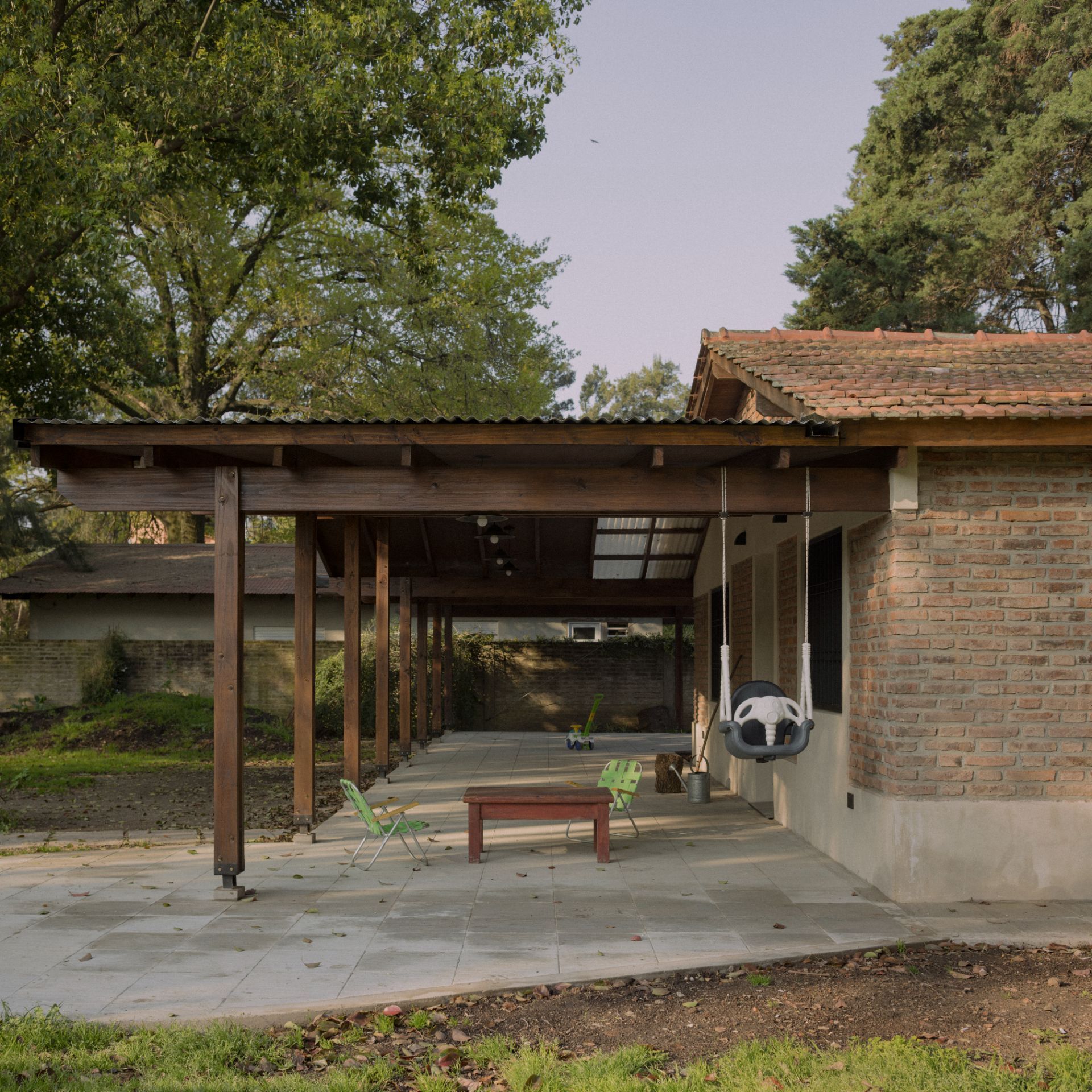
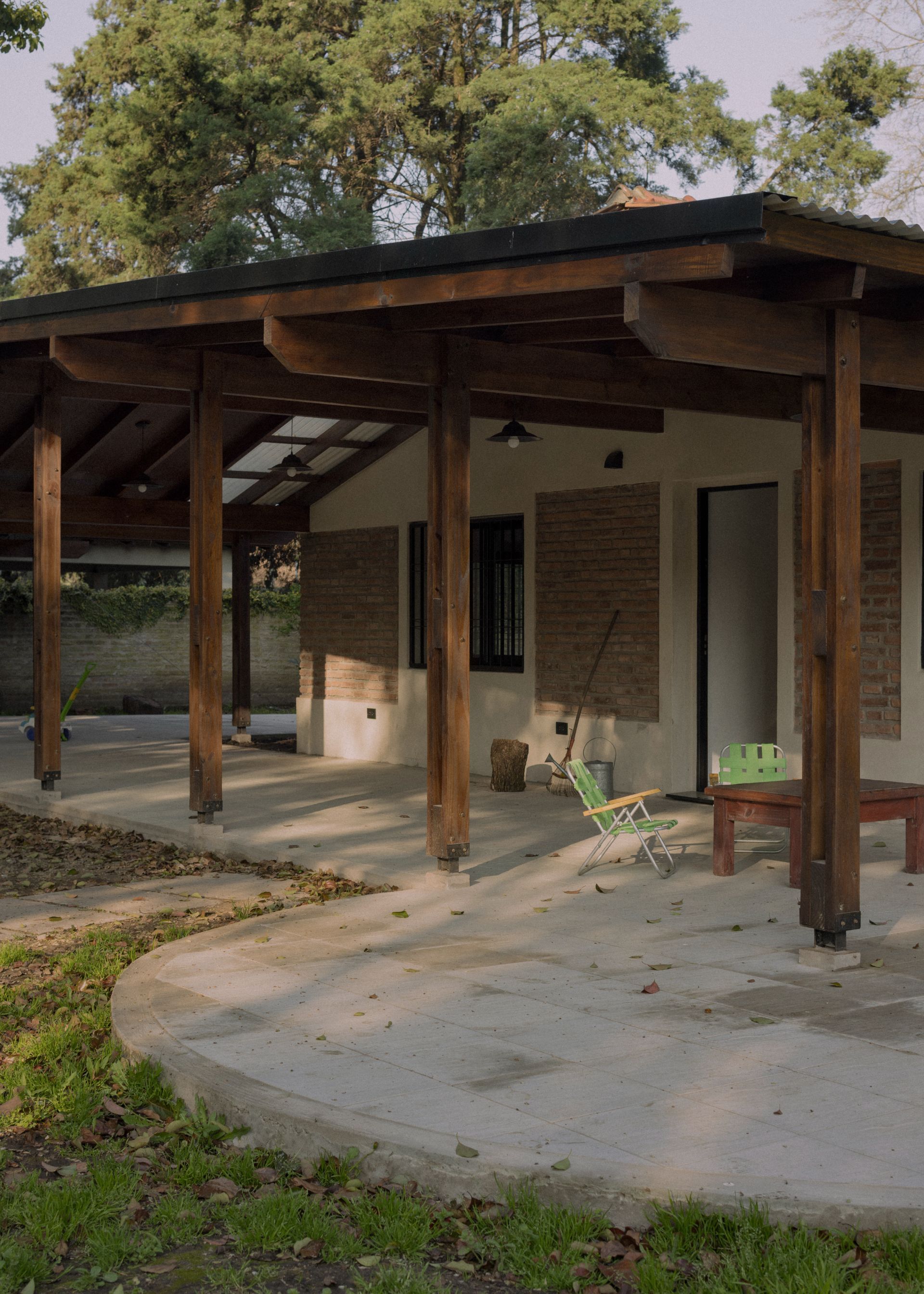
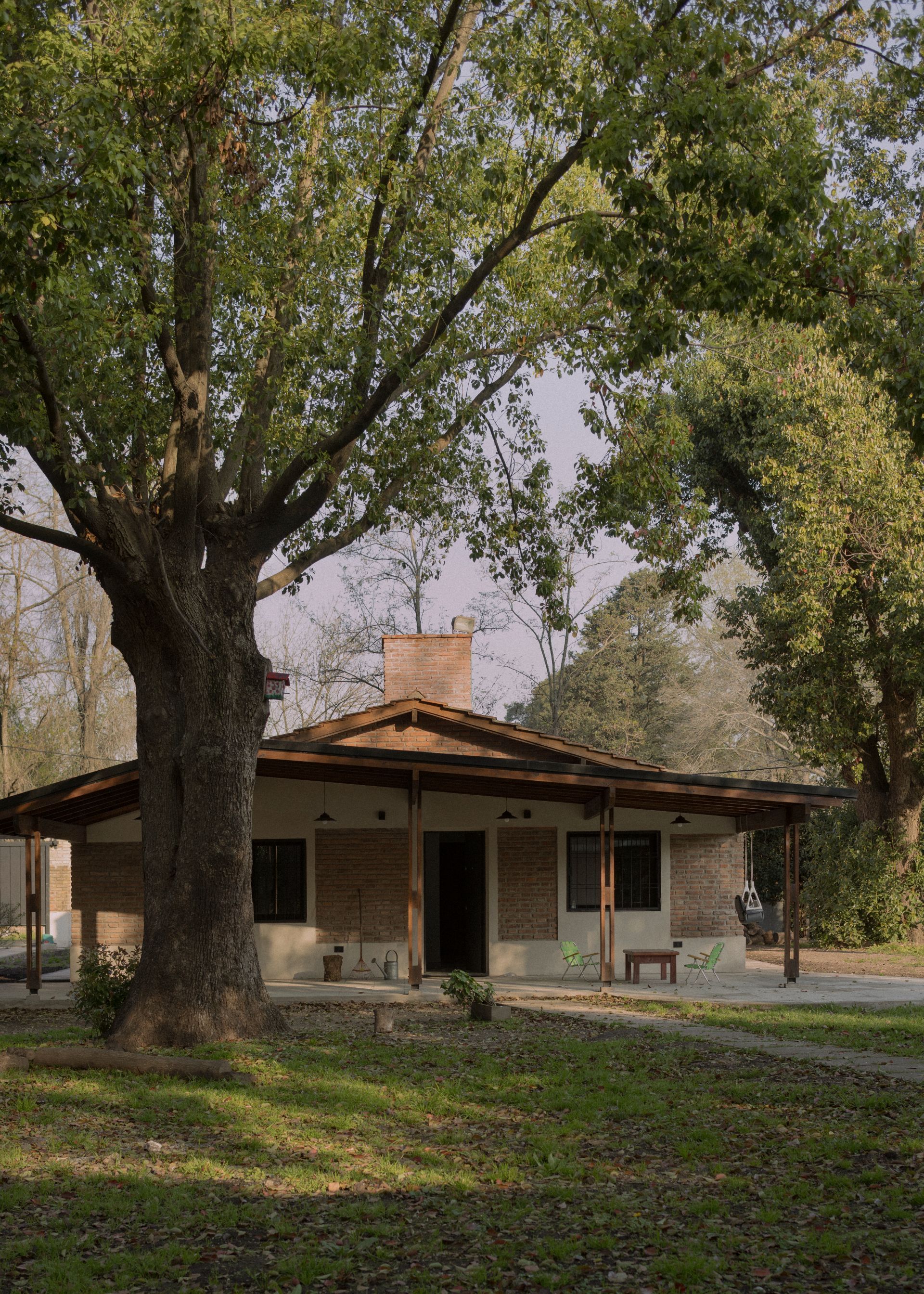
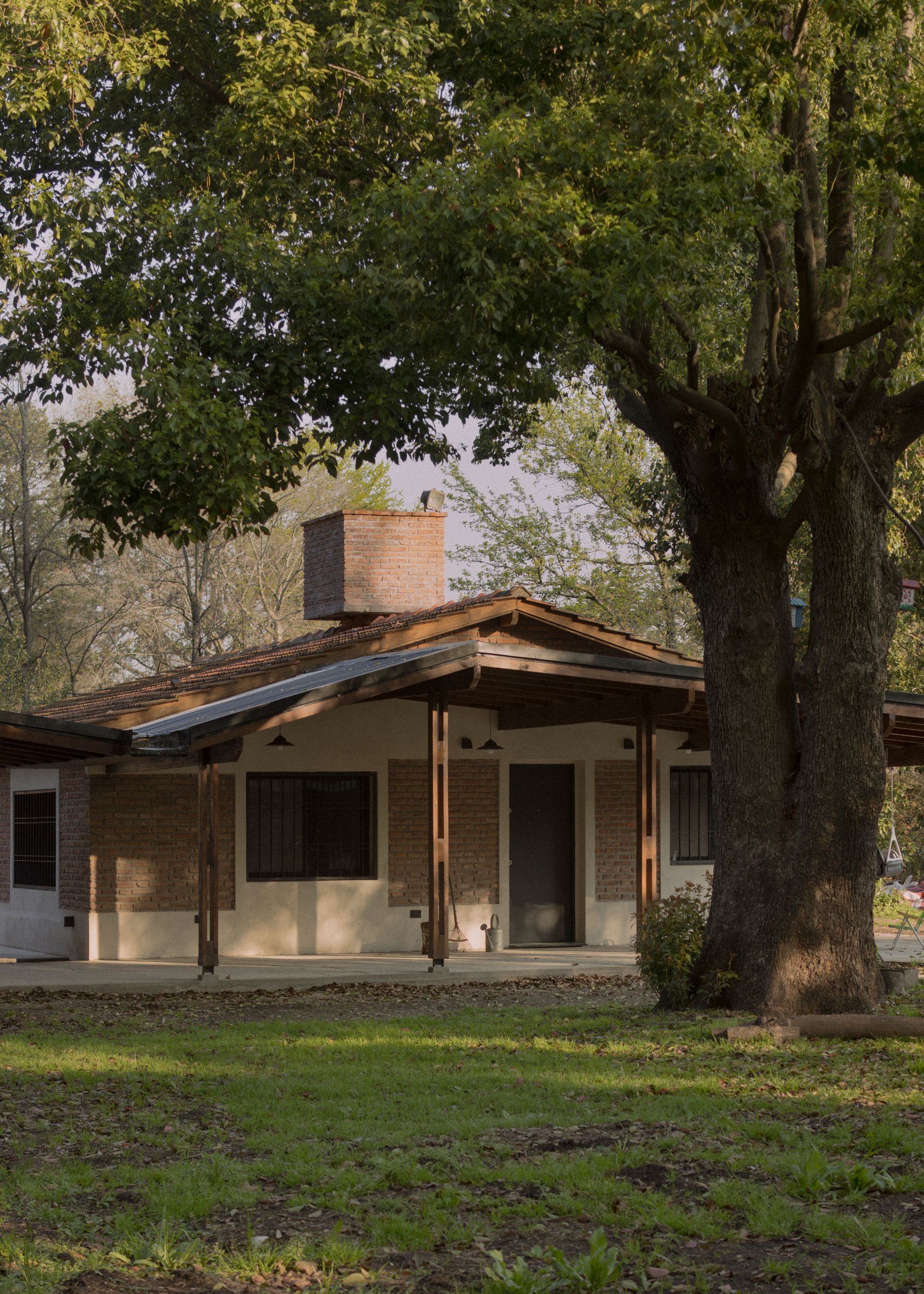
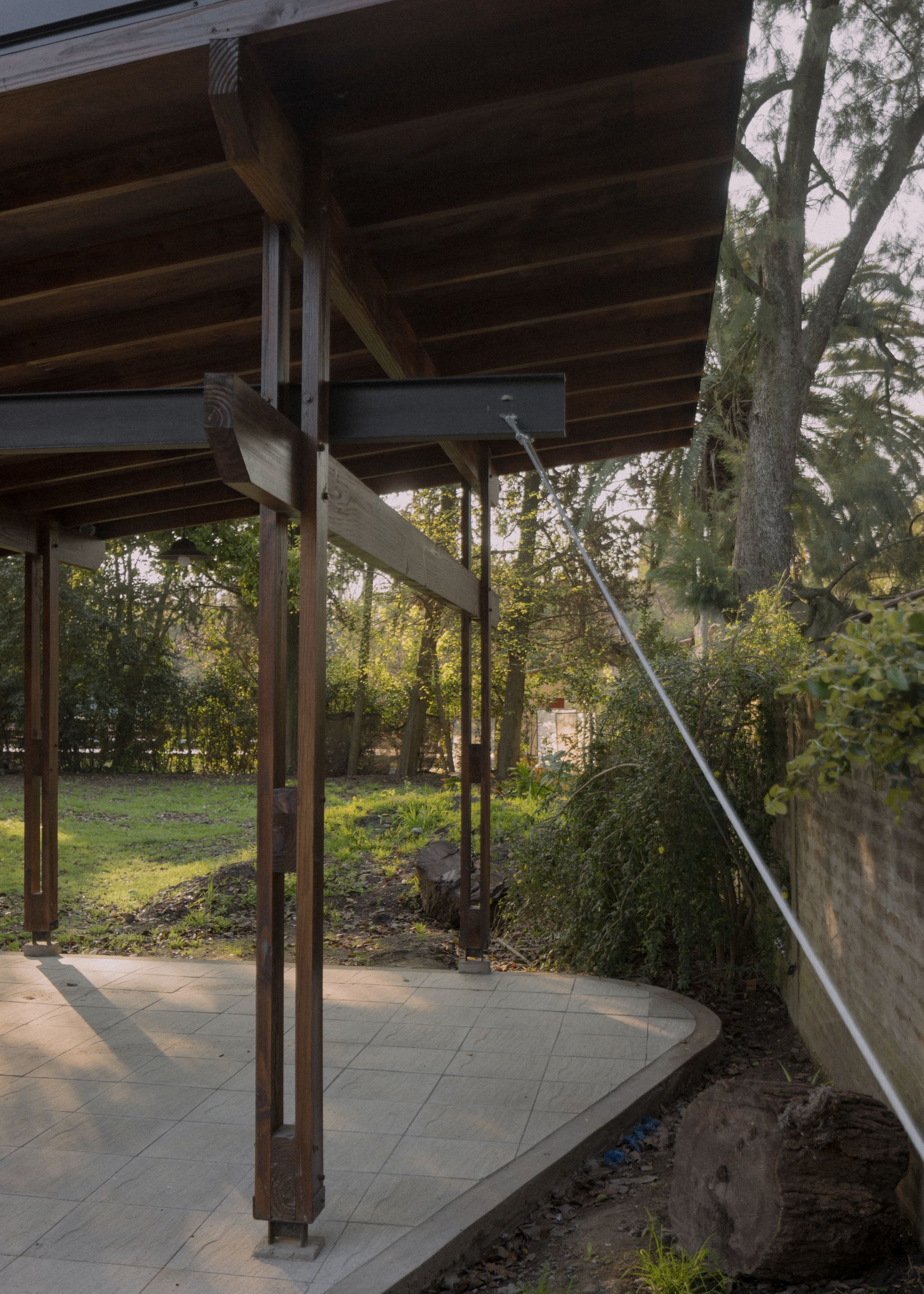
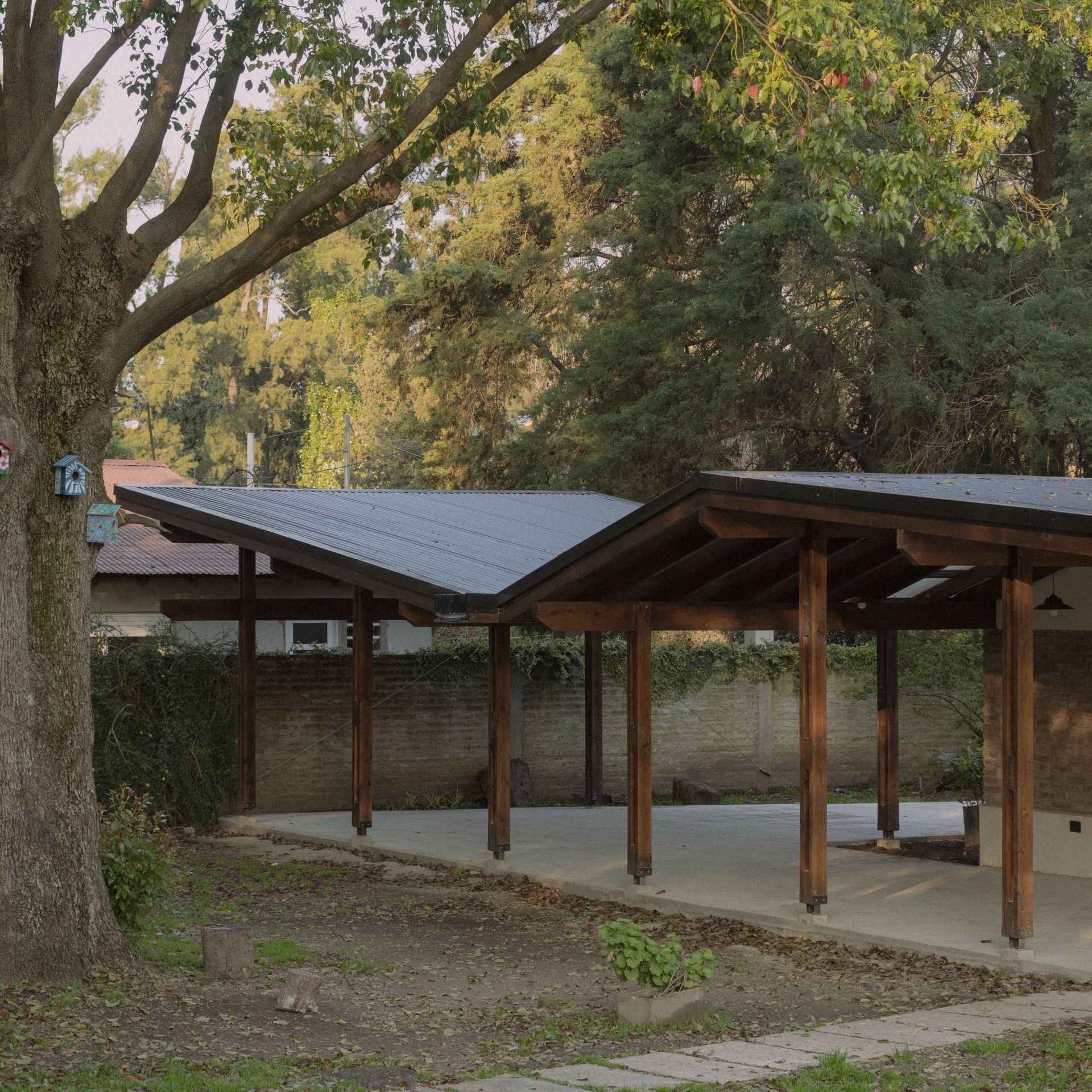
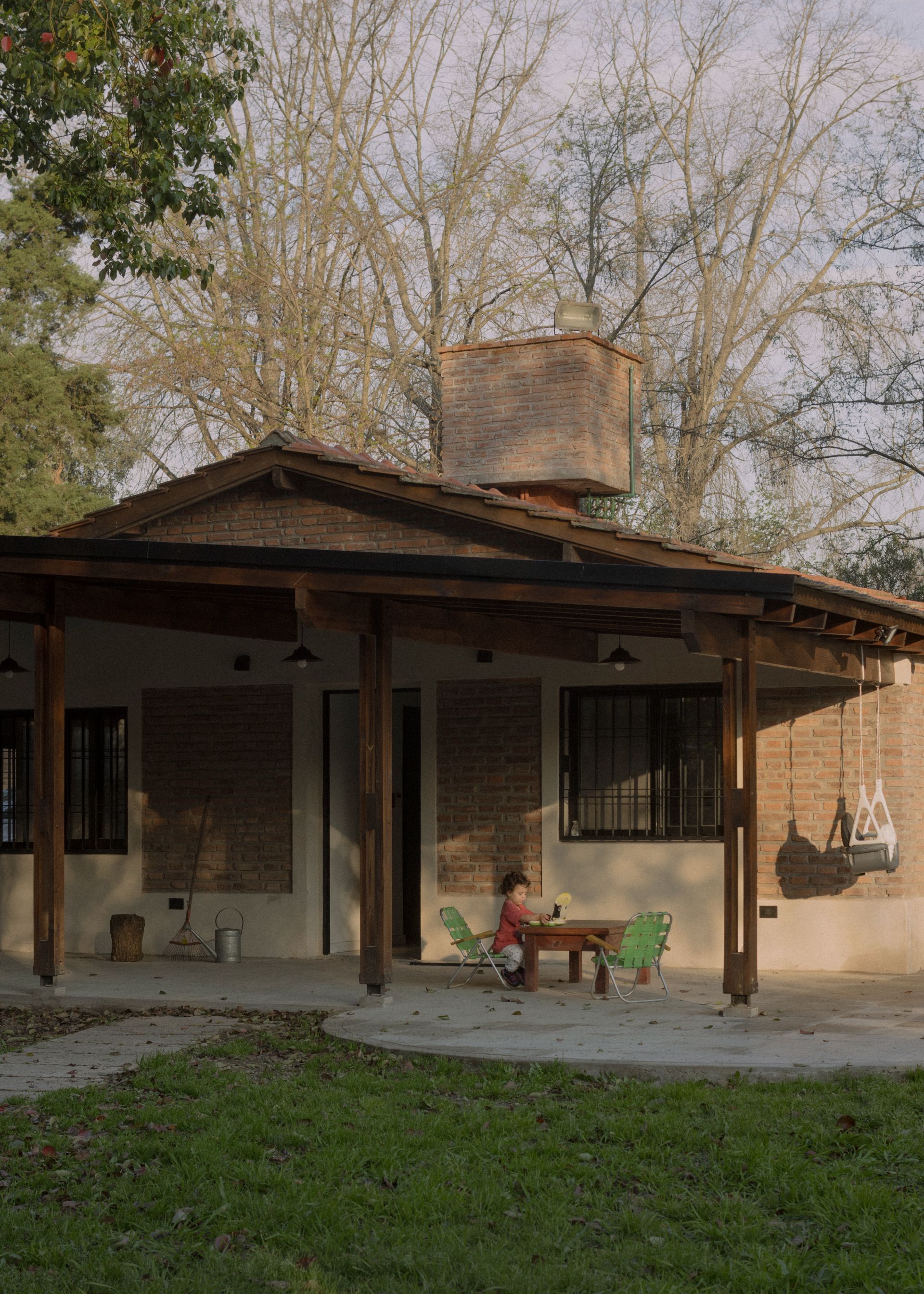
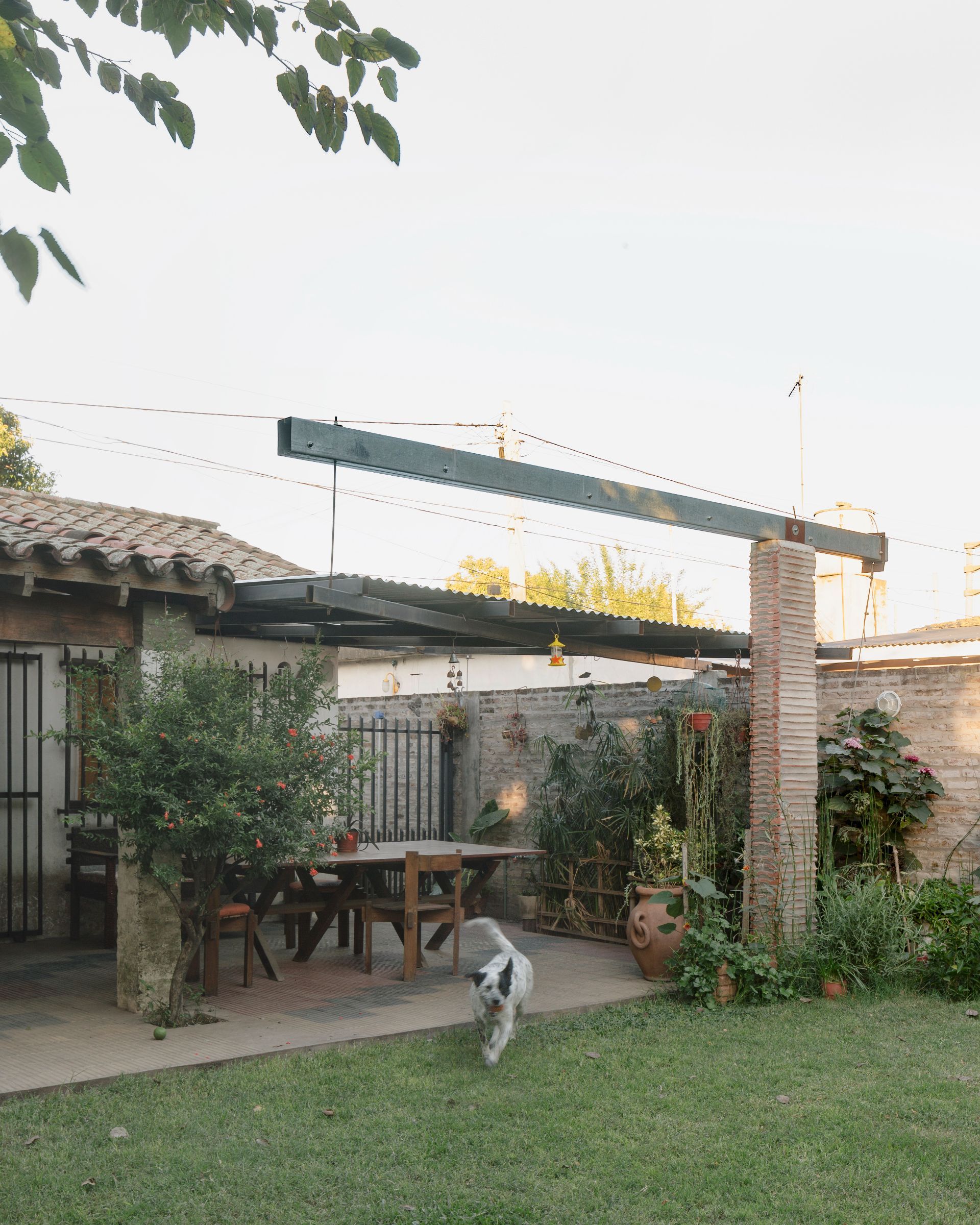
Construir en el conurbano se trata de resolver muchas veces con lo que se tiene a mano o con lo que se puede. Un presupuesto acotado, utilización de materiales conseguidos de demolición y la posibilidad de establecer un proceso de construcción entre arquitecto y maestro donde el ensayo y la experimentación fueran condicionantes del proyecto. Yaraví es una obra pensada como una investigación construida. Buscó estudiar a la TENSIÓN como un recurso arquitectónico para romper el concepto de límite. Esto se dió en varias escalas: En una primera escala que tiene que ver con LA VIVIENDA, el proyecto trató de generar semi cubiertos entre interior y el exterior en la casa de una pareja de jubilados en la ciudad de Moreno, ubicada en el conurbano bonaerense a 38 kilómetros de la ciudad de Buenos Aires. Esta acción permite pensar espacios de transición e intermediación que mejoran la vivencia no sólo de los nuevos lugares, sino también de aquellos espacios que median. Cada decisión atendió a la mejoría de las condiciones no sólo de los espacios generados sino también los del “adentro” y del “afuera”. Se busca habitar los bordes. En una segunda escala que refiere a LA CIUDAD, los espacios construidos proponen una revisión de ciertas tipologías y locales que se construyen en el perímetro de la región metropolitana. Estas construcciones cumplen con la función de espacios conocidos como cocheras, garaje, quincho, asador, parrilla, galería y son los lugares hacia donde se expande la casa y sus habitantes. En esos bordes sucede la vida en familia y en comunidad. La condición de INDEFINICIÓN ayuda a pensar el crecimiento de las viviendas contemporáneas sin rótulos y con la única meta de mejorar las condiciones de vida de los habitantes. En una tercera escala se busca tensar la relación del constructor y lo construido en EL HACER. En este caso la figura de arquitecto proyectista entendida como el conocedor de antemano de las capacidades de un material para ponerlo en práctica supeditado a la forma, no funciona. Por lo contrario, la actitud ante el material es entre lúdica y científica dado que nunca se la trabajó a la teja como módulo para la construcción de una columna y menos estando solicitada de manera excéntrica en su esfuerzo. Respecto de “lo construido” se buscó que la obra estuviera en tensión constante. Una columna de tejas apiladas sostiene una única viga en voladizo de la que cuelgan los planos de techos. El uso de tensores y el mínimo de puntos de apoyo en existencias, pretendió tensar la condición tectónica de la pieza. ¿Hasta qué punto un material que no fue pensado con ese fin puede servir? ¿Hasta qué punto sostén y sostenido pueden estar distantes? ¿Cómo se lleva a cabo un espacio con el mínimo de material al punto tal de desmaterializar los límites? En esta posibilidad de estudio tectónico está la posibilidad de entender la dificultad del borde ya que se diluye la materialización de los límites espaciales.
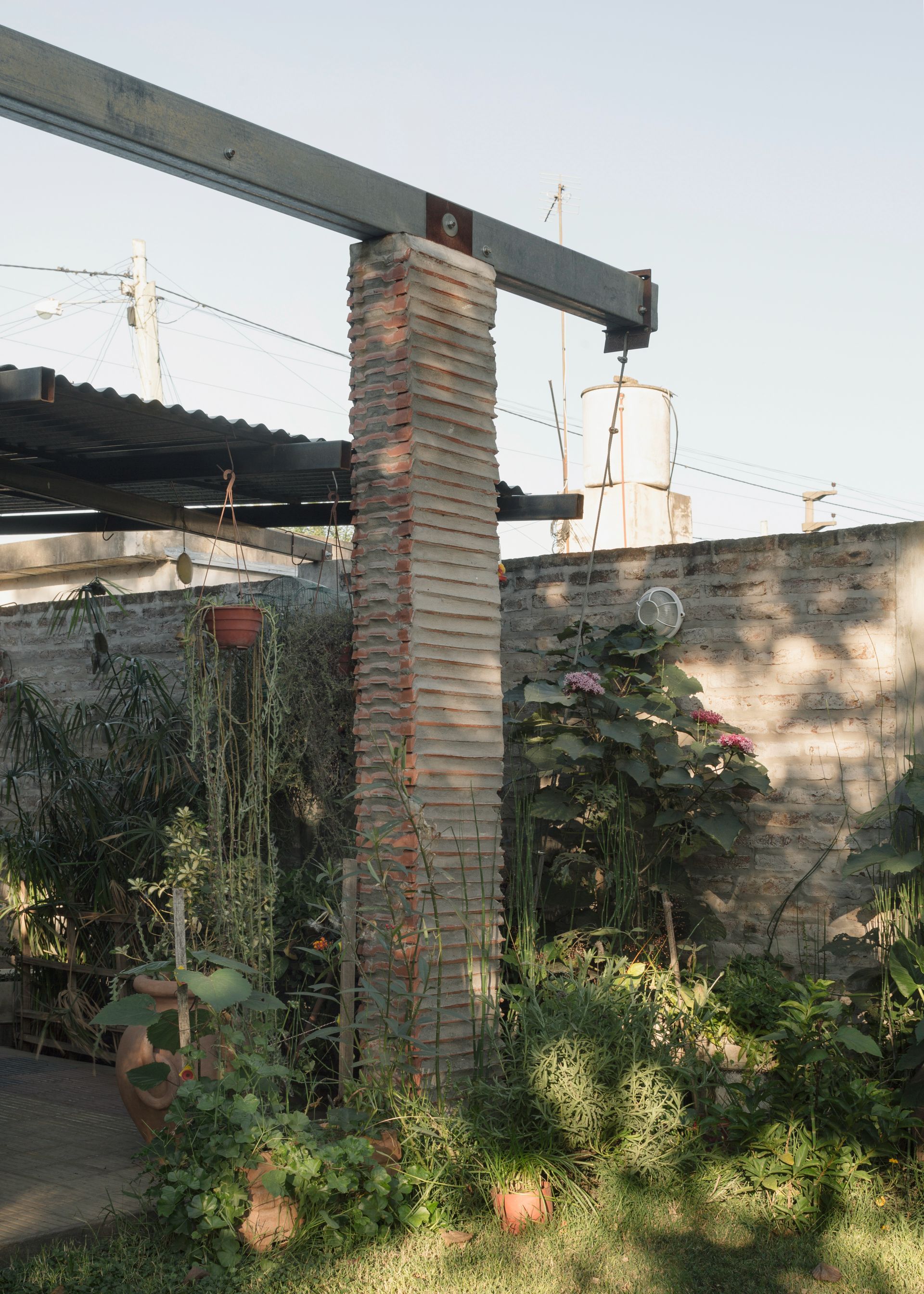
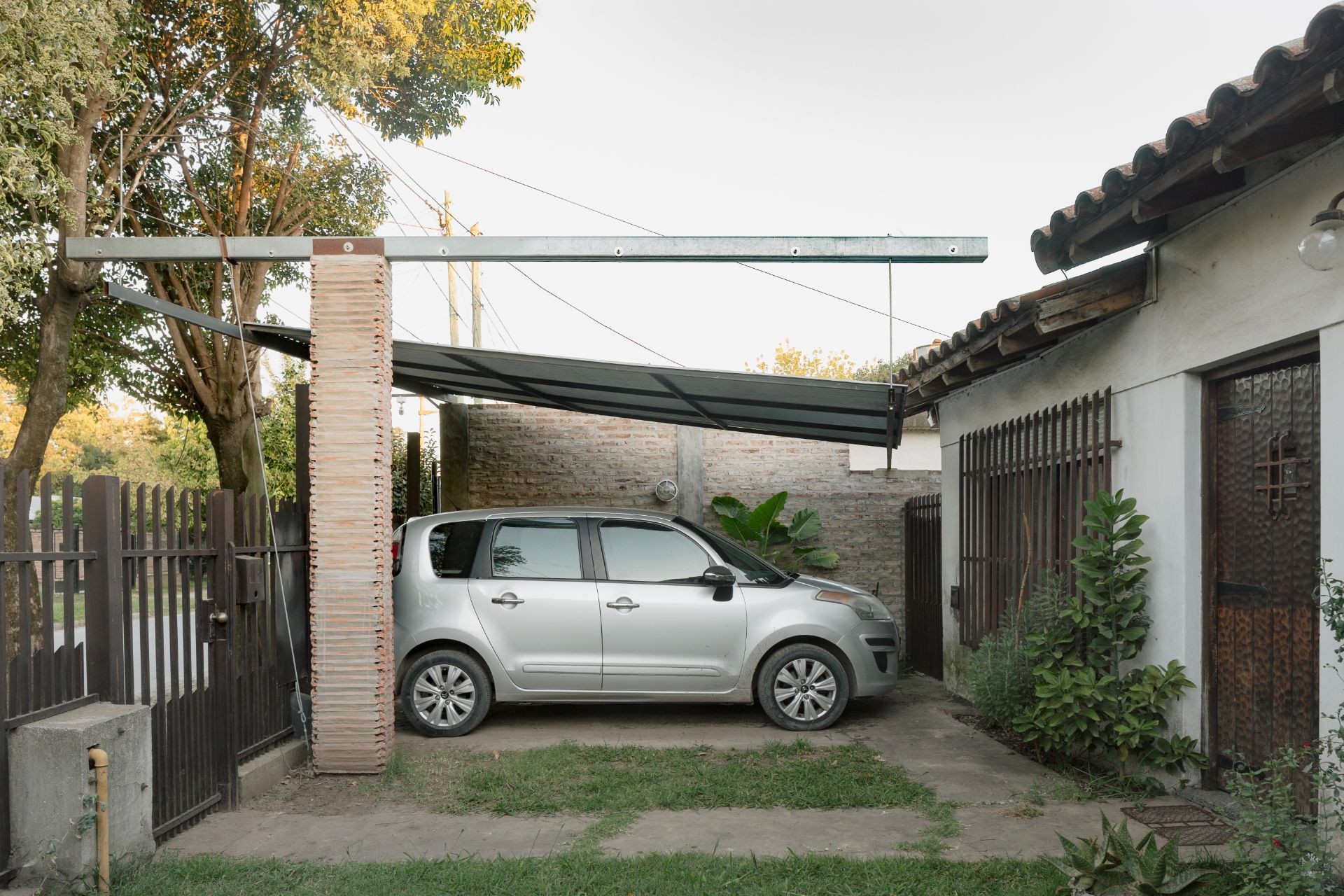
Building in the Greater Buenos Aires area often involves making do with what's available or what's possible. A limited budget, the use of salvaged materials, and the possibility of establishing a collaborative construction process between architect and builder, where trial and experimentation are key to the project, are all part of the equation. Yaraví is a project conceived as a built investigation. It sought to study TENSION as an architectural resource to break down the concept of boundaries. This occurred at various scales: First, at the level of HOUSING, the project aimed to create semi-covered spaces between the interior and exterior of a retired couple's home in the city of Moreno, located in the Greater Buenos Aires area, 38 kilometers from the city of Buenos Aires. This approach allows for the creation of transitional and intermediary spaces that enhance the experience not only of the new spaces themselves, but also of the spaces that mediate between them. Every decision considered the improvement of conditions not only in the spaces created, but also in the 'inside' and 'outside' areas. The aim is to inhabit the margins. On a second scale, referring to THE CITY, the built spaces propose a re-examination of certain typologies and buildings constructed on the perimeter of the metropolitan region. These constructions fulfill the function of spaces known as carports, garages, barbecue areas, grills, and verandas, and are the places toward which the house and its inhabitants expand. Family and community life unfolds on these margins. This condition of INDEFINITION helps to consider the growth of contemporary housing without labels and with the sole aim of improving the living conditions of its inhabitants. On a third scale, the aim is to challenge the relationship between the builder and the built environment in the act of making. In this case, the figure of the architect as designer, understood as someone who knows beforehand the capabilities of a material to put it into practice, subordinated to form, does not work. On the contrary, the approach to the material is both playful and scientific, given that the tile had never been used as a module for constructing a column, much less under eccentric stress. Regarding the constructed structure, the aim was for it to be in constant tension. A column of stacked tiles supports a single cantilevered beam from which the roof planes are suspended. The use of tension rods and the minimal number of support points was intended to heighten the tectonic condition of the piece. To what extent can a material not designed for this purpose be used? To what extent can support and supported be separated? How can a space be created with the minimum amount of material to the point of dematerializing boundaries? This possibility of tectonic study allows us to understand the difficulty of the edge, as the materialization of spatial limits is diluted.
Fecha -Date - 2017-2019
Ubicación -Location - Moreno, Buenos Aires
Tipo -Typology -AmpliaciónHousing Extension
Equipo -Team -
Juan Pablo BerberyJuan Pablo BerberyFelipe OeyenFelipe OeyenMatias Lien BenitezMatias Lien BenitezDaniel Benitez (Constructor)Daniel Benitez (Builder)
Estado -Status -TerminadaCompleted
Fotos -Photos - Federico Cairoli

Edificio Hibiscus

Moreno, Buenos Aires
2022

EDIFICIO HIBISCUS

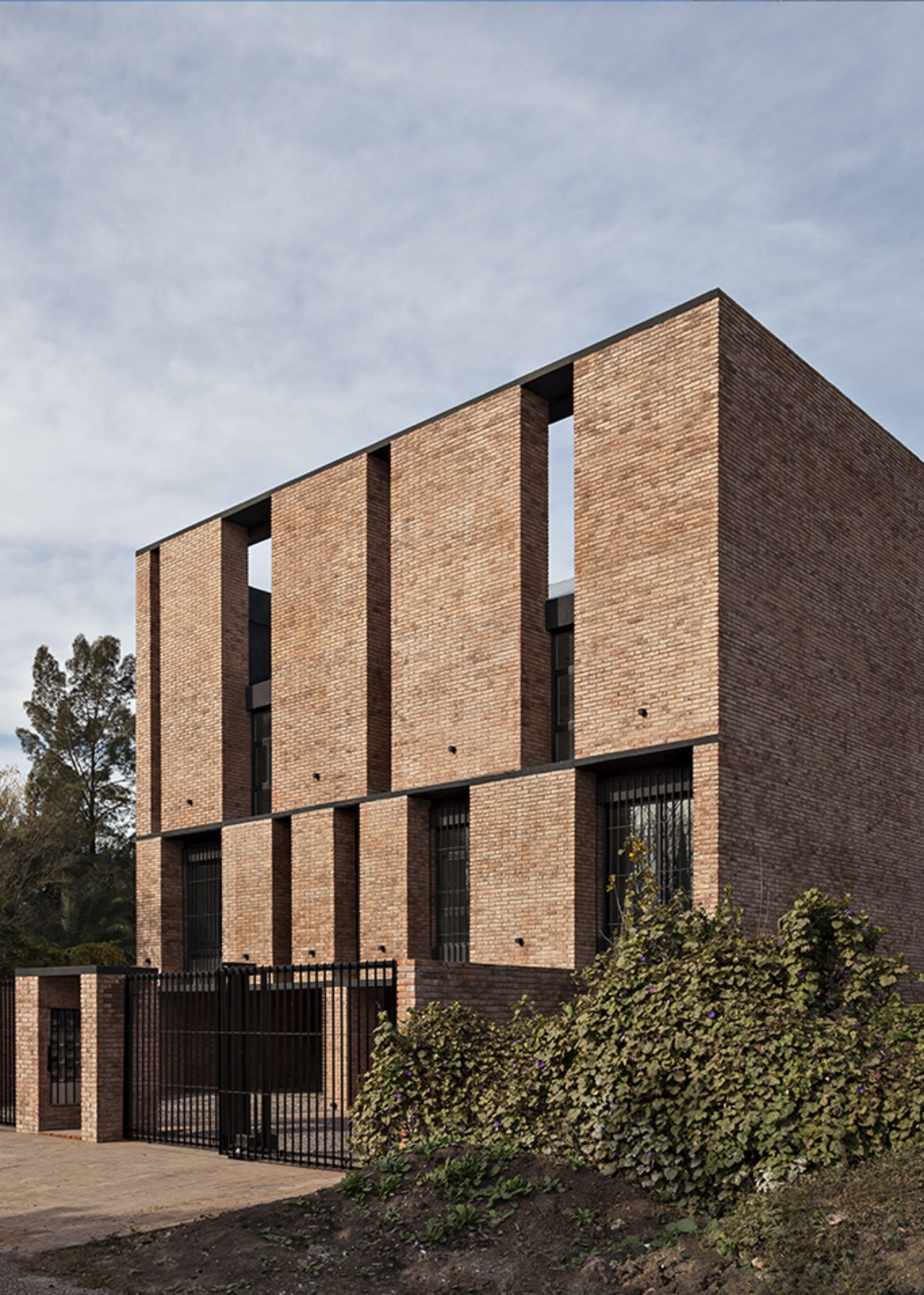
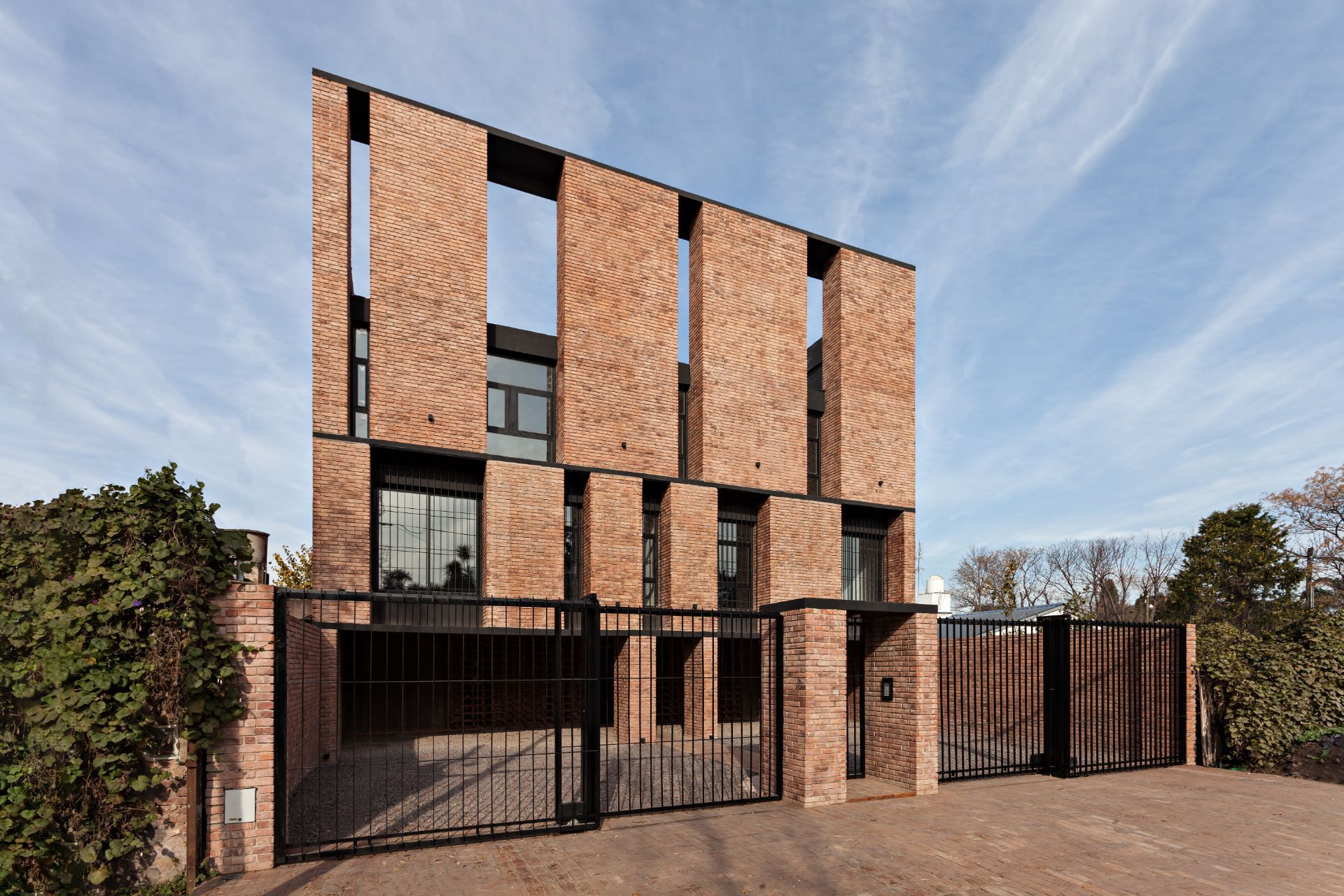
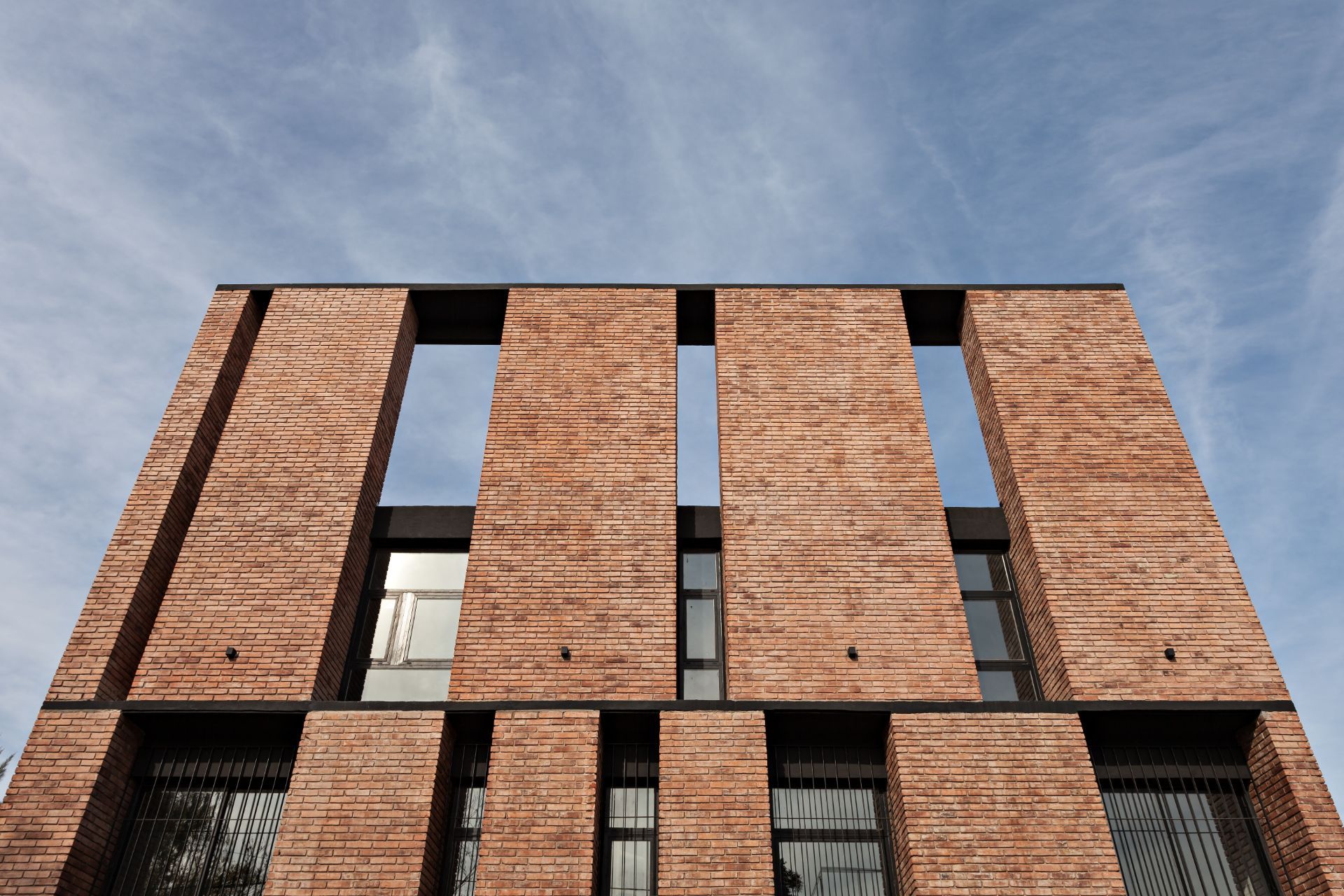
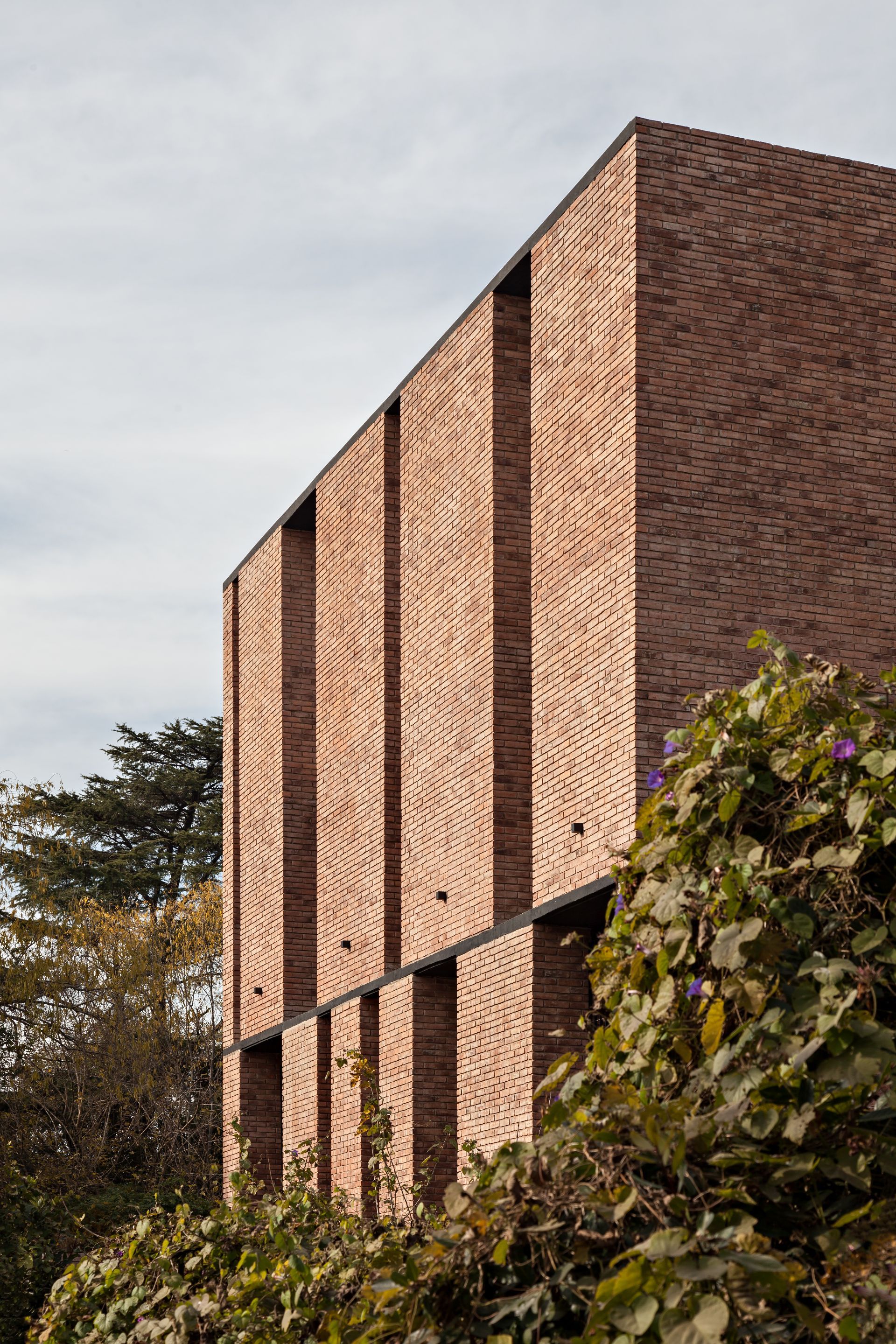
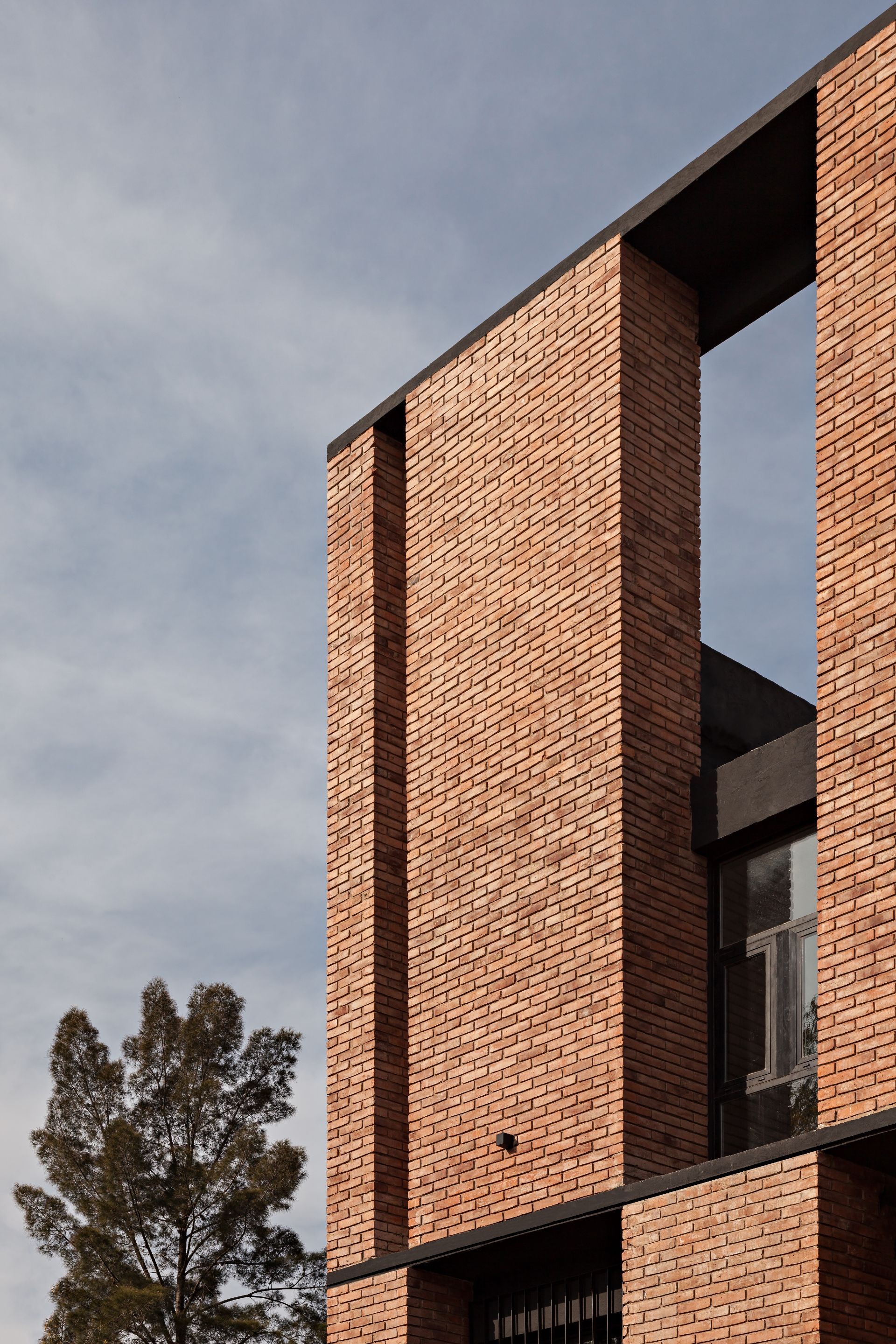
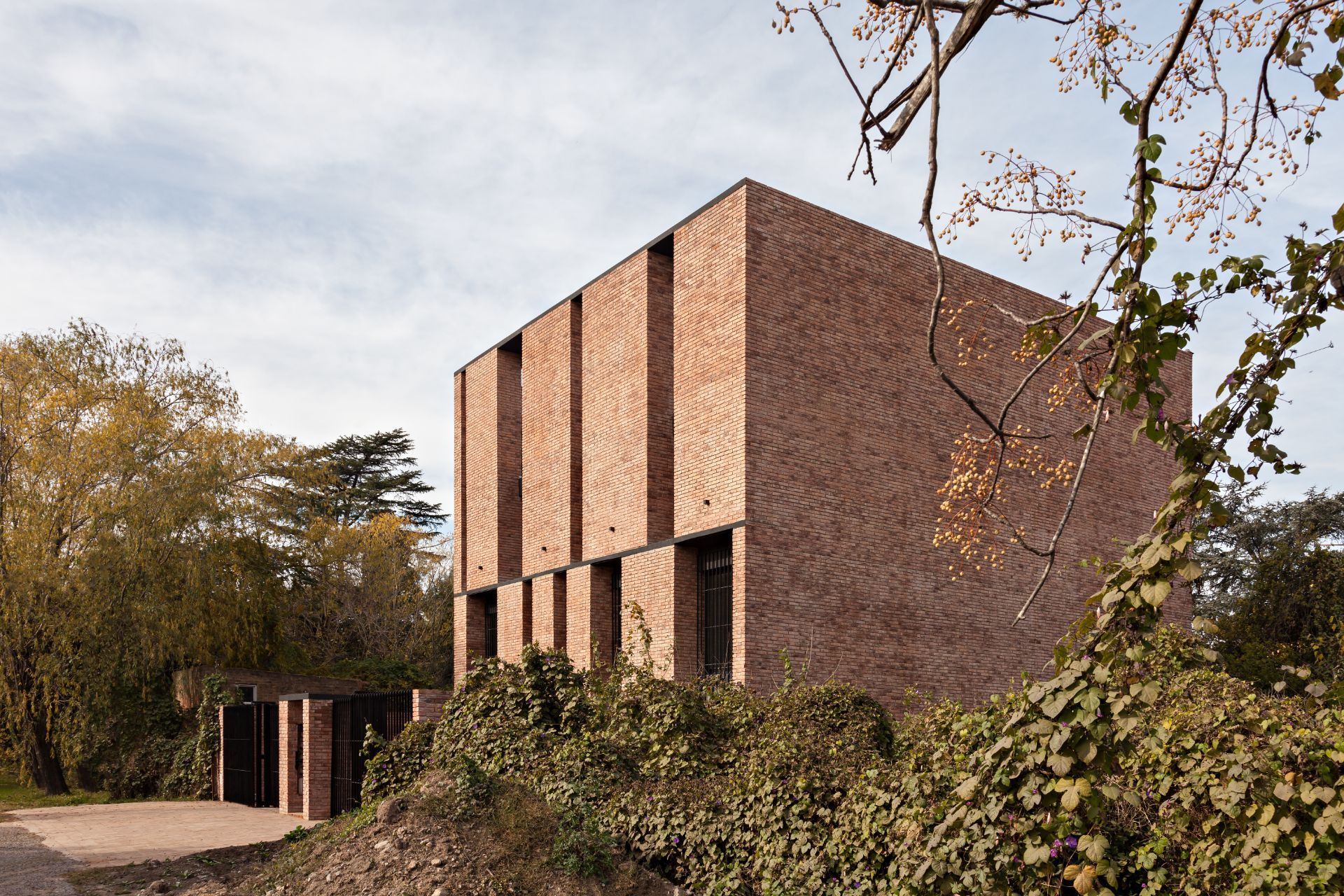
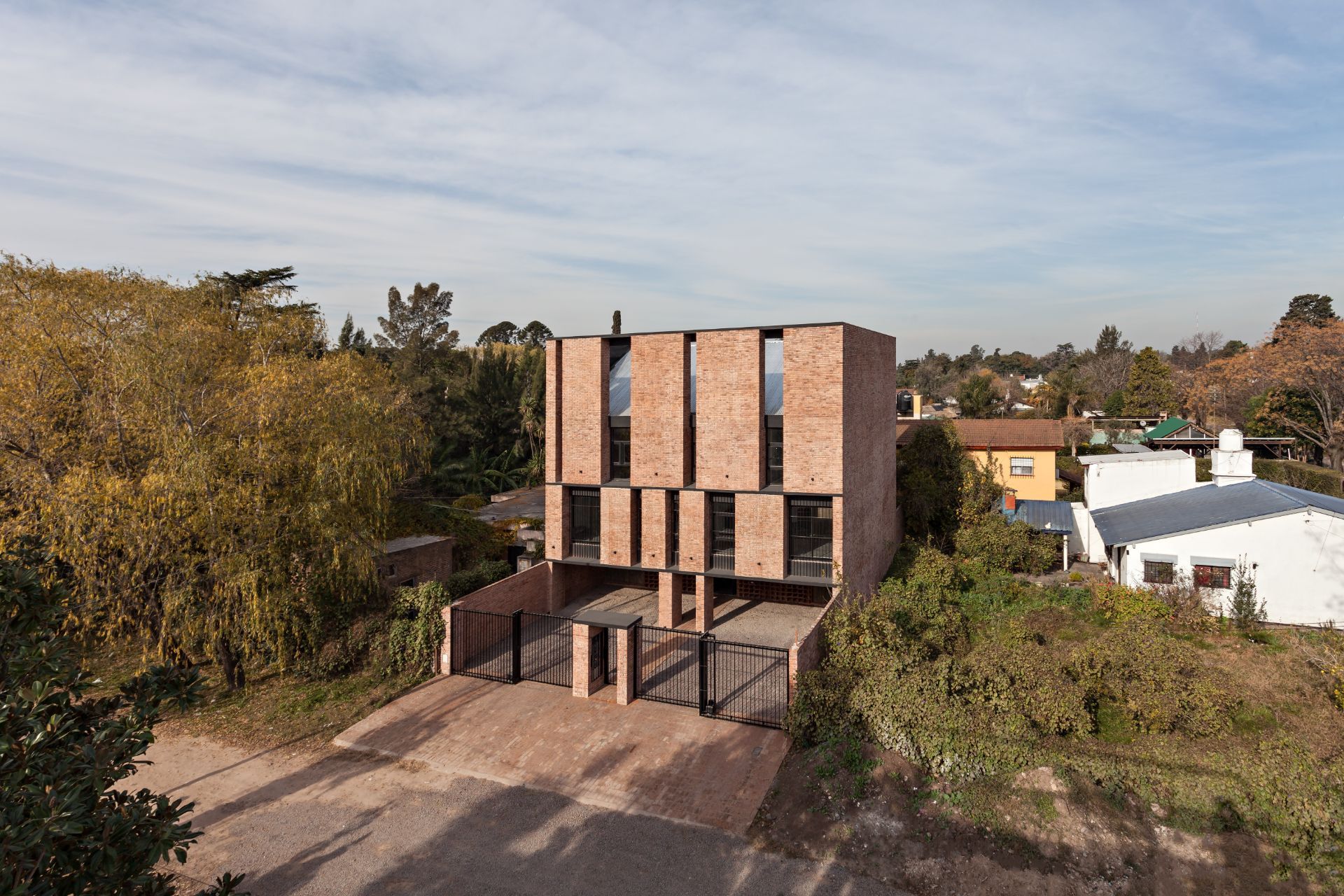
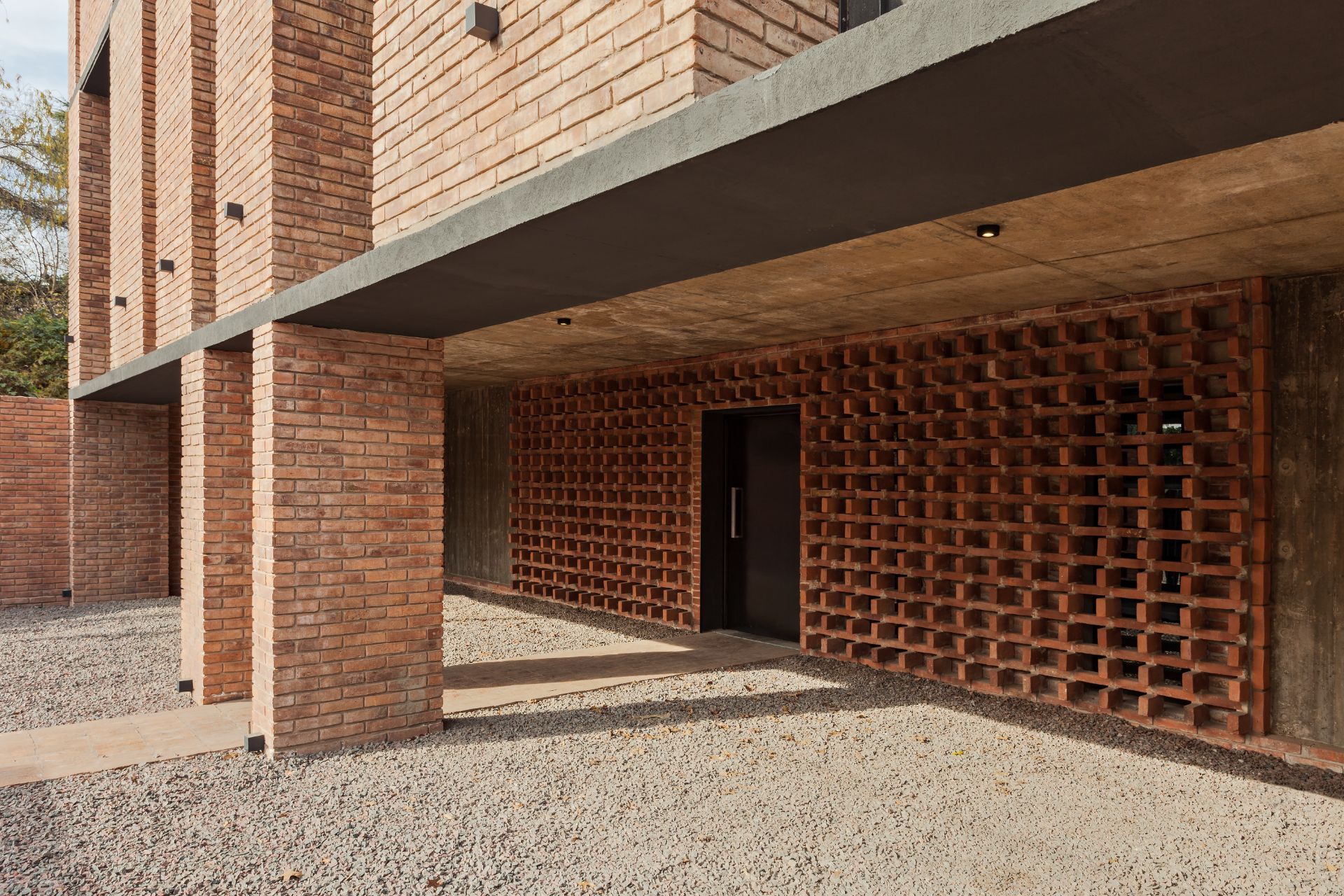
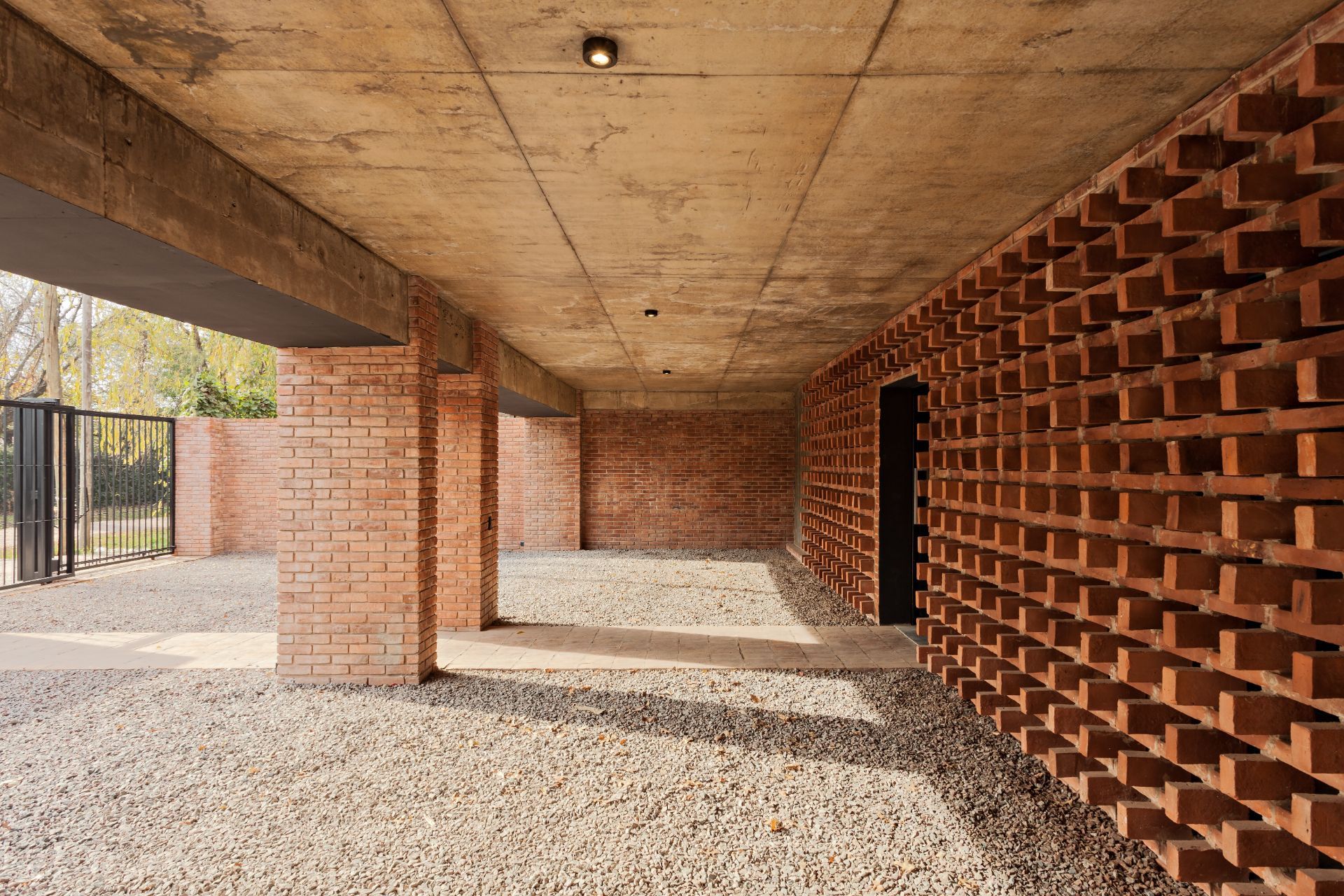
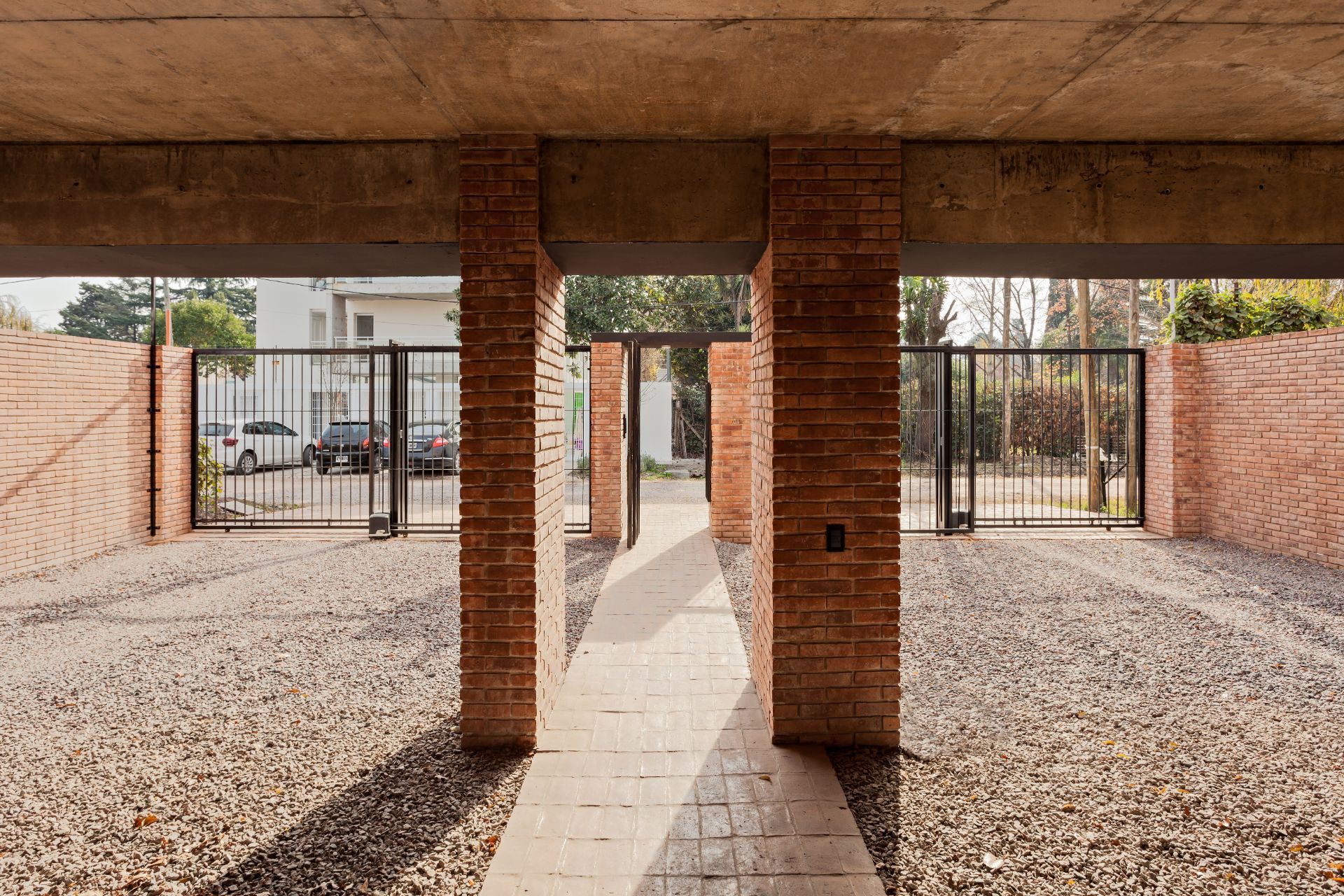
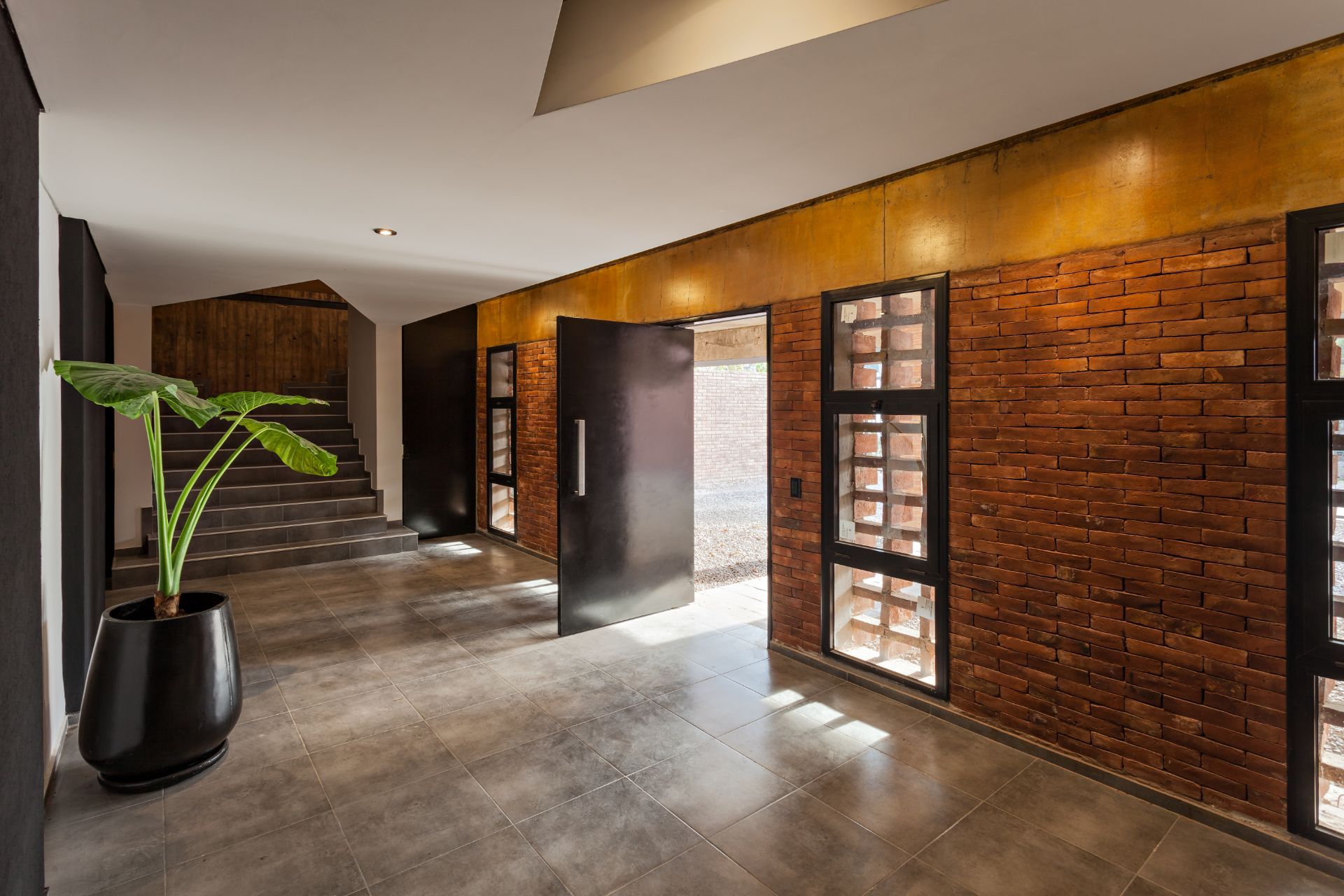
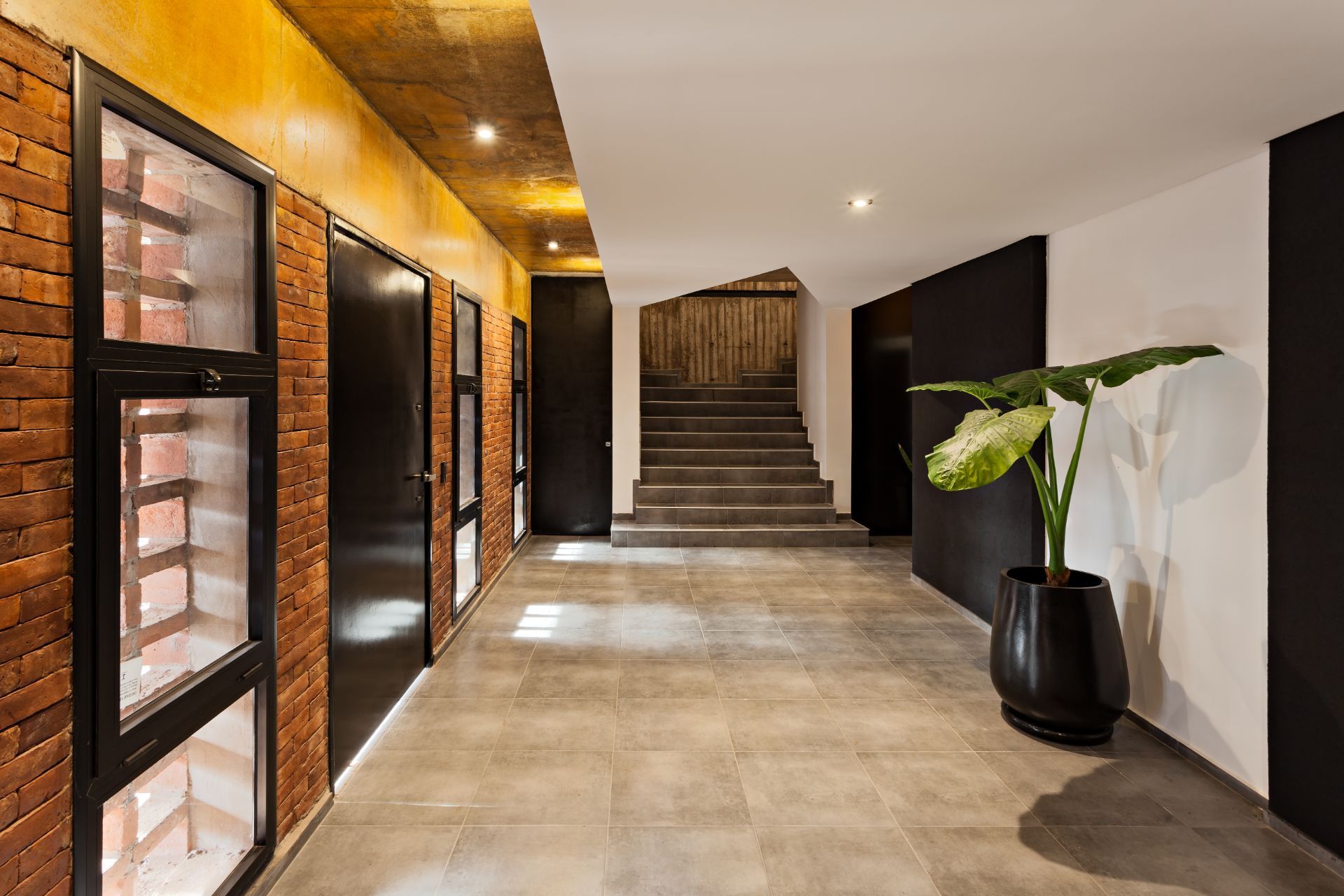
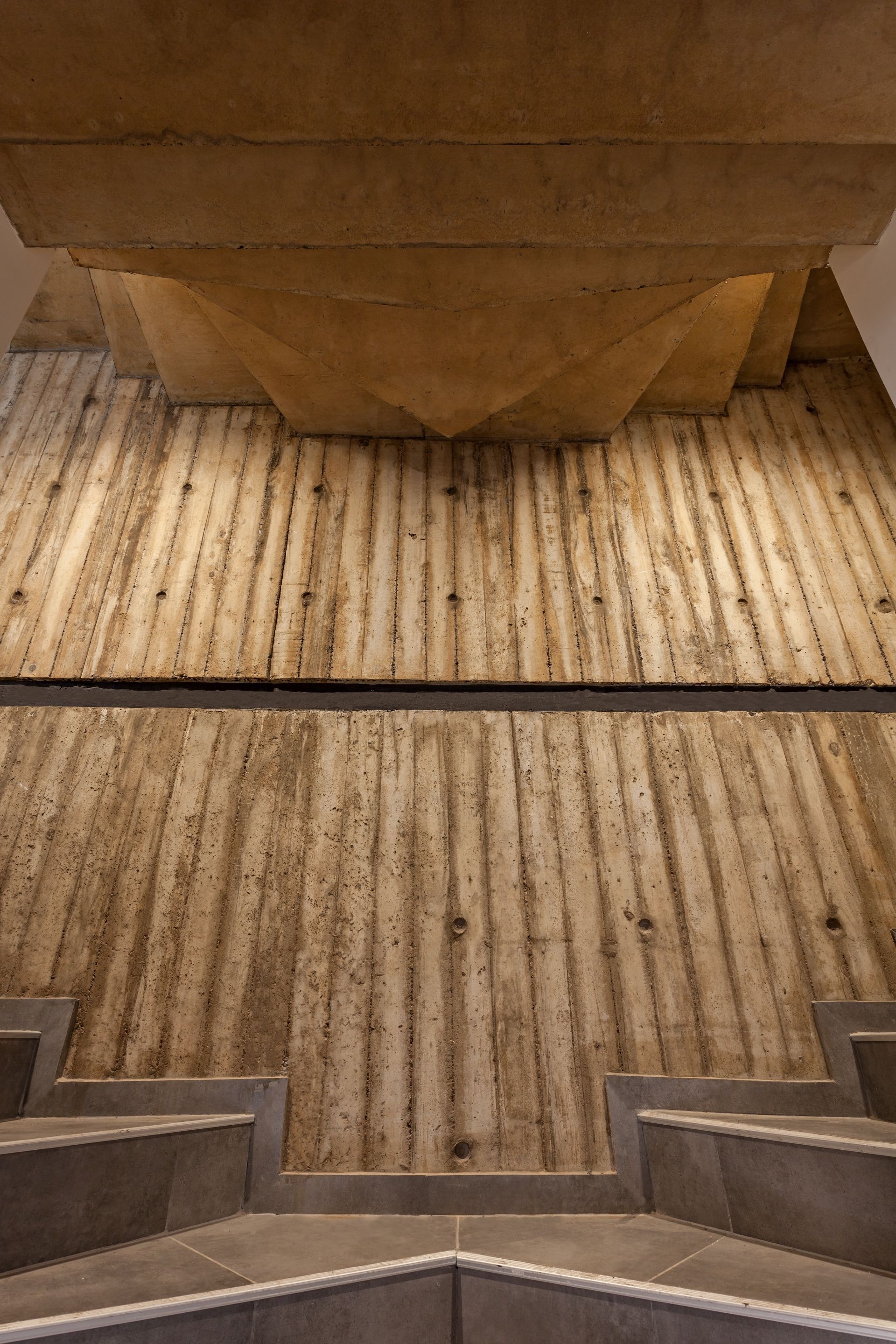
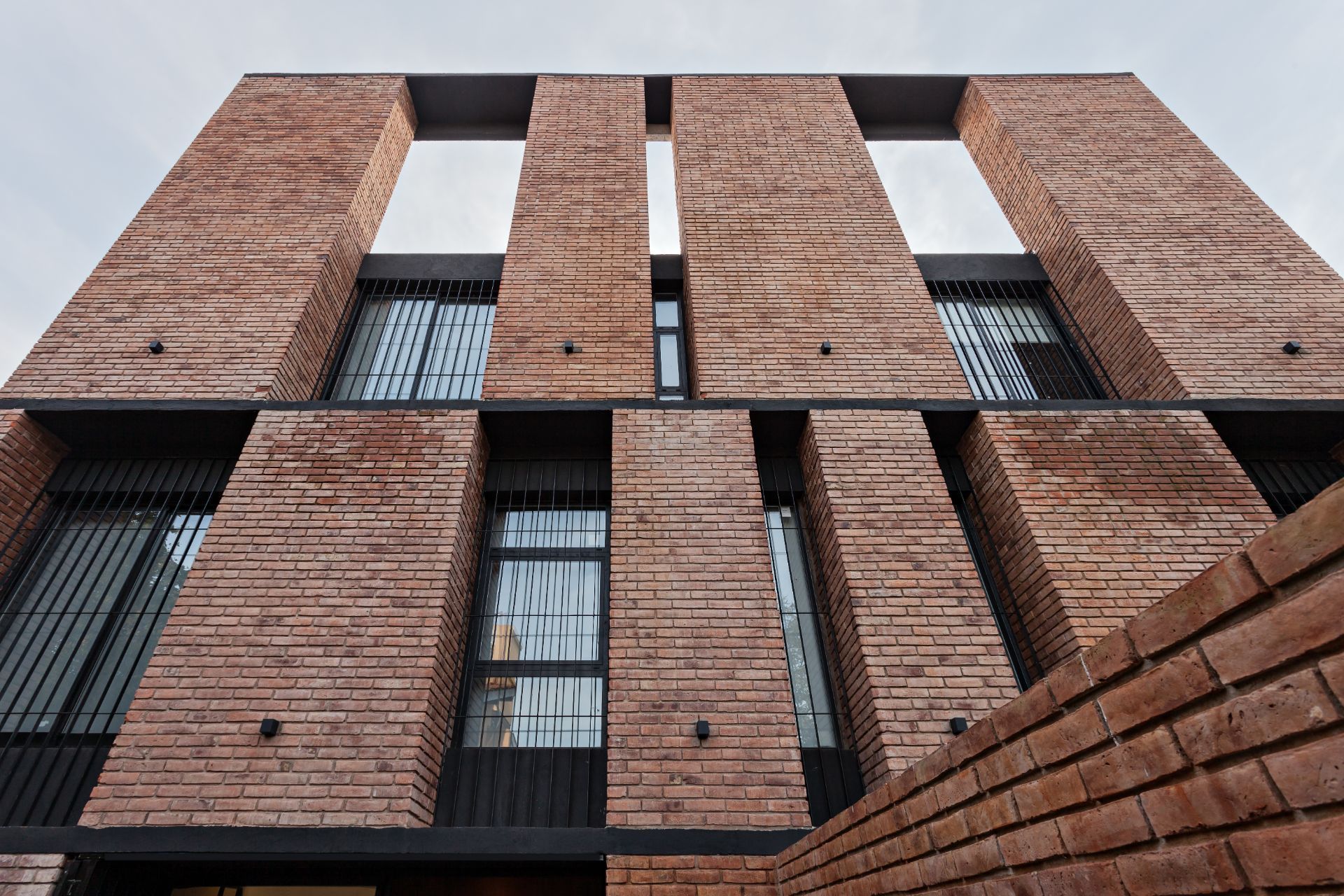
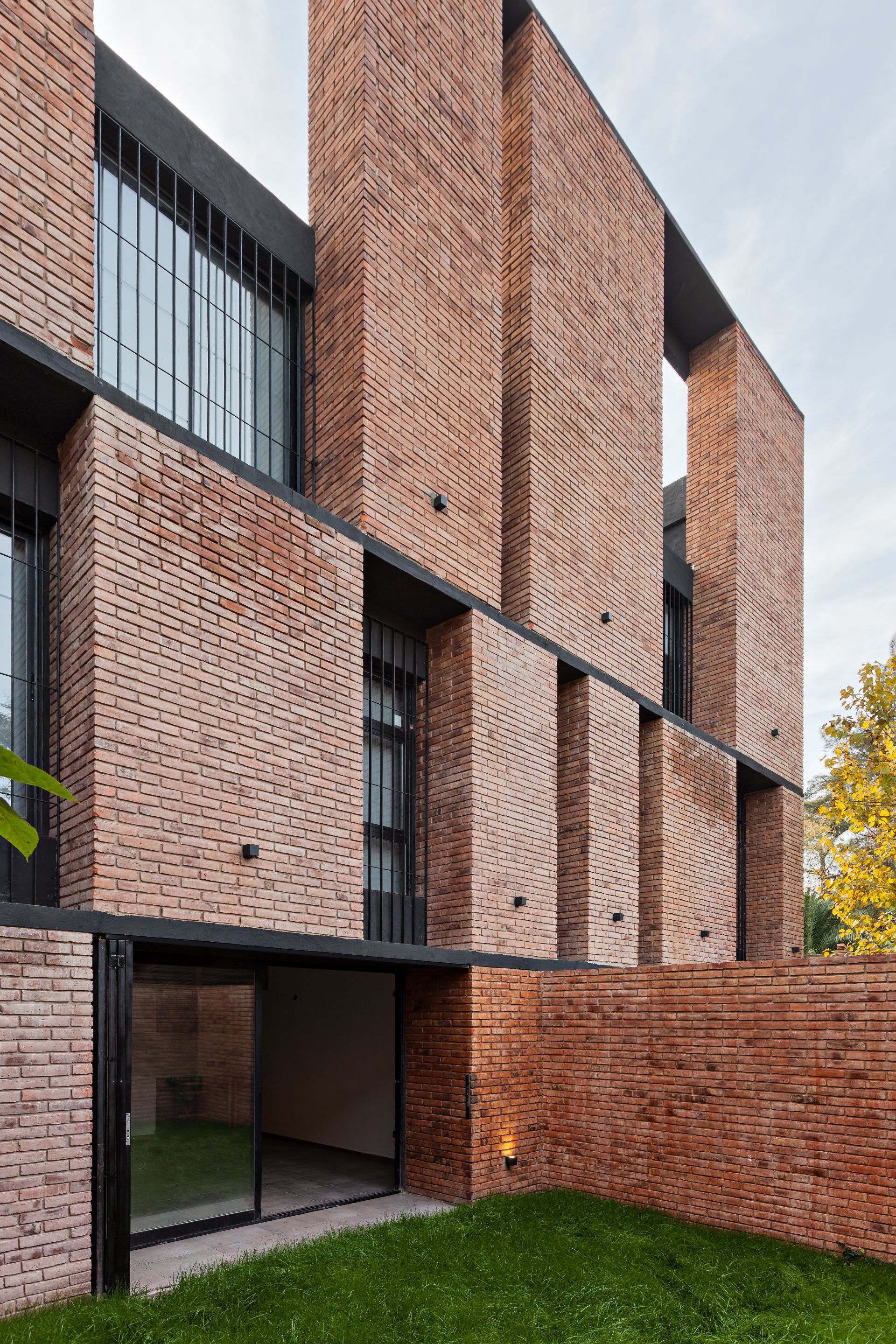
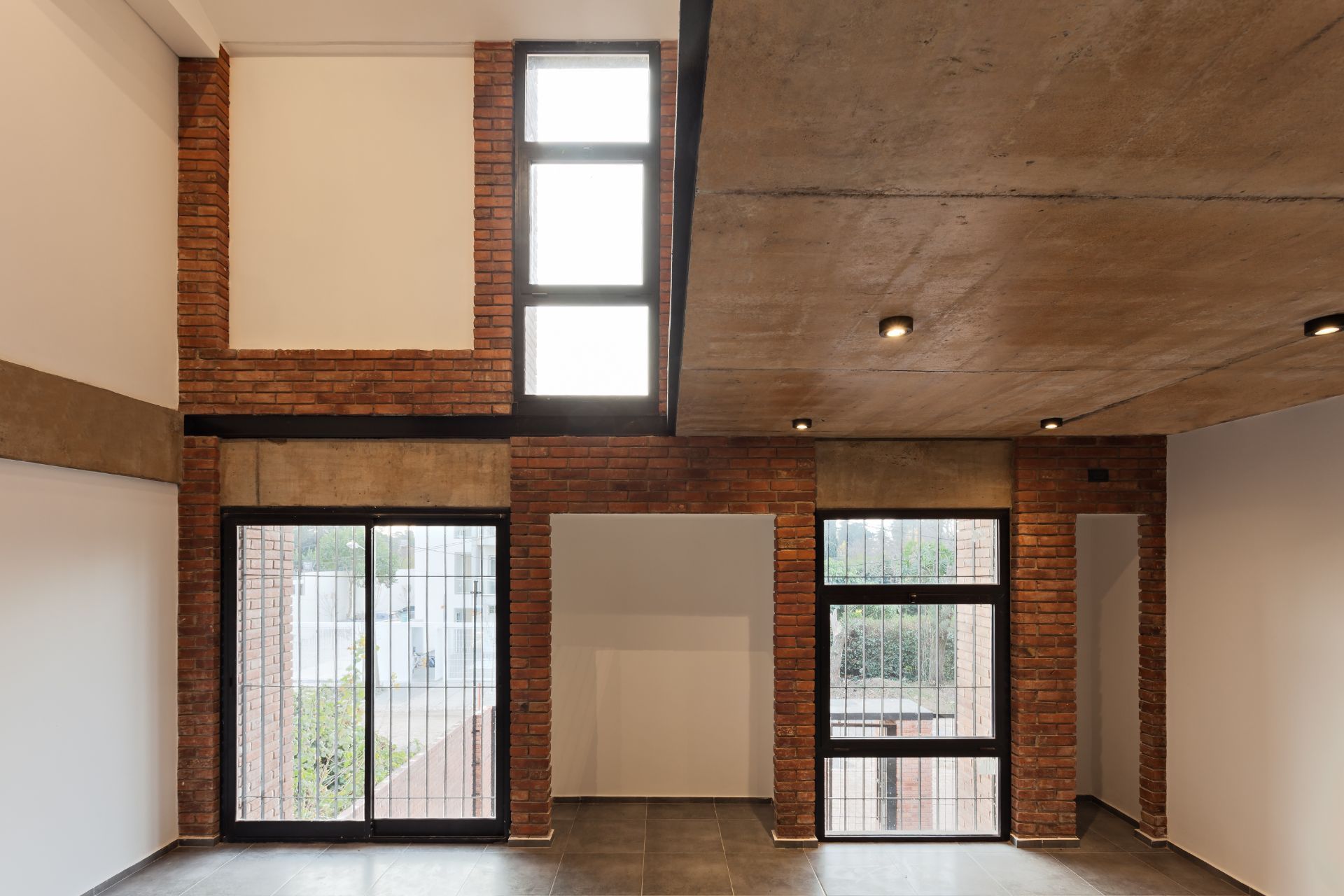
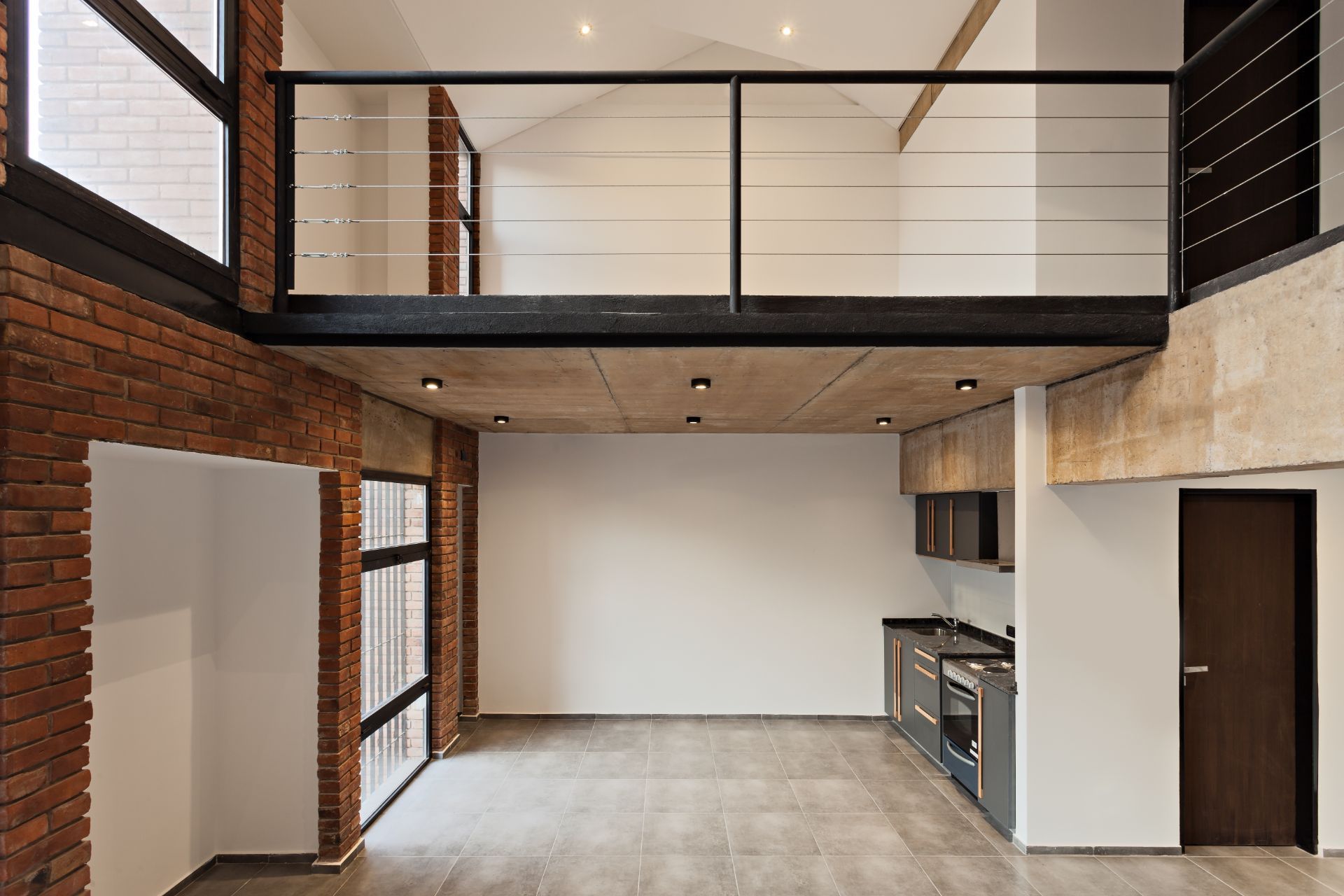
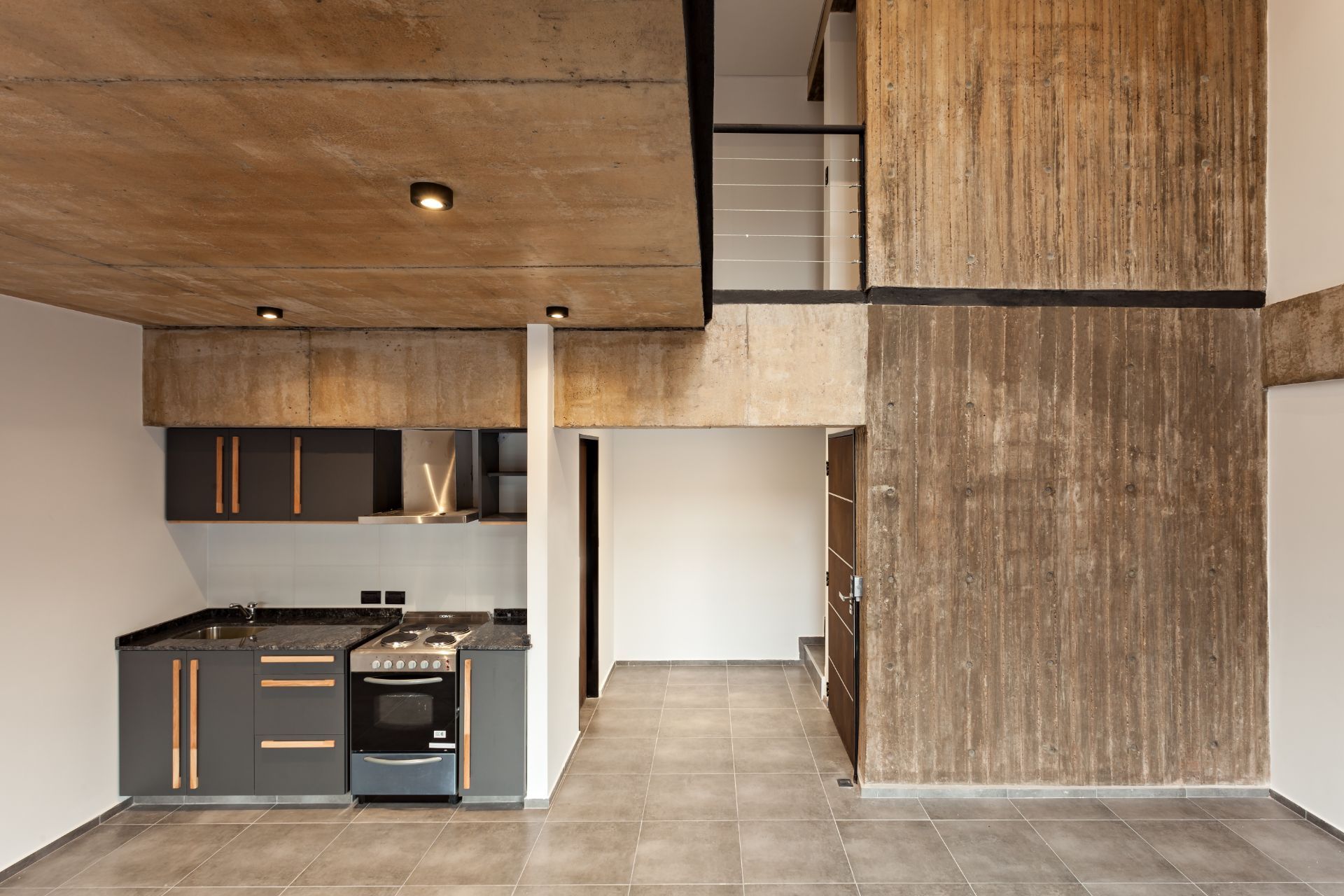
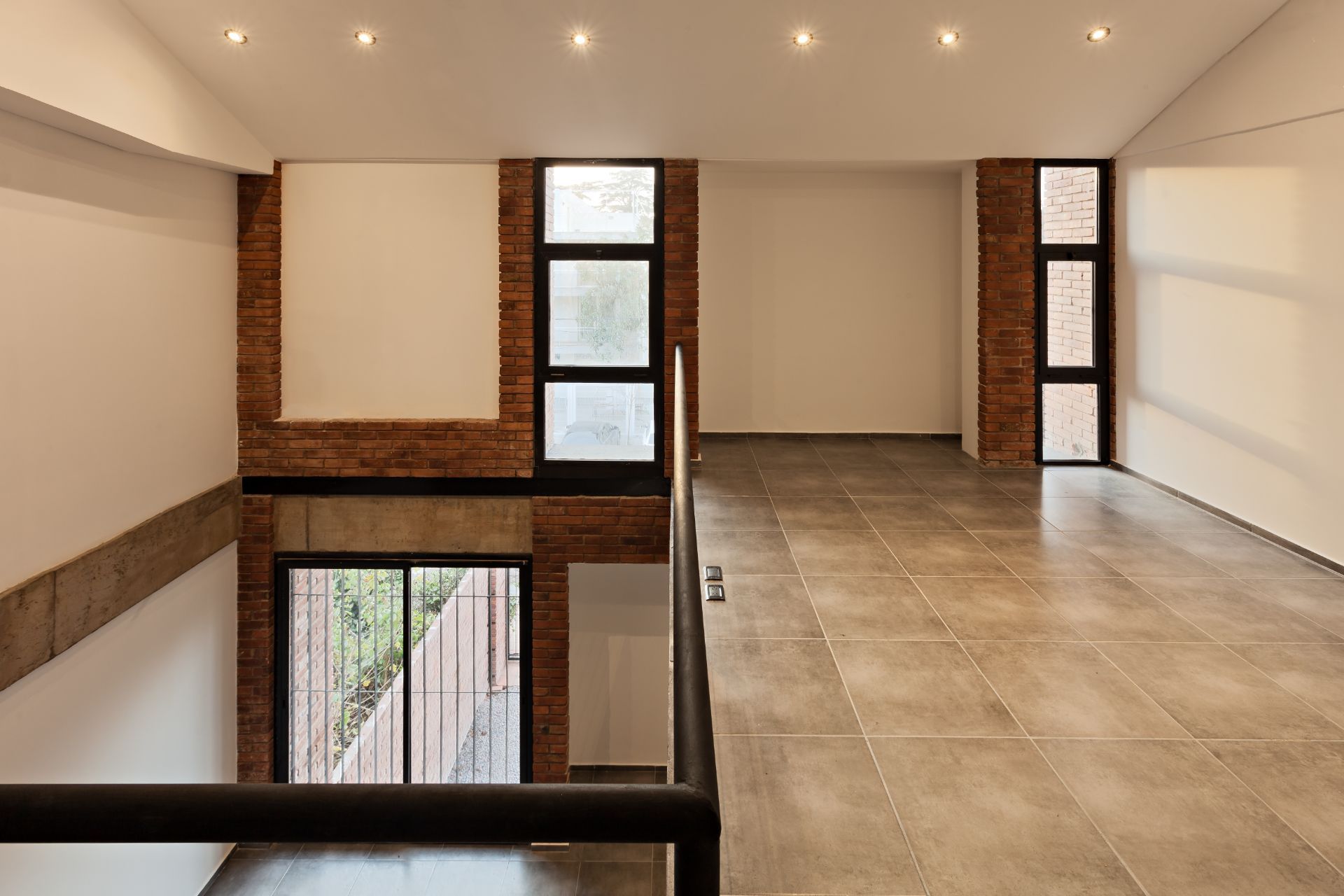
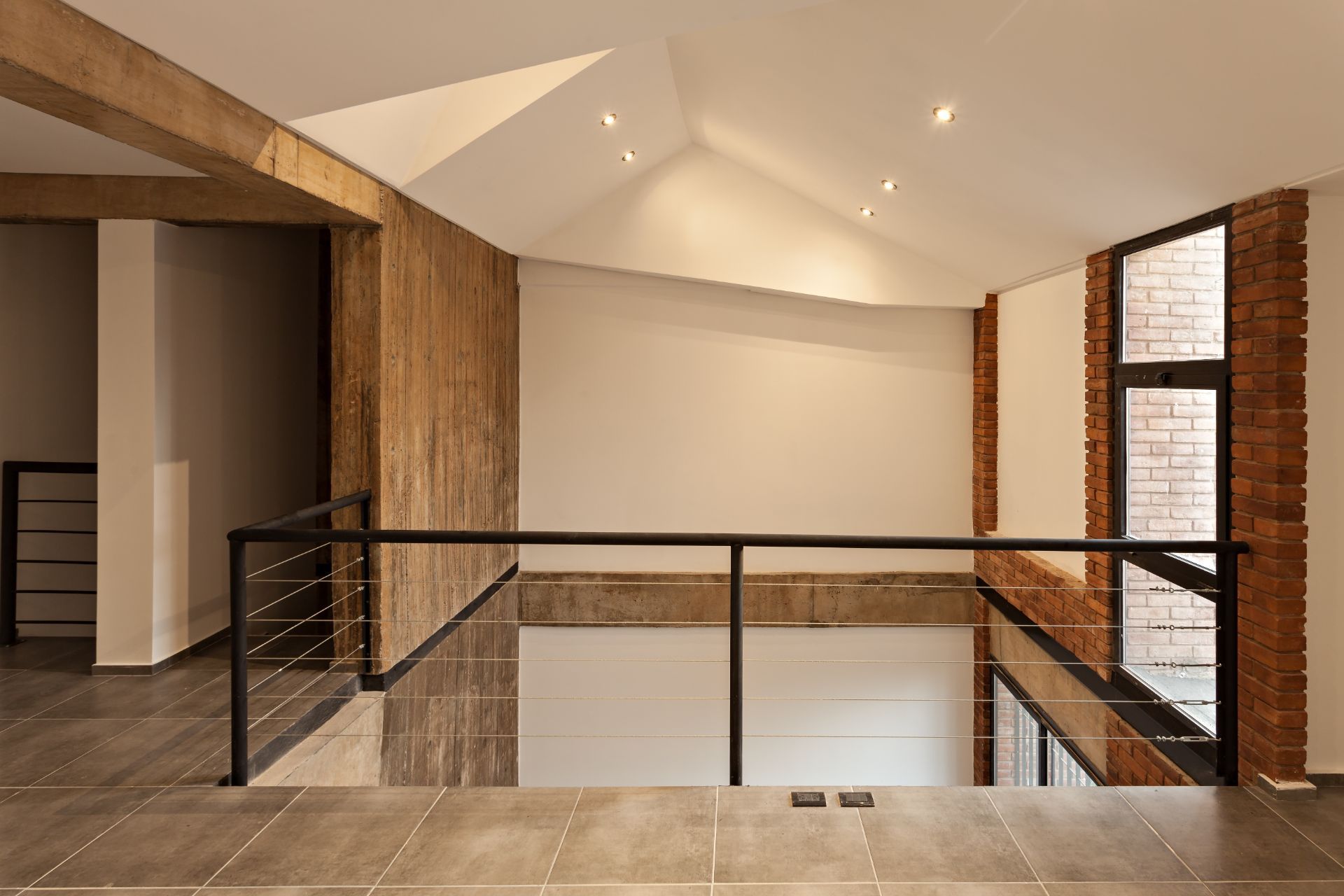
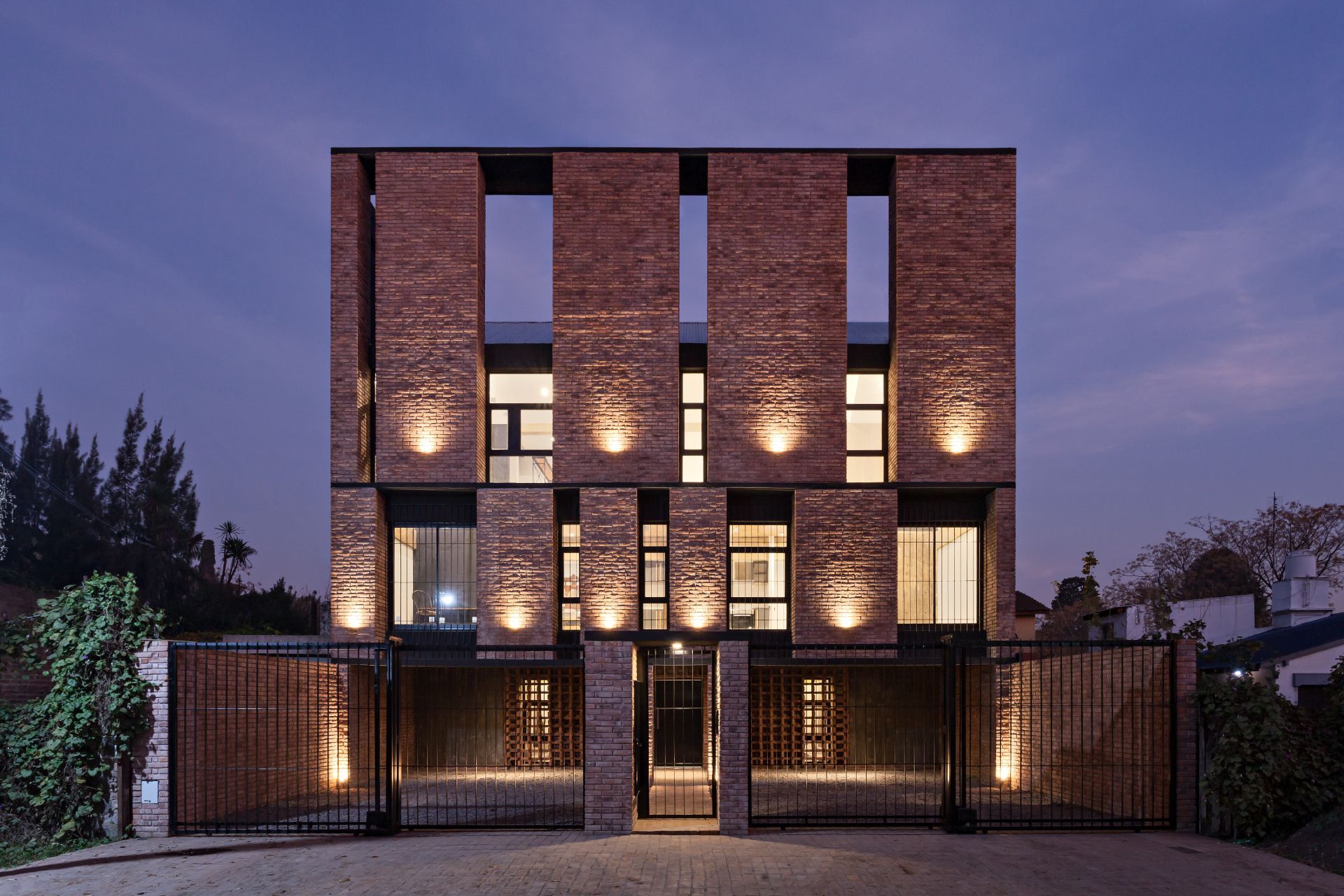
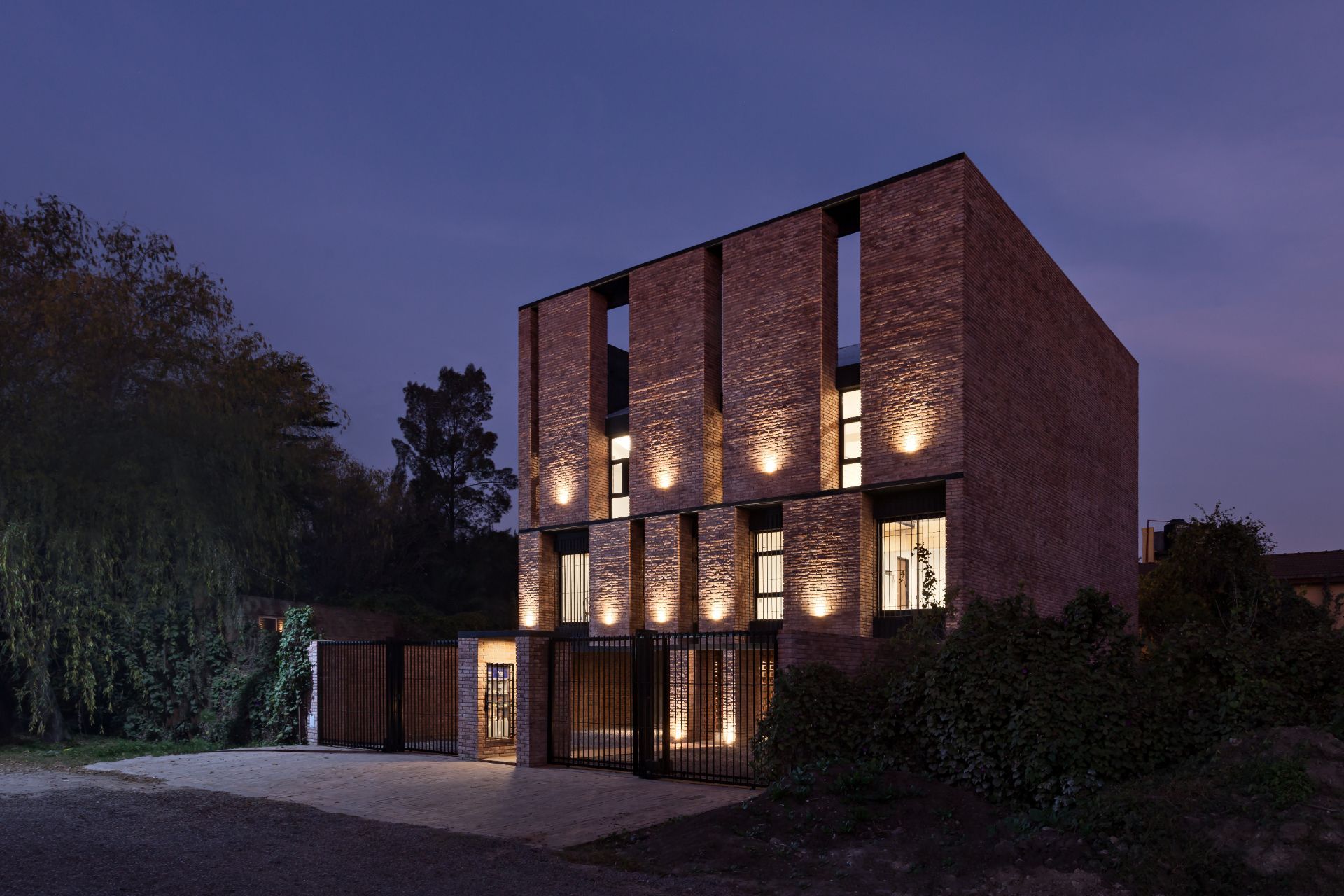
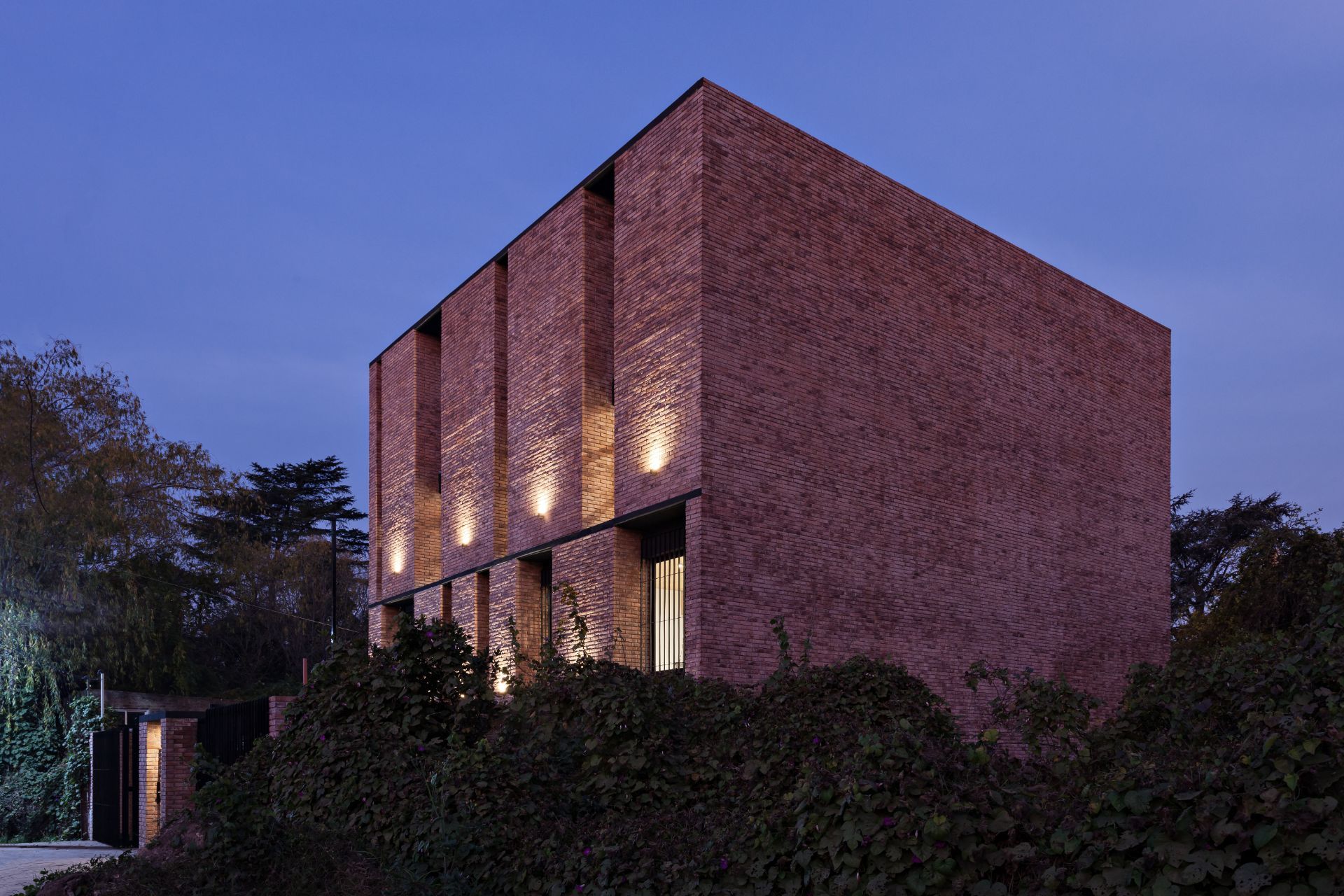
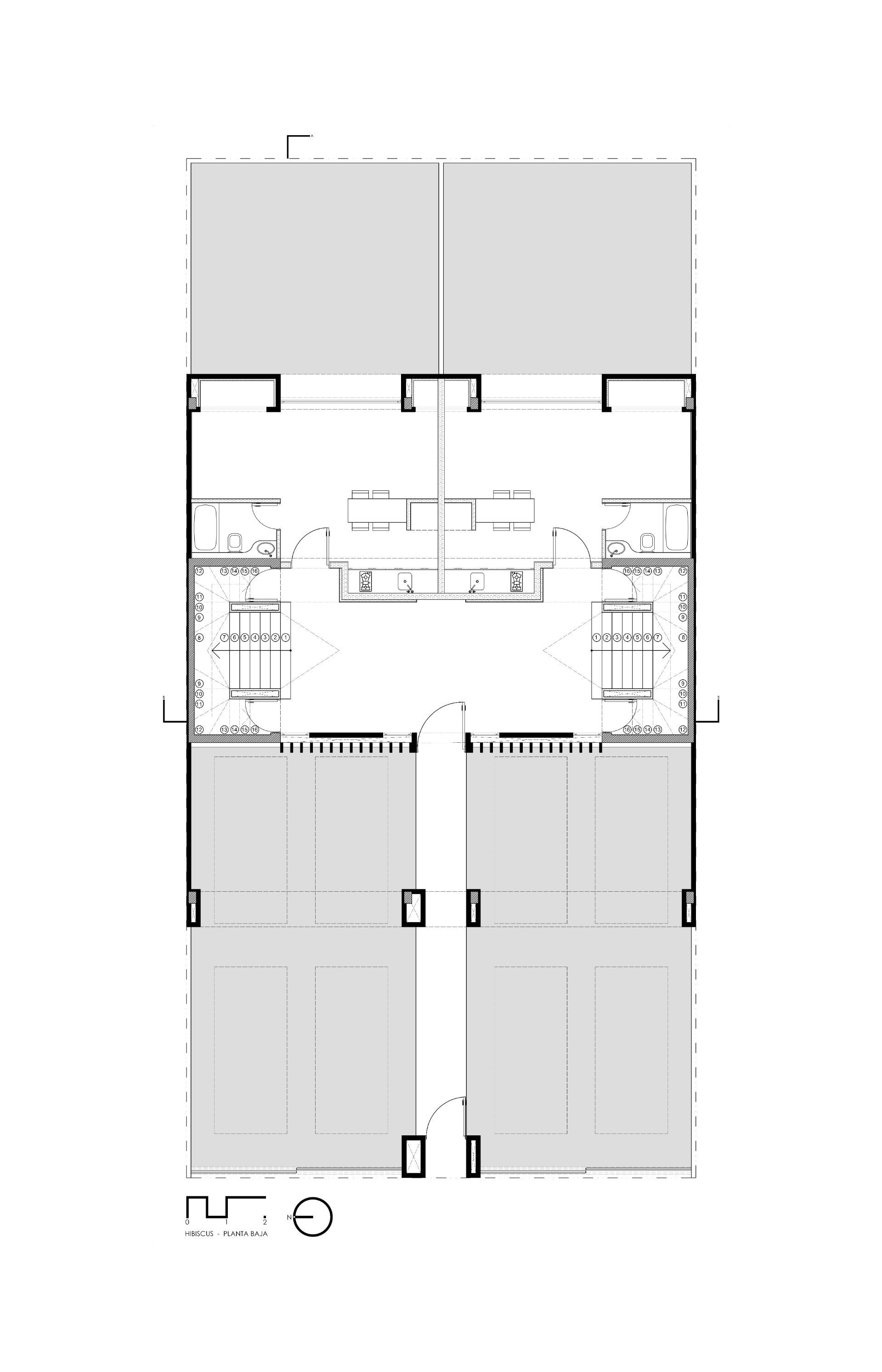
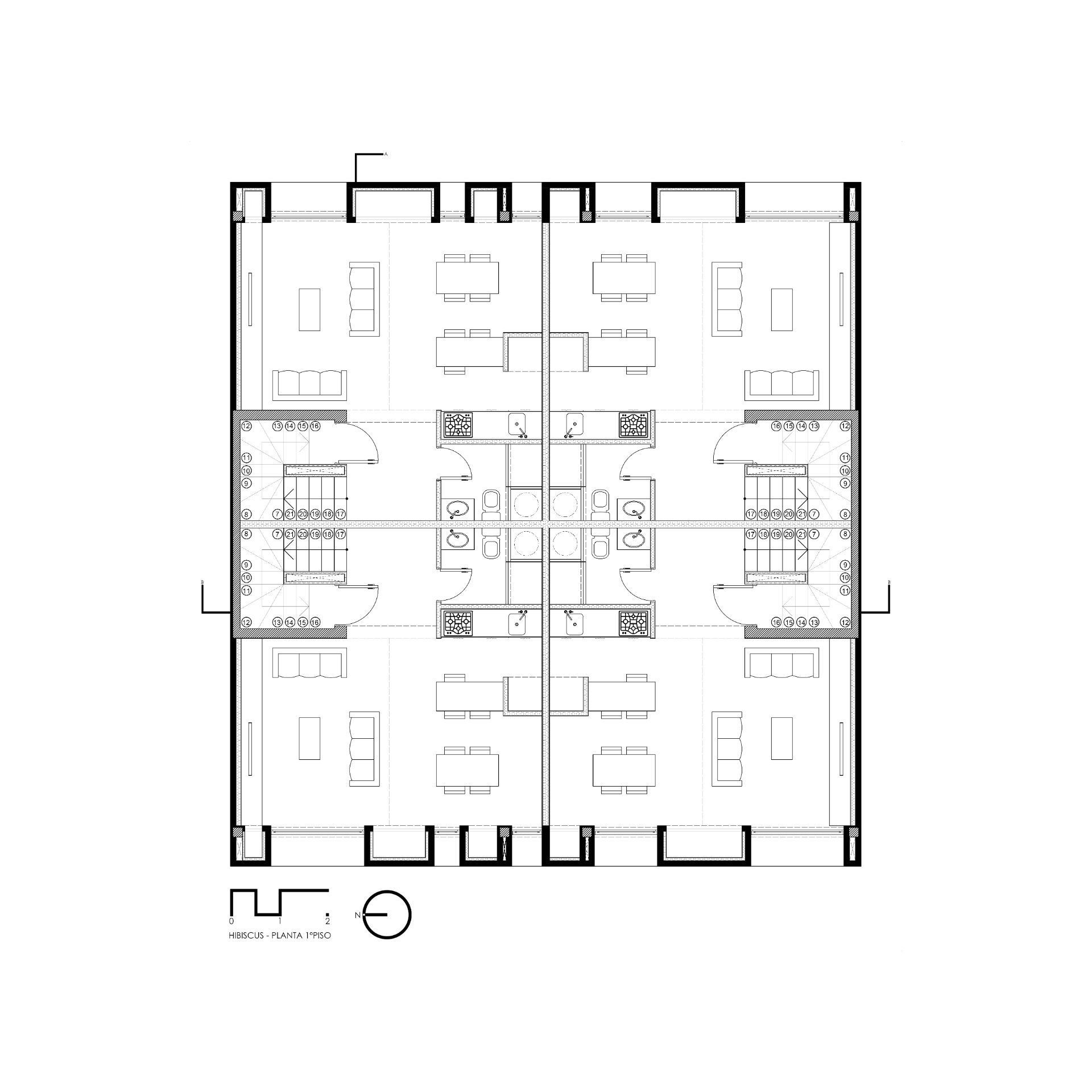
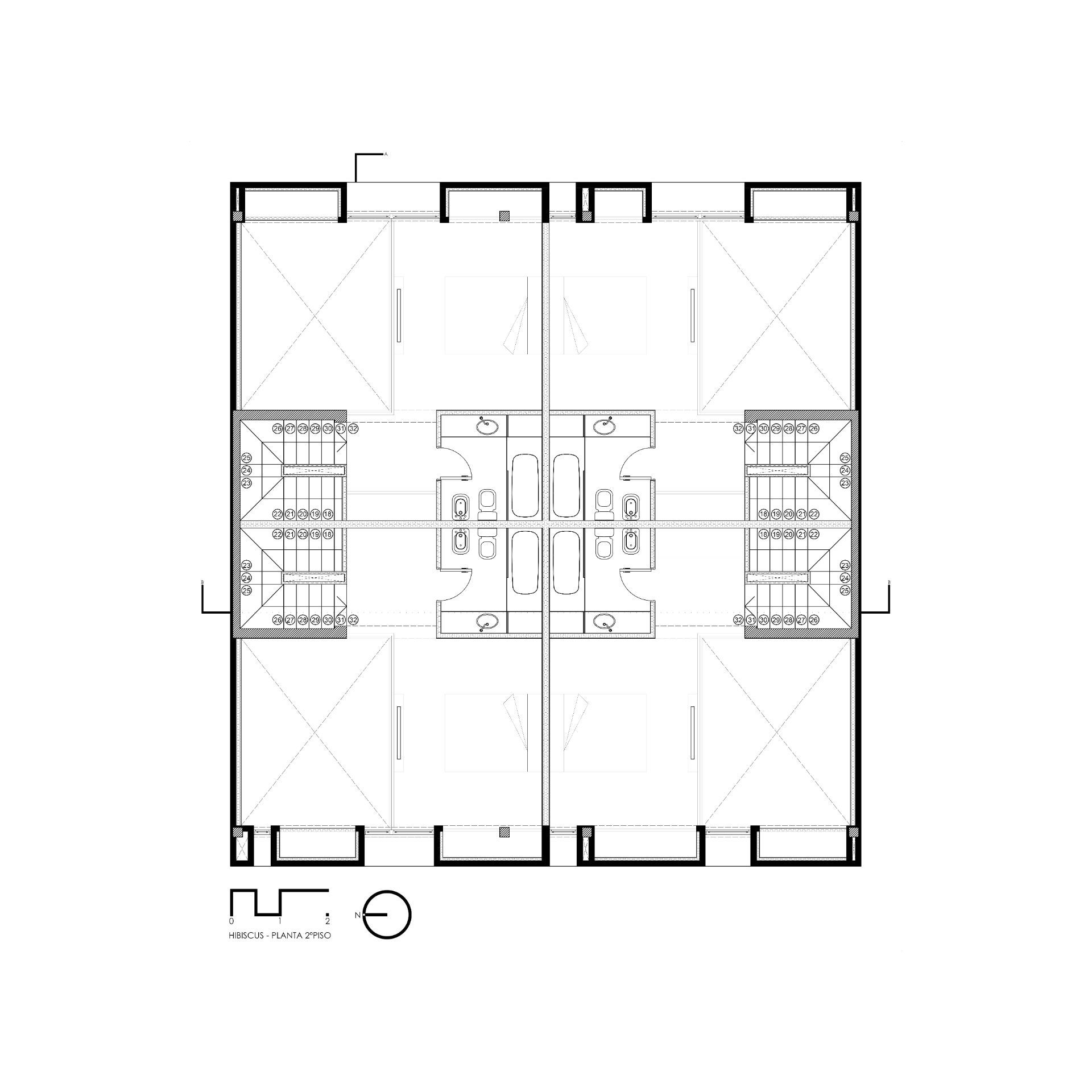
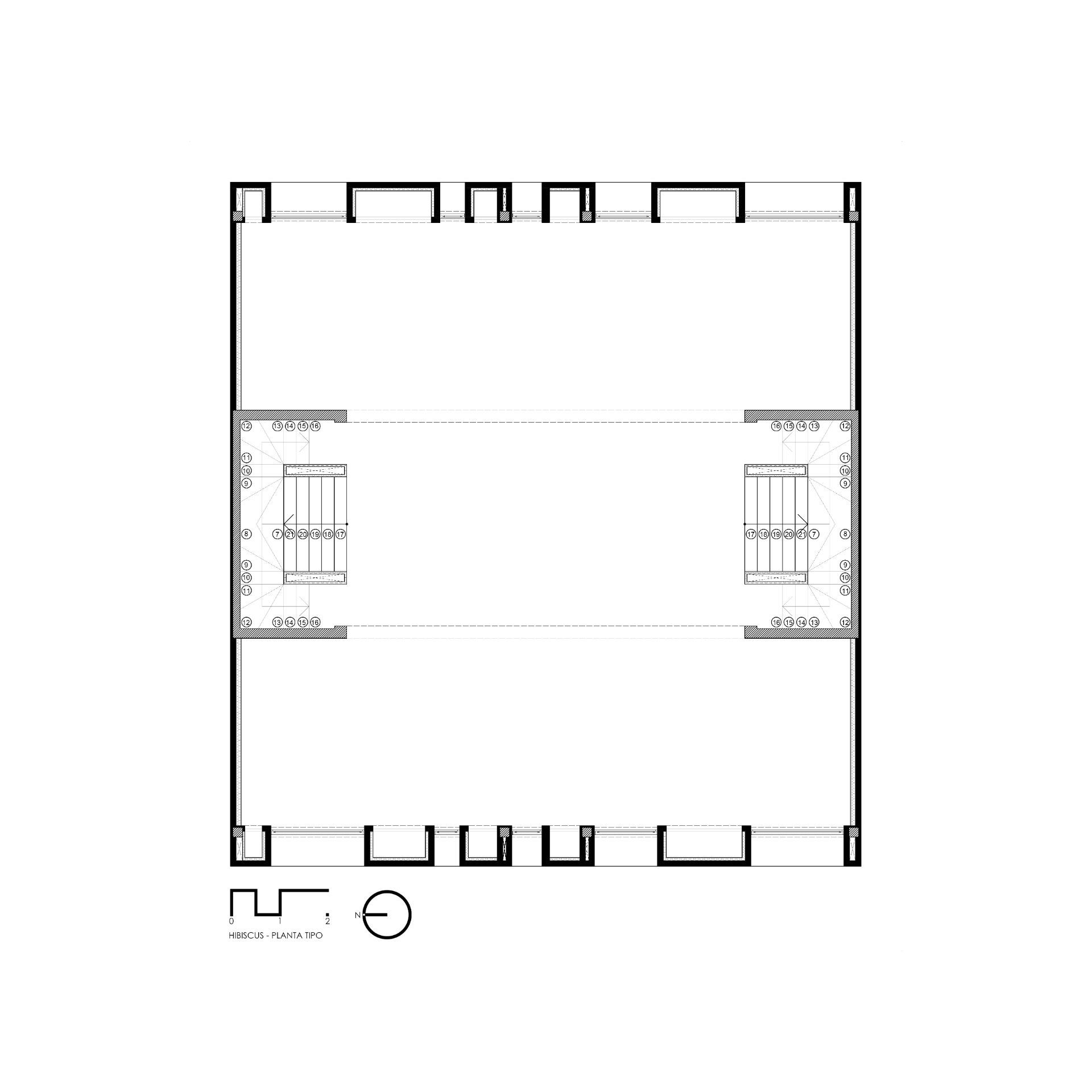
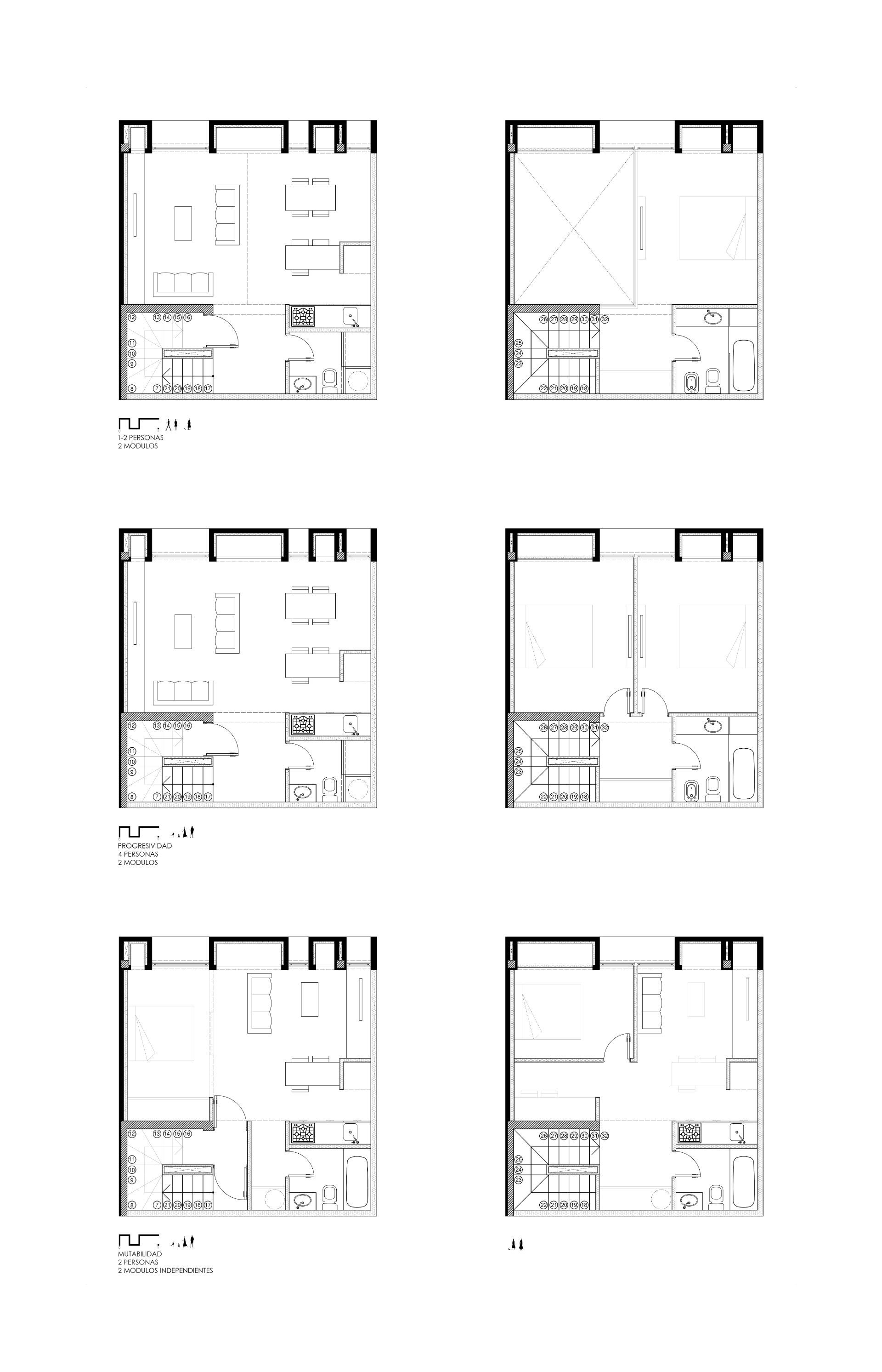
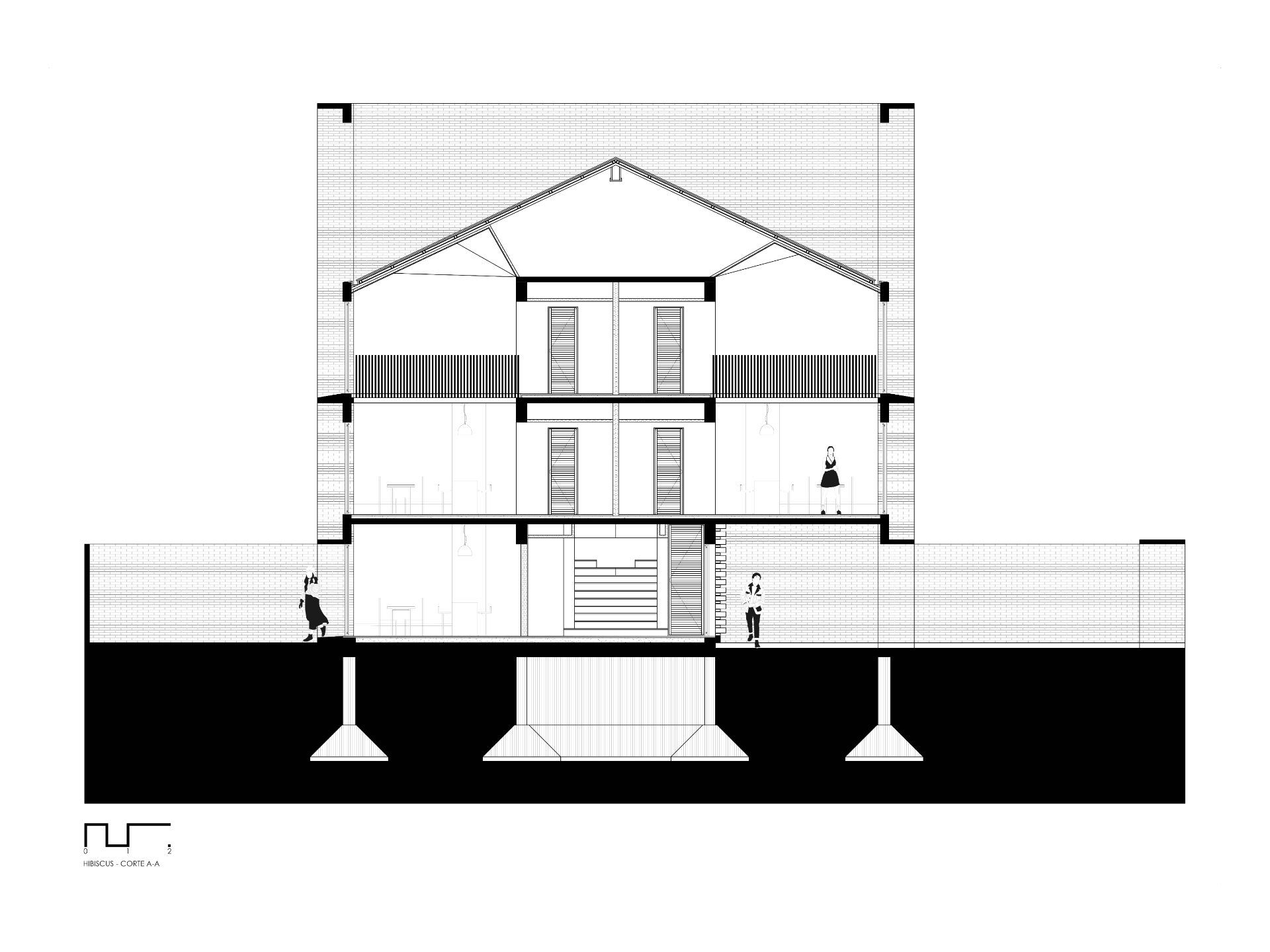
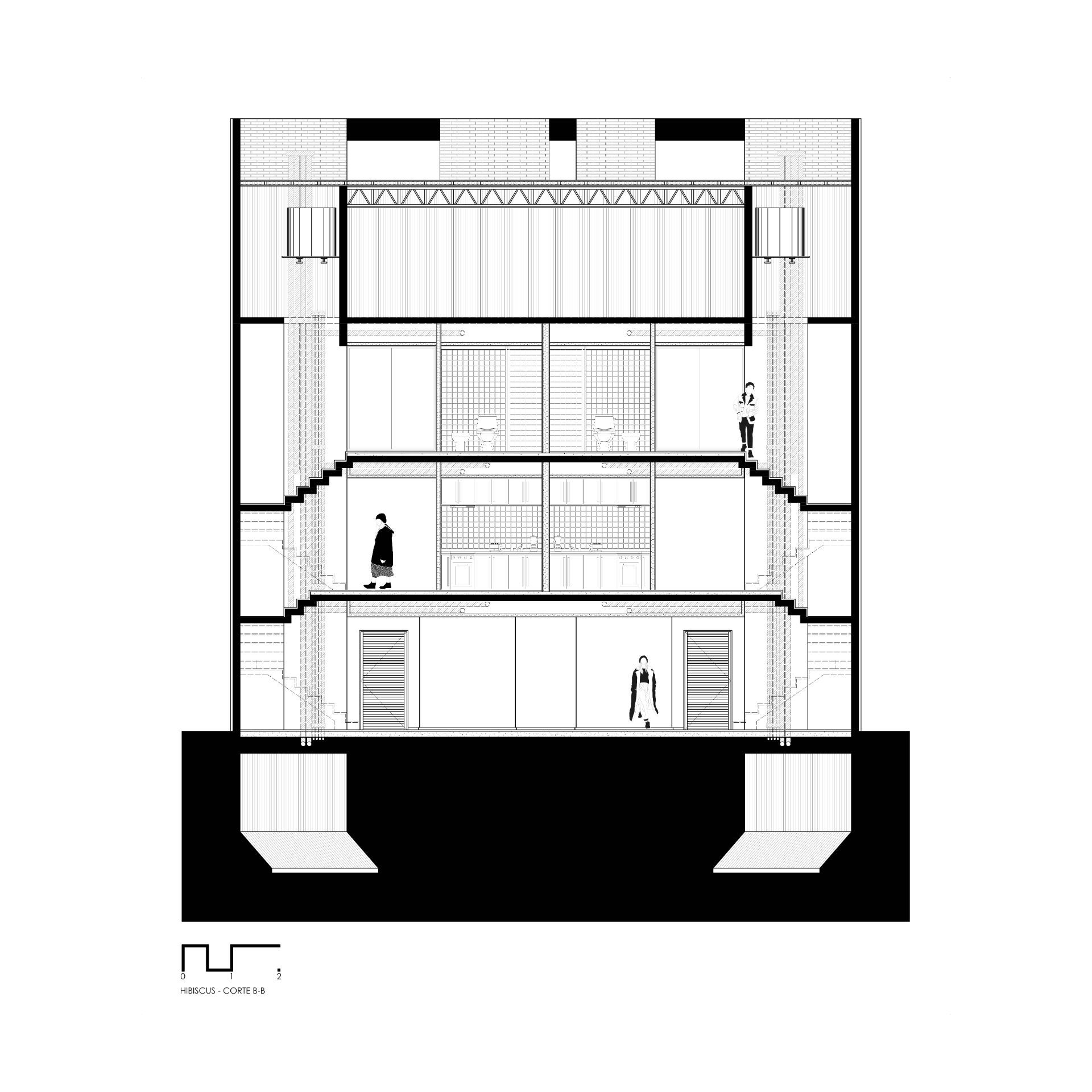
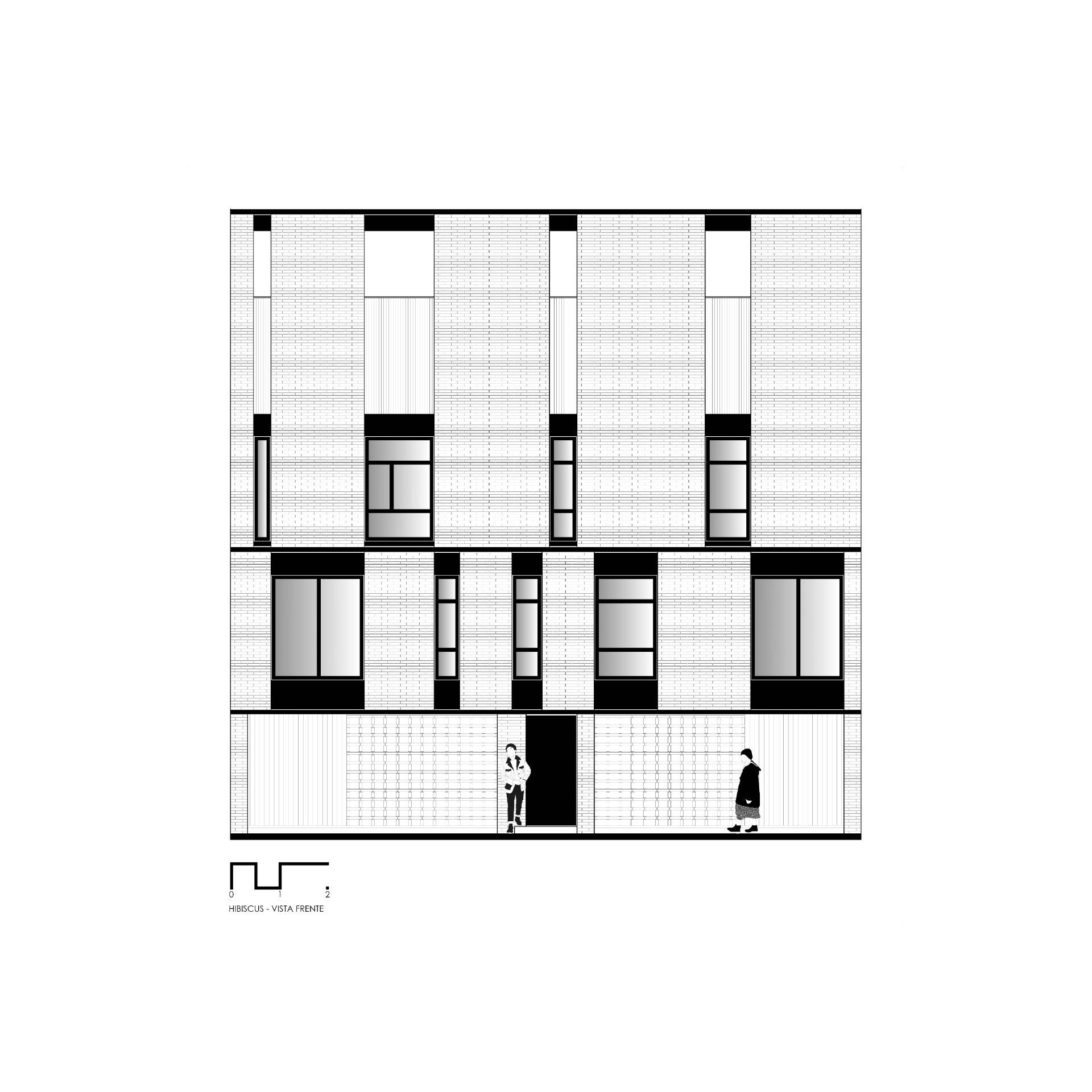
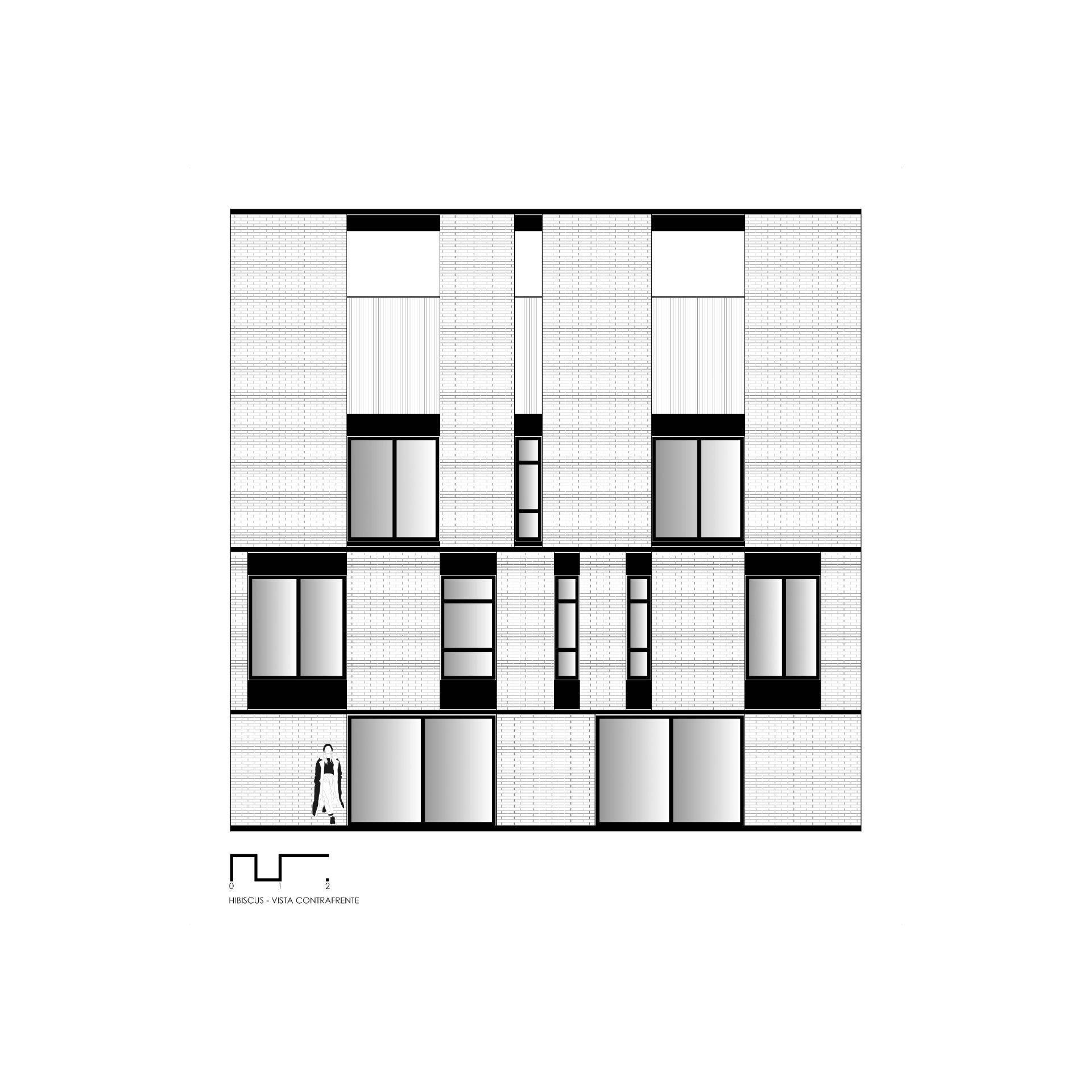
El edificio Hibiscus, Ubicado en Moreno, Buenos Aires; reflexiona sobre la celeridad en los cambios de modos de vida, busca aportar flexibilidad en sus espacios, para que puedan adaptarse al estilo de vida contemporáneo y ser indeterminados ante un futuro desconocido. La mayoría de las viviendas que se construyen actualmente, resultan ser arquitecturas diagramadas por órdenes establecidos en otra época y conforme a otras necesidades, se trata de modelos más rígidos enmarcados en una idea de familia y modo de vida destinado a perdurar. El conflicto se genera cuando dichos ordenes establecidos y formas de habitar cambian, en ese momento nos encontramos con edificaciones que no pueden satisfacer los cambios. Necesitamos pensar en sistemas evolutivos en continua redefinición haciendo eje en el organismo habitante, el individuo puede cambiar por la arquitectura y la arquitectura por el individuo, para ello, Lo importante es pensar en las preguntas que hablan de los procesos de habitar. El edificio hibiscus parte de la búsqueda de subordinar la planificación y tecnología a una adecuación variada y flexible del entorno construido al individuo, incorporando las condiciones cambiantes como un elemento positivo del proyecto, para ello es necesario un diseño capaz de resistir el paso del tiempo, tanto funcional como estético. Desde el punto de vista estético surge la idea de reemplazar contemporaneidad con atemporalidad. encontramos un cubo estricto construido en su perímetro con ladrillos que envejece en forma favorable y sin mantenimiento, Una forma ¨pura¨, que es a fin de cuentas la manera más flexible de permitir el cambio y renovación continua. al ser un edificio entre medianeras, posee mayor masa en su fachada y contrafachada, se generan aperturas estratégicas, en las partes llenas alberga vacíos que funcionan como plenos donde se encuentran instalaciones y estructura, contemplando espacios para futuras necesidades. Este juego de llenos y vacíos no sólo responde al programa, sino también al comportamiento medioambiental e impronta del edificio. Desde el punto de vista funcional, encontramos contenidas dentro del cubo tres plantas libres que sitúan las circulaciones verticales sobre sus laterales, culminan en una cubierta liviana, que contempla la posibilidad estructural de ser reciclada y así agregar otro nivel contenido dentro de la forma. Las plantas libres, en su interior utilizan tecnologías y materiales constructivos reciclables, por lo tanto, en lugar de proyectar un espacio para un determinado programa, se ofrece una estructura abierta a distintas apropiaciones. En el caso actual se propuso un programa de seis unidades funcionales, dos compuestas por un módulo mínimo de superficie habitable (según normativa) y las otras cuatro por dos módulos, de los cuales uno se presenta en forma incompleta y tiene en primera instancia la posibilidad de progresar aumentando su superficie. Una vez completada la totalidad de la superficie edificable posible, las unidades funcionales compuestas por dos módulos tendrán la posibilidad de ser dividas generando así dos unidades funcionales independientes. El proceso puede ser inverso fusionando módulos. Ser un soporte a las necesidades de ocupación físicas y simbólicas, en constante cambio, es el argumento principal del proyecto.
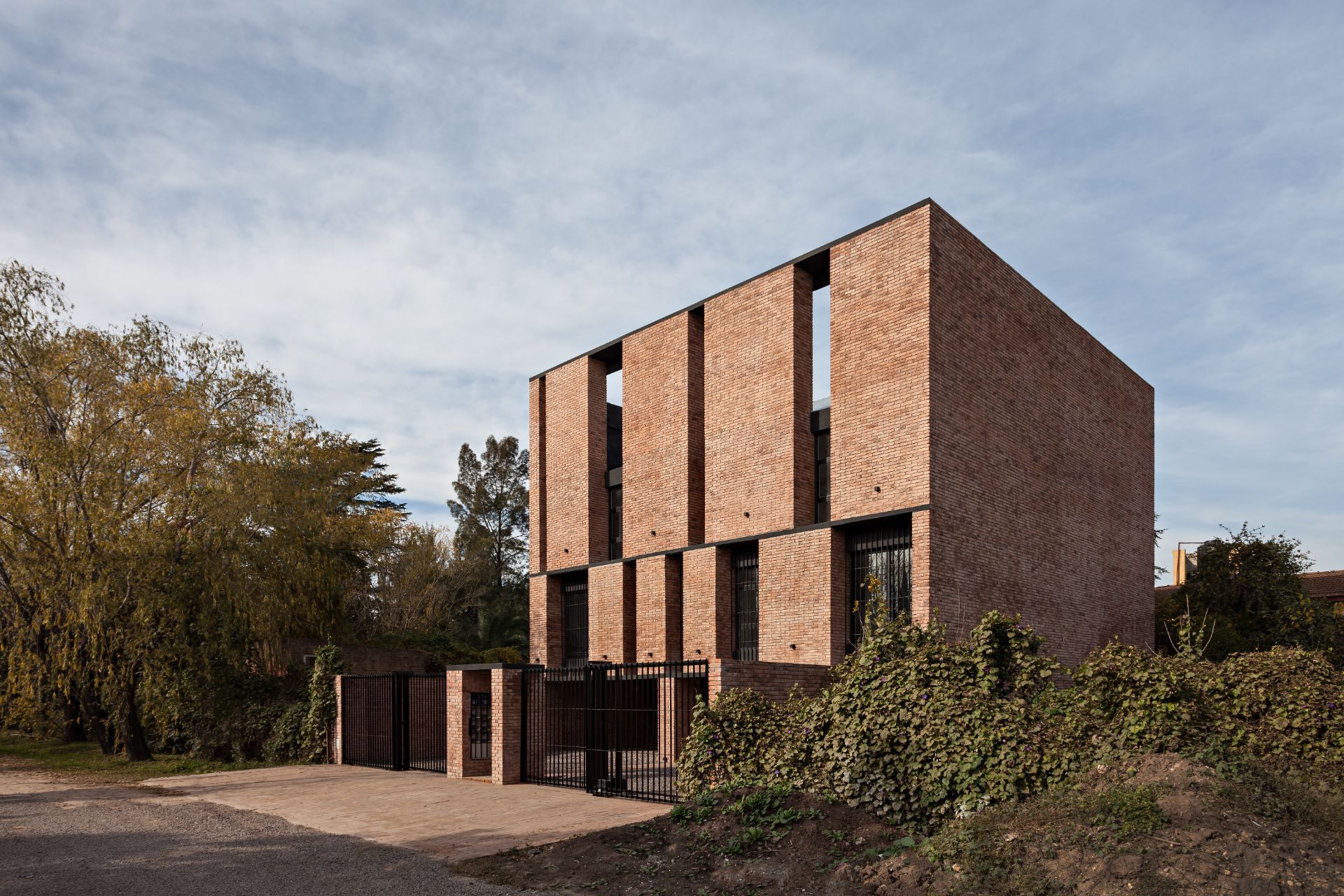
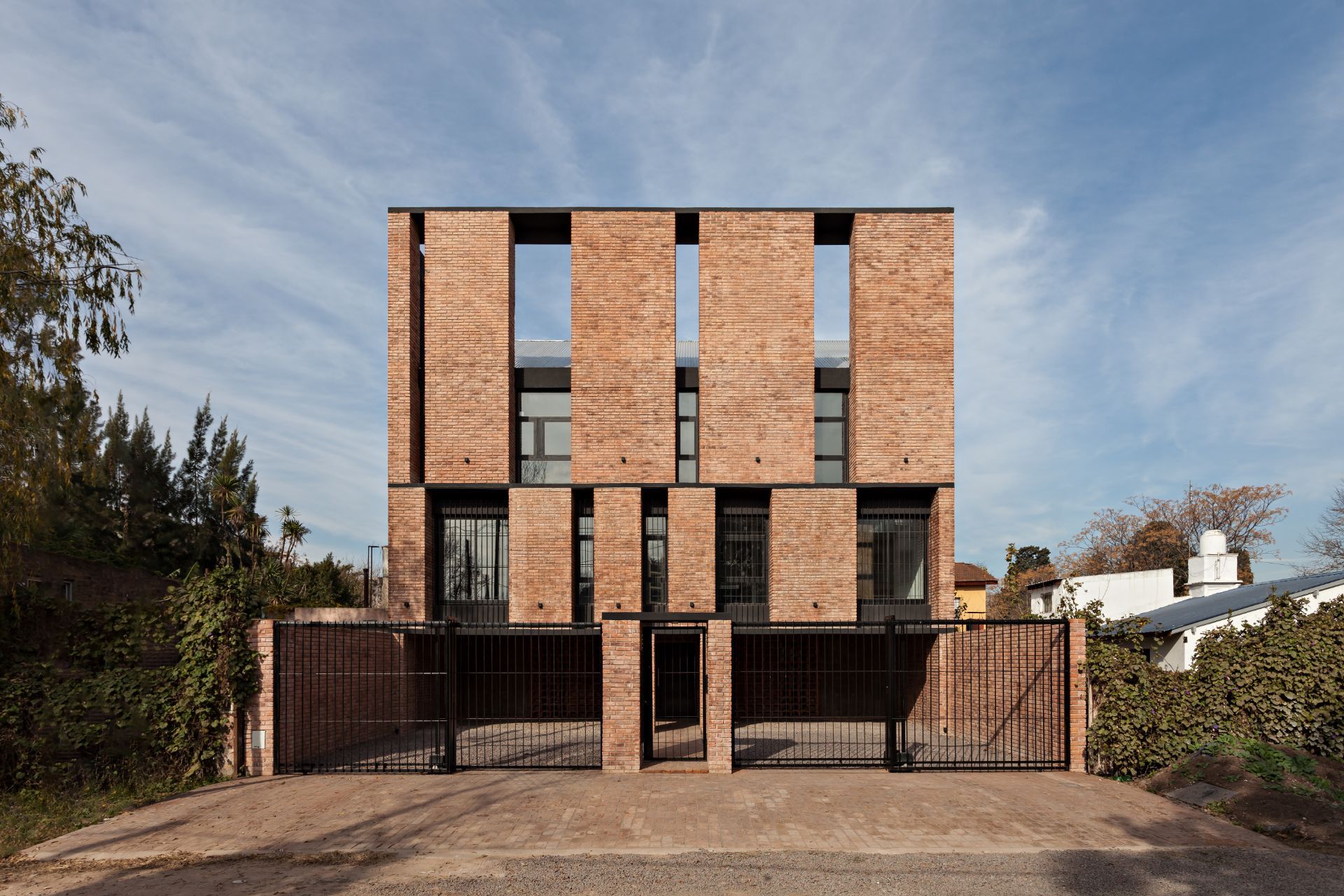
The Hibiscus building, located in Moreno, Buenos Aires, reflects on the rapid pace of change in lifestyles. It seeks to provide flexibility in its spaces so they can adapt to contemporary living and remain open to an unknown future. Most homes currently being built are architectural designs based on established norms from another era and according to different needs. These are more rigid models framed within an idea of ​​family and a way of life intended to endure. The conflict arises when these established norms and ways of living change; at that point, we find ourselves with buildings that cannot accommodate the changes. We need to think about evolutionary systems in continuous redefinition, focusing on the inhabiting organism. The individual can change through architecture, and architecture through the individual. Therefore, it is important to consider the questions that address the processes of inhabiting. The Hibiscus building stems from the desire to subordinate planning and technology to a varied and flexible adaptation of the built environment to the individual, incorporating changing conditions as a positive element of the project. This requires a design capable of withstanding the test of time, both functionally and aesthetically. From an aesthetic point of view, the idea arises of replacing contemporaneity with timelessness. We find a strict cube constructed around its perimeter with bricks that age gracefully and without maintenance. A 'pure' form, which is ultimately the most flexible way to allow for continuous change and renewal. Being a building between party walls, it has greater mass on its facade and rear facade. Strategic openings are created, and within the solid sections, voids function as full spaces housing installations and structure, while also considering spaces for future needs. This interplay of solids and voids not only responds to the program but also to the environmental behavior and the building's overall character. From a functional standpoint, the cube contains three open-plan floors with vertical circulation along its sides, culminating in a lightweight roof that allows for structural recycling, thus adding another level within the form. The open-plan floors utilize recyclable construction technologies and materials; therefore, instead of designing a space for a specific program, the structure is open to diverse uses. In this case, a program of six functional units was proposed: two composed of a minimum module of habitable area (according to regulations), and the other four of two modules, one of which is initially incomplete and has the possibility of being expanded. Once the total possible buildable area is reached, the functional units composed of two modules can be divided, creating two independent functional units. The process can be reversed by merging modules. The project's main objective is to support the constantly evolving physical and symbolic needs of occupancy.
Fecha -Date - 2022
Ubicación -Location - Moreno, Buenos Aires
Tipo -Typology -Edificio de vivienda colectivaCollective Housing Building
Equipo -Team -
Martín CaparrozMartín Caparroz
Estado -Status -TerminadaCompleted
Fotos -Photos - Albano García

Casa Callao

Paso del Rey, Buenos Aires
2020

CASA CALLAO

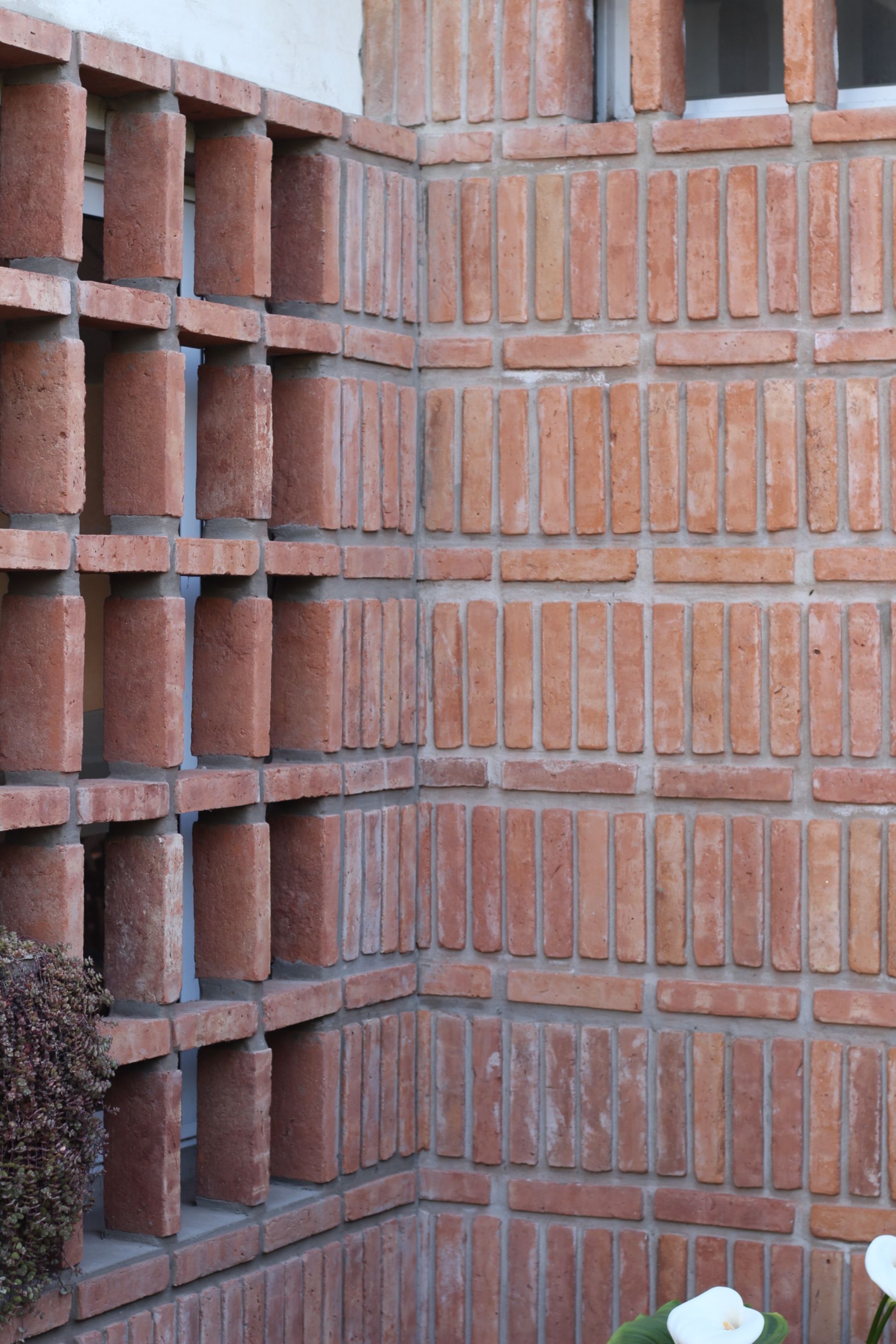
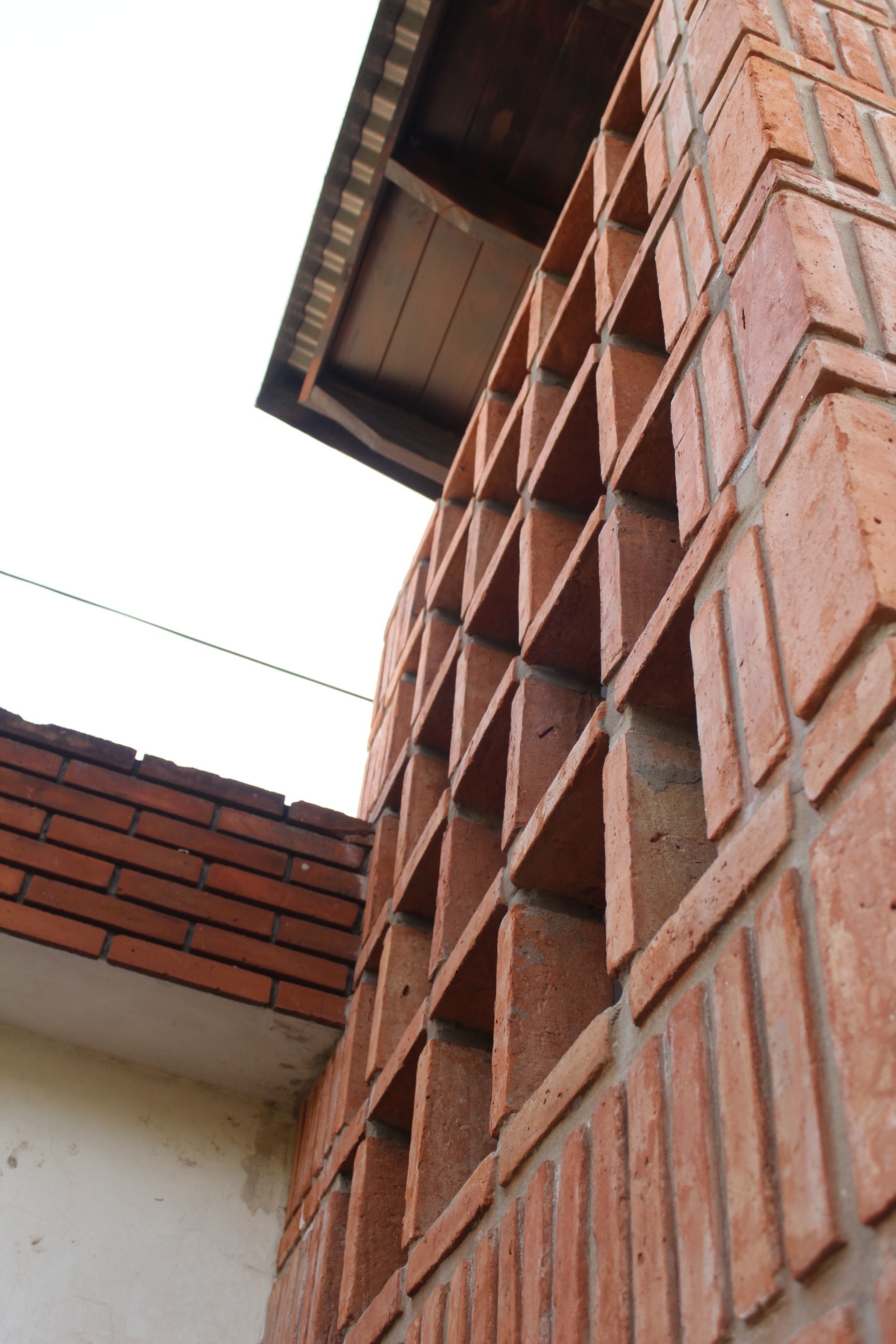
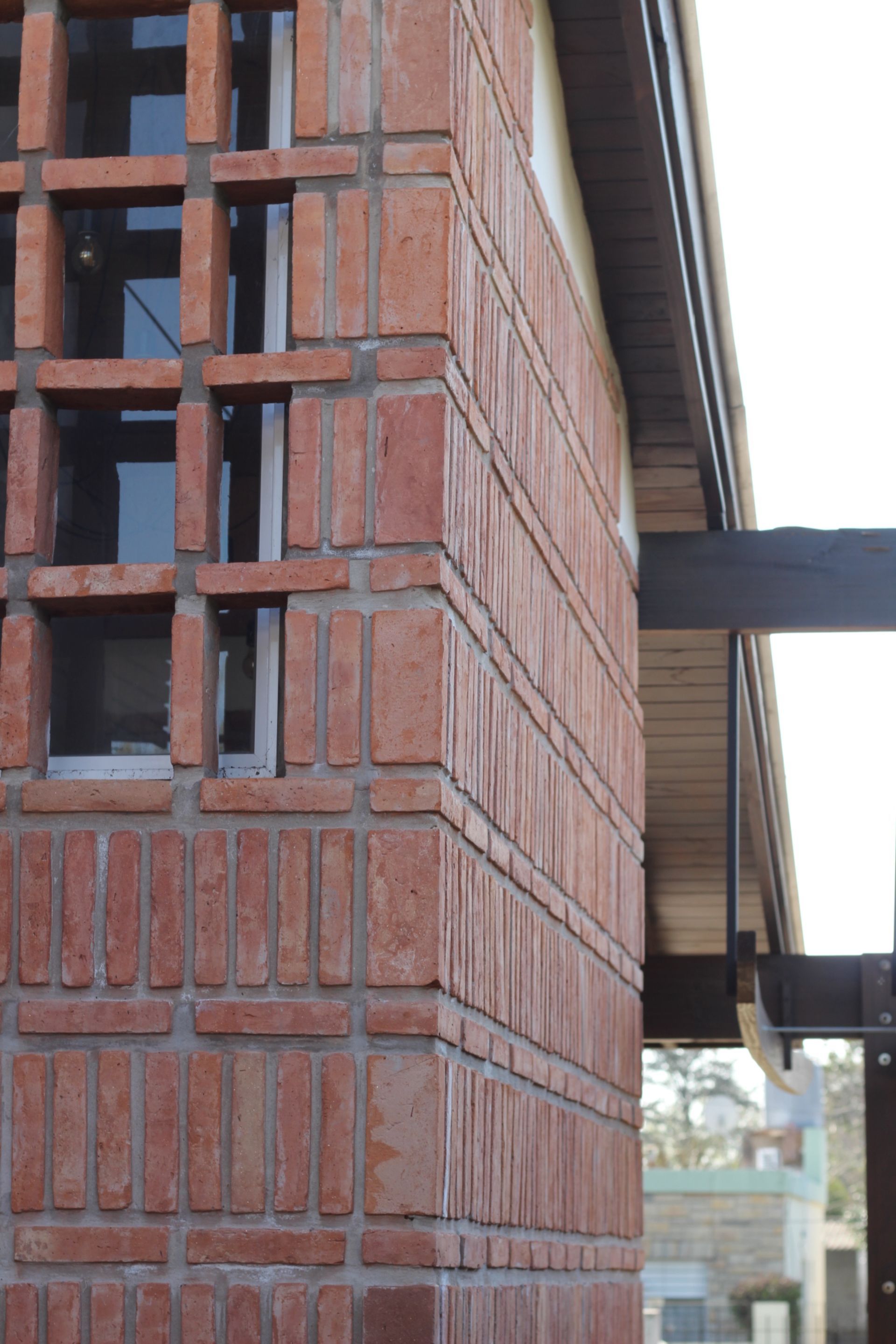
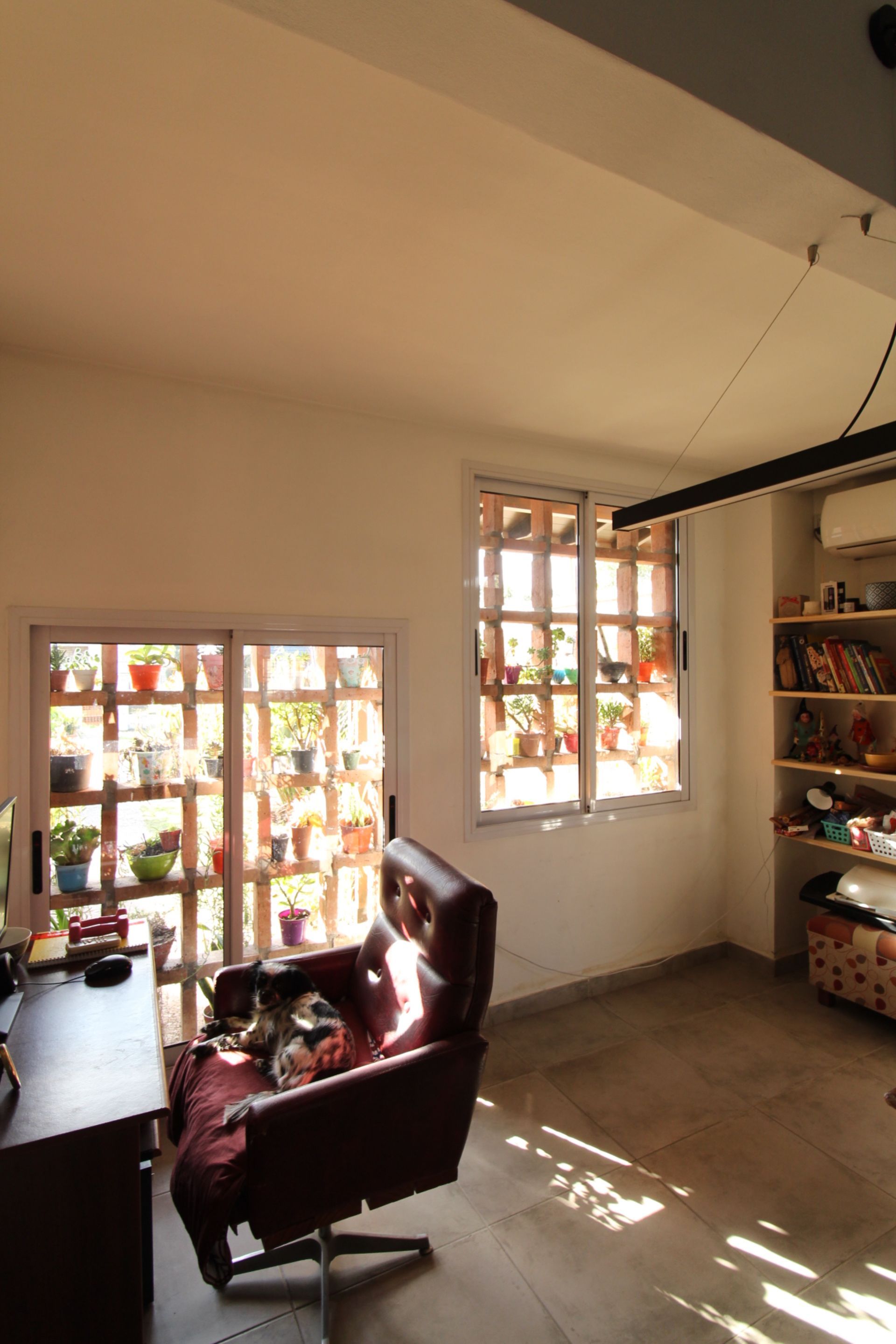
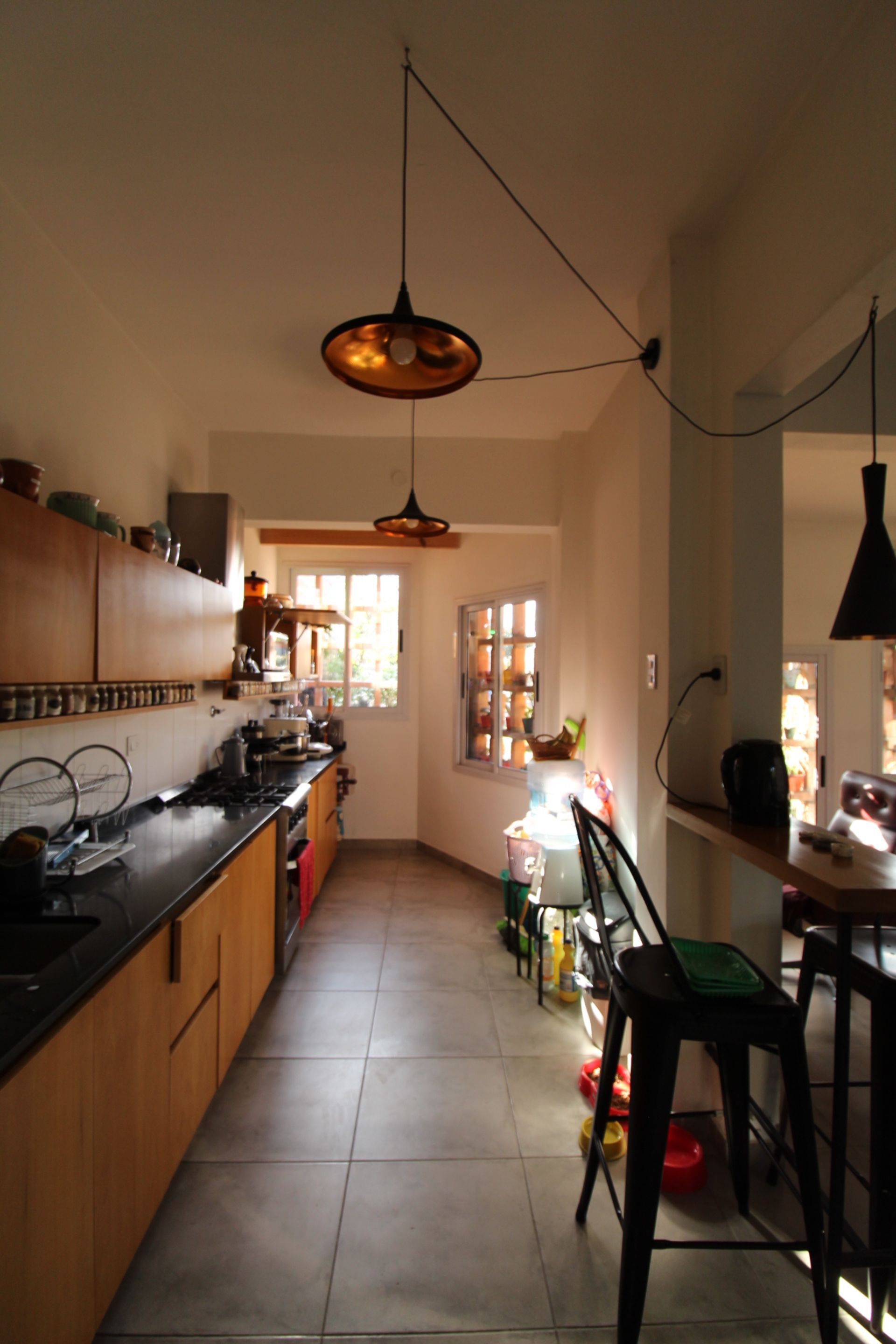
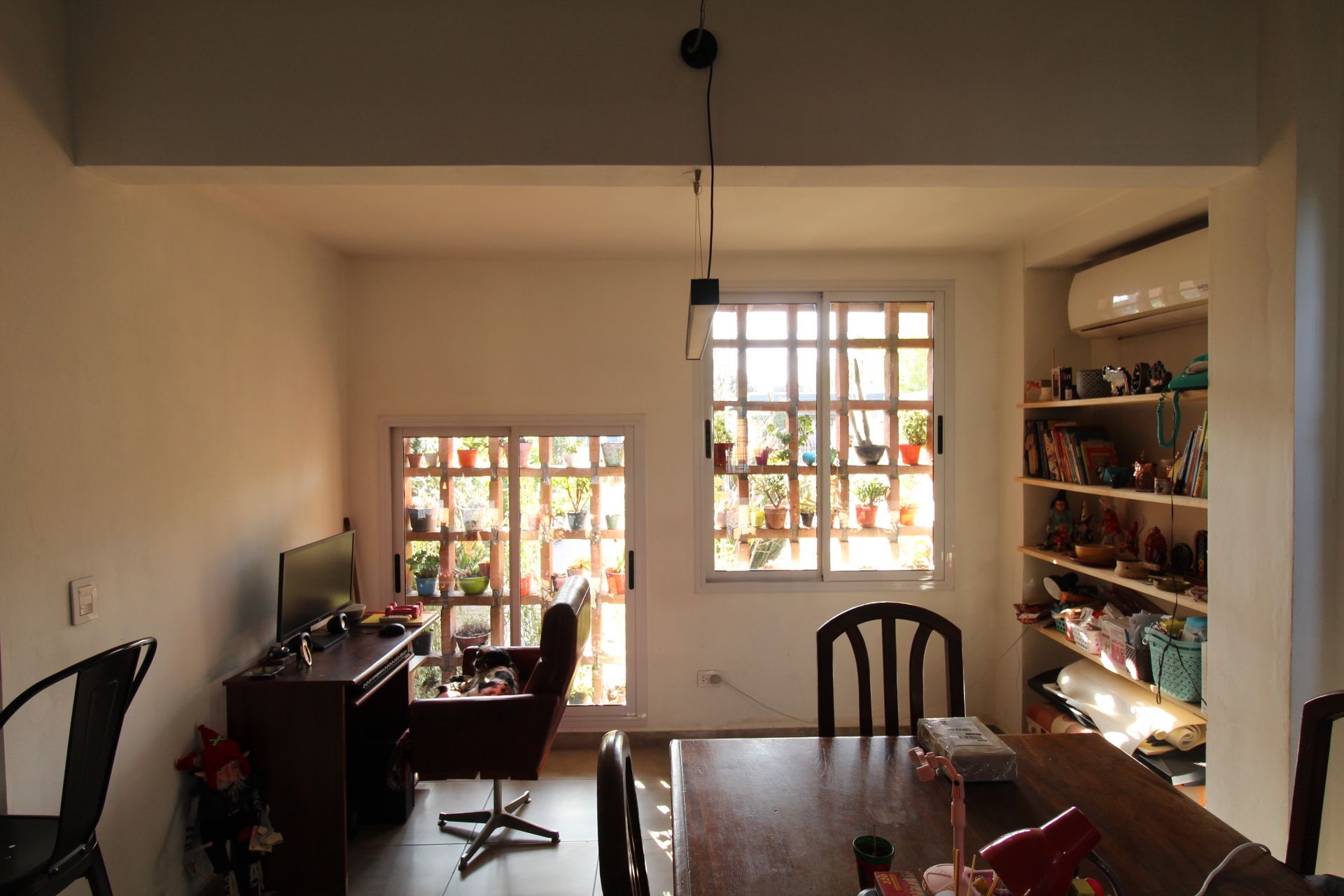
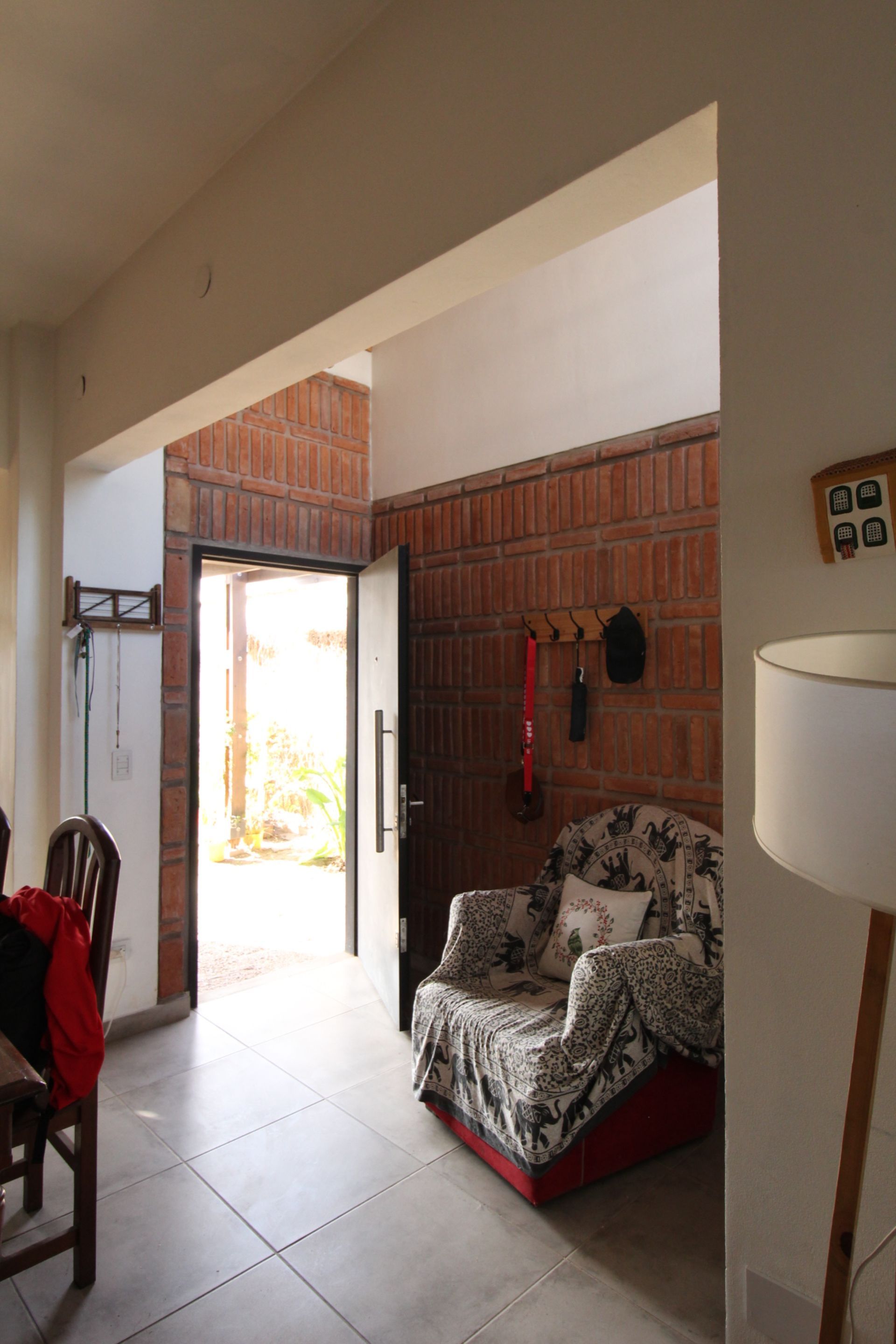
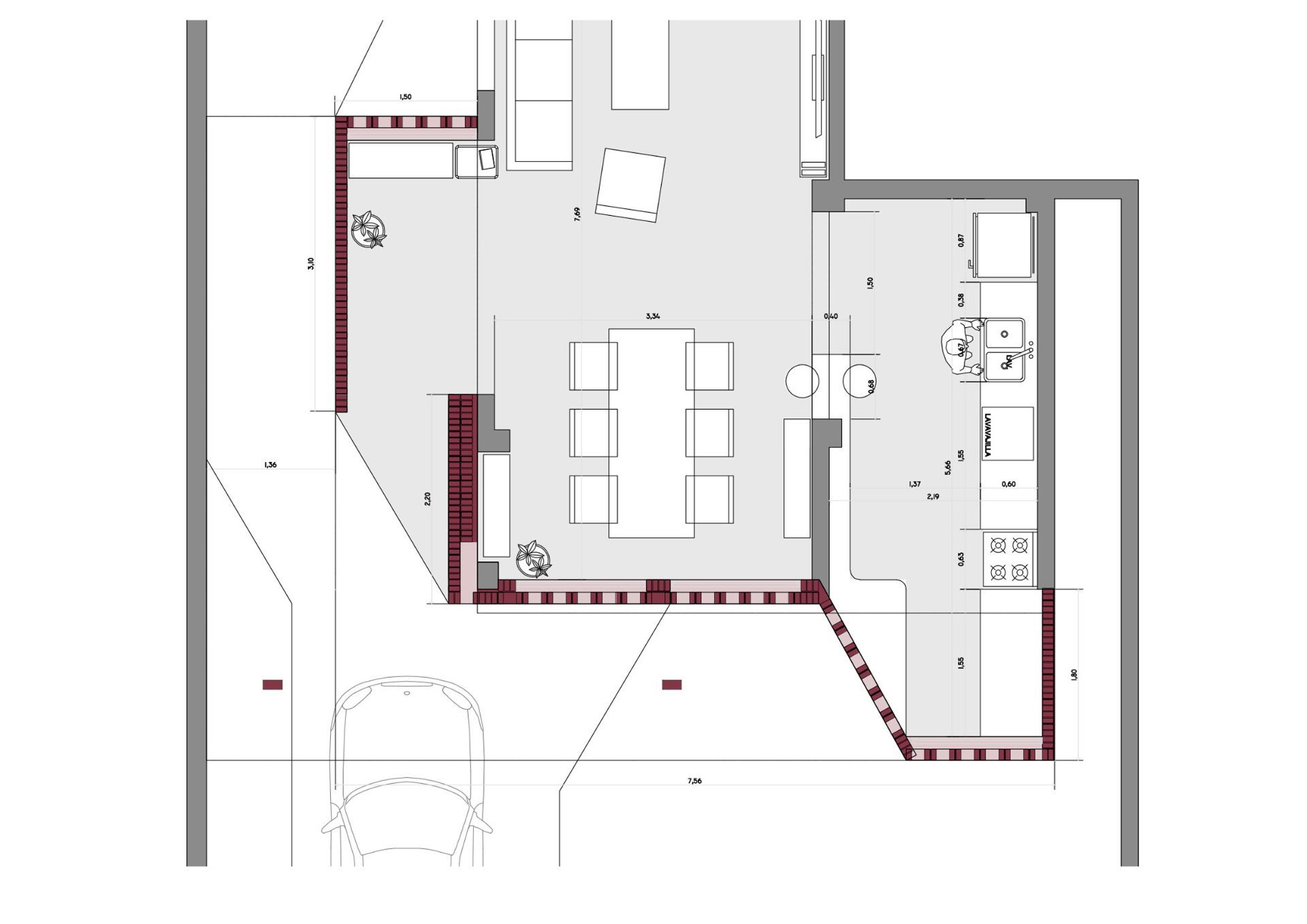
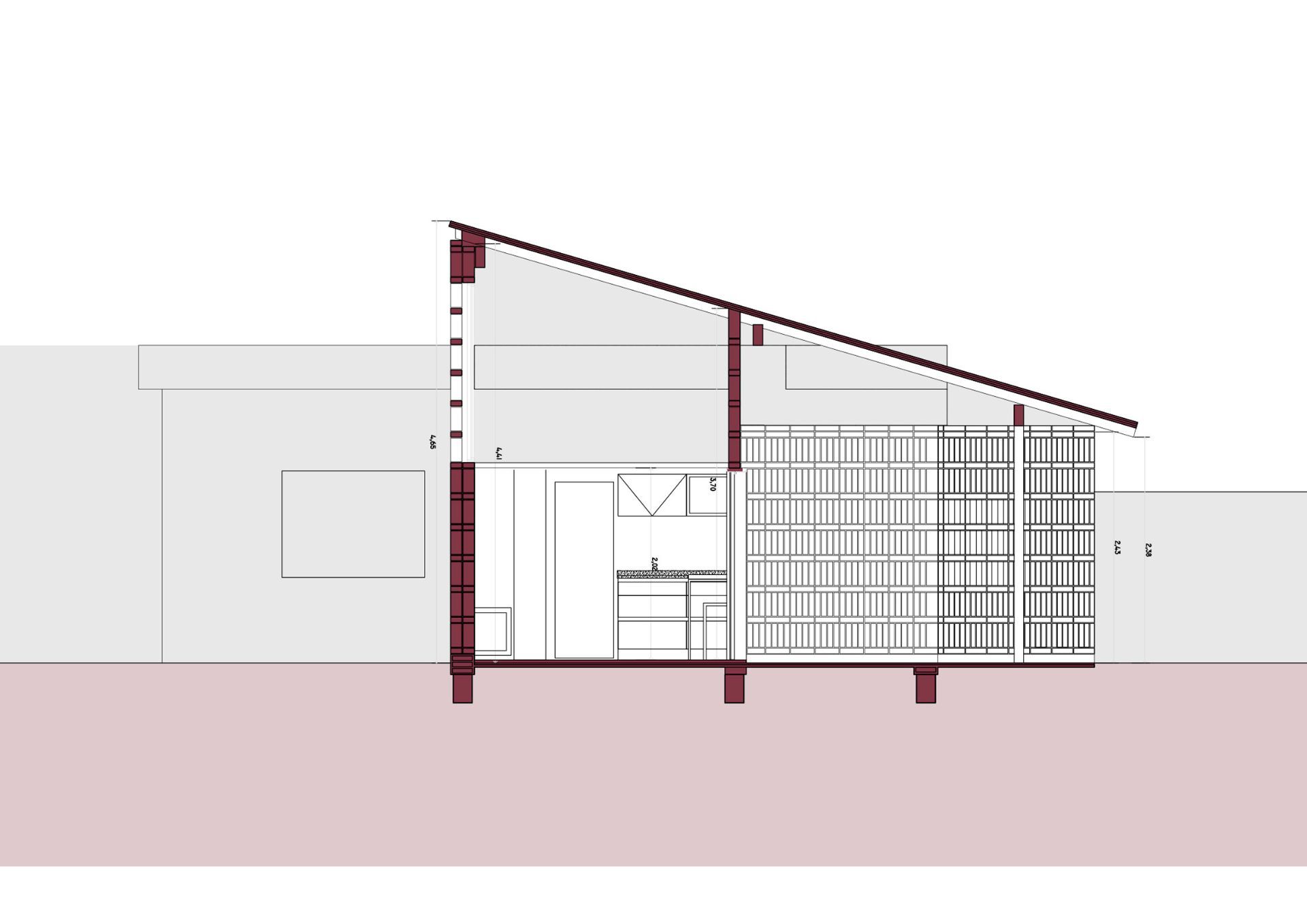
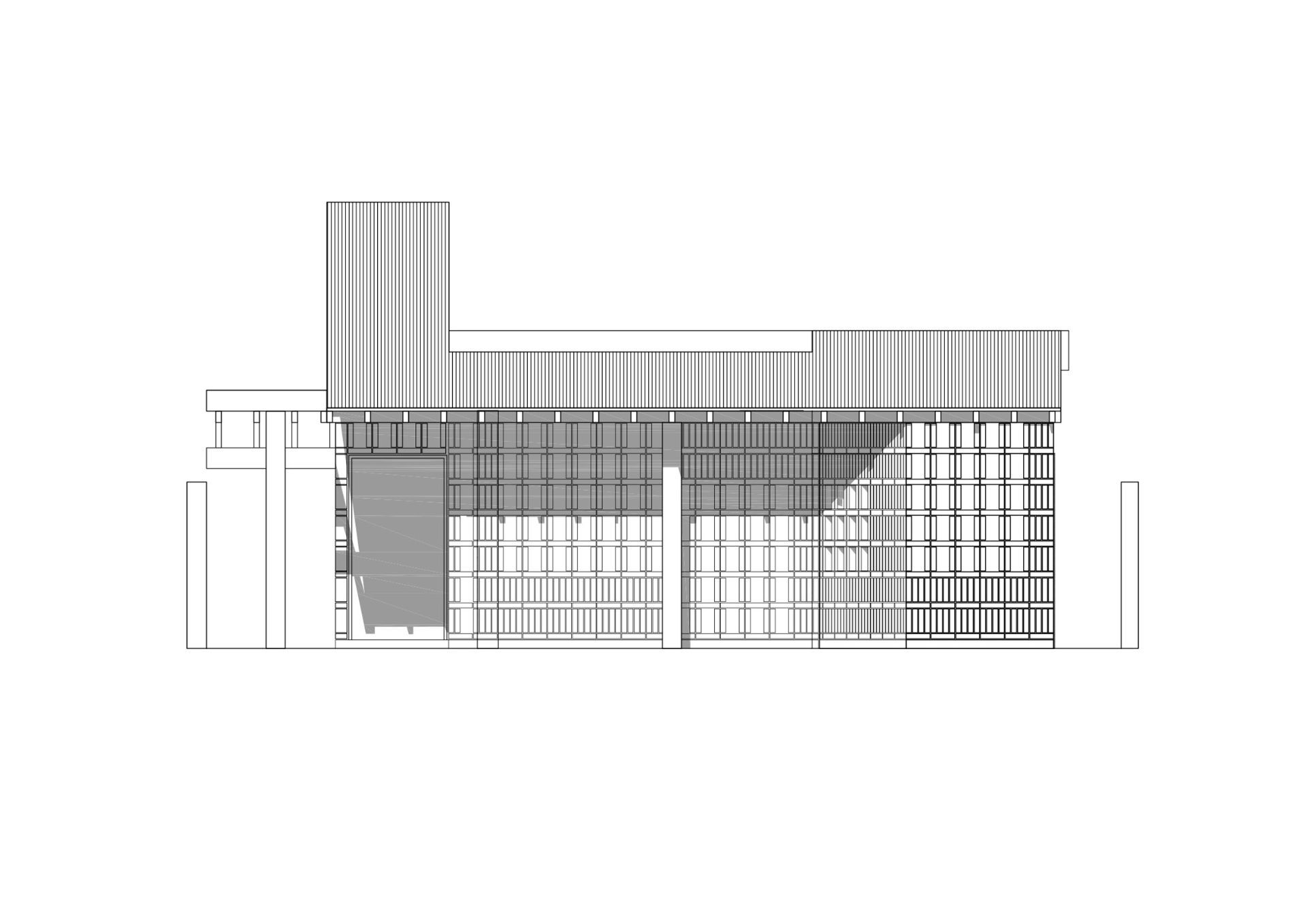
El encargo se dió como una serie de pretenciones claras y aisladas: Ampliar la cocina, ganar más luz y tener un lugar para hacer yoga, mejorar el acceso a la casa dándole jerarquía y evitar ver desde la calle un departamento que existe en el fondo del lote, por detrás de la casa a intervenir. Se propuso una única piel de ladrillo que envolviese la existencia, ampliara espacios, reordenara visuales, definiera un nuevo modo de acceder, capturara un semicubierto en desuso como parte de la interioridad. Esta nueva superficie que por momentos se adapta a lo que existe y por momento se despega busca en esa diferencia construir un BORDE, a diferencia de lo que se interpreta como Límite. EN esta condición, el Borde tiene espesor y es habitable. Posibilitando generar transiciones controladas en el pasaje de exterior a interior no sólo de las personas, sino tambien del aire y la luz para que la experiencia sea atractiva. La nueva piel define con un lenguaje atemporal las nuevas formas de habitar de una casa. Dando desde sus bordes una nueva oportunidad de ocupar el hogar de toda la vida de una jubilada en el conurbano bonaerense.”

The commission stemmed from a series of clear and distinct requirements: to enlarge the kitchen, increase natural light, create a space for yoga, improve access to the house by giving it a more prominent presence, and prevent a rear apartment, located behind the house to be renovated, from being visible from the street. A single brick skin was proposed to envelop the existing structure, expand spaces, reorganize views, define a new access point, and incorporate a disused semi-covered area as part of the interior. This new surface, which at times adapts to the existing structure and at other times detaches itself, seeks to construct a BORDER through this contrast, as opposed to what is typically interpreted as a Boundary. In this context, the Edge has depth and is habitable, enabling controlled transitions between exterior and interior, not only for people but also for air and light, making the experience engaging. The new skin defines, with a timeless language, new ways of inhabiting a house. Giving from its edges a new opportunity to occupy the lifelong home of a retired woman in the Buenos Aires suburbs.
Fecha -Date - 2020-2021
Ubicación -Location - Paso del Rey, Buenos Aires
Tipo -Typology -AmpliaciónHousing Extension
Equipo -Team -
Juan Pablo BerberyJuan Pablo BerberySantiago BechSantiago BechDana Martinez de NobiliDana Martinez de NobiliDaniel Gonzalez (Constructor)Daniel Gonzalez (Builder)Lautaro GonzalezLautaro GonzalezMartin PederneraMartin Pedernera
Estado -Status -En Proceso - Etapa 1 TerminadaIn Progress - Phase 1 Completed
Fotos -Photos - Matias Lien Benitez

Casa Los Juncos

Lujan, Buenos Aires
2024

CASA LOS JUNCOS

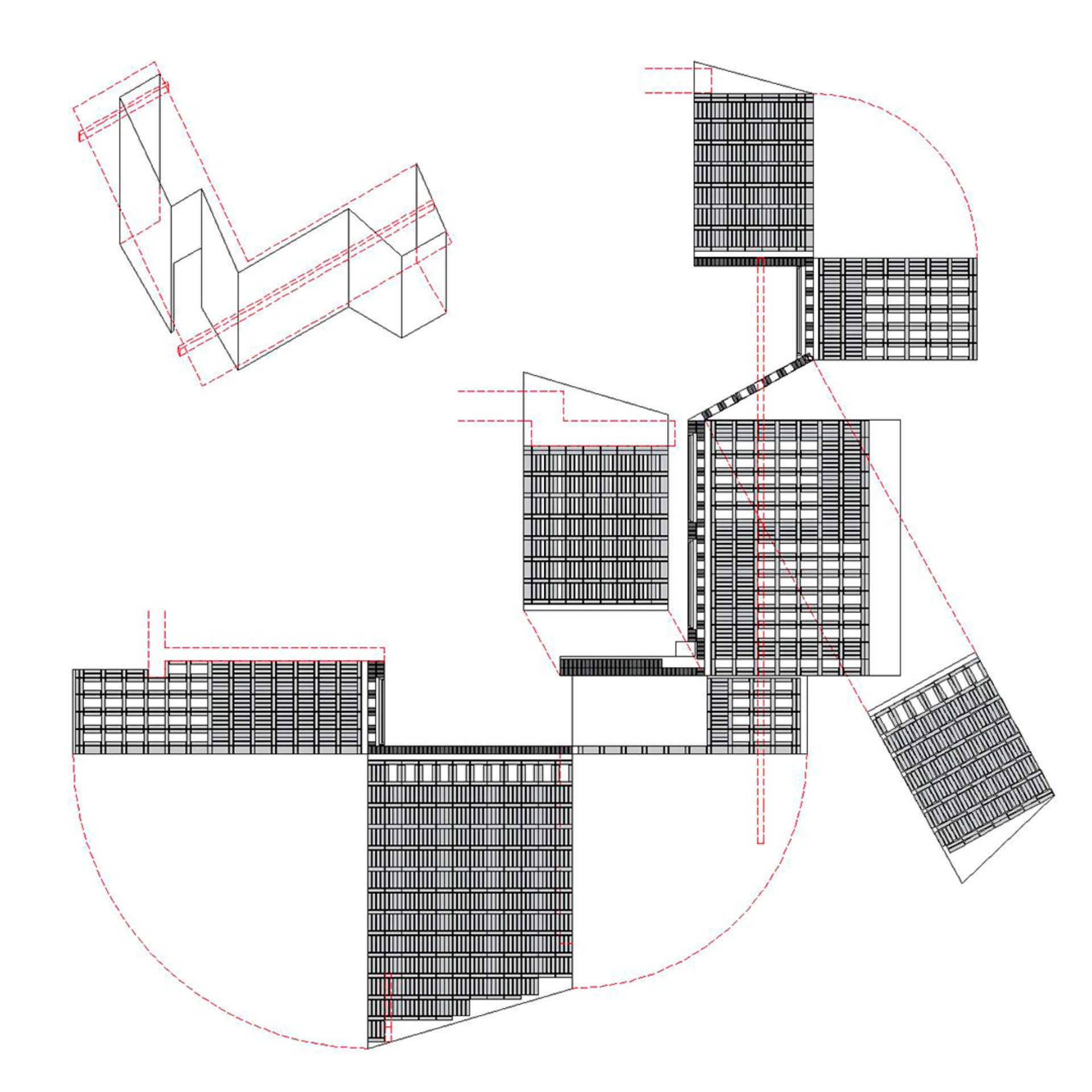
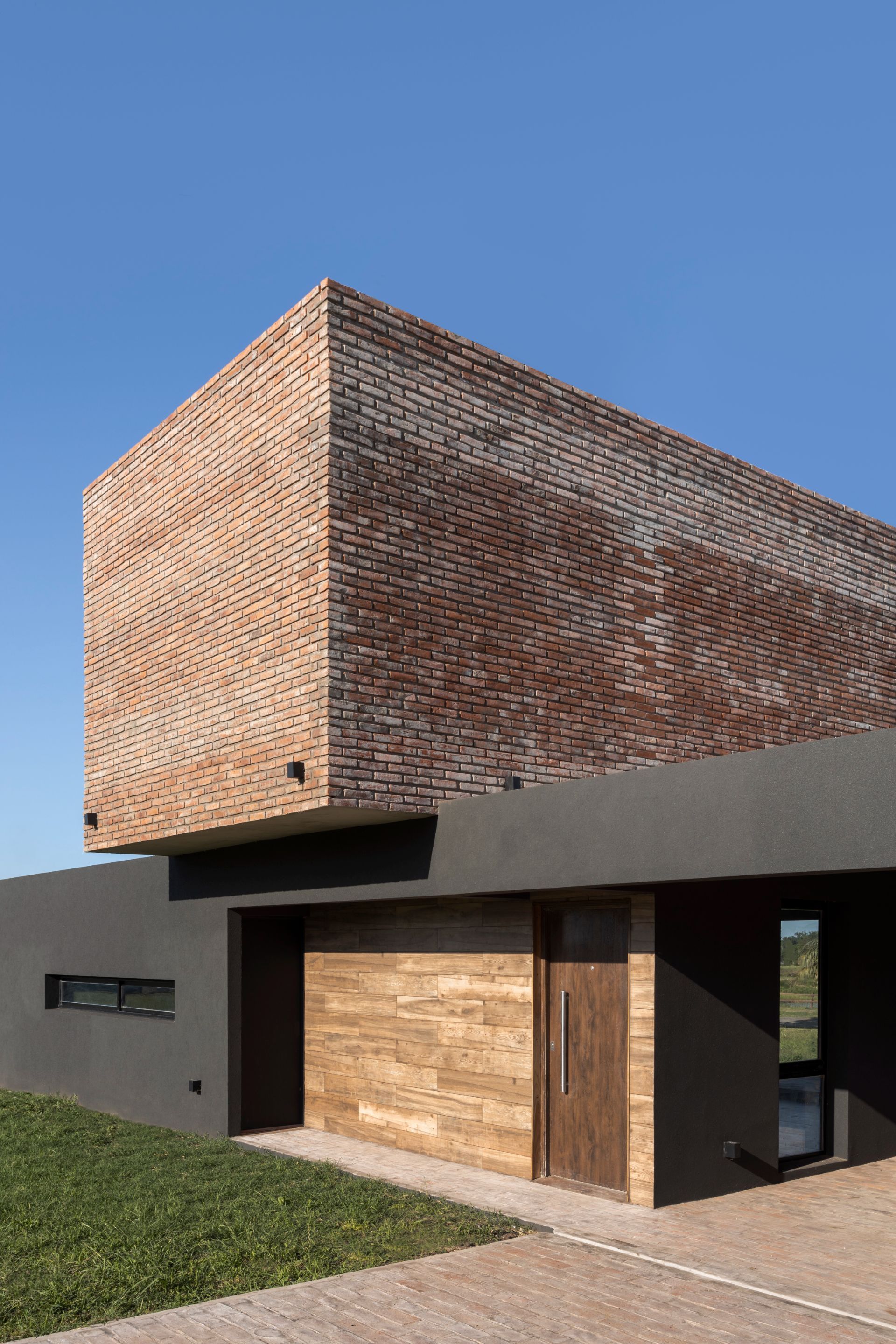
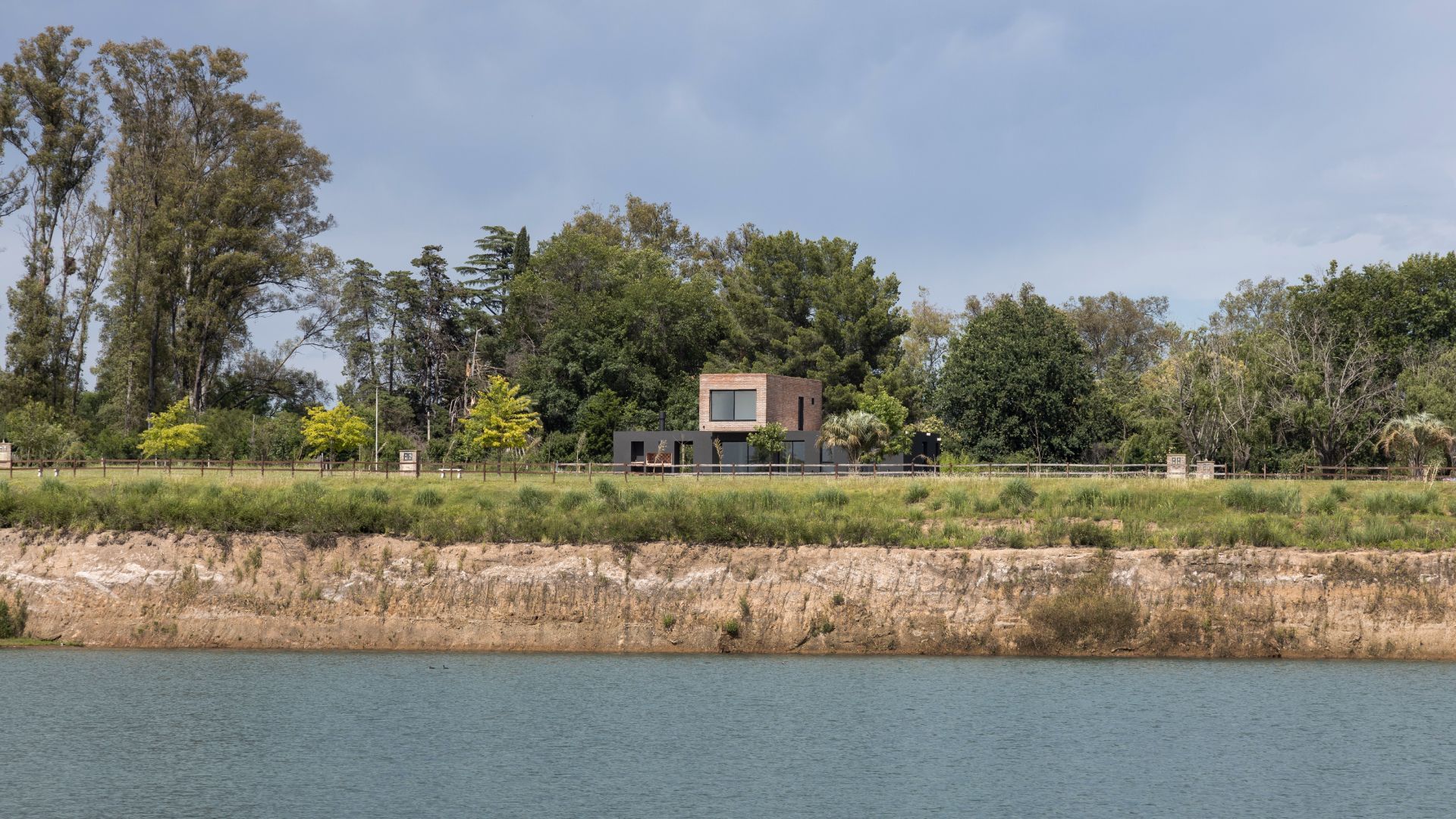
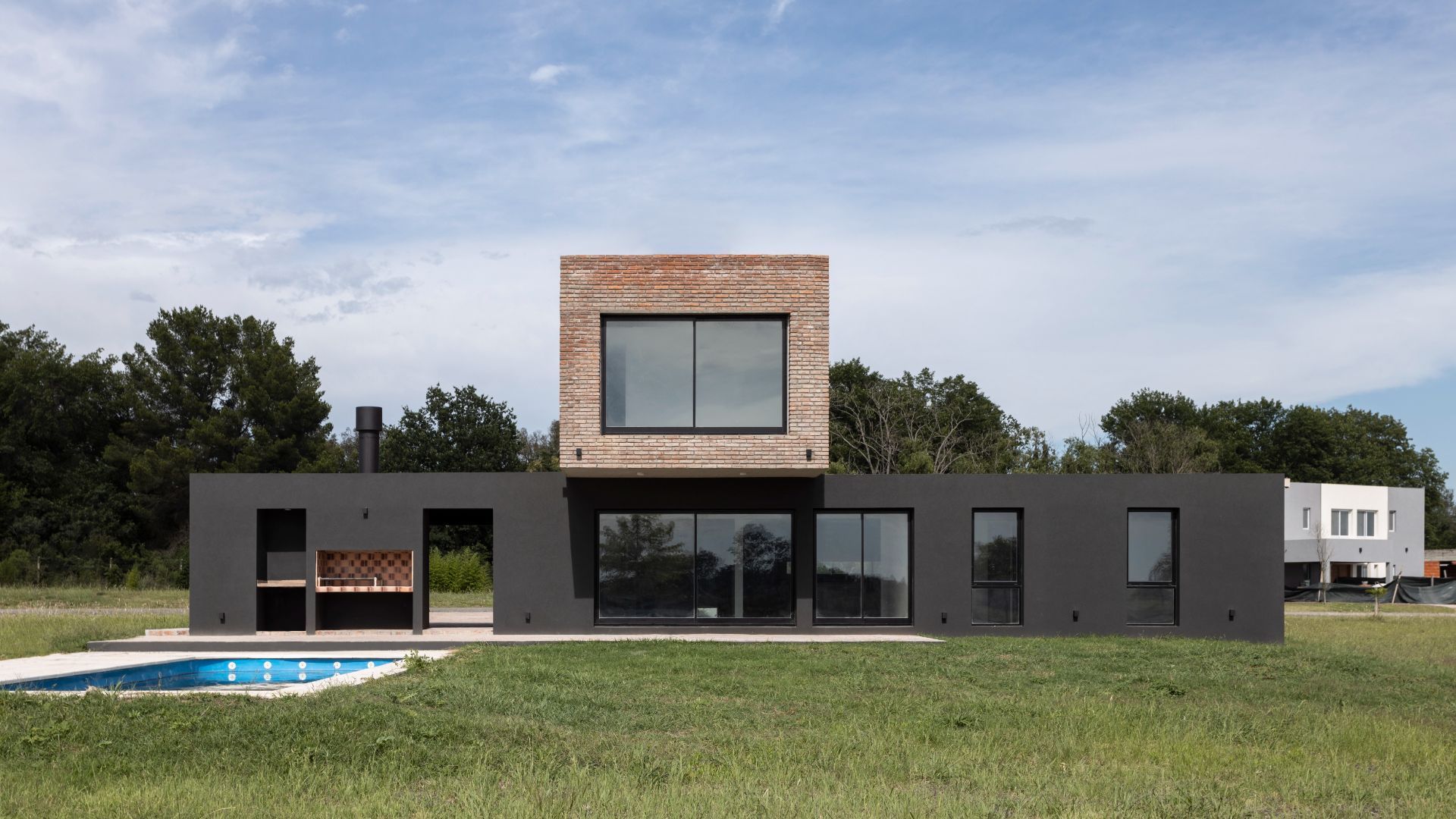
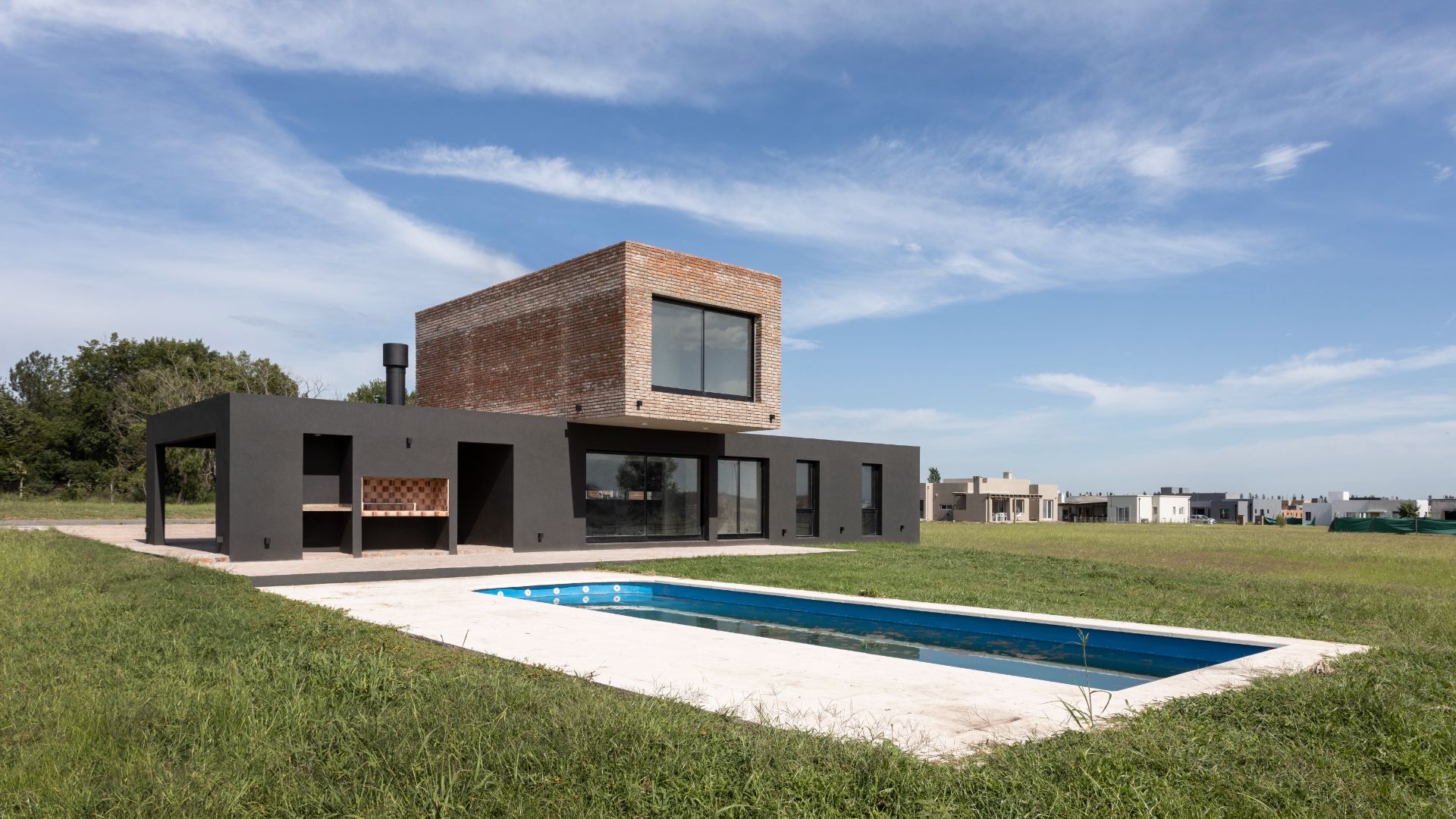
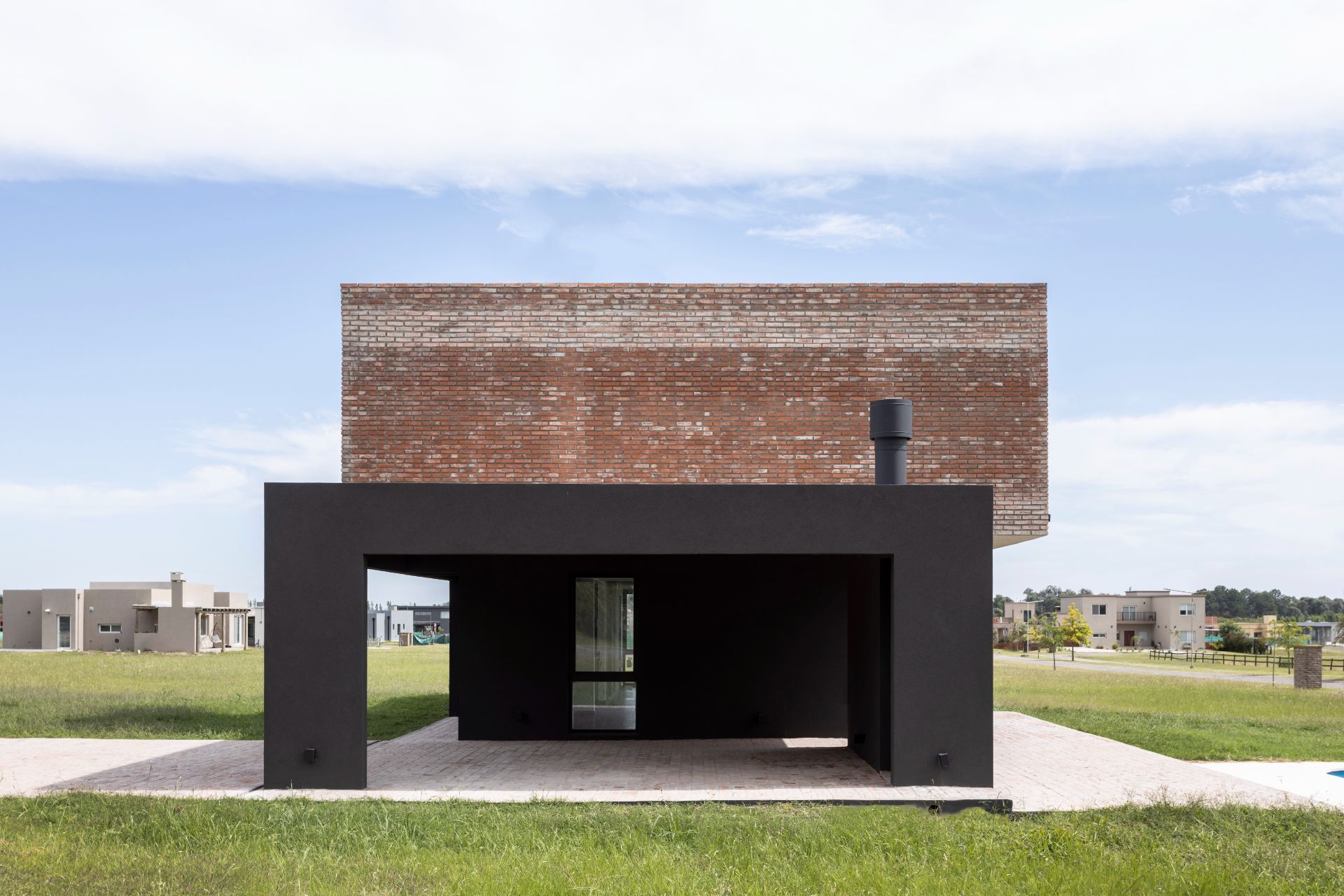
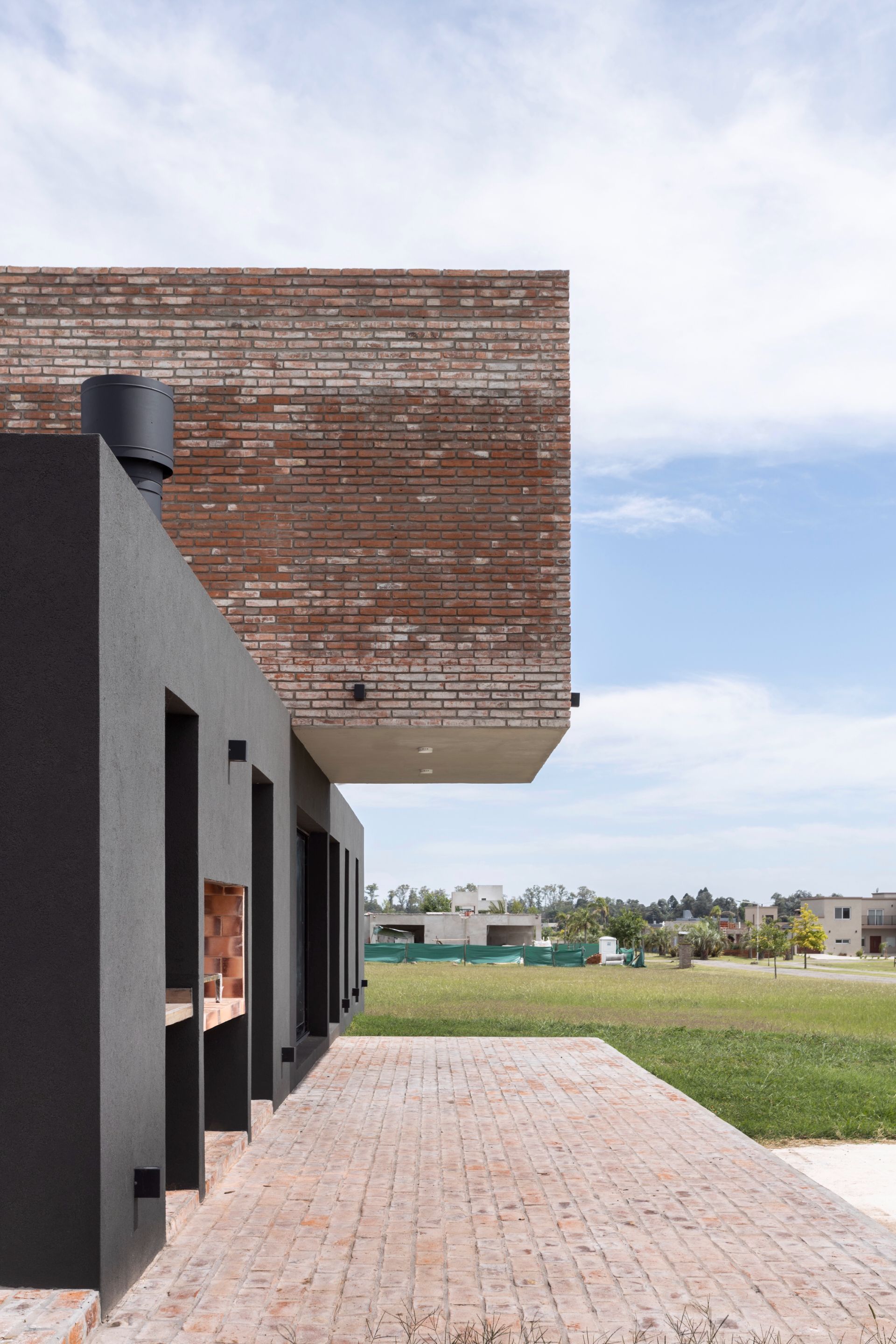
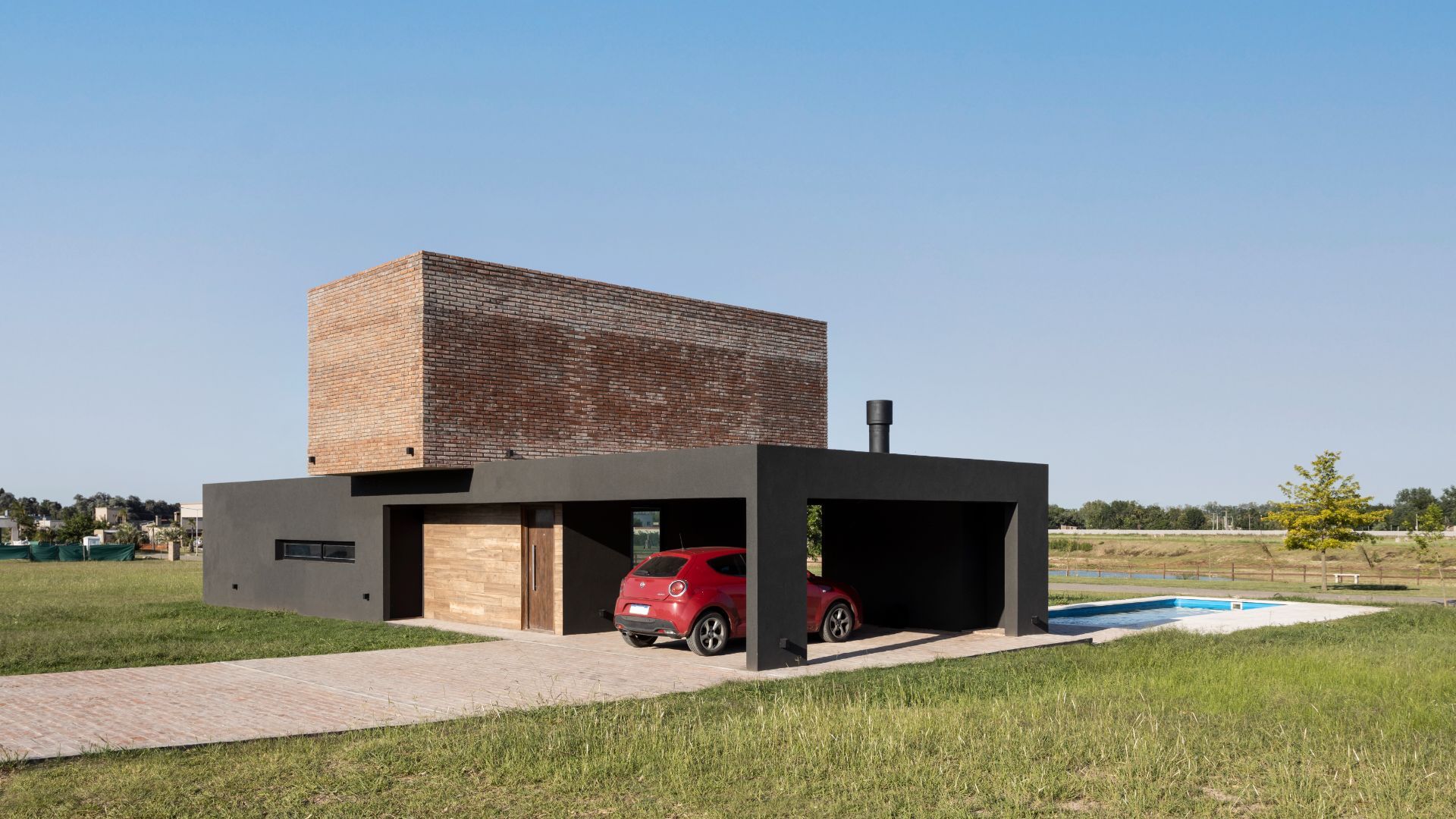
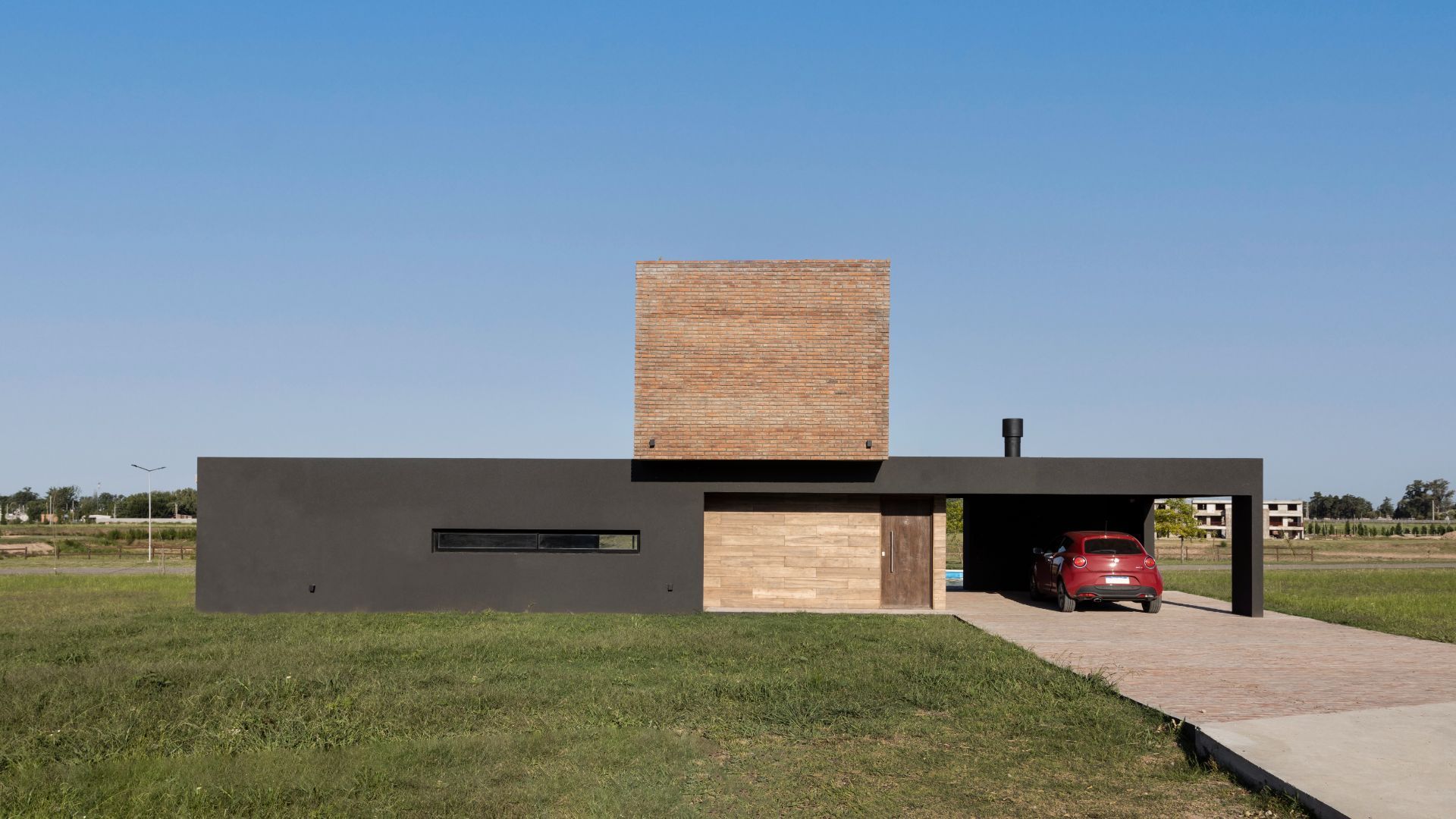
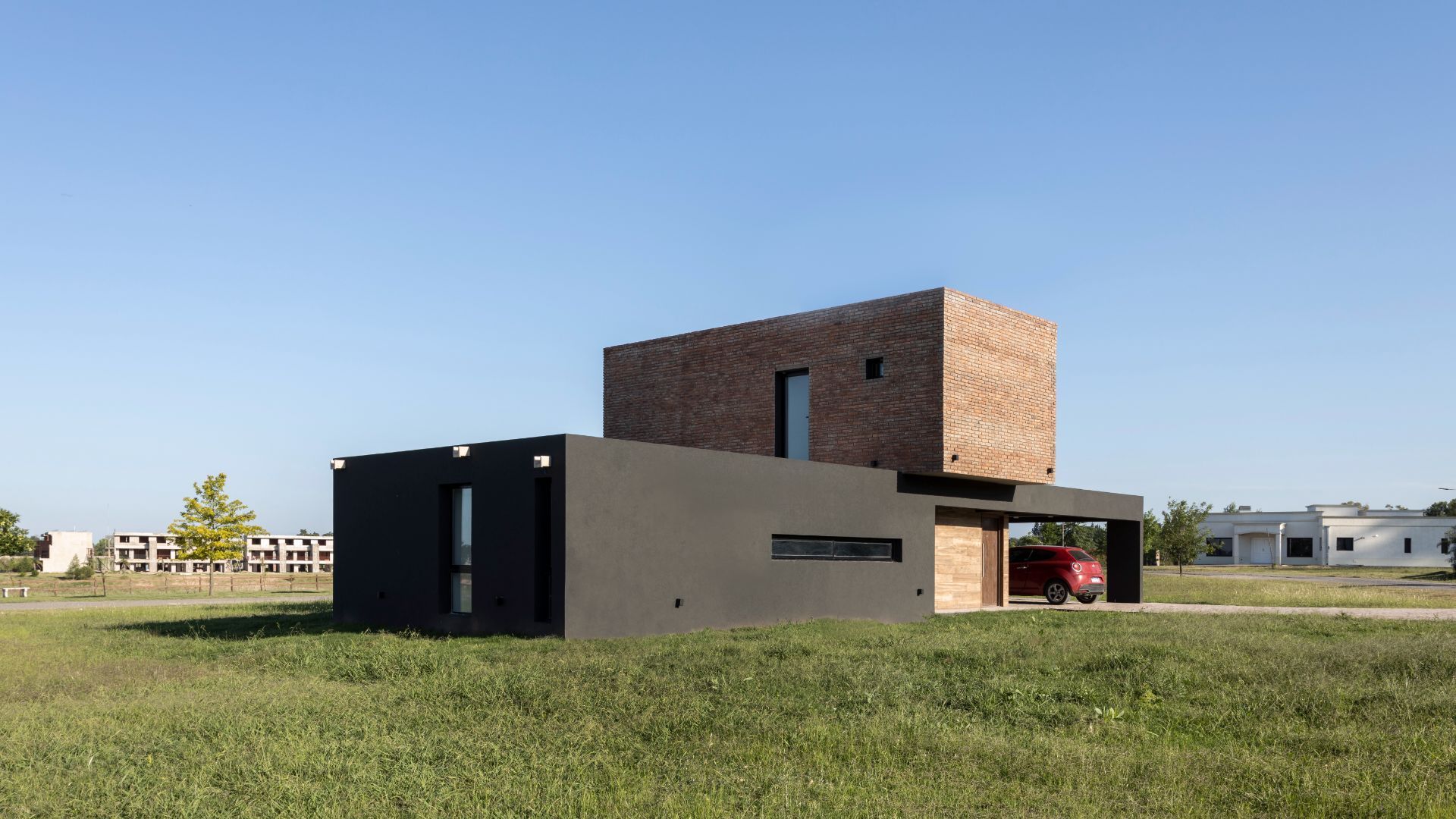
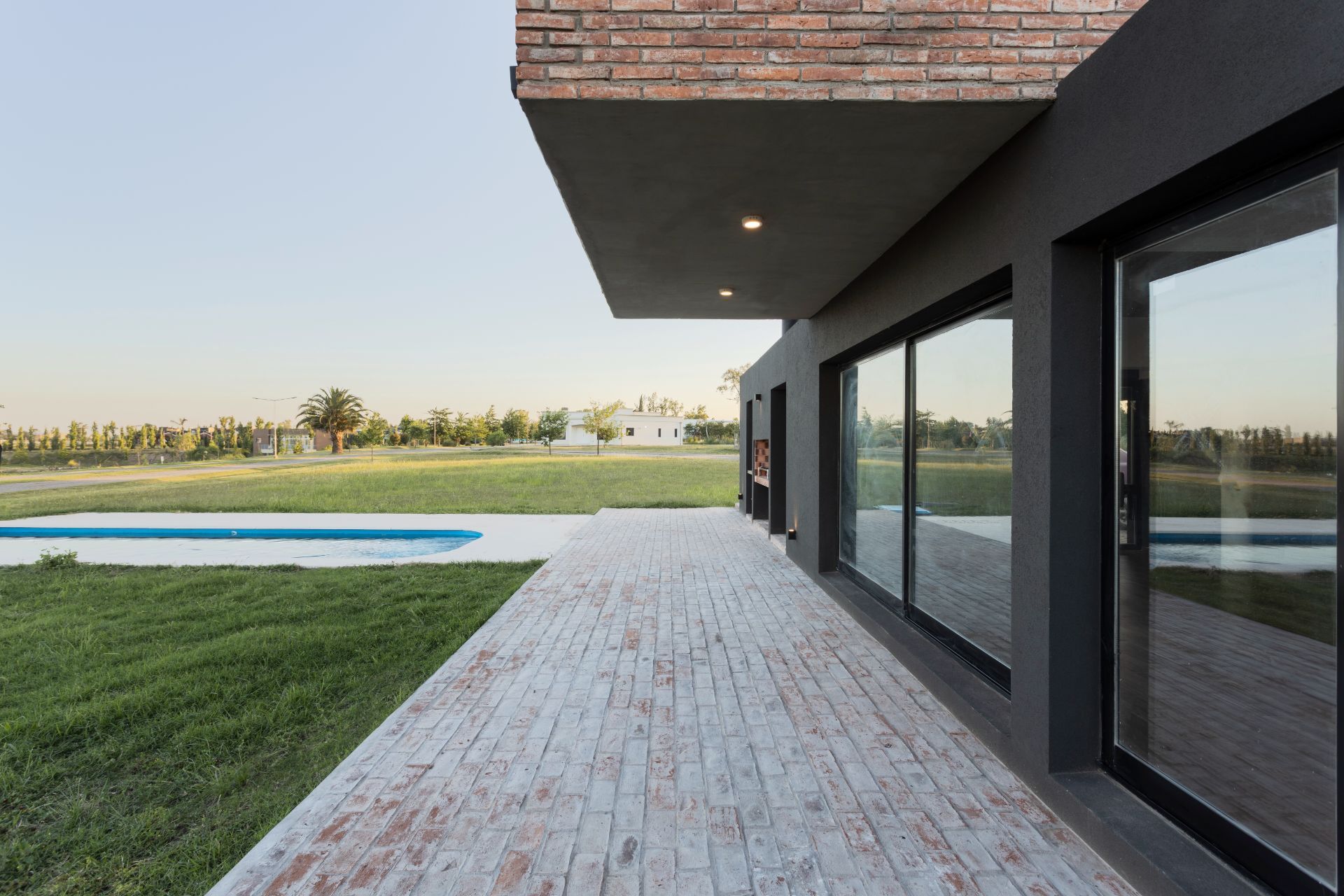
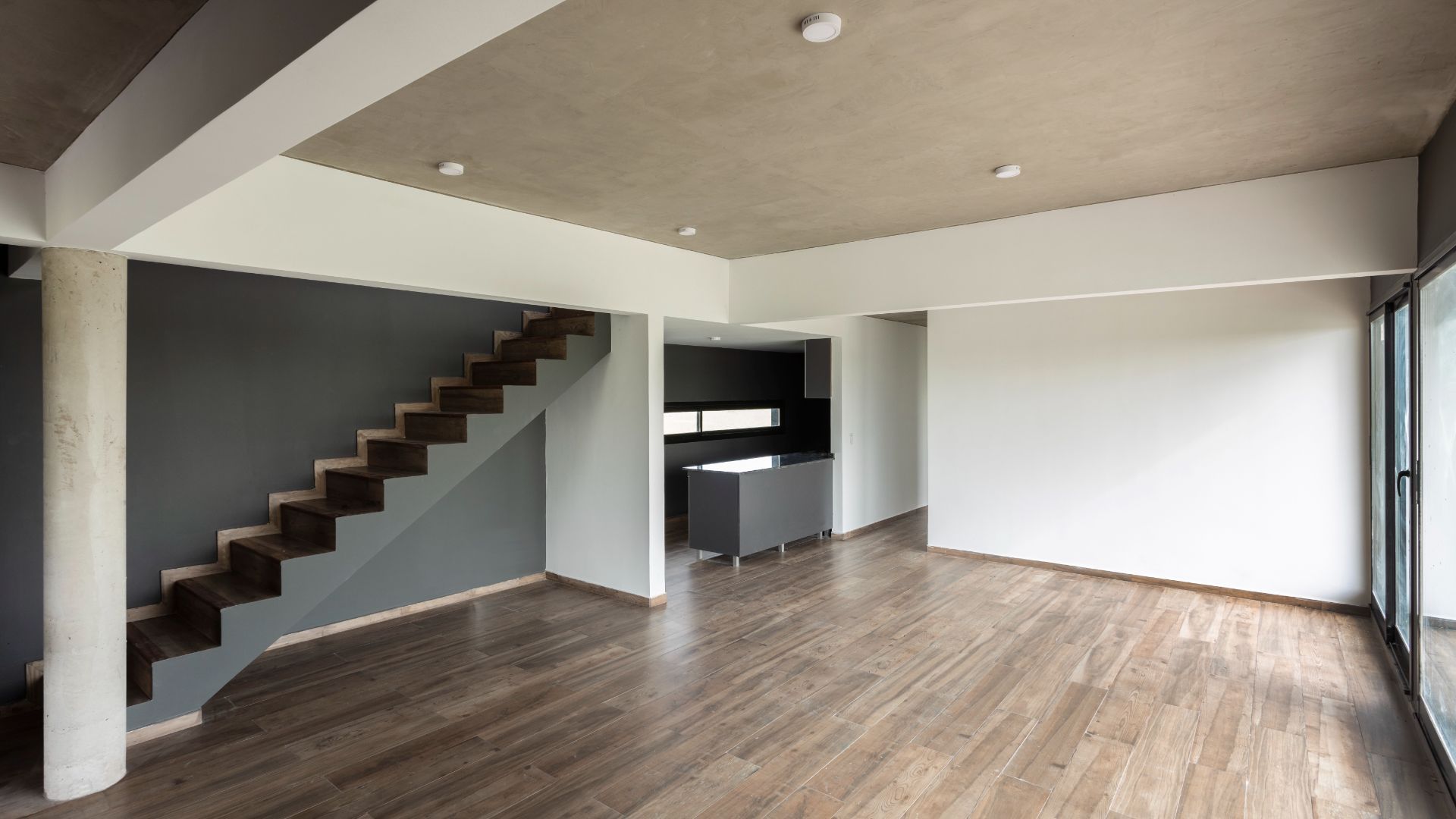
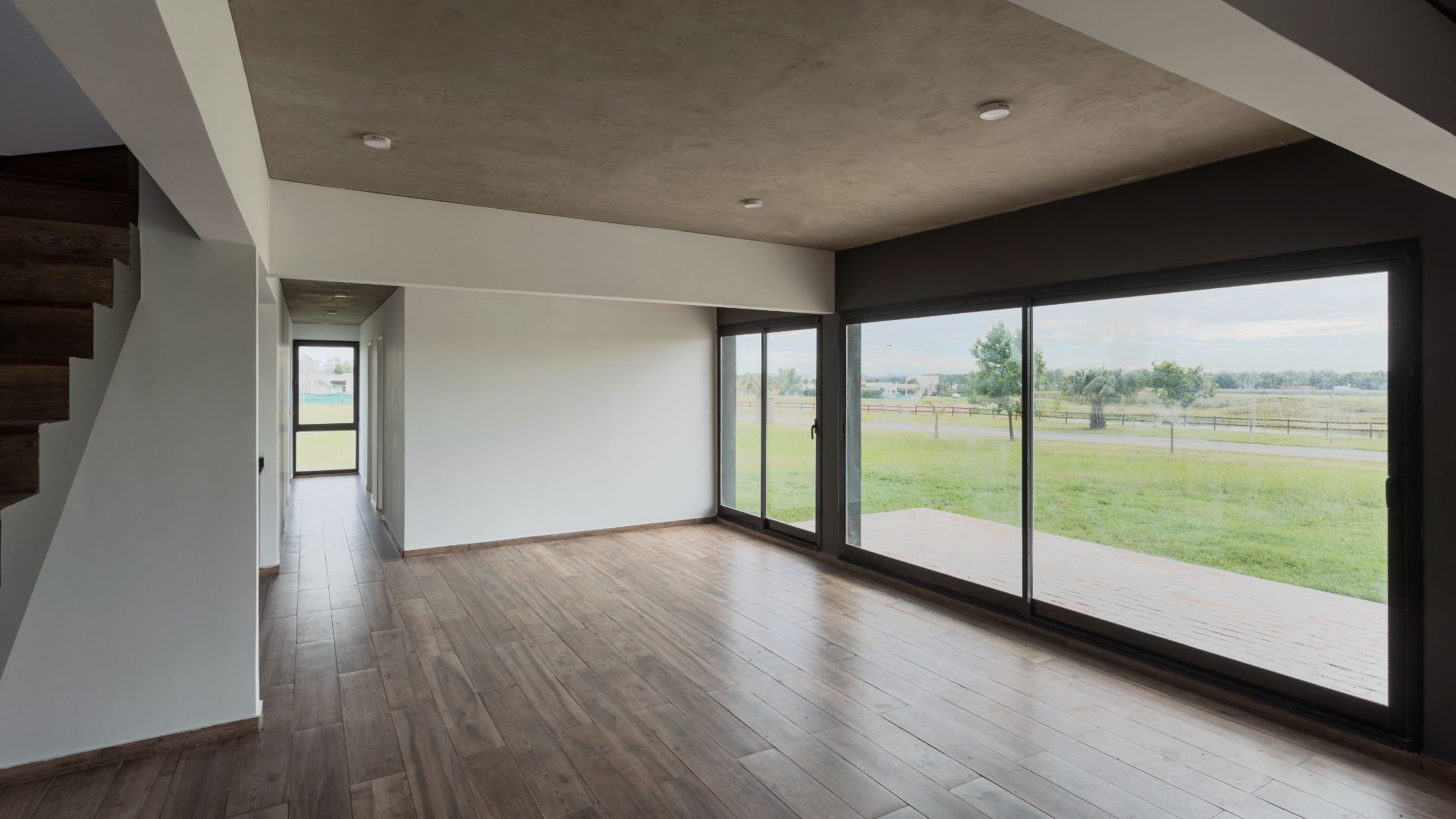
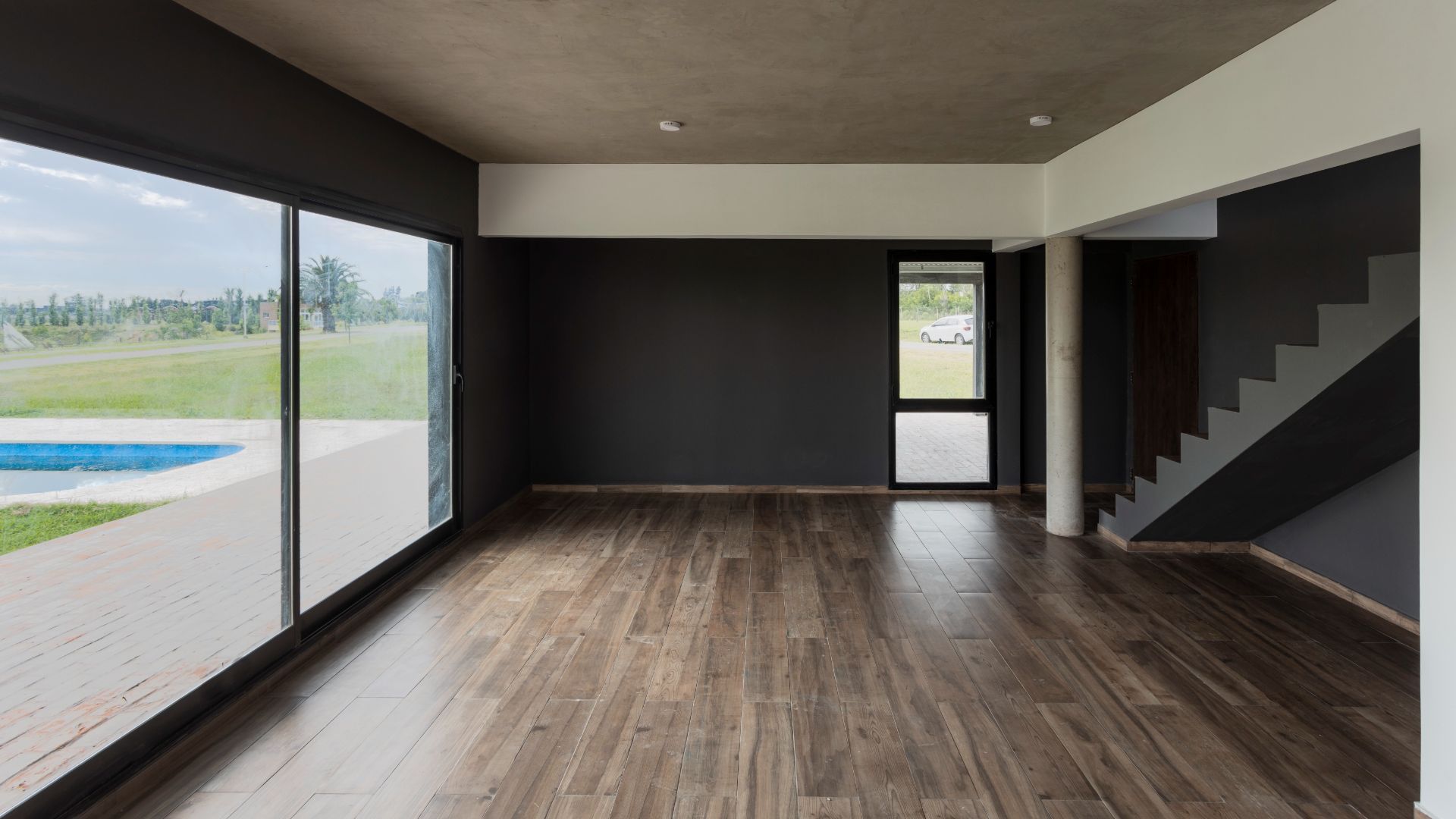
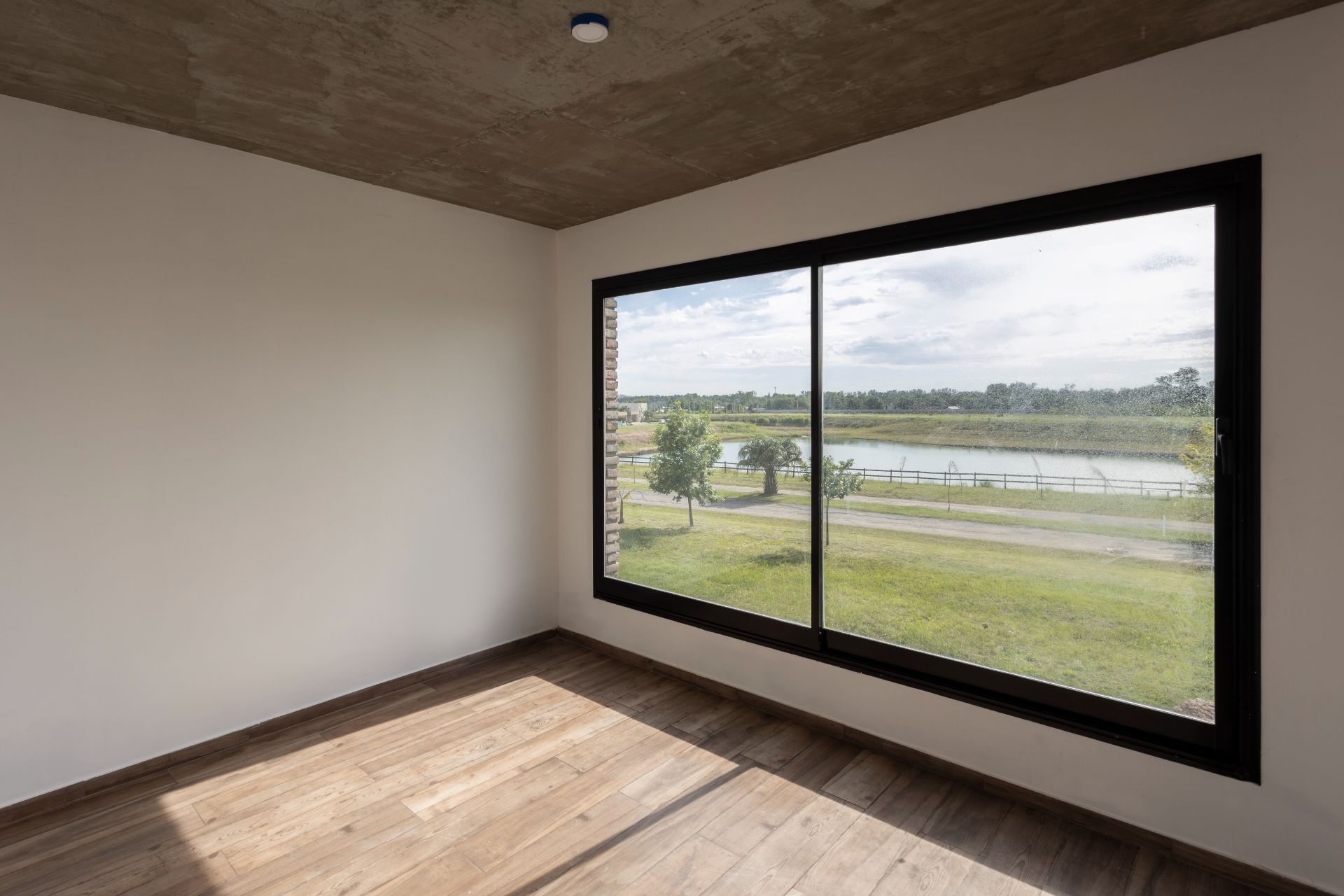
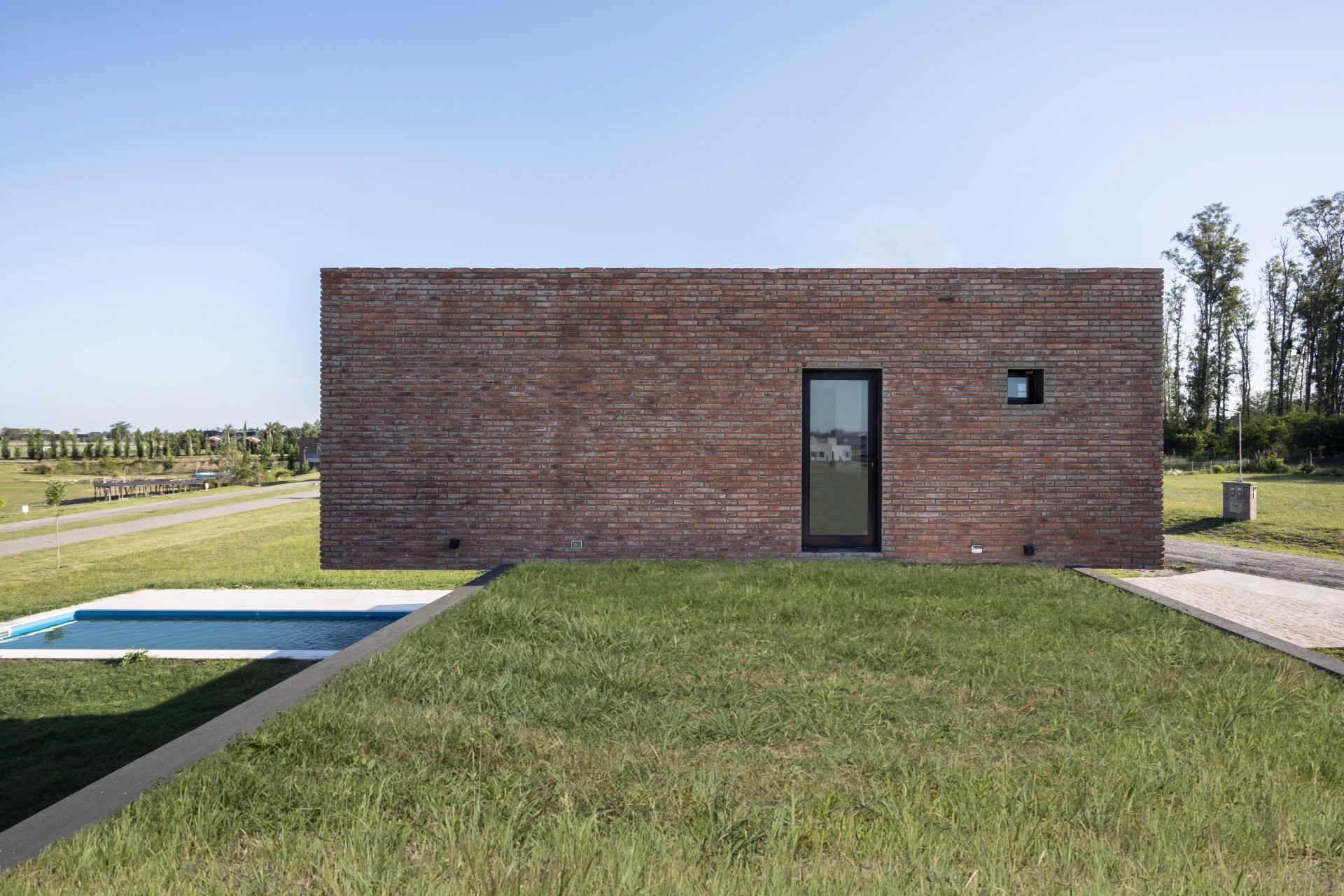
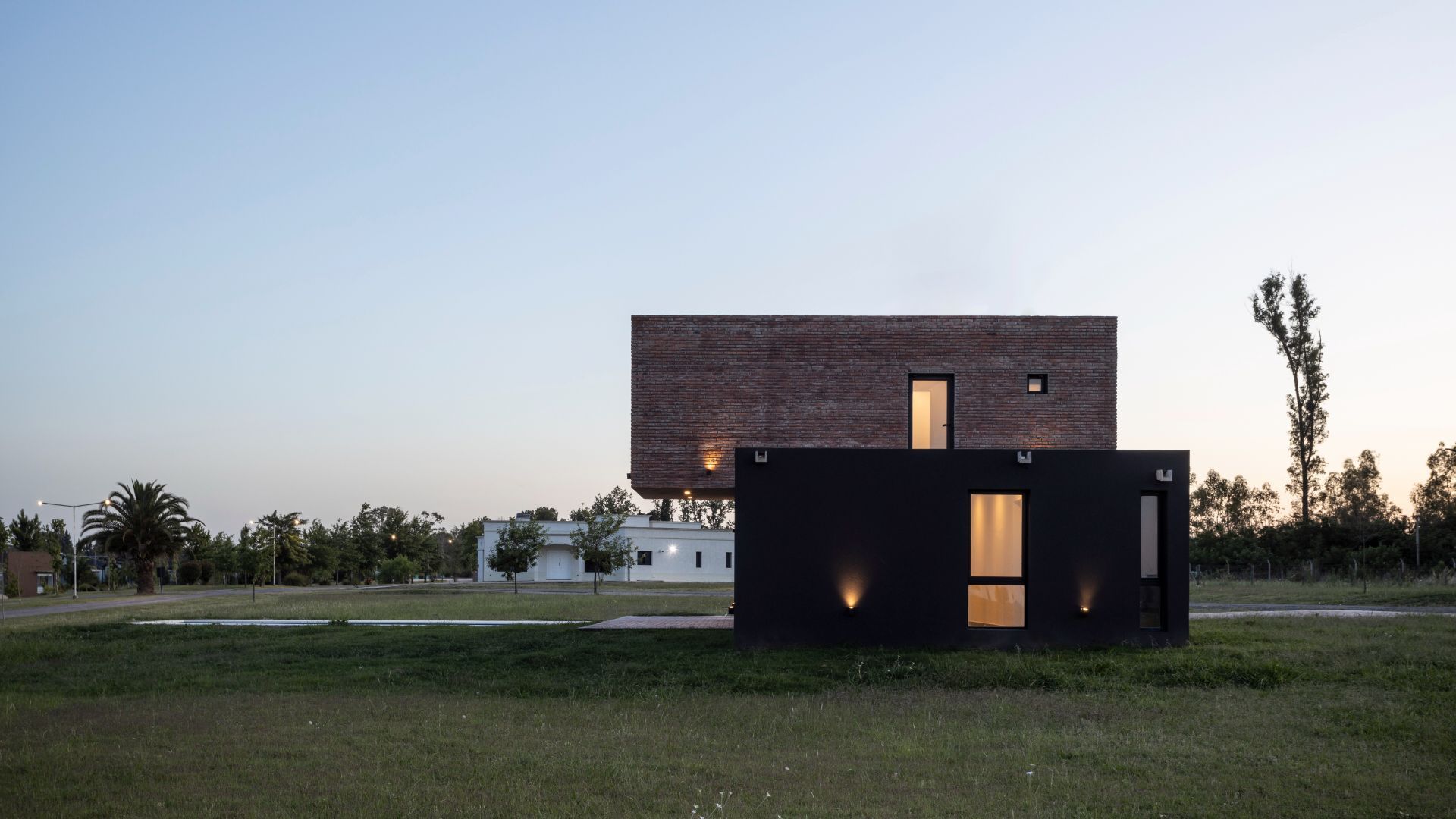
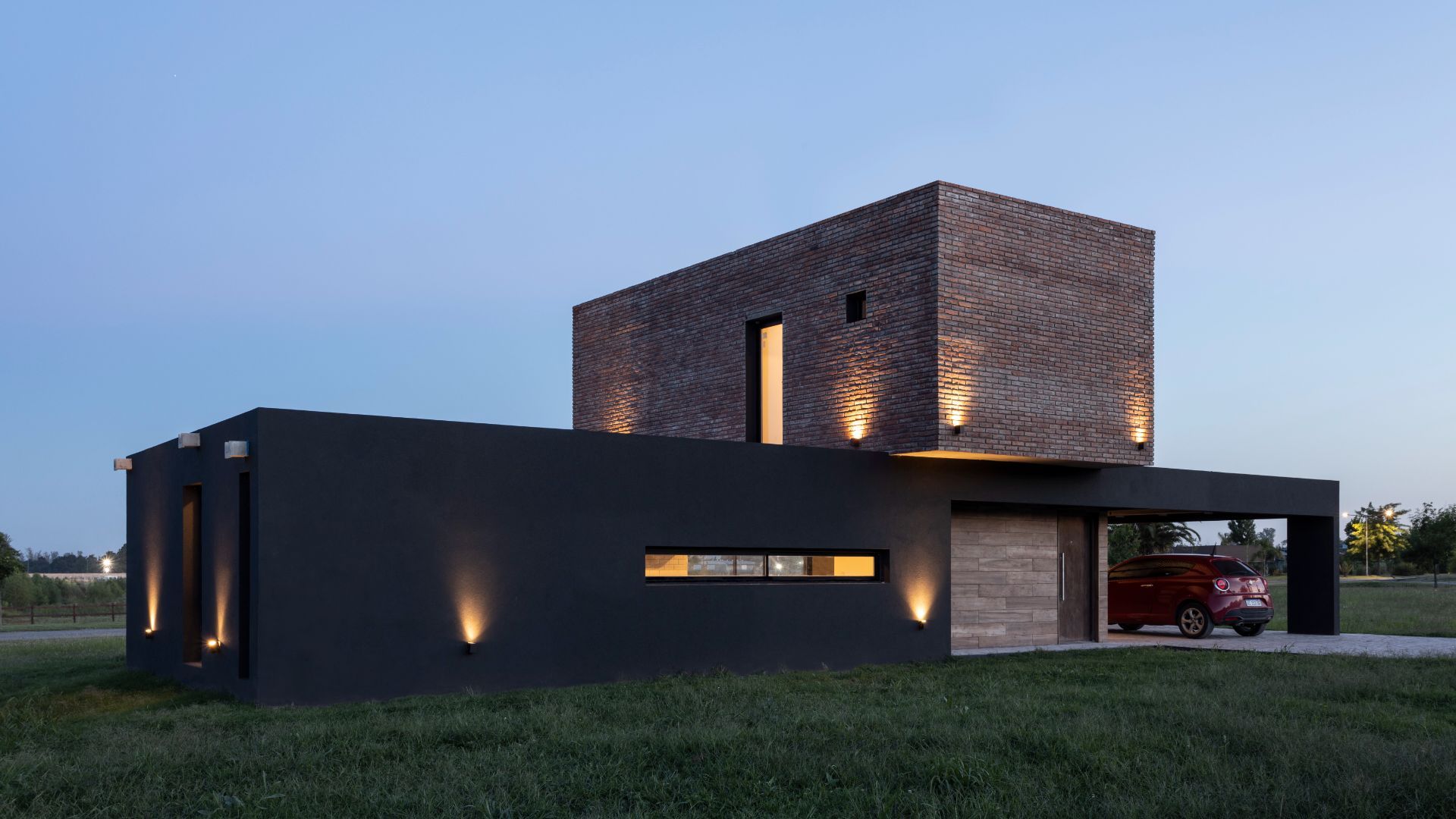
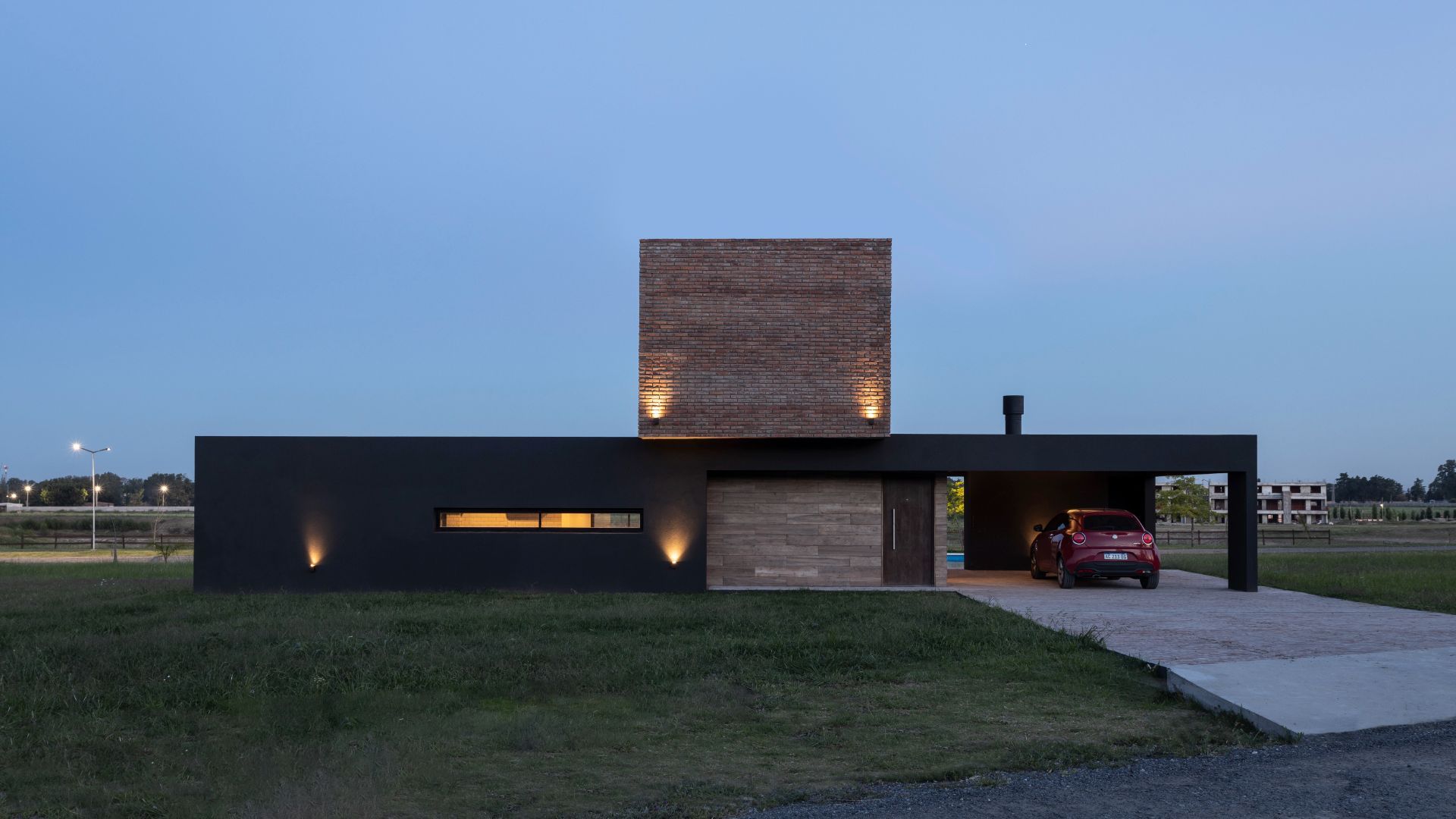
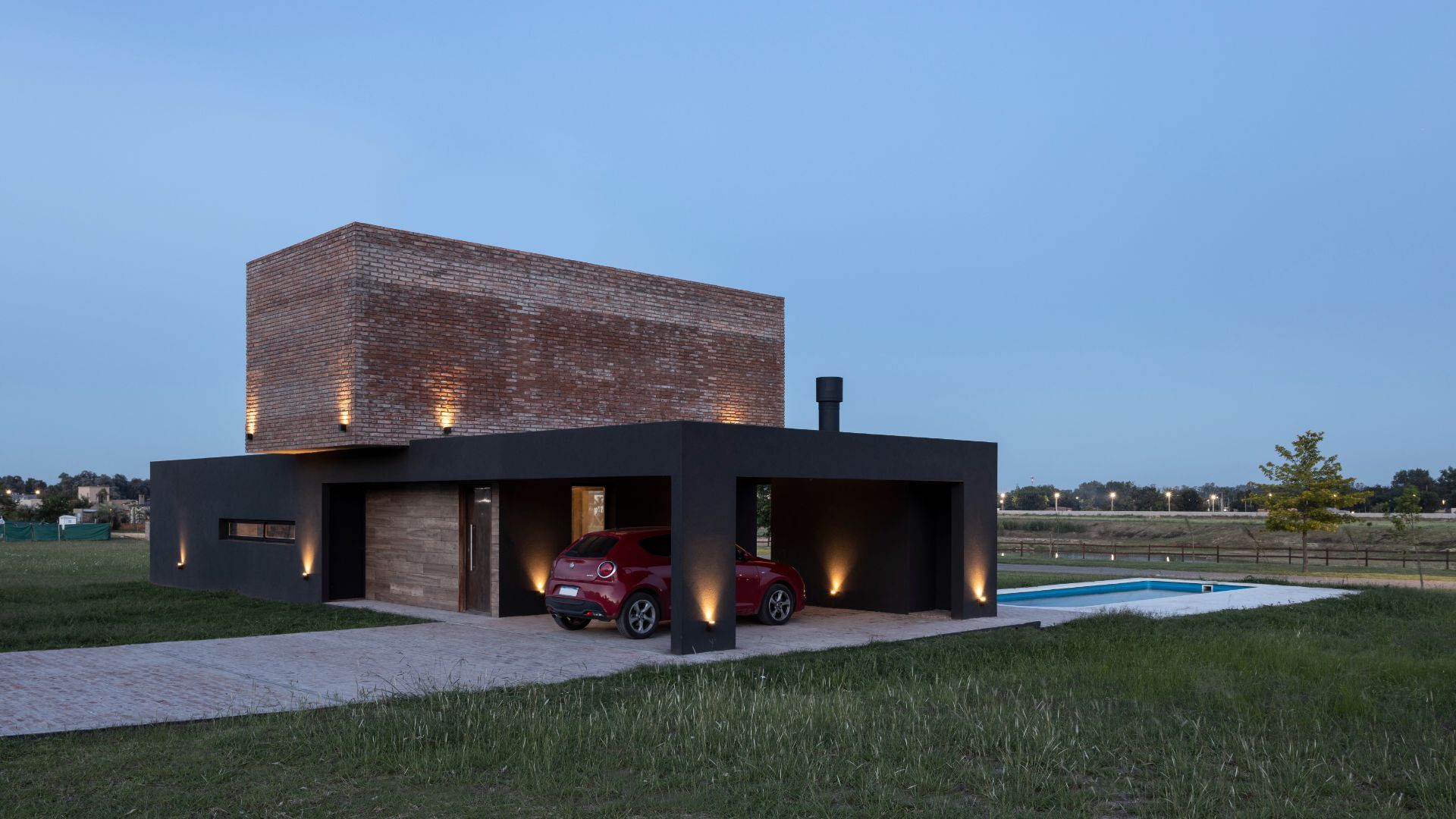
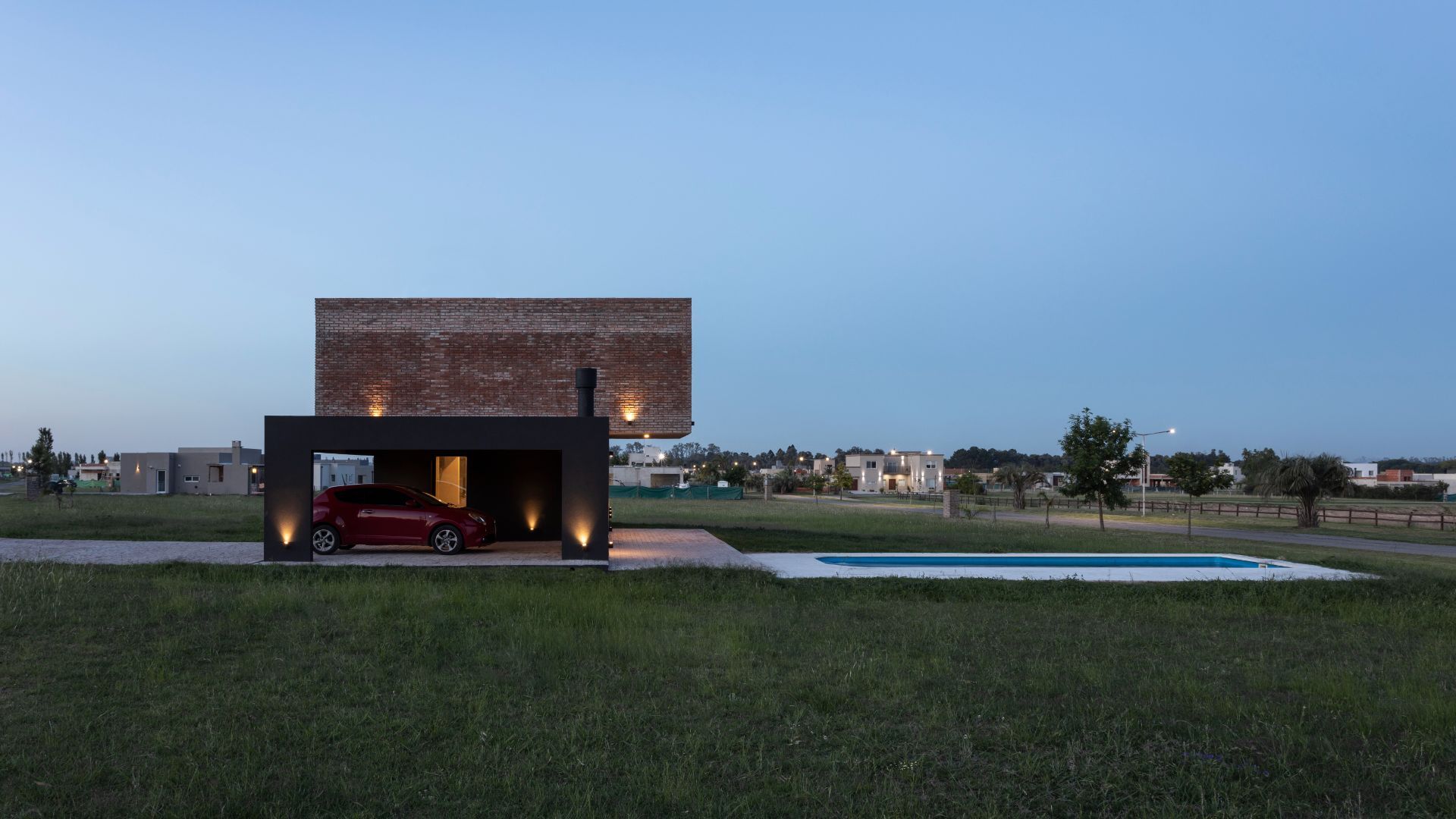
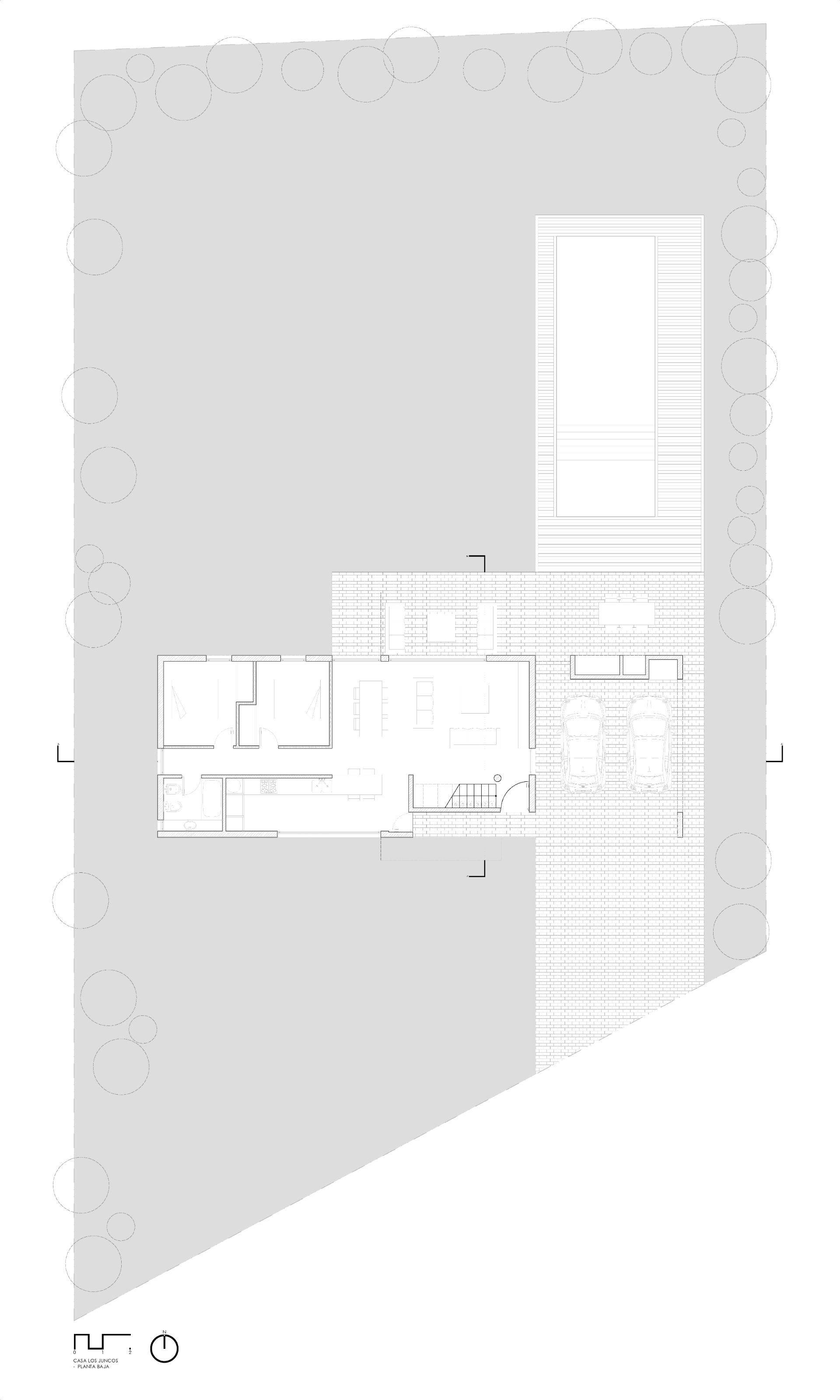
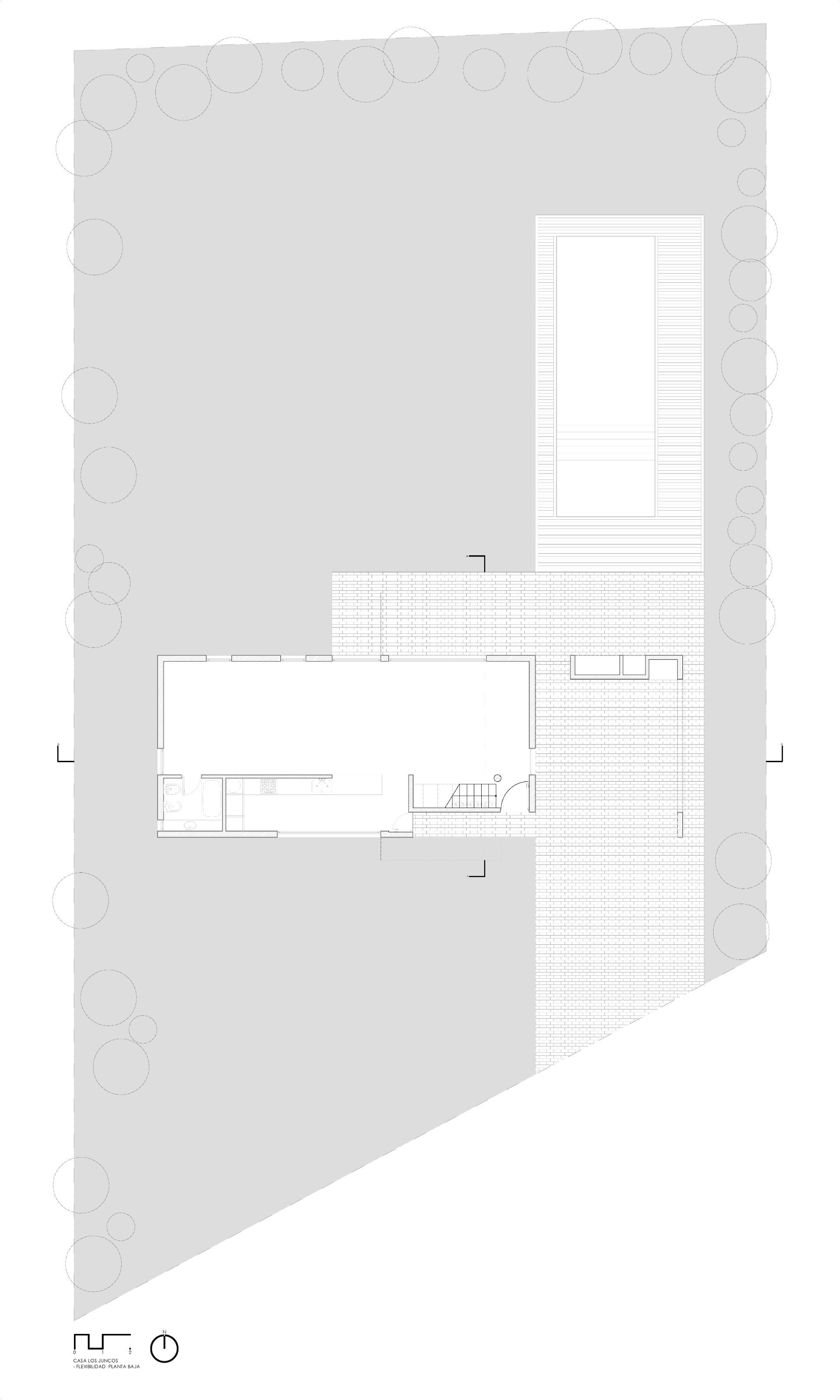
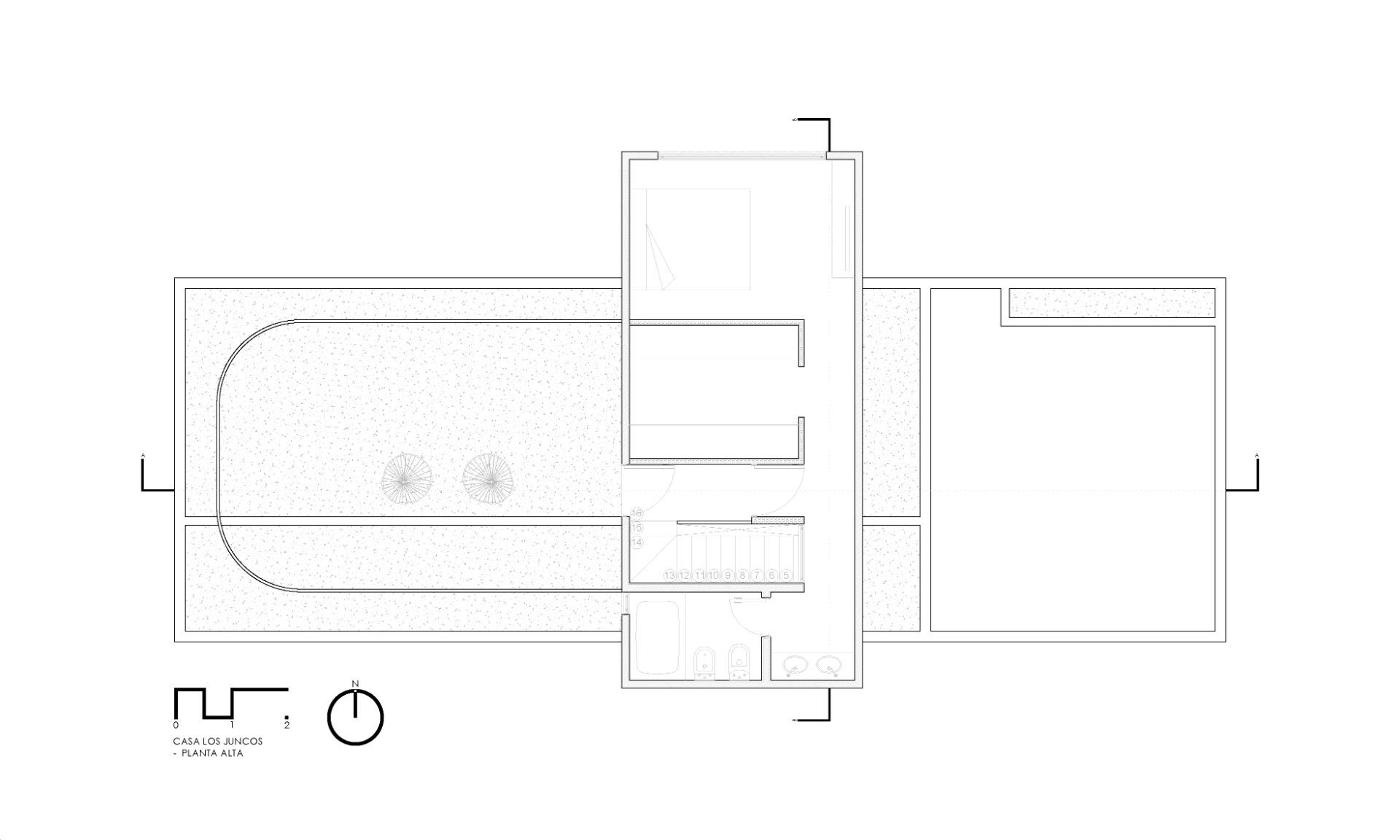
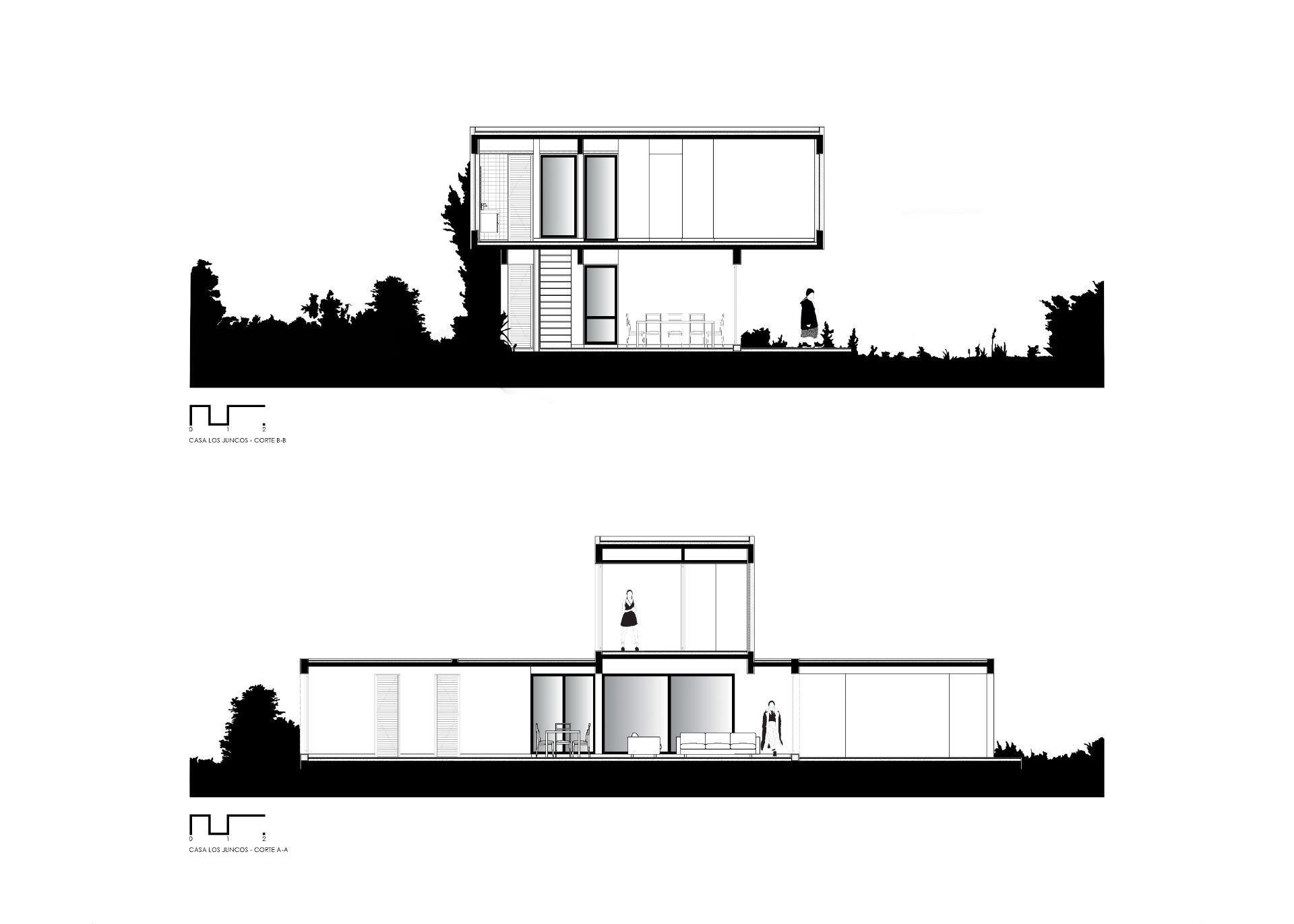
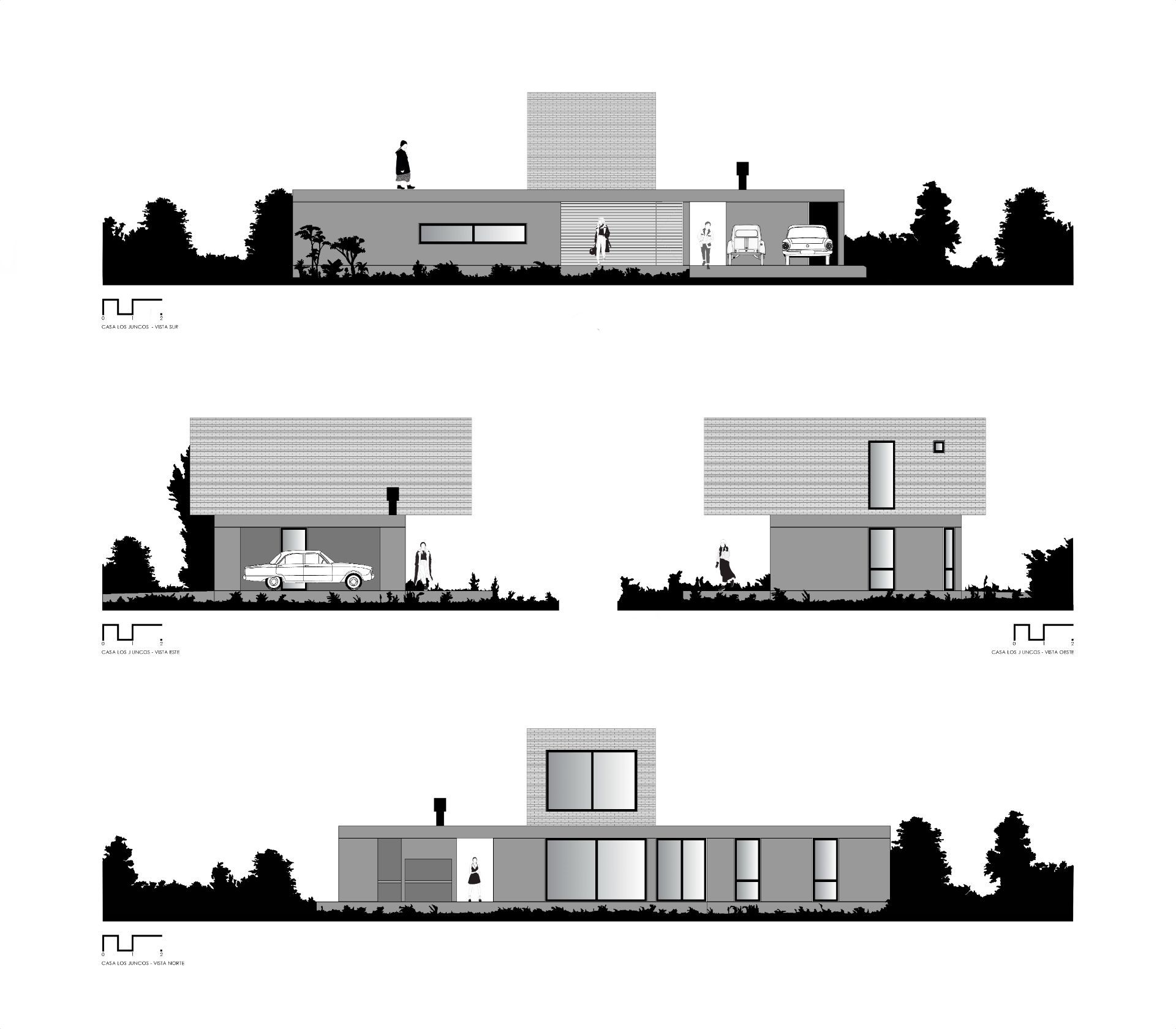
La casa Los Juncos, ubicada en un barrio cerrado de Lujan, Buenos Aires; se piensa en la profundidad de un entorno, donde la comunión con el paisaje circundante y la eficacia espacial se erigen como pilares fundamentales. La vivienda, despojada de artificios, se divide en dos estratos claramente definidos por la elección de materiales y la disposición de sus espacios. La génesis de este hogar encuentra raíces en la necesidad de construir una morada versátil, adaptada a una audiencia desconocida, en el marco de un proyecto inmobiliario de bajo presupuesto. La adaptabilidad se convierte así en la esencia del diseño, permitiendo que la casa se amolde a diversas circunstancias y modos de vida a lo largo de su existencia. El desafío principal fue la colaboración con una mano de obra poco calificada, sin comprometer la economía del proyecto. Por ello, se recurrió a detalles y métodos constructivos tradicionales y asequibles. Los materiales seleccionados se distinguen por su bajo coste y mantenimiento, garantizando una construcción sencilla y eficiente. El entorno natural influye marcadamente en la configuración de la vivienda. Situada al borde de un lago, la casa se erige con la intención de maximizar la comunión visual con el cuerpo acuático. La planta baja, reservada para las áreas sociales, se abre generosamente hacia el parque, propiciando una transición fluida entre los espacios interiores y exteriores, y aprovechando plenamente las vistas y la luz natural. El nivel inferior se caracteriza por un revestimiento oscuro, que no solo contrasta visualmente, sino que también funde la estructura con el paisaje, mientras que el volumen superior de ladrillo añade calidez y textura al conjunto. Este contrapunto material no solo obedece a un juego estético, sino que también contribuye a la durabilidad y funcionalidad de la casa. La orientación se planifica para optimizar la iluminación natural y la ventilación, mientras que las aperturas y ventilaciones cruzadas ayudan a mantener una temperatura agradable y mejoran la eficiencia energética. En la planta baja, un sistema constructivo desmontable permite futuras modificaciones y ampliaciones, como la posible expansión en la planta alta, actualmente reservada como terraza verde para la contemplación del lago. La distribución interna se organiza mediante una circulación clara y sencilla, separando las áreas húmedas de las de estar. Esta disposición no solo facilita el movimiento, sino que también permite la adaptación a futuros usos y cambios en la vida de los habitantes. La flexibilidad se erige así como elemento central del diseño, permitiendo que la casa evolucione con sus ocupantes. Esta residencia contemporánea no solo se distingue por su diseño adaptable y su estética tradicional, sino también por su funcionalidad y respeto por el entorno. Es un espacio que invita a la conexión con la naturaleza, sin sacrificar la comodidad ni el estilo de vida moderno. La fusión de materiales tradicionales con mirada actual da como resultado una morada atemporal.
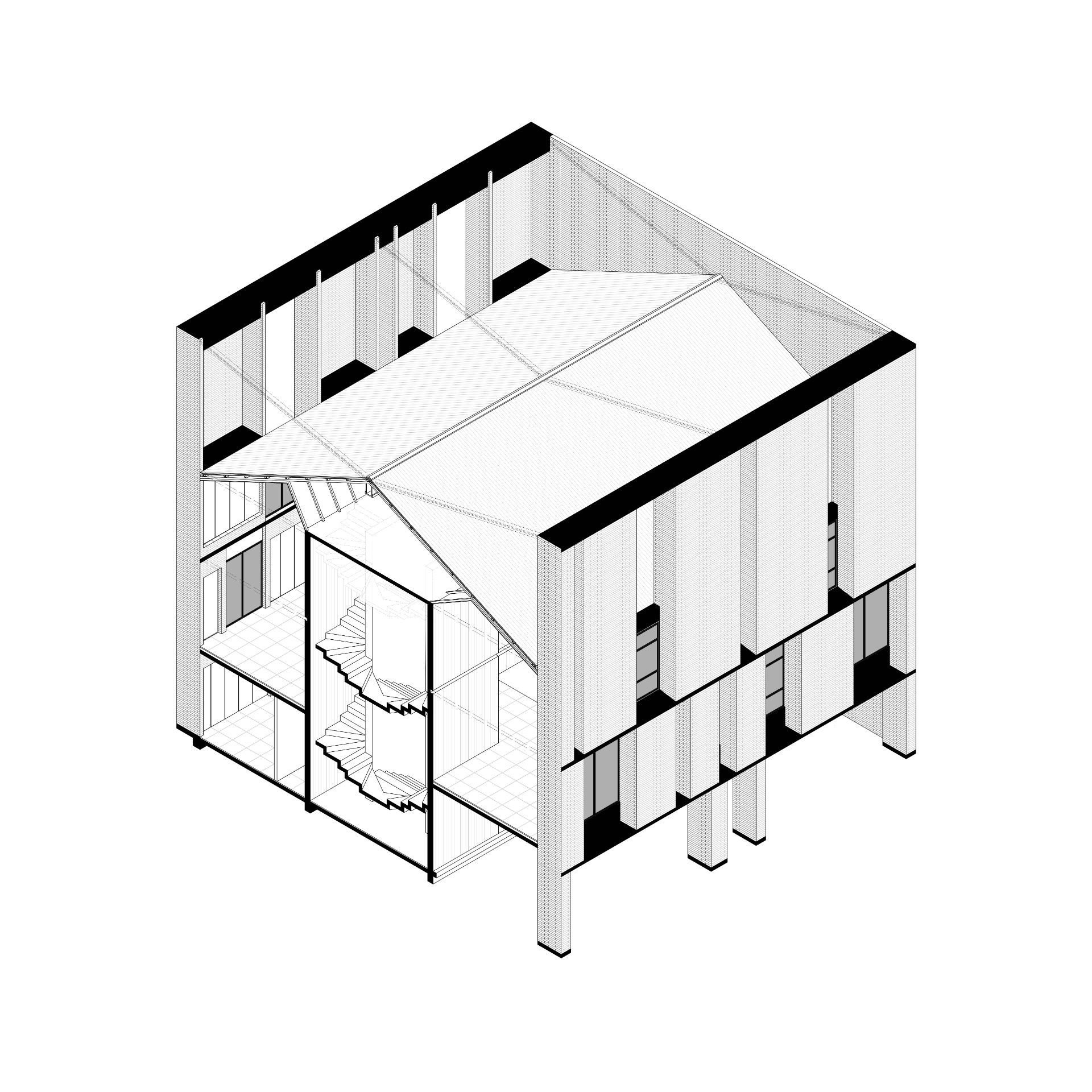
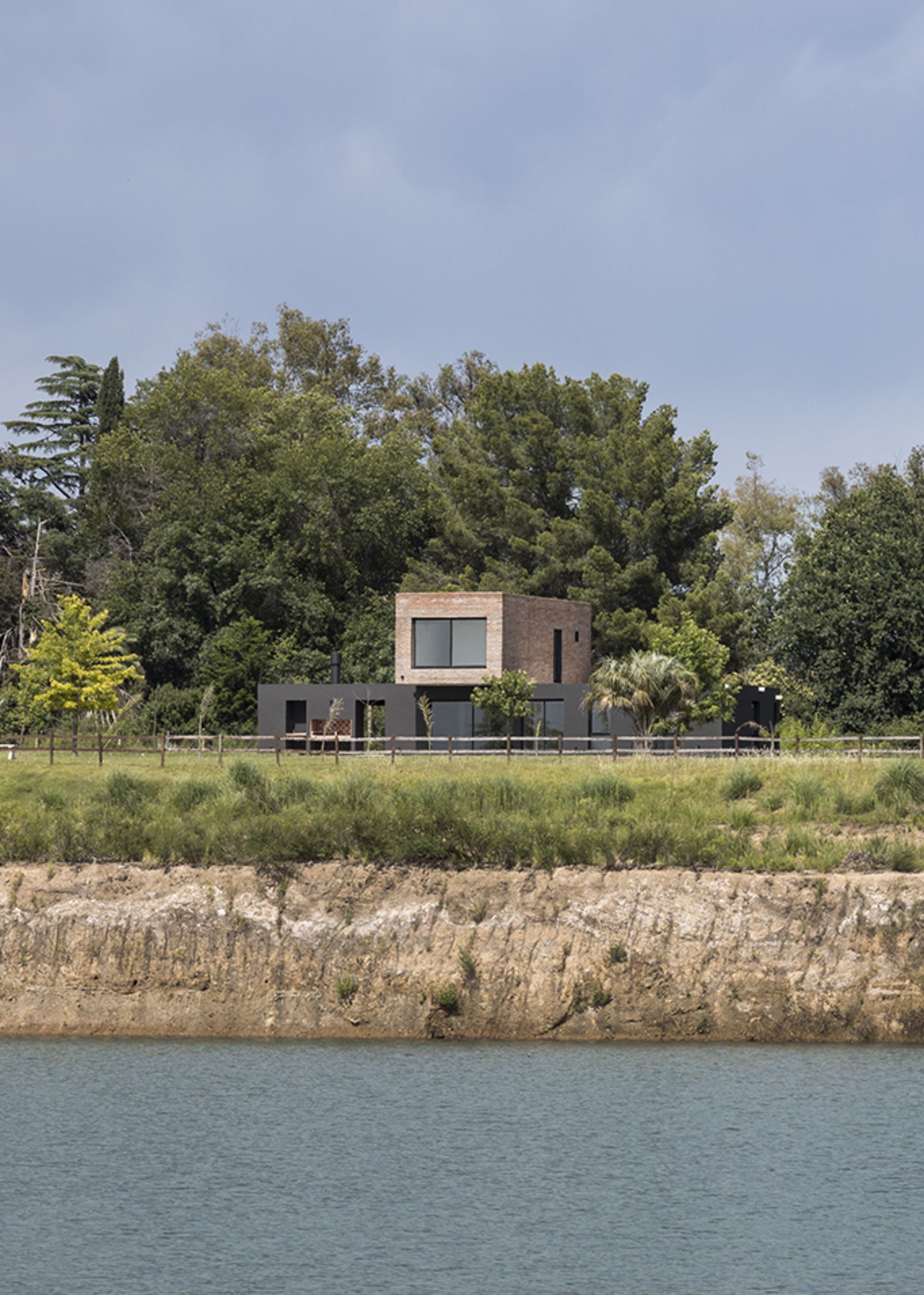
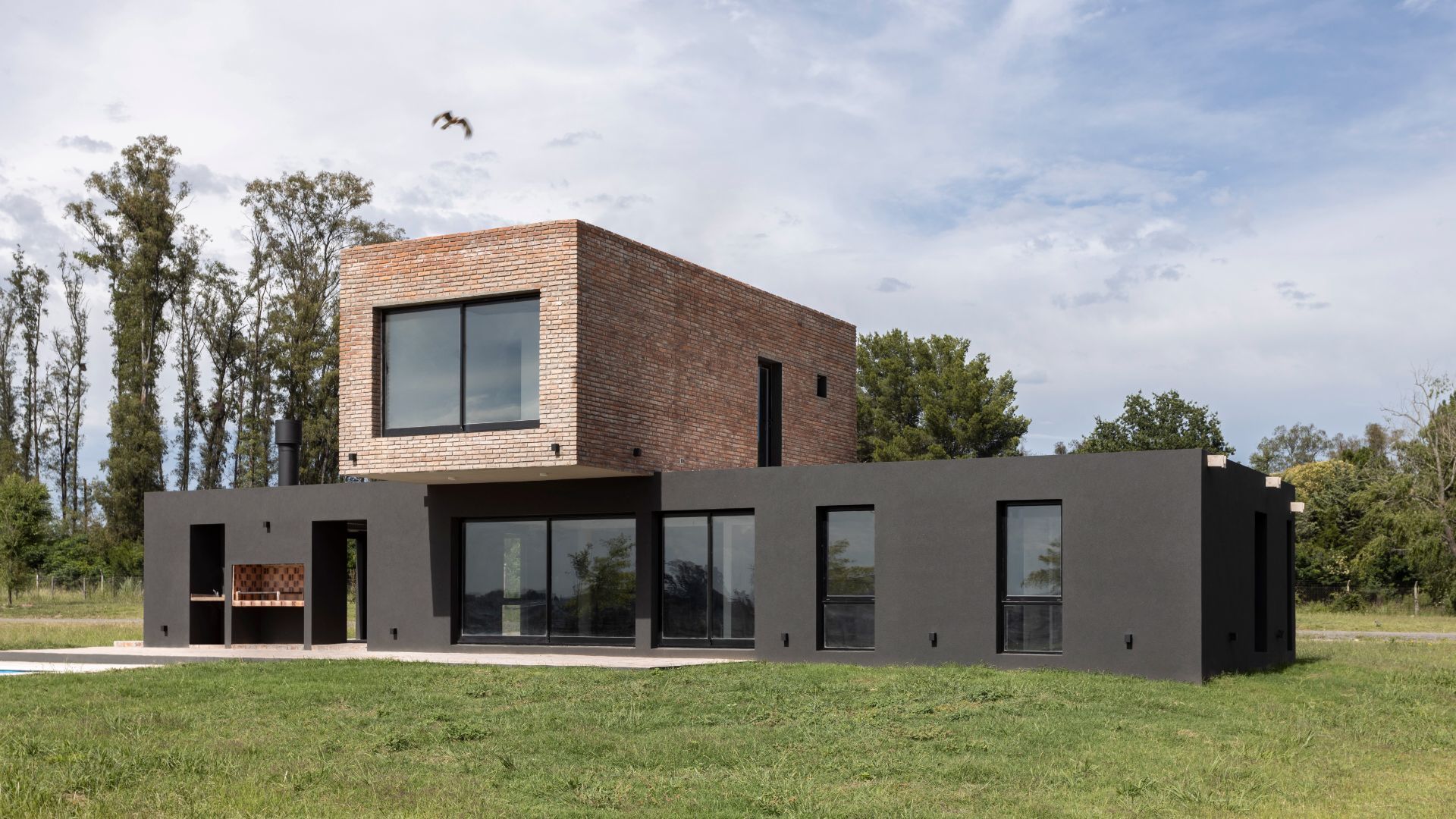
Los Juncos House, located in a gated community in Luján, Buenos Aires, is conceived with a deep connection to its surroundings, where communion with the landscape and spatial efficiency are fundamental pillars. The house, stripped of artifice, is divided into two clearly defined strata through the choice of materials and the arrangement of its spaces. The genesis of this home lies in the need to build a versatile dwelling, adapted to an unknown audience, within the framework of a low-budget real estate project. Adaptability thus becomes the essence of the design, allowing the house to mold itself to diverse circumstances and lifestyles throughout its existence. The main challenge was collaborating with a relatively unskilled workforce without compromising the project's budget. Therefore, traditional and affordable construction methods and details were employed. The selected materials are distinguished by their low cost and maintenance, guaranteeing a simple and efficient construction. The natural environment significantly influences the configuration of the house. Situated on the edge of a lake, the house is designed to maximize the visual connection with the water. The ground floor, reserved for social areas, opens generously onto the park, fostering a seamless transition between interior and exterior spaces and fully utilizing the views and natural light. The lower level is characterized by a dark cladding that not only provides visual contrast but also blends the structure with the landscape, while the upper brick volume adds warmth and texture to the whole. This material counterpoint serves not only an aesthetic purpose but also contributes to the house's durability and functionality. The orientation is planned to optimize natural light and ventilation, while openings and cross-ventilation help maintain a comfortable temperature and improve energy efficiency. On the ground floor, a demountable construction system allows for future modifications and expansions, such as the potential expansion of the upper floor, currently reserved as a green terrace for contemplating the lake. The internal layout is organized around a clear and simple circulation pattern, separating the wet areas from the living areas. This layout not only facilitates movement but also allows for adaptation to future uses and changes in the lives of its inhabitants. Flexibility thus becomes a central element of the design, allowing the house to evolve with its occupants. This contemporary residence is distinguished not only by its adaptable design and traditional aesthetic but also by its functionality and respect for the environment. It is a space that invites connection with nature without sacrificing comfort or a modern lifestyle. The fusion of traditional materials with a contemporary perspective results in a timeless dwelling.
Fecha -Date - 2024
Ubicación -Location - Lujan, Buenos Aires
Tipo -Typology -Obra NuevaNew Construction
Equipo -Team -
Martin CaparrozMartin Caparroz
Estado -Status -TerminadaCompleted
Fotos -Photos - Albano García

Casa Yopará

Moreno, Buenos Aires
2021

CASA YOPARÁ

Al desafío de proyectar la casa propia de todx arquitectx se le suma la variable de intervenir la pequeña casa donde vivió durante muchos años hasta su muerte Doña Josefa, la abuela de Juan Pablo. Con estas cuestiones las preguntas sobre qué hacer, cuánto demoler, qué agregar, qué atmosfera sostener, con qué materialidad nueva se puede hacer referencia a lo vivido, cómo se pueden ganar metros de interioridad para un arquitecto y una música en una casa que solo tenía una cocina, un baño y una piecita sin iluminación. La propuesta busca trabajar con una pared que mas que separar, trabaja como conectora: incorpora un “depósito” a la interioridad para hacer un espacio de taller para piano y estudio, aumenta la relación del  dormitorio con el patio a traves de la galería y por último define un acceso nuevo sosteniendo las condiciones de la galería. La galería como lugar de encuentro, de intercambio con amigxs, de celebraciones como en los cumpleaños de la niñez, de lugar para ver partidos de futbol con los de siempre. El lugar indeterminado que no es adentro ni afuera, pero es ambos a la vez.
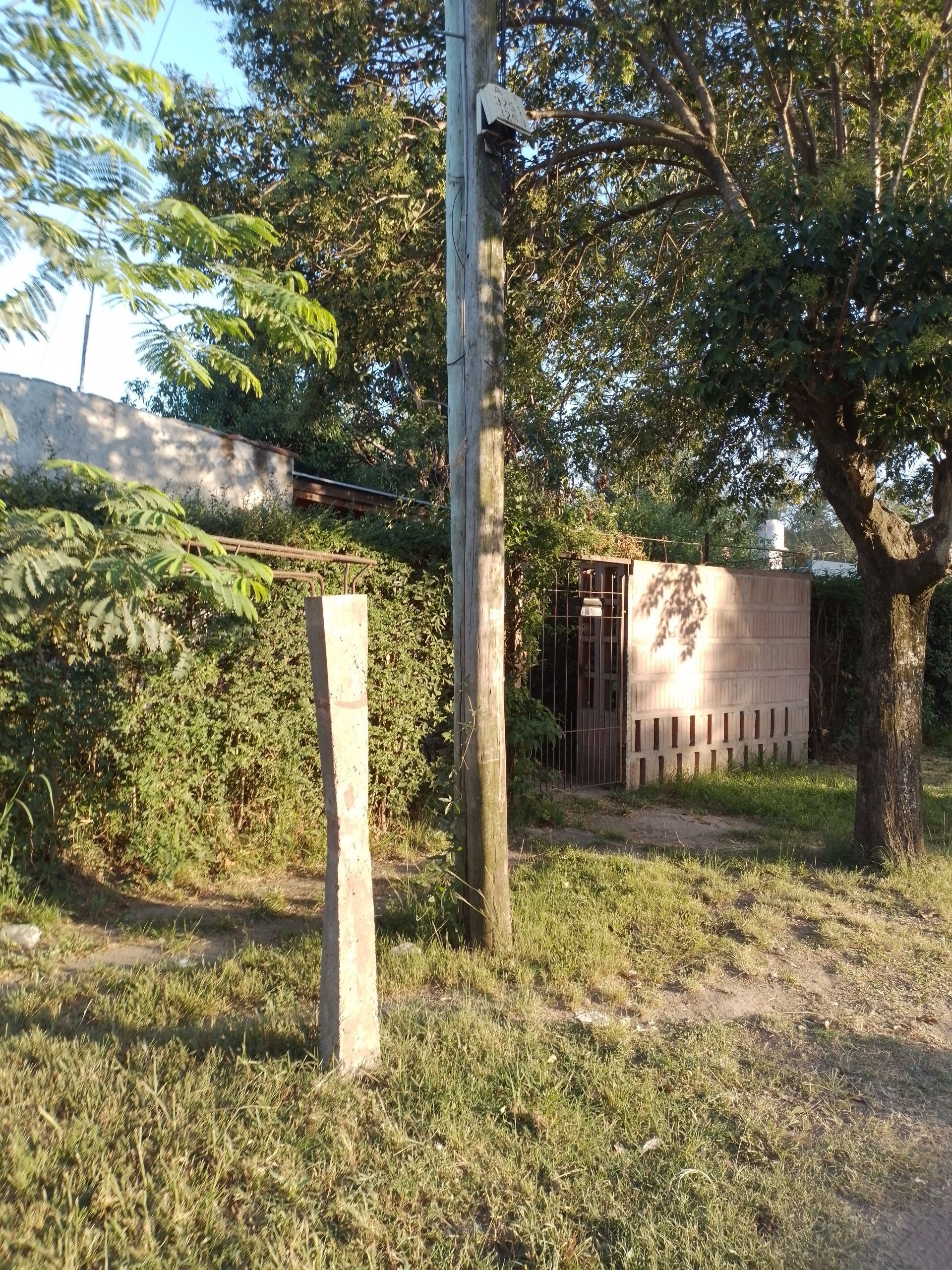
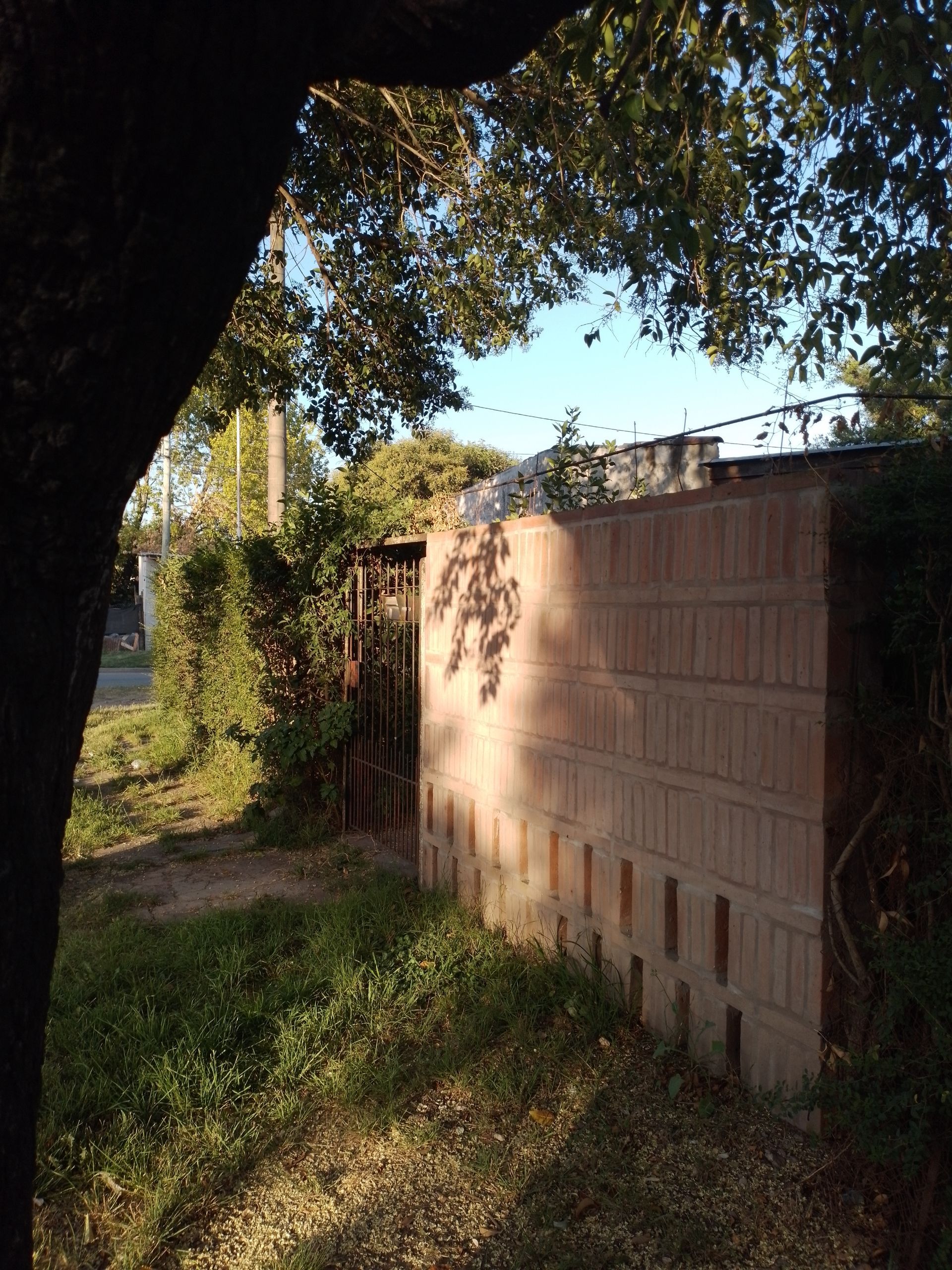
The challenge of designing one's own home, common to all architects, is compounded by the variable of renovating the small house where Juan Pablo's grandmother, Doña Josefa, lived for many years until her death. These factors raise questions about what to do, how much to demolish, what to add, what atmosphere to maintain, what new materials can be used to reference the past, and how to gain more interior space for an architect and a musician in a house that previously consisted of only a kitchen, a bathroom, and a small, unlit room. The proposal seeks to work with a wall that, rather than separating, acts as a connector: it incorporates a storage area into the interior to create a piano studio and study space, enhances the connection between the bedroom and the patio through the gallery, and finally defines a new entrance while preserving the gallery's existing features. The gallery becomes a meeting place, a space for sharing with friends, for celebrations like childhood birthdays, a place to watch soccer games with friends. It's an indeterminate space that is neither inside nor outside, yet is both at once.
Fecha -Date - 2020
Ubicación -Location - Moreno, Buenos Aires
Tipo -Typology -AmpliaciónHousing Extension
Equipo -Team -
Juan Pablo BerberyJuan Pablo BerberySantiago Roldán FiguerasSantiago Roldán FiguerasDaniel Benitez (Constructor)Daniel Benitez (Builder)
Estado -Status -TerminadaCompleted
Fotos -Photos - Juan Pablo Berbery

Casa Delia

Moreno, Buenos Aires
2020

CASA DELIA

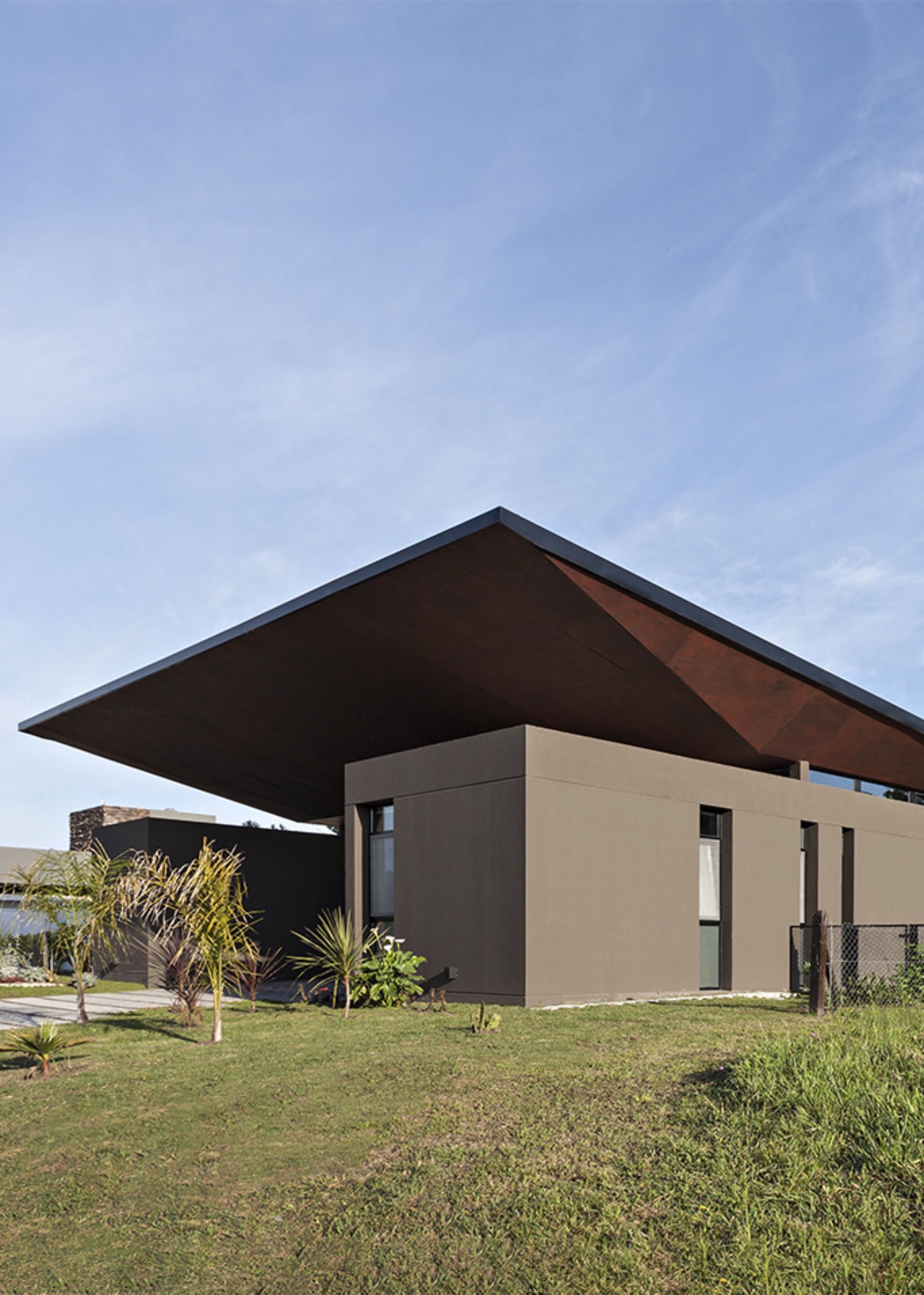
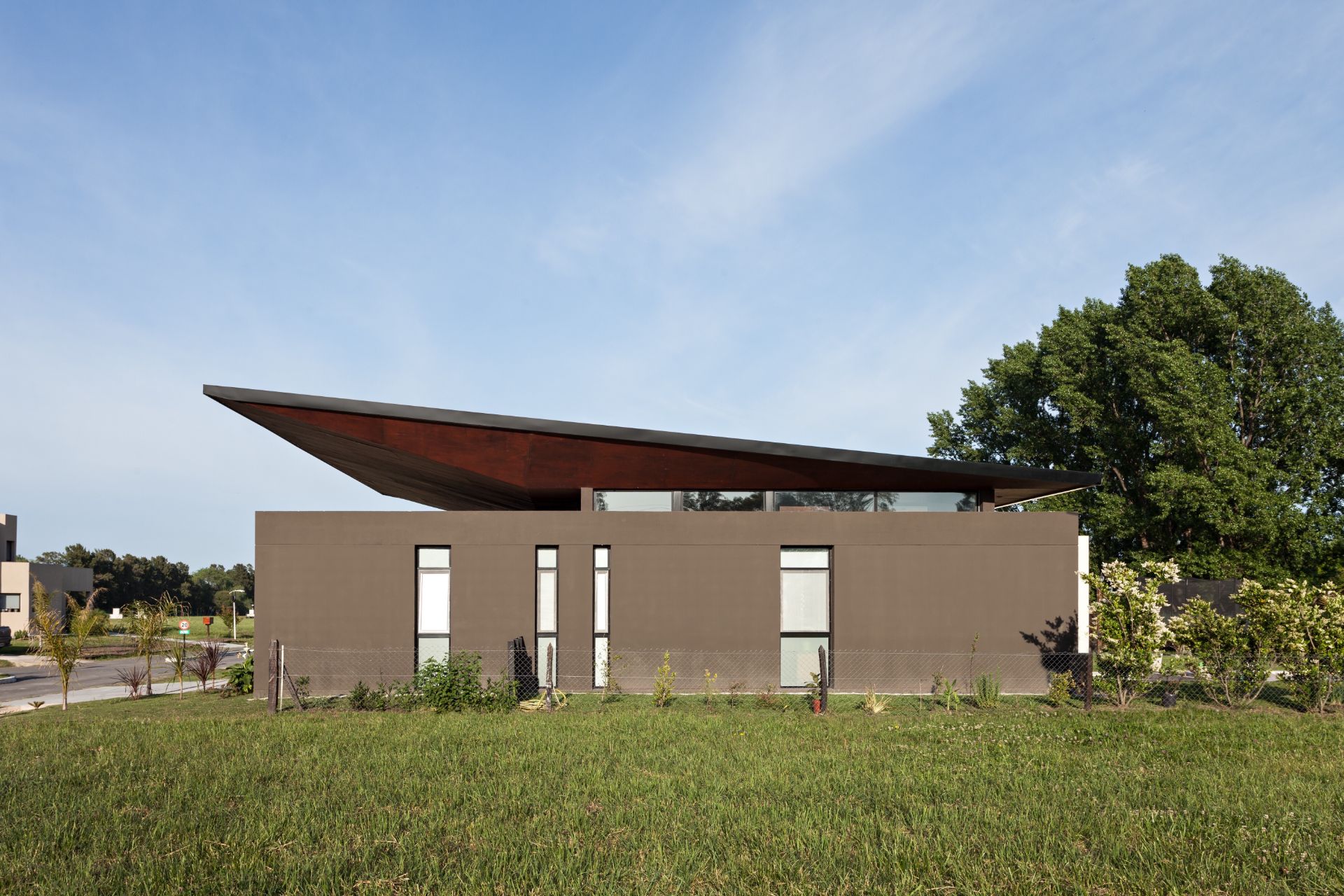
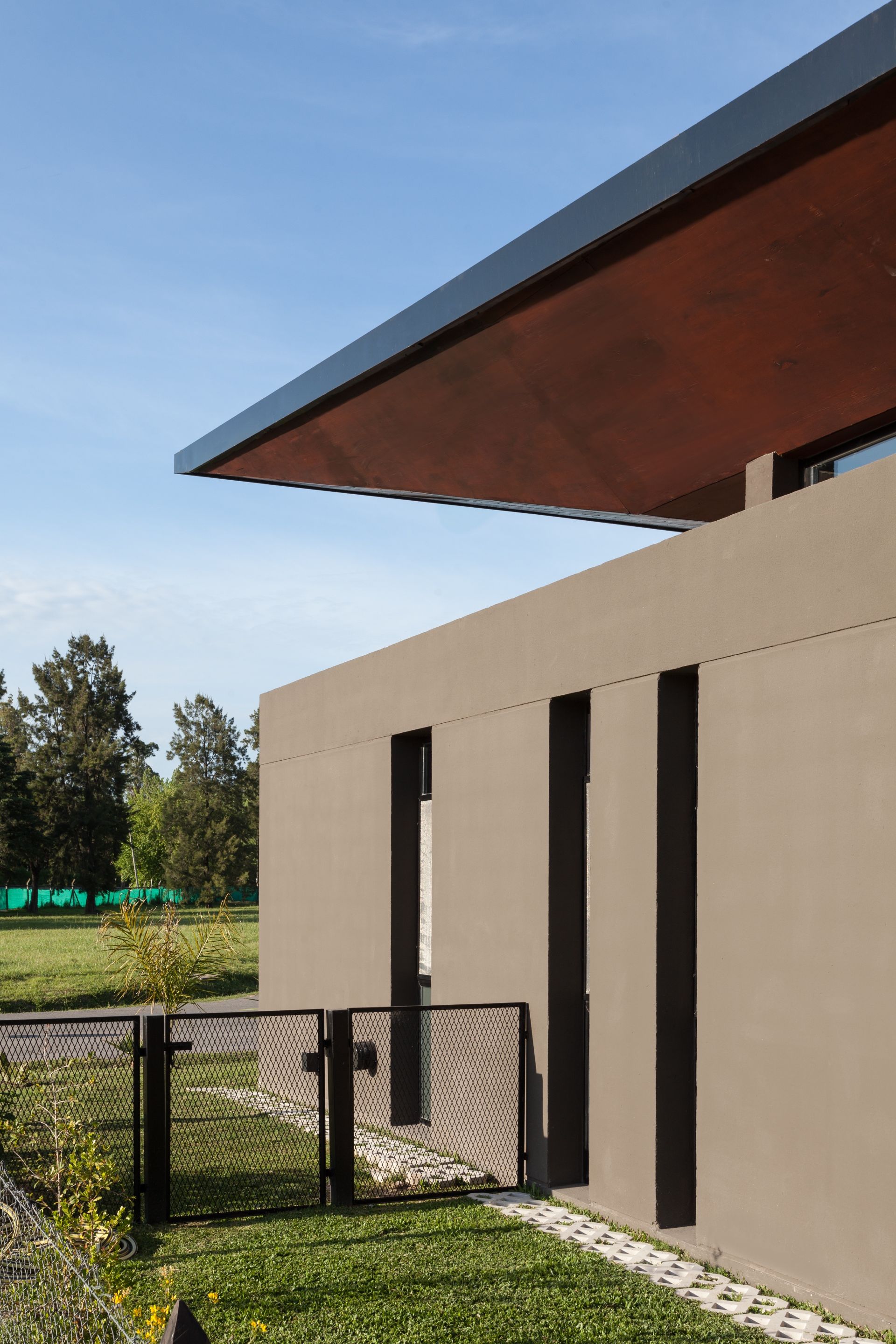
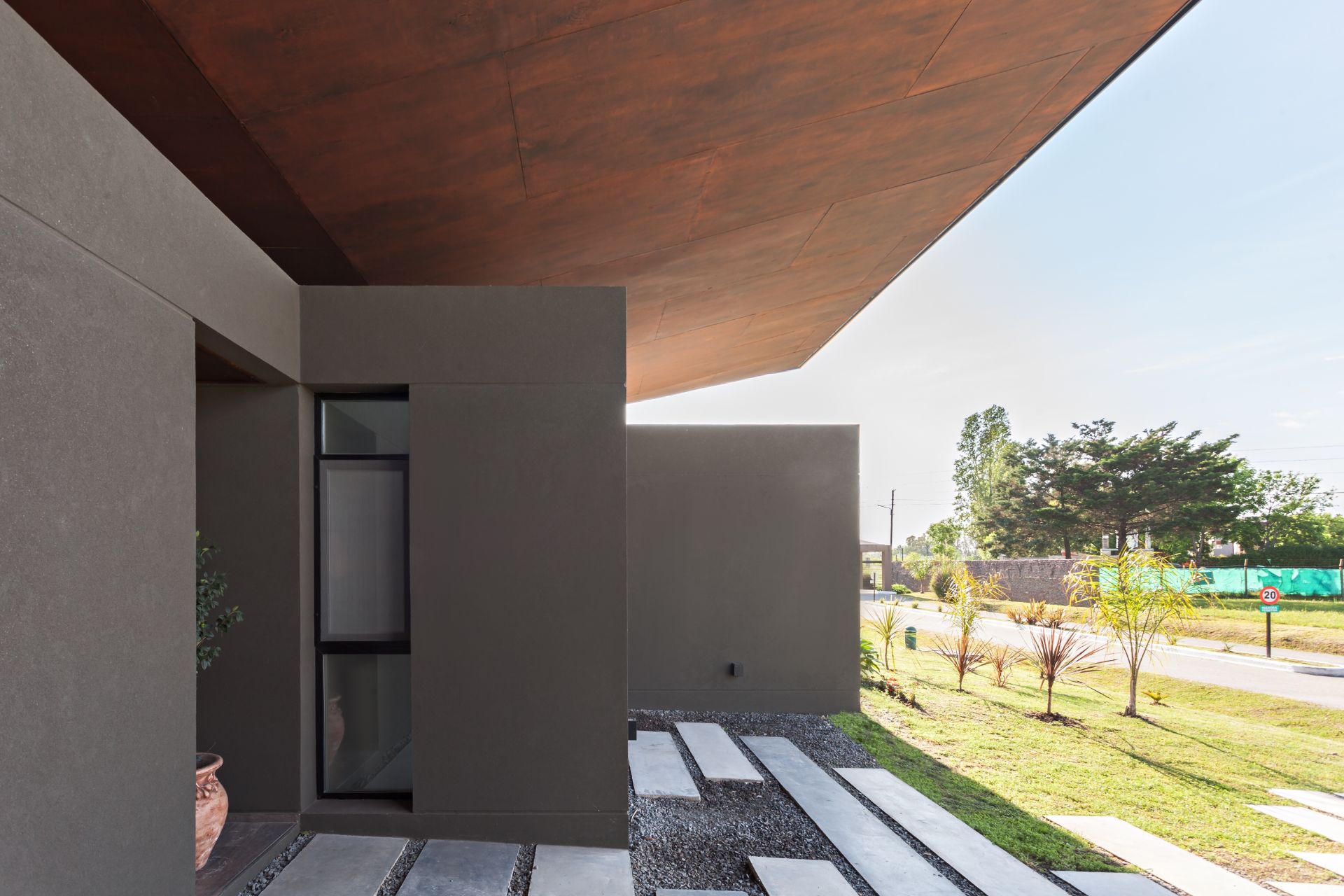
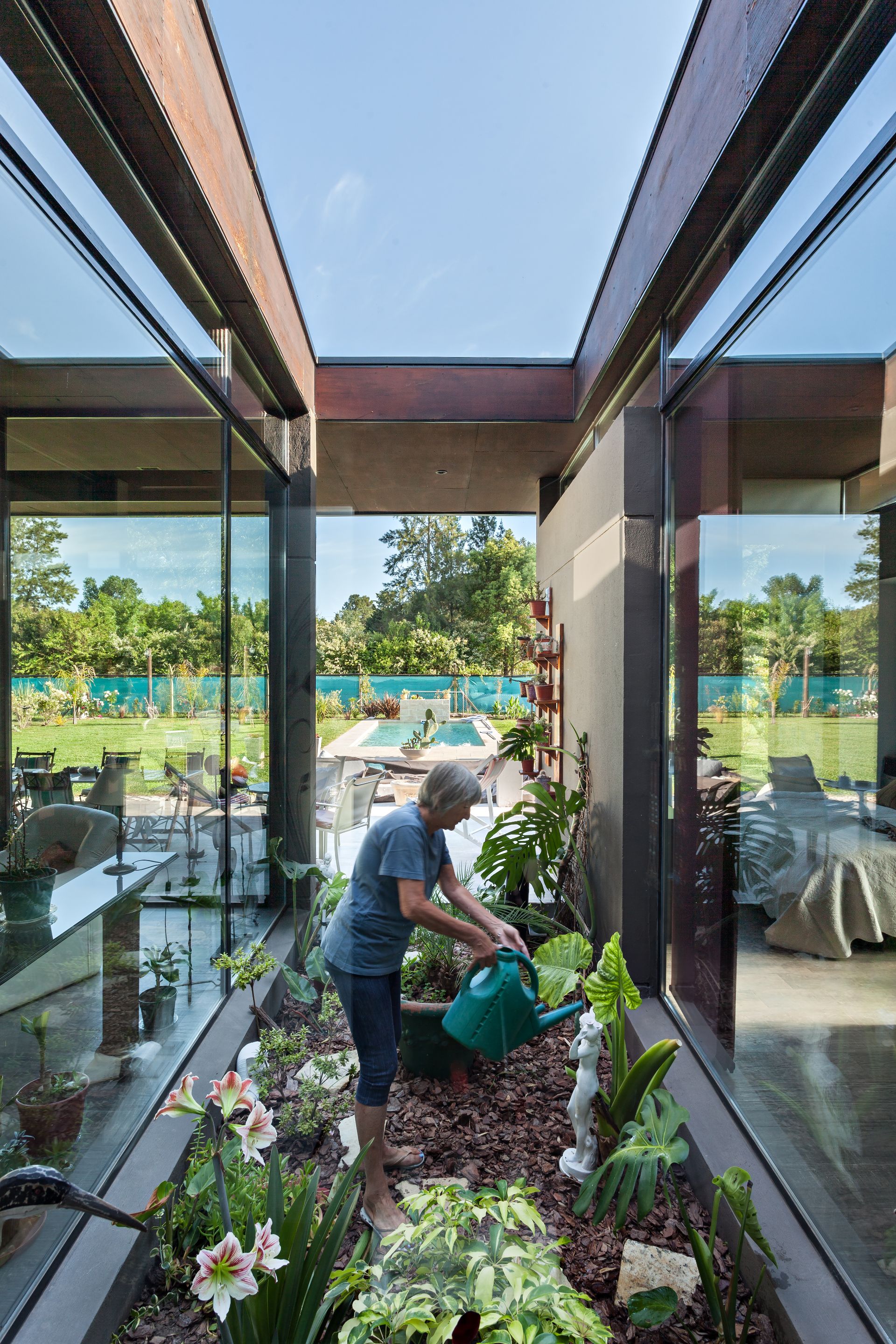
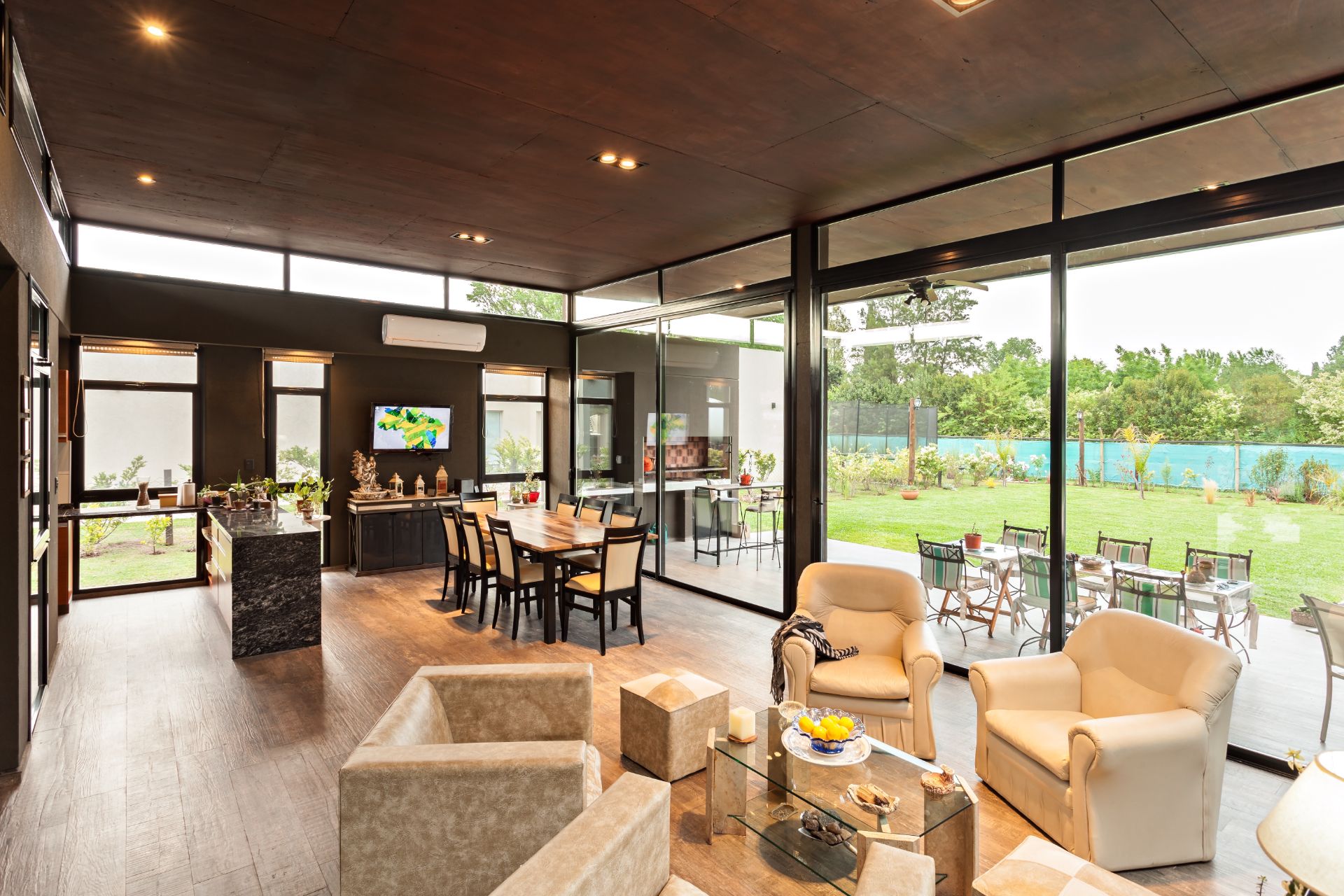
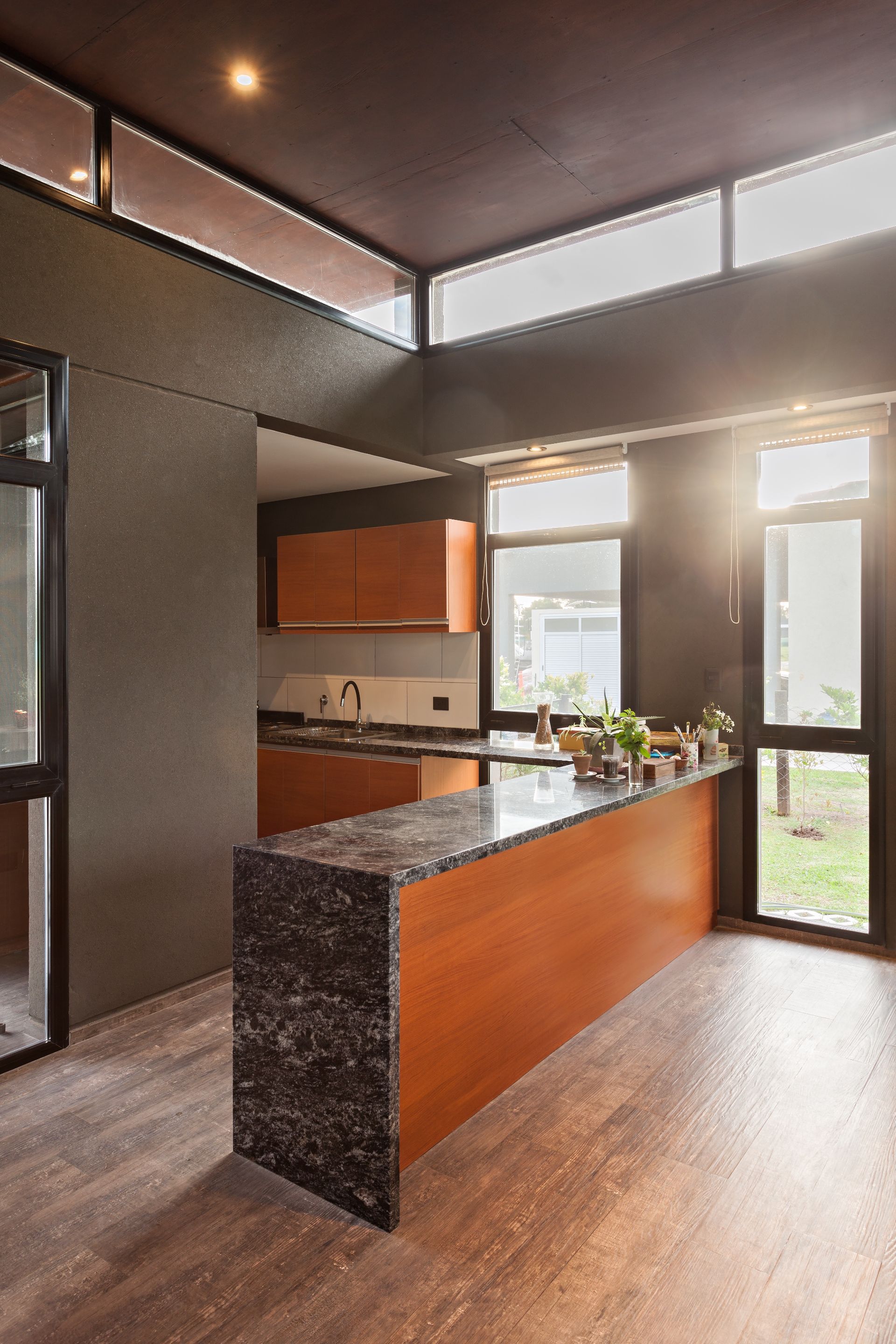
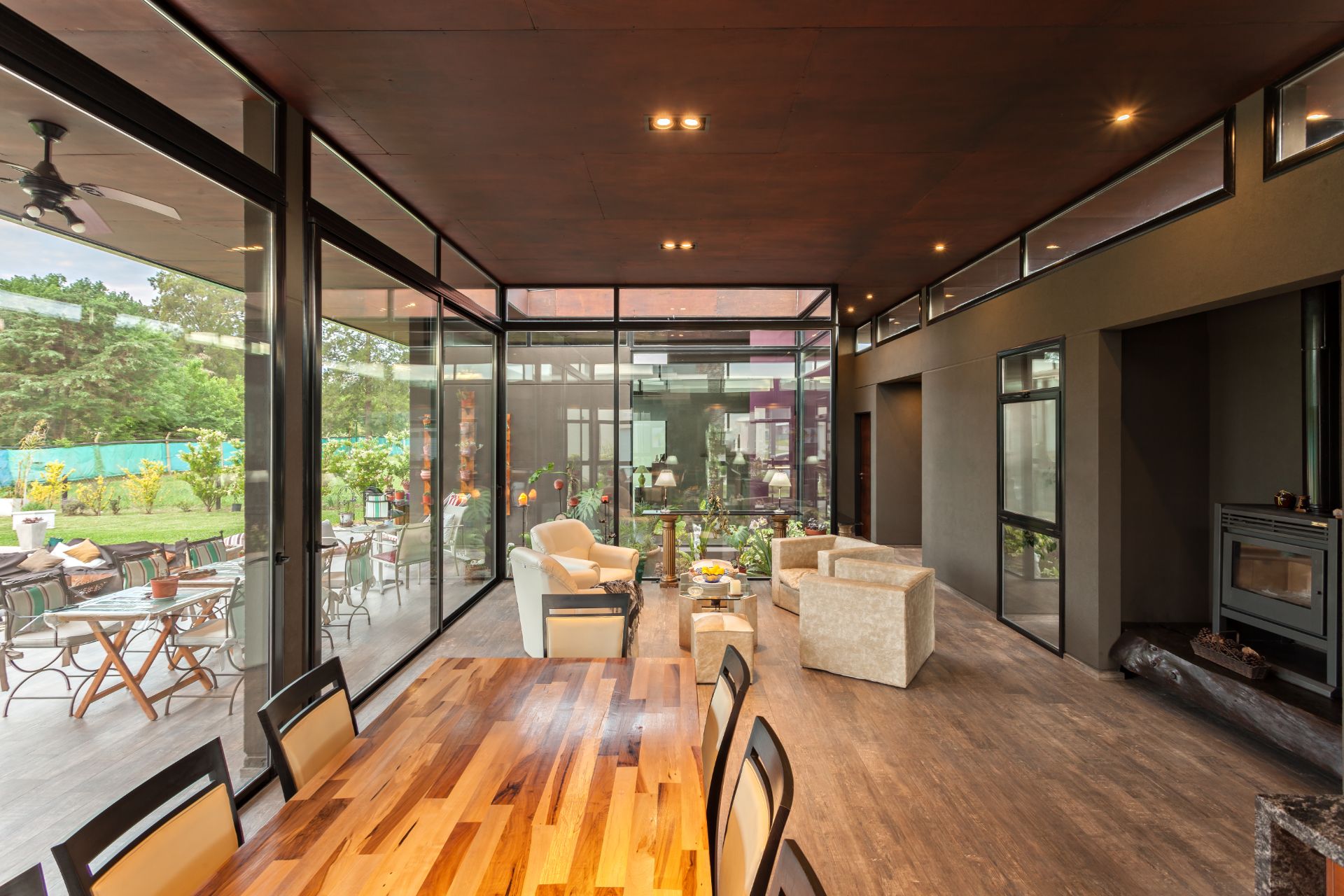
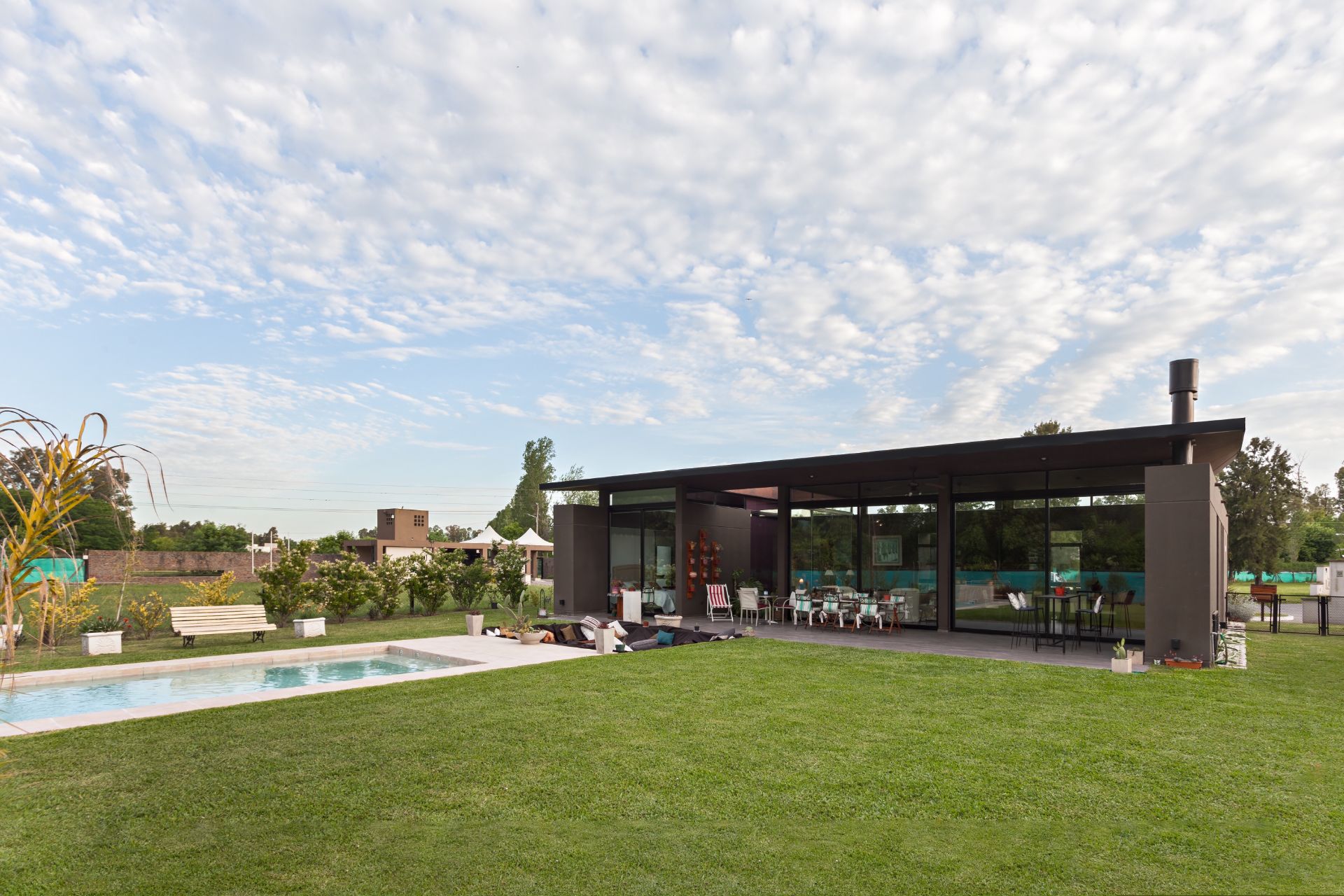
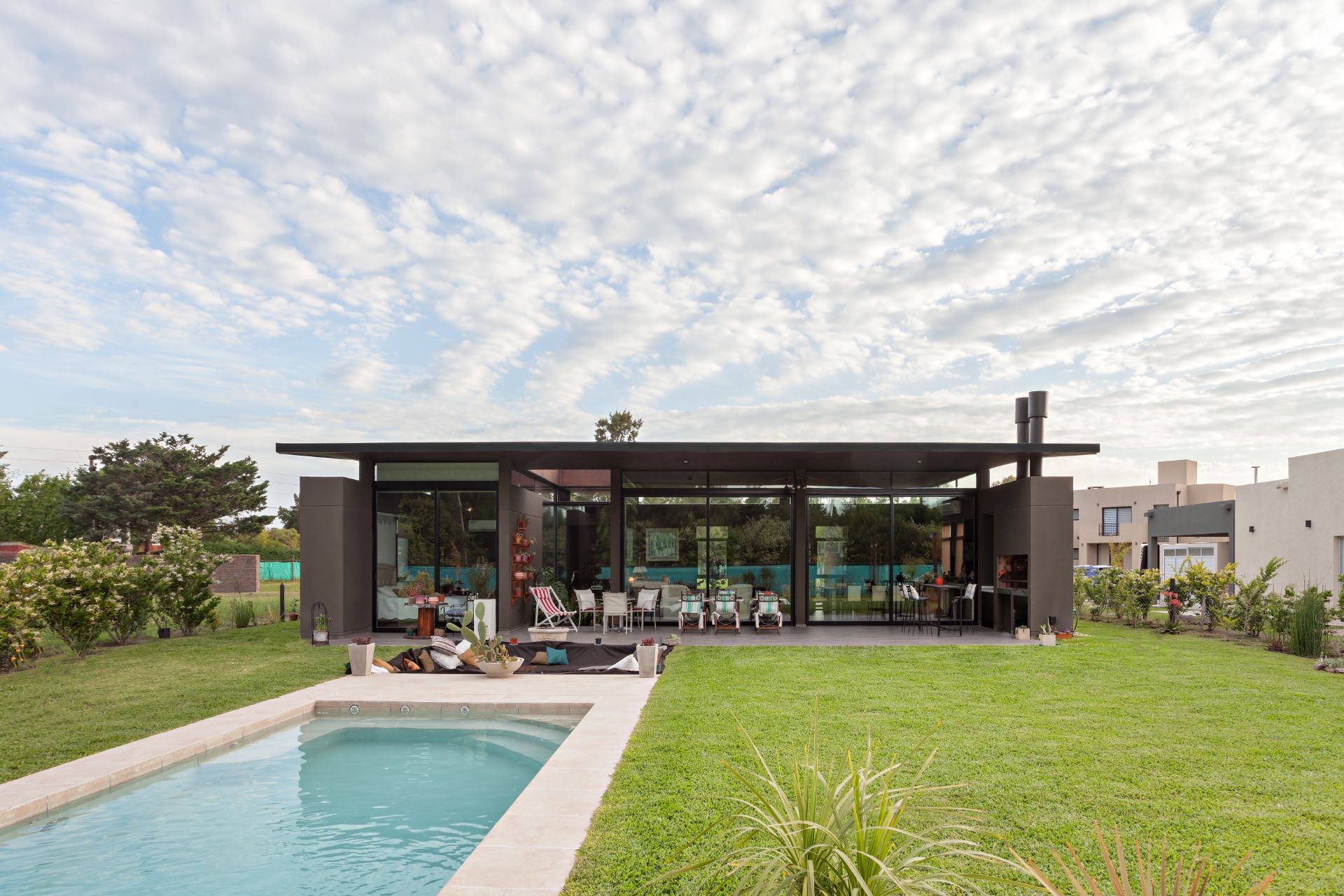
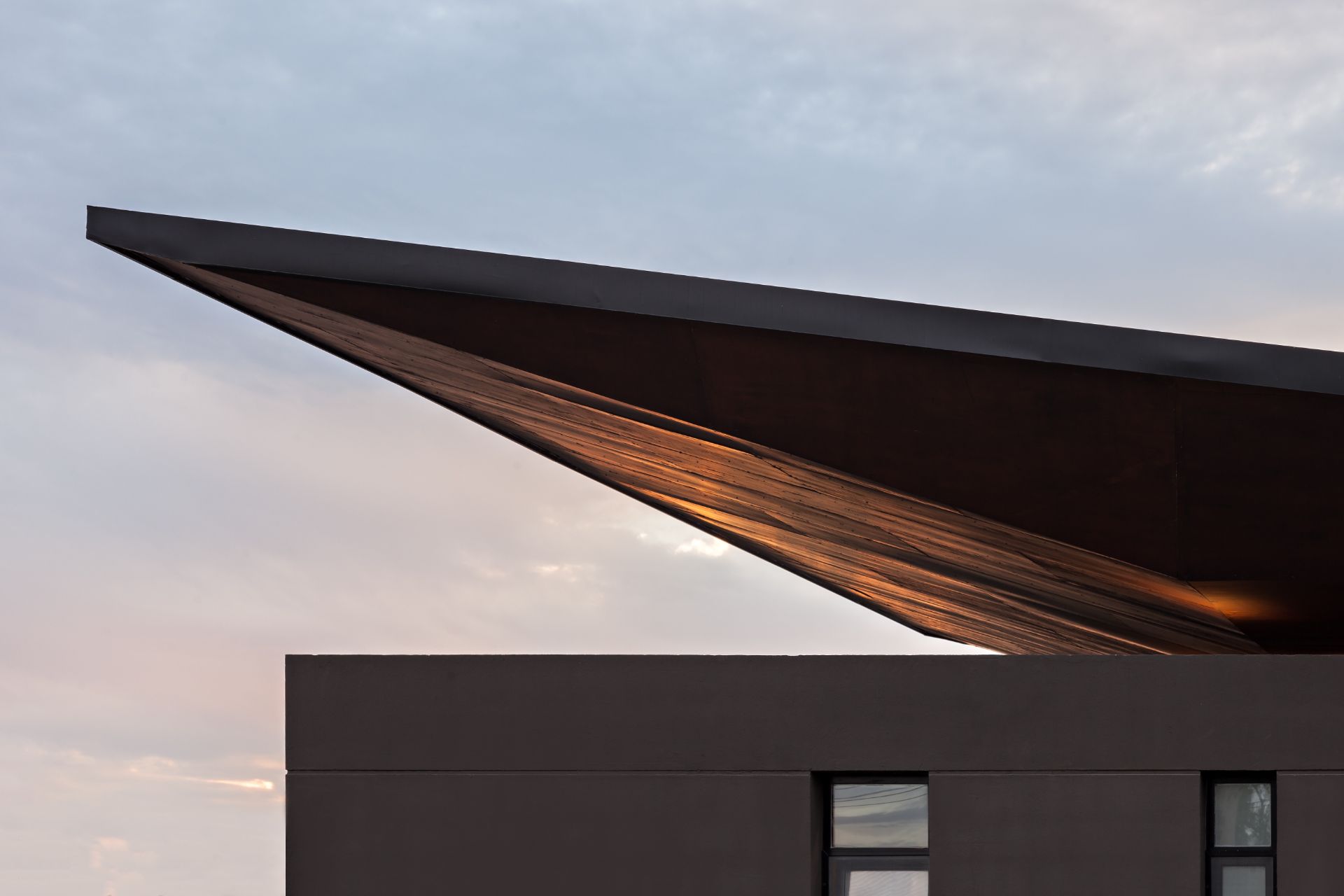
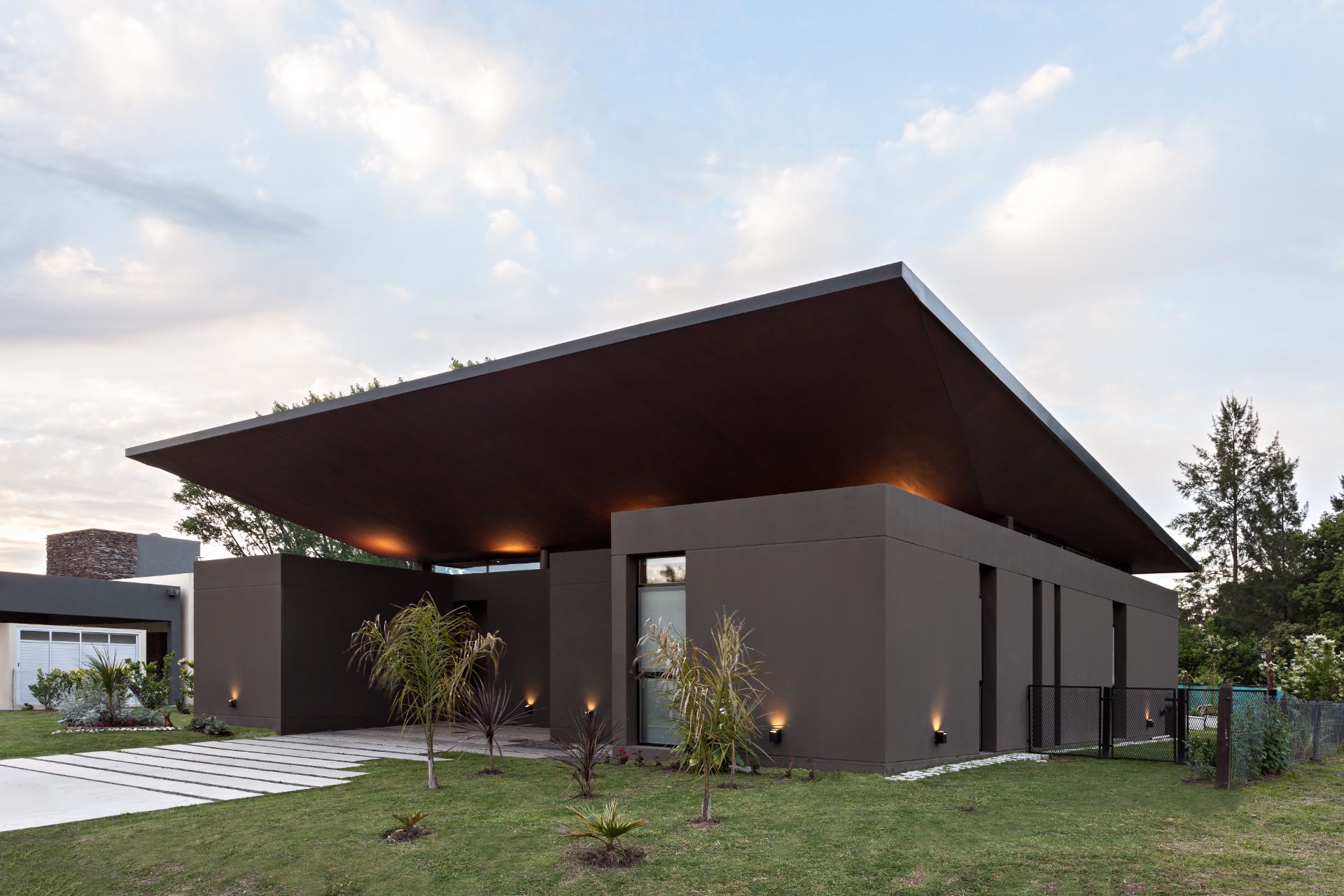
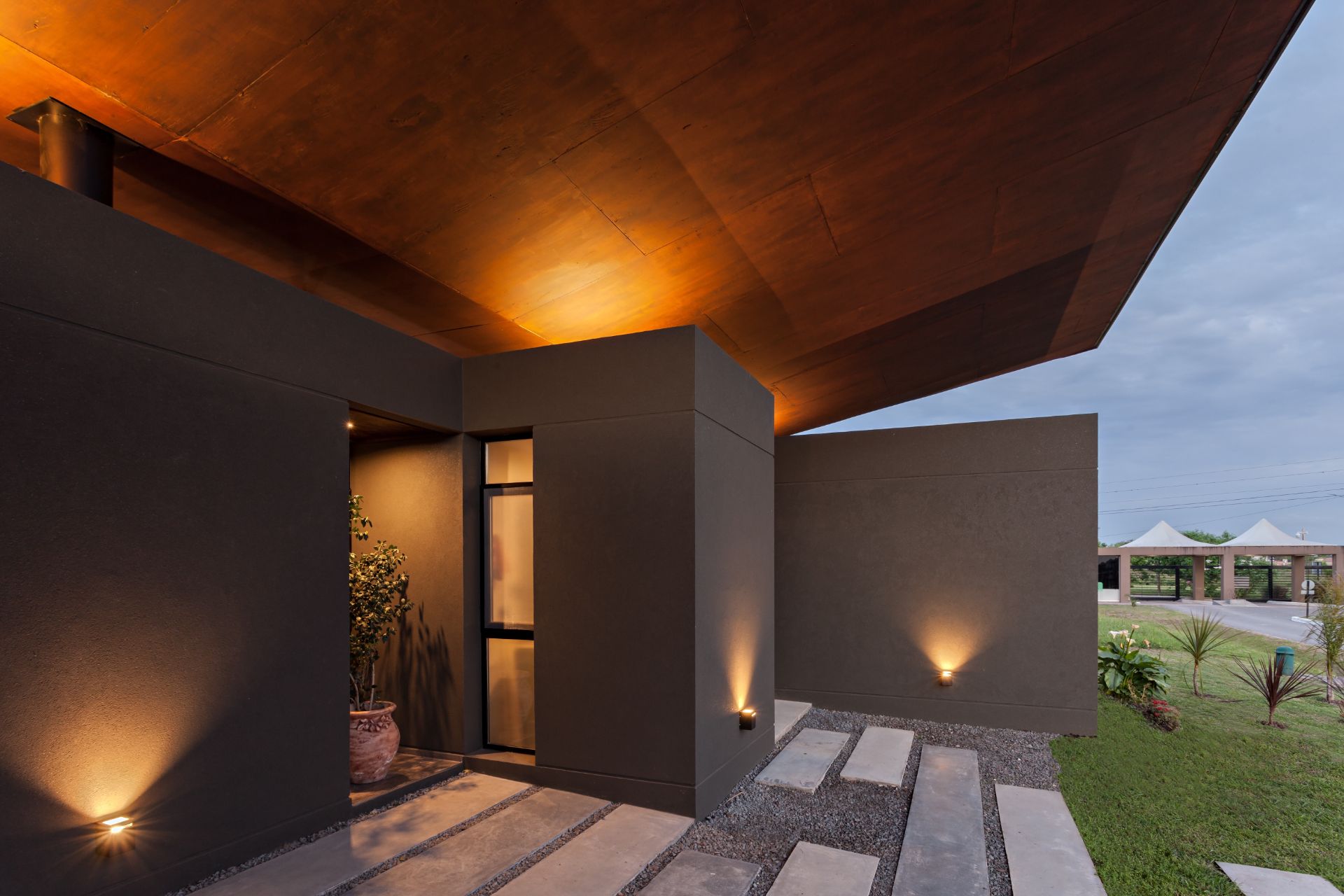
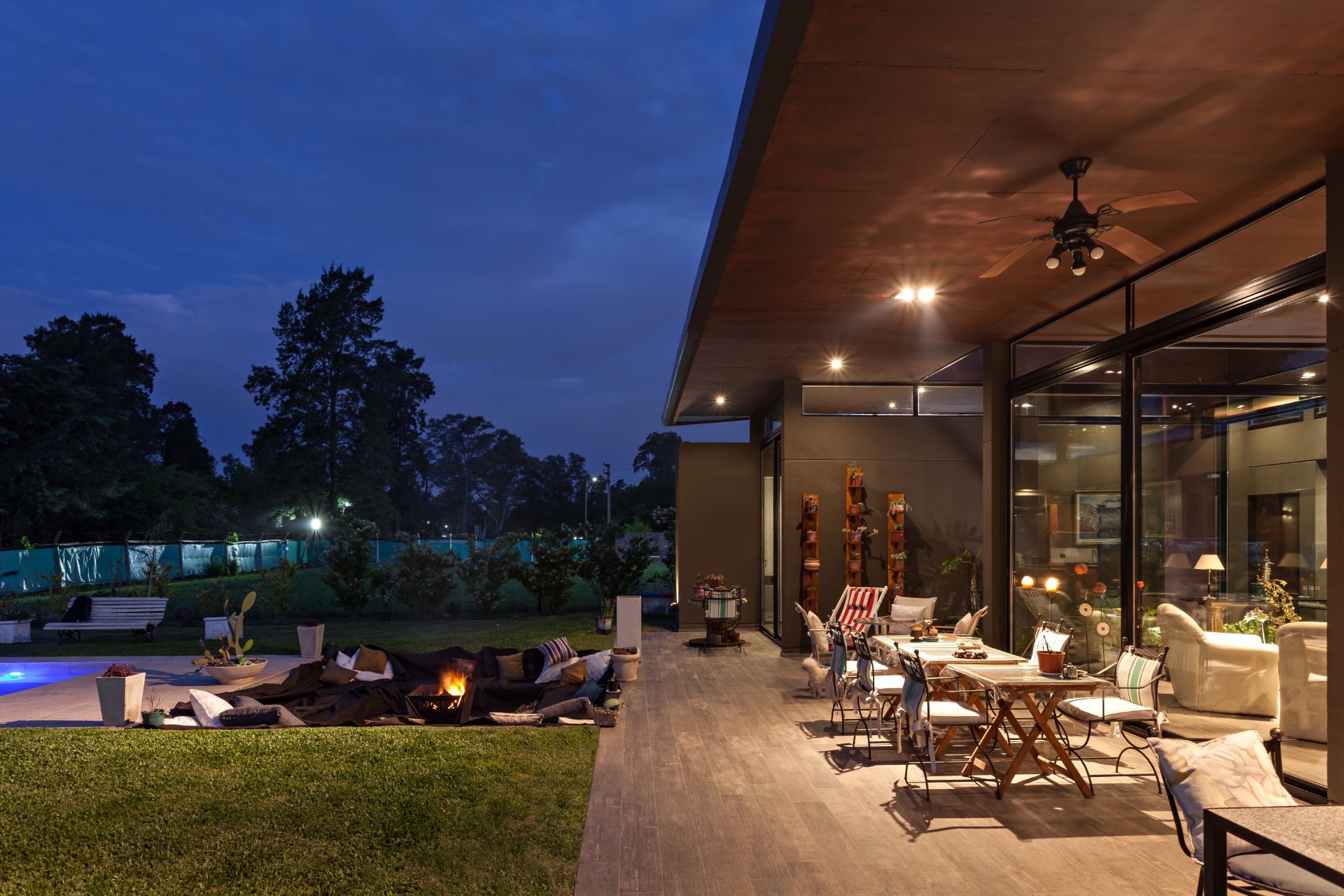
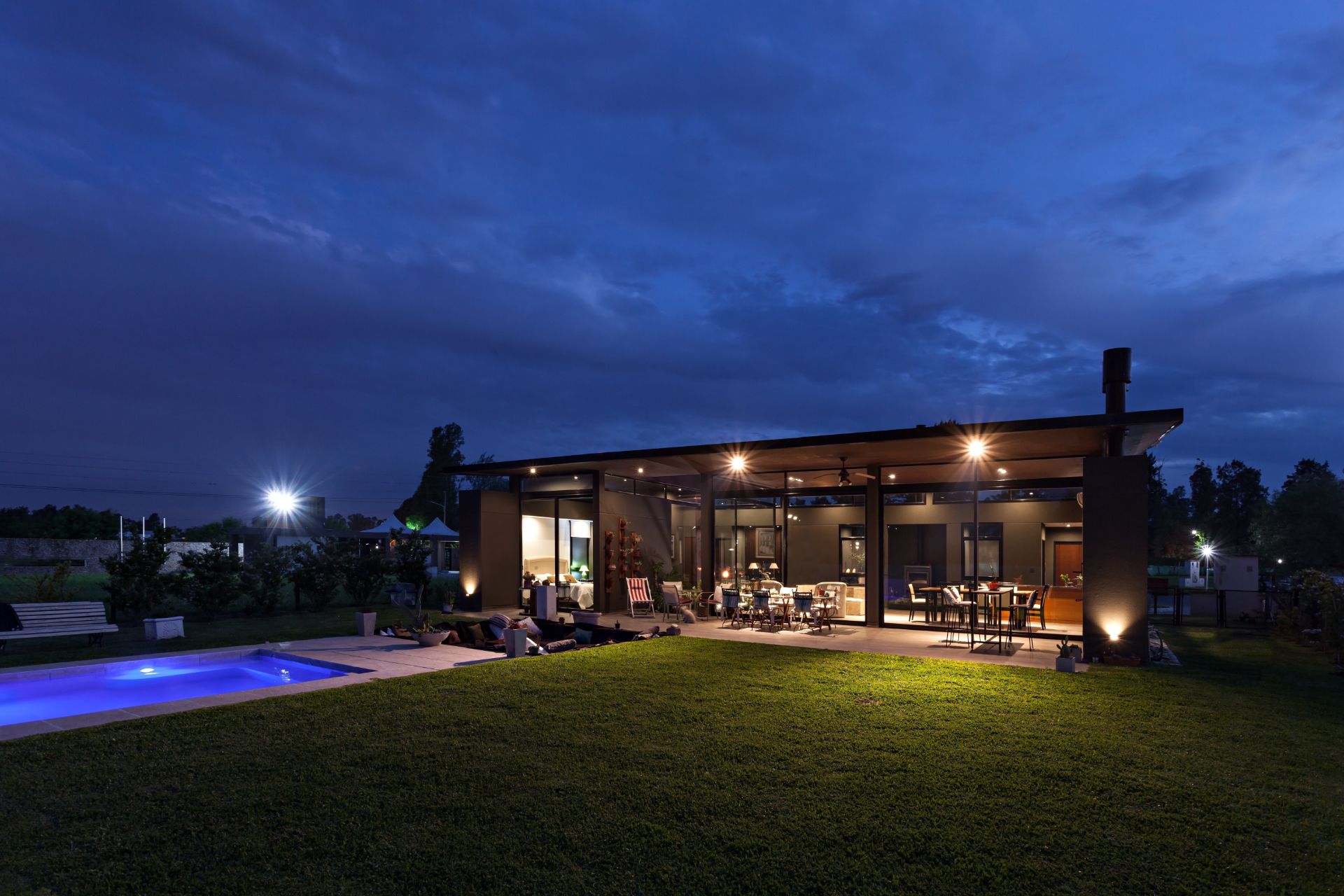
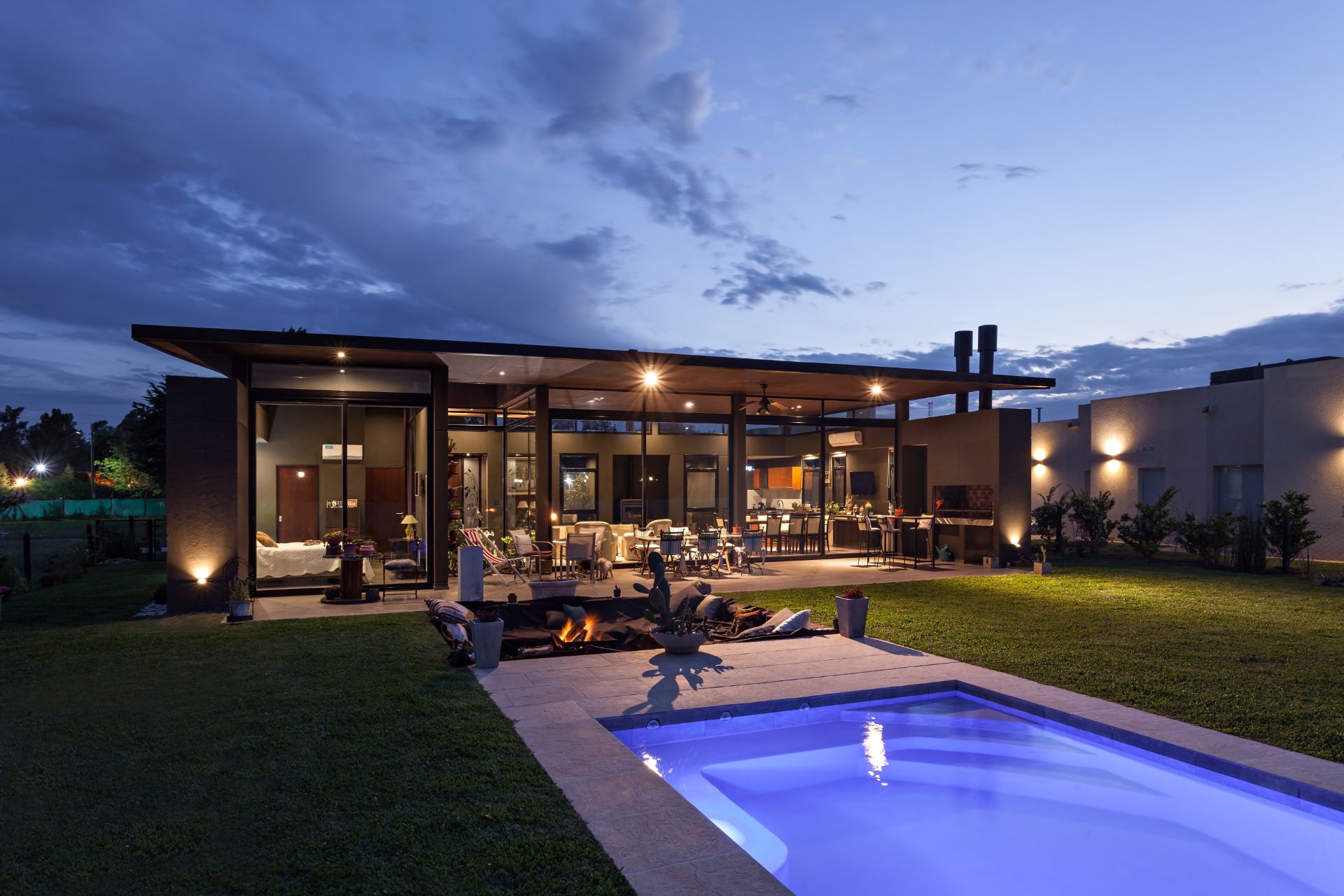
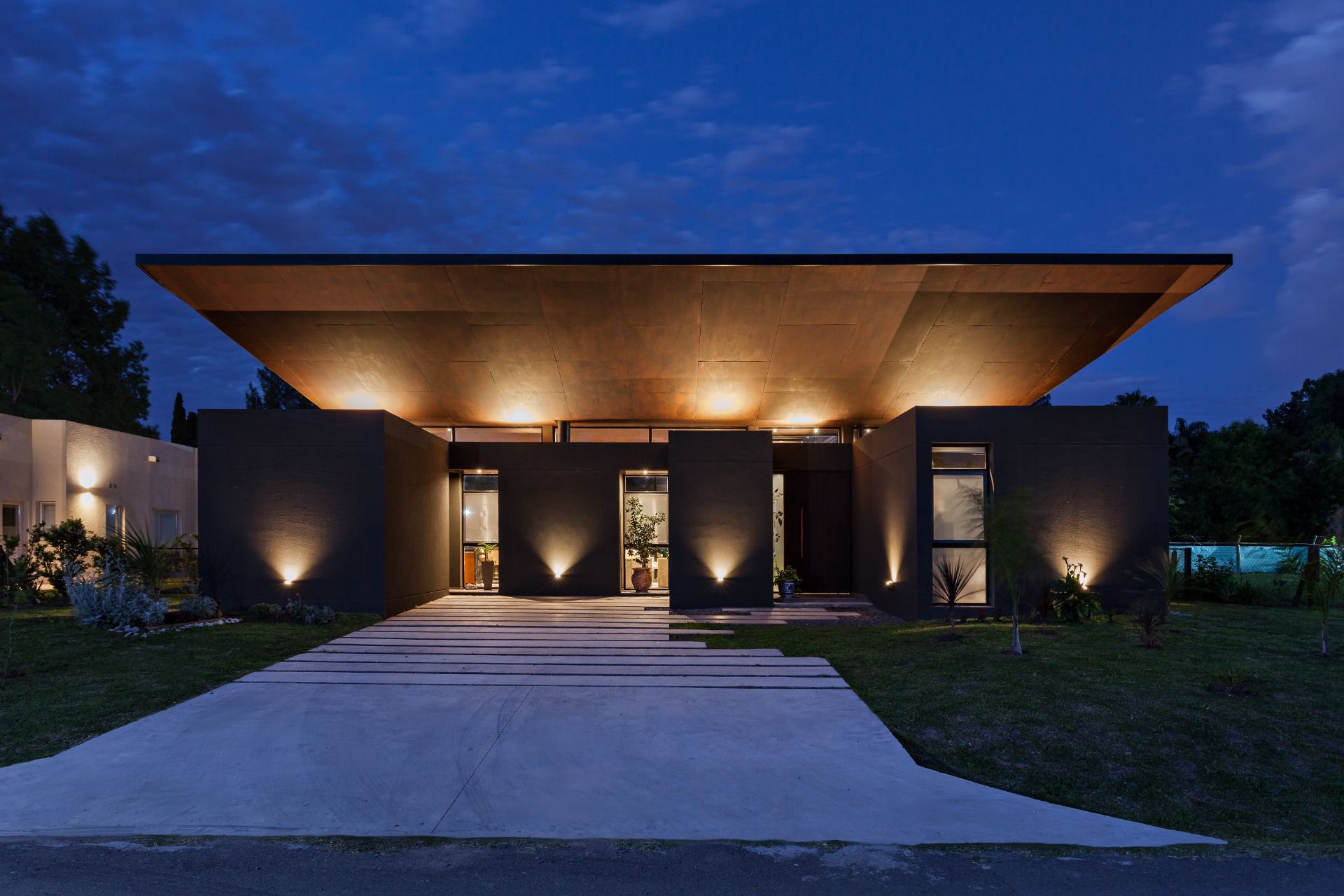
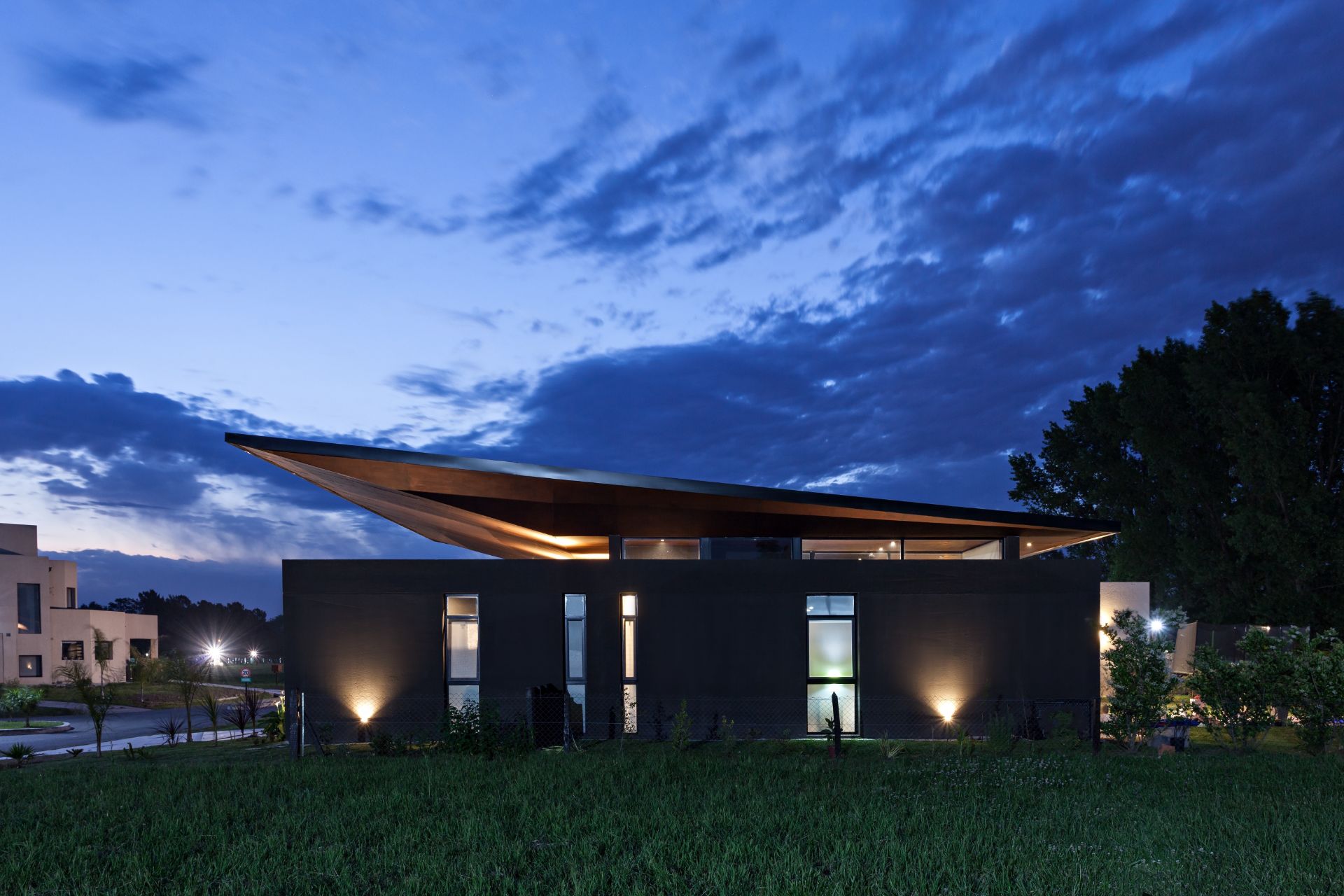
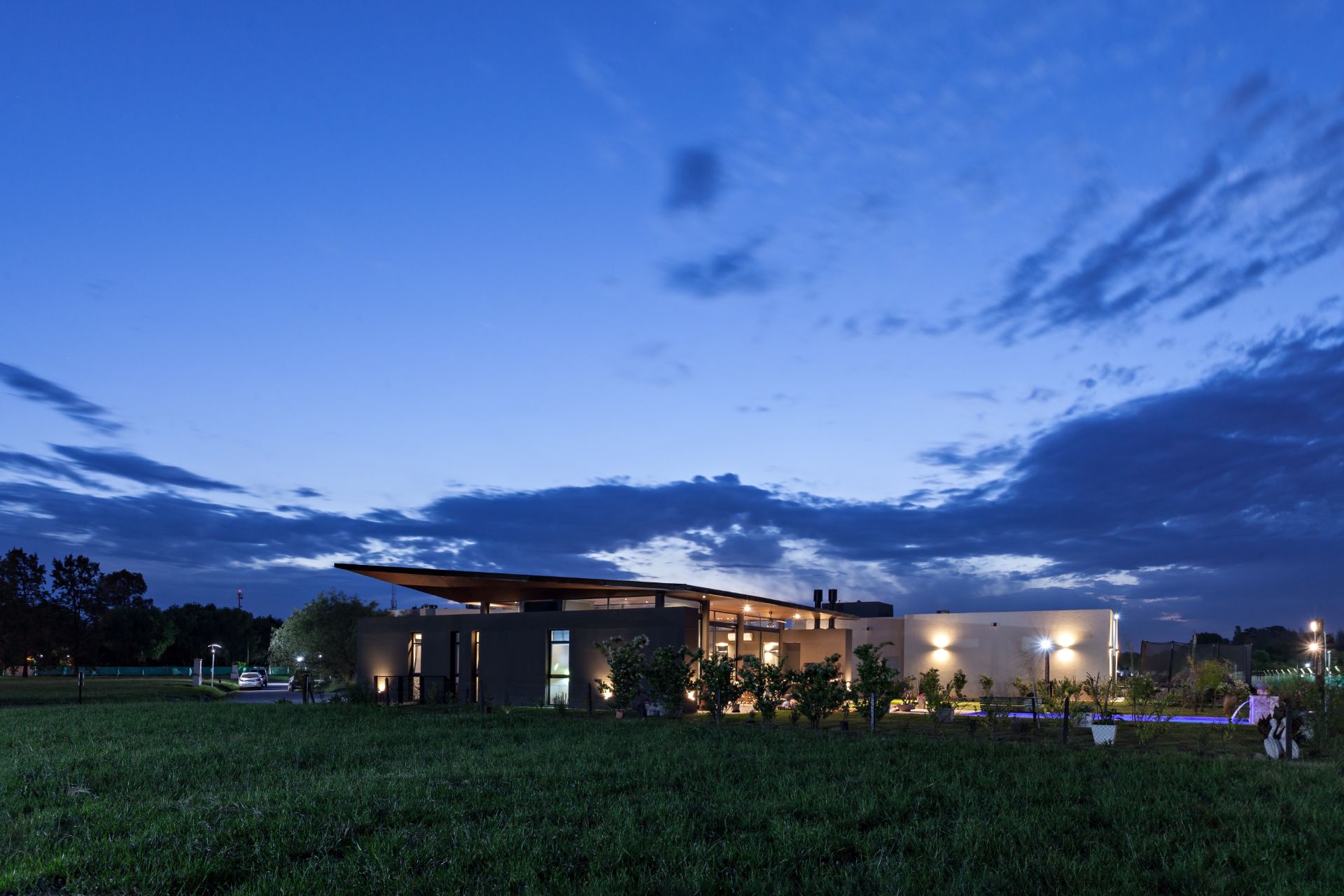
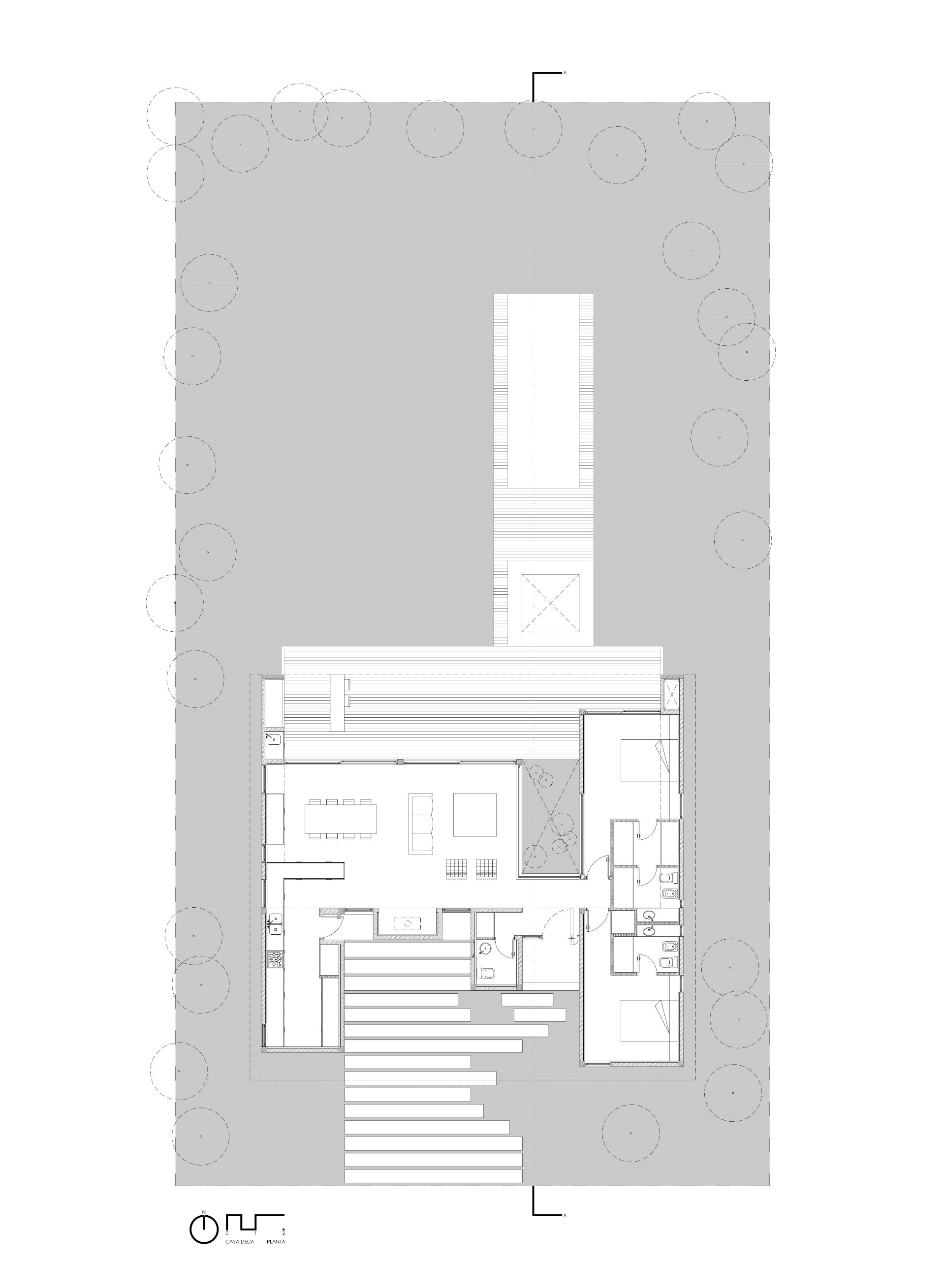
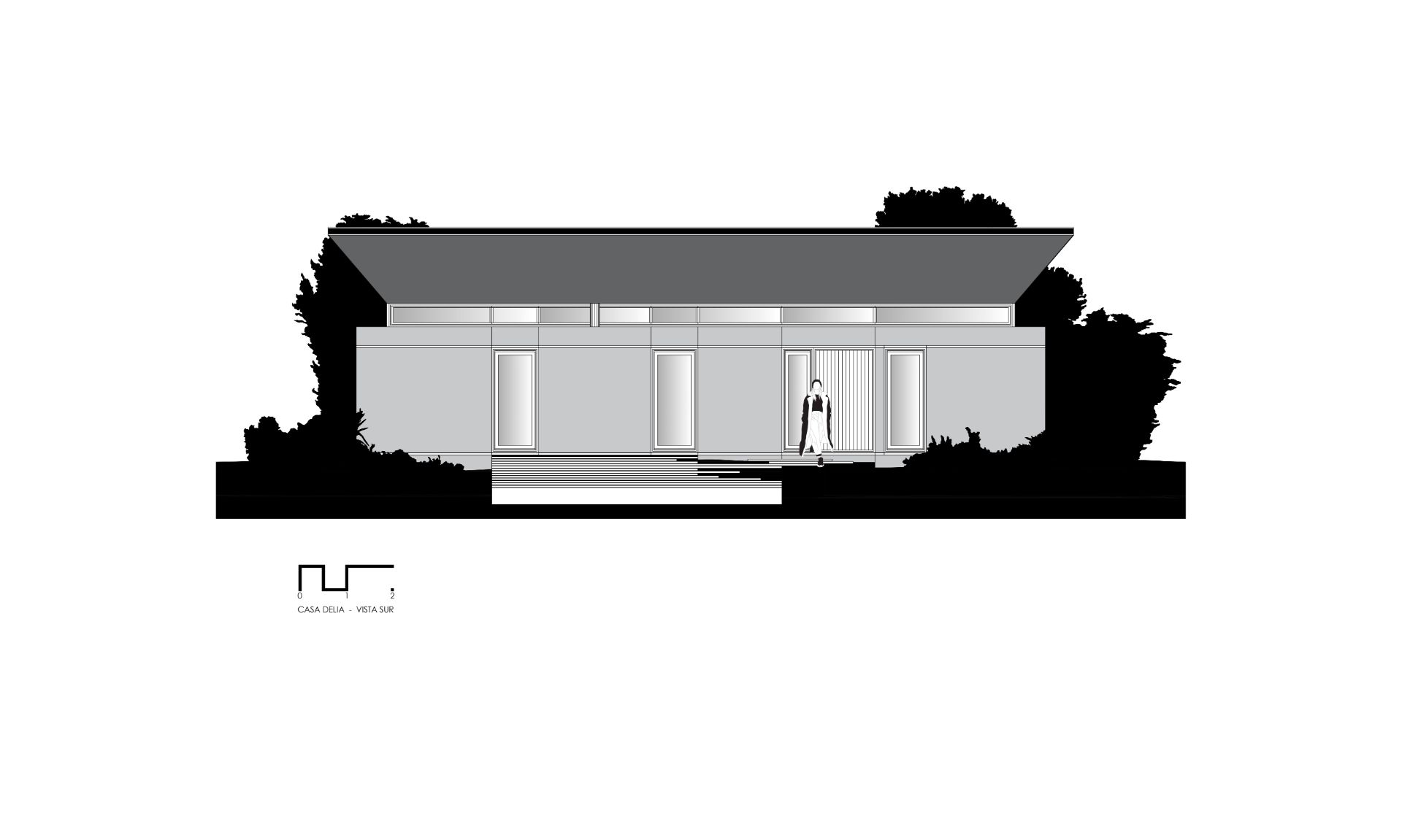
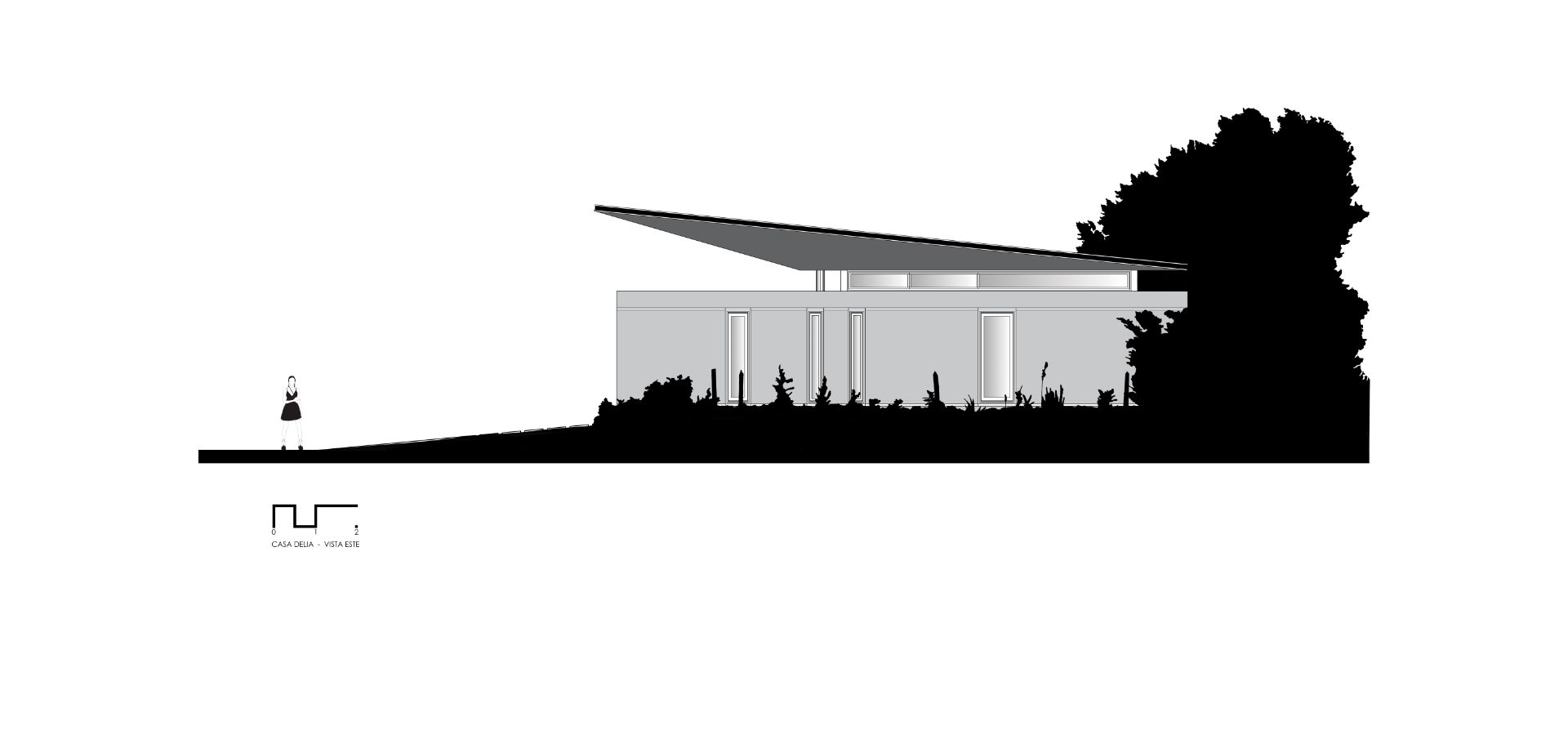
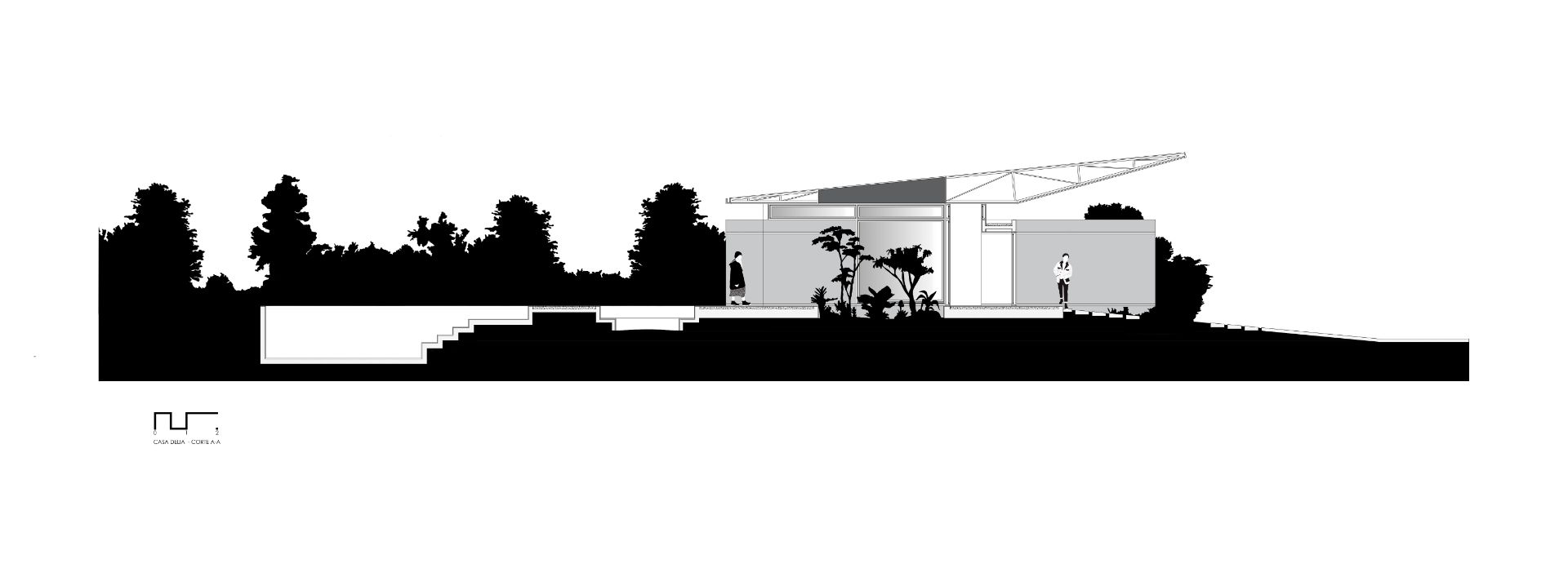
La casa Delia, ubicada en un barrio cerrado de moreno, Buenos Aires; pensada para dar respuesta a necesidades físicas y simbólicas planteadas en el encargo. Necesidad física, un espacio flexible y abierto donde habita una sola persona y a su vez posee la dualidad de albergar constantemente muchos invitados. Necesidad simbólica, un espacio rico en cuanto a un habitar sensible y reflexivo para delia. Se dispone de una gran sala continua, con el fin de caracterizar cada actividad en la casa, este espacio se organiza a partir de cuatro elementos dispuestos cuidadosamente en relación a otros físicos o imaginarios que son vestigios de la vida de Delia. Los espacios pensados buscaron nunca ser una operación neutral o técnica, por el contrario, la ocupación material y simbólica del espacio en la casa puede ser concebida como la lucha por el poder de asignar sentidos (discursos) a los elementos y objetos materiales. En esta tensión, más o menos secreta entre los distintos discursos que se disputan el sentido de los espacios, anida la dimensión política del habitar en la casa Delia. La vida se desarrolla dentro de un anillo alrededor del patio central totalmente acristalado, colonizado por un jardín que organiza y articula los distintos usos. Una cubierta metálica continua que abarca toda la extensión de la planta, en su interior revestida en fenólicos de madera, genera un contraste de luz, color y textura con el resto exterior que intenta pasar a un plano austero. A su vez flota gracias a un intersticio acristalado sobre cuatro volúmenes en su frente que se encuentran en contacto con el suelo, dos de ellos envuelven las caras laterales, y conforman una envolvente que abraza al gran espacio central interior; dejando un espacio abierto hacia el fondo donde se culmina en una galería con total apertura al parque privado. Se plantea una secuencia espacial en el paso del espacio público a privado. Se invita al visitante a través de una gran cubierta que en el acceso presenta su mayor escala, para luego acceder a la parte más secreta e íntima de la casa. En el recorrido hacia el punto de entrada mediante la pendiente de la cubierta y el terreno, la relación espacial comienza a brindar mayor intimidad, continuando la secuencia, una vez dentro el patio se torna protagonista, luego se pueden observar todos los espacios de la casa conectados entre sí.
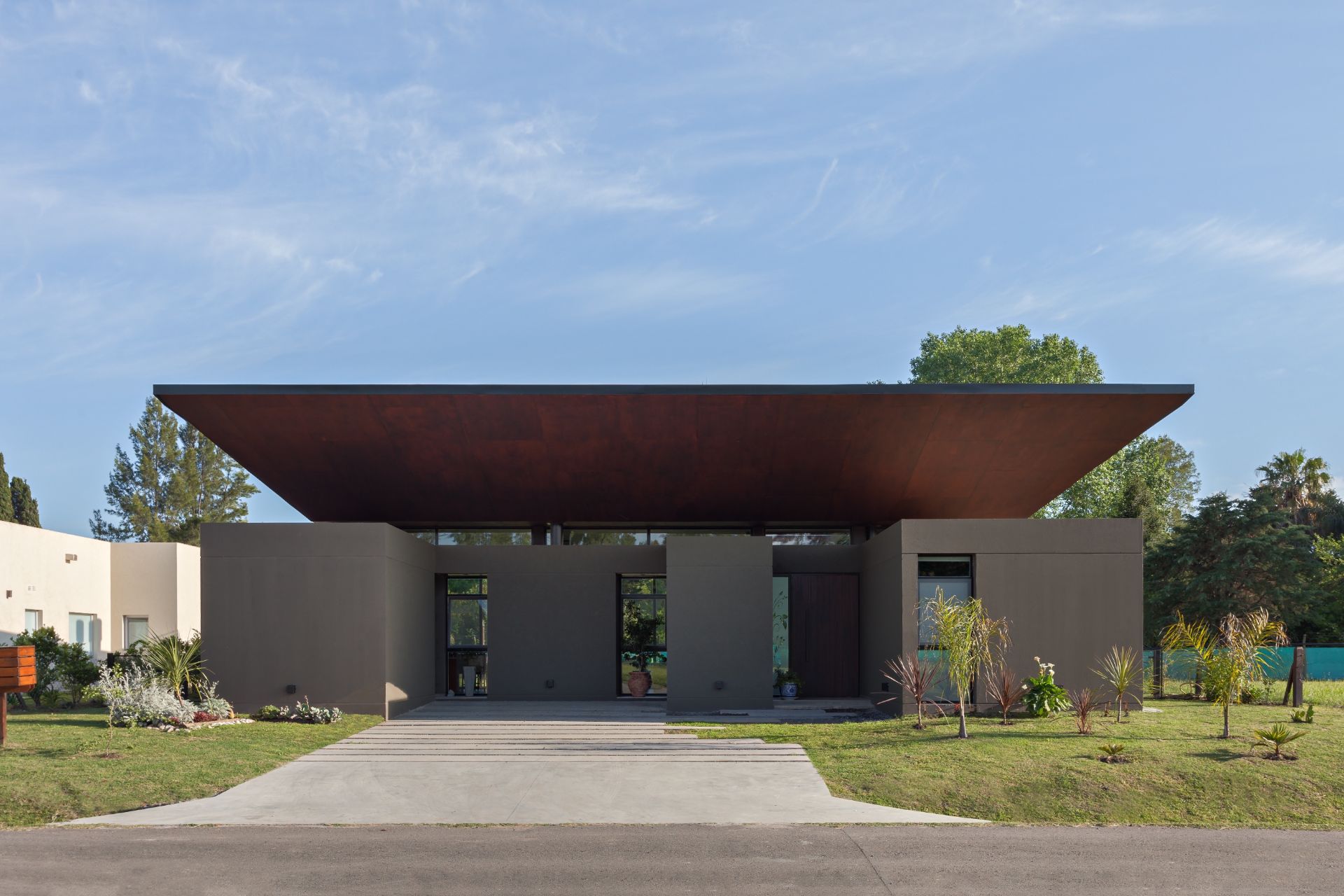
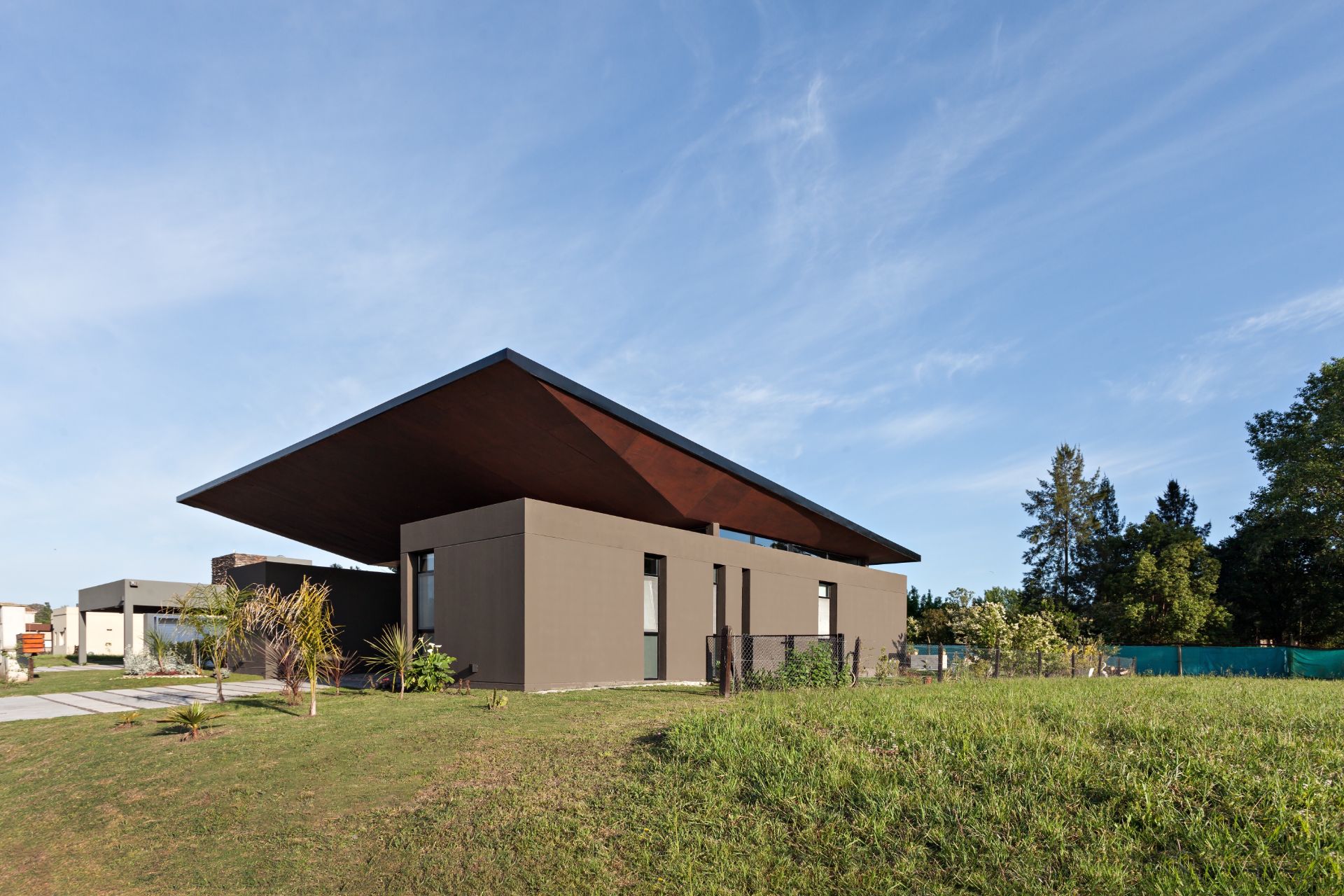
Delia's house, located in a gated community in Moreno, Buenos Aires, was designed to address both the physical and symbolic needs outlined in the commission. The physical need was for a flexible and open space where a single person lives, yet which also has the dual capacity to constantly accommodate numerous guests. The symbolic need was for a space rich in terms of Delia's sensitive and reflective living. A large, continuous room was designed to characterize each activity within the house. This space is organized around four elements carefully arranged in relation to other physical or imagined elements that are vestiges of Delia's life. The spaces were never intended to be a neutral or purely technical operation. On the contrary, the material and symbolic occupation of space in the house can be conceived as a struggle for power to assign meanings (discourses) to the material elements and objects. In this more or less secret tension between the different discourses vying for the meaning of the spaces lies the political dimension of living in Delia's house. Life unfolds within a ring around a fully glazed central courtyard, populated by a garden that organizes and articulates the various uses. A continuous metal roof spanning the entire footprint, its interior clad in wood-effect phenolic panels, creates a contrast of light, color, and texture with the exterior, which strives for a more austere approach. This roof appears to float, thanks to a glazed interstice, above four volumes at its front that are in contact with the ground. Two of these volumes wrap around the side facades, forming an envelope that embraces the large central interior space, leaving an open area at the rear that culminates in a gallery fully opening onto the private park. A spatial sequence is established in the transition from public to private space. The visitor is invited through a large roof, which reaches its greatest scale at the entrance, before entering the more private and intimate part of the house. On the journey towards the entrance point through the slope of the roof and the terrain, the spatial relationship begins to provide greater privacy, continuing the sequence, once inside the patio becomes the protagonist, then all the spaces of the house connected to each other can be observed.
Fecha -Date - 2020
Ubicación -Location - Moreno, Buenos Aires
Tipo -Typology -Vivienda unifamiliarHousing
Equipo -Team -
Martín CaparrozMartín Caparroz
Estado -Status -TerminadaCompleted
Fotos -Photos - Albano García

Casa Lafinur

La Reja, Buenos Aires
2025

CASA LAFINUR

Aquí escribes el texto del proyecto…
(English translation available soon)
Fecha -Date - 2024-2025
Ubicación -Location - La Reja, Buenos Aires
Tipo -Typology -AmpliaciónHousing Extension
Equipo -Team -
Juan Pablo BerberyJuan Pablo BerberyMartin CaparrozMartin CaparrozKatia FumbergKatia FumbergCecilia LopezCecilia LopezDaniel Gonzalez (Constructor)Daniel Gonzalez (Builder)Lautaro GonzalezLautaro GonzalezDaniel BenitezDaniel BenitezNicolas Diez (cálculo estructural)Nicolas Diez (Structural Calc.)lion amoblamientoslion amoblamientos
Estado -Status -TerminadaCompleted
Fotos -Photos - Federico Cairoli

Capilla Santa Mónica

Caseros, Buenos Aires
2013

CAPILLA SANTA MÓNICA

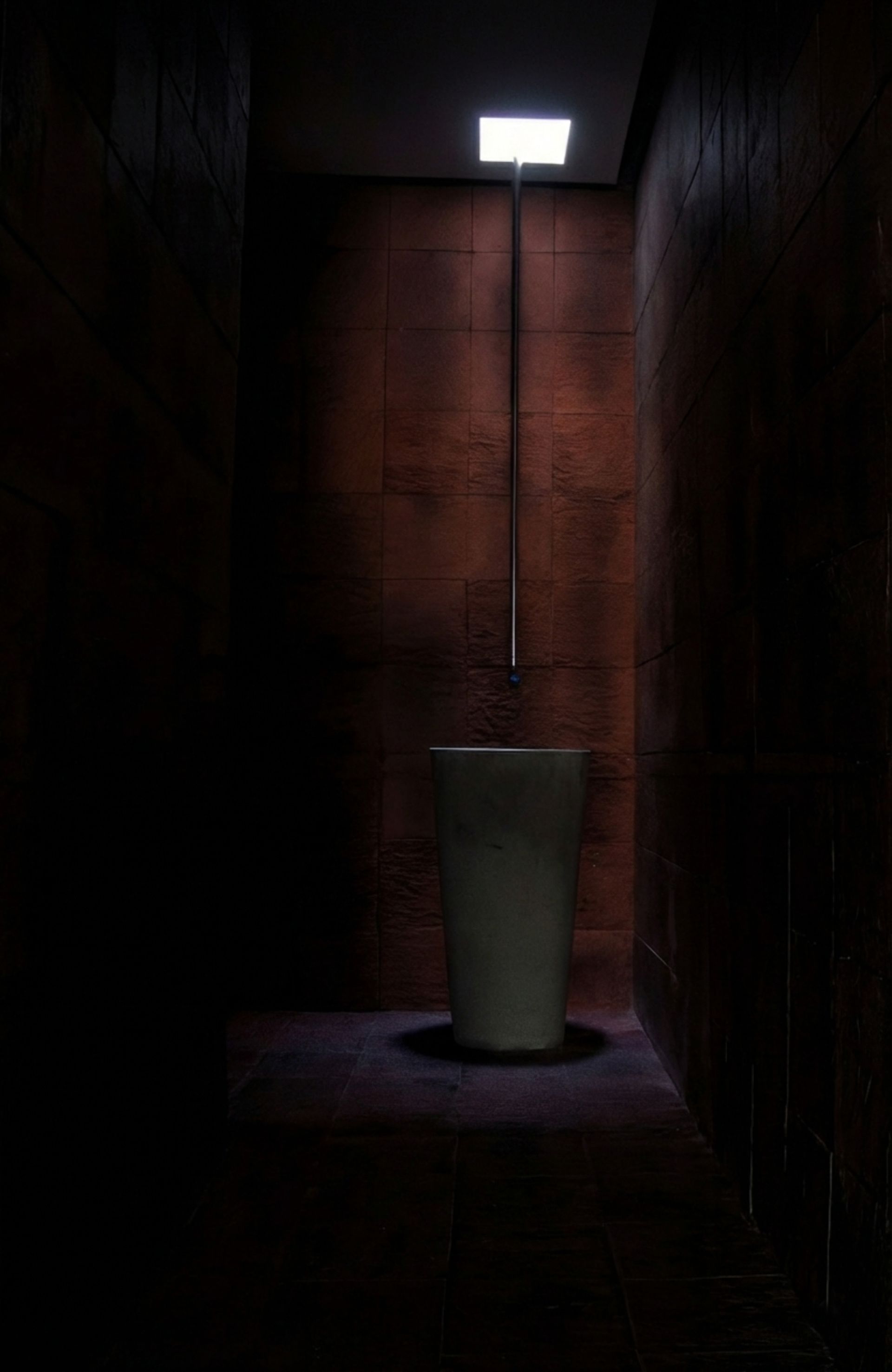
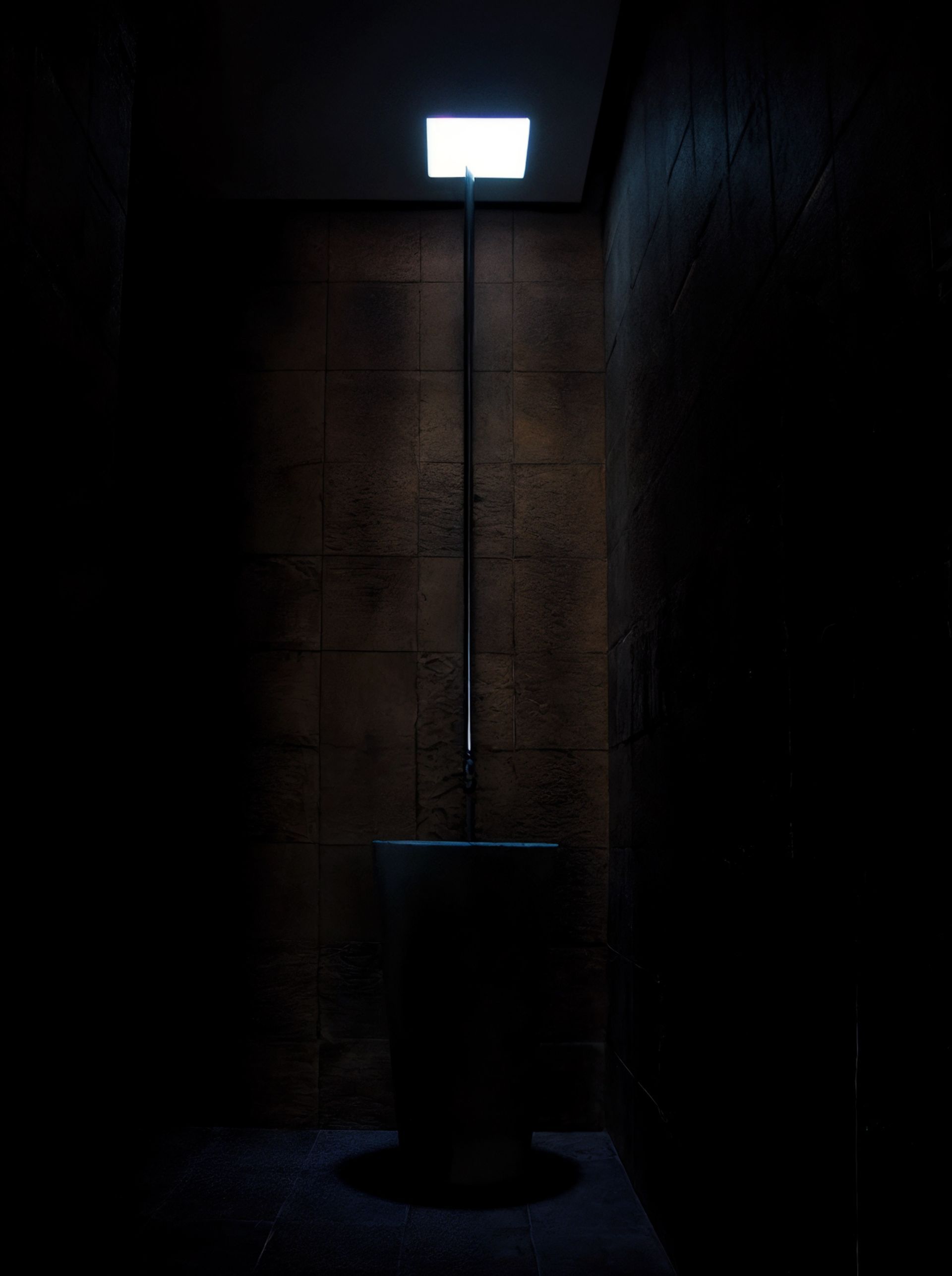
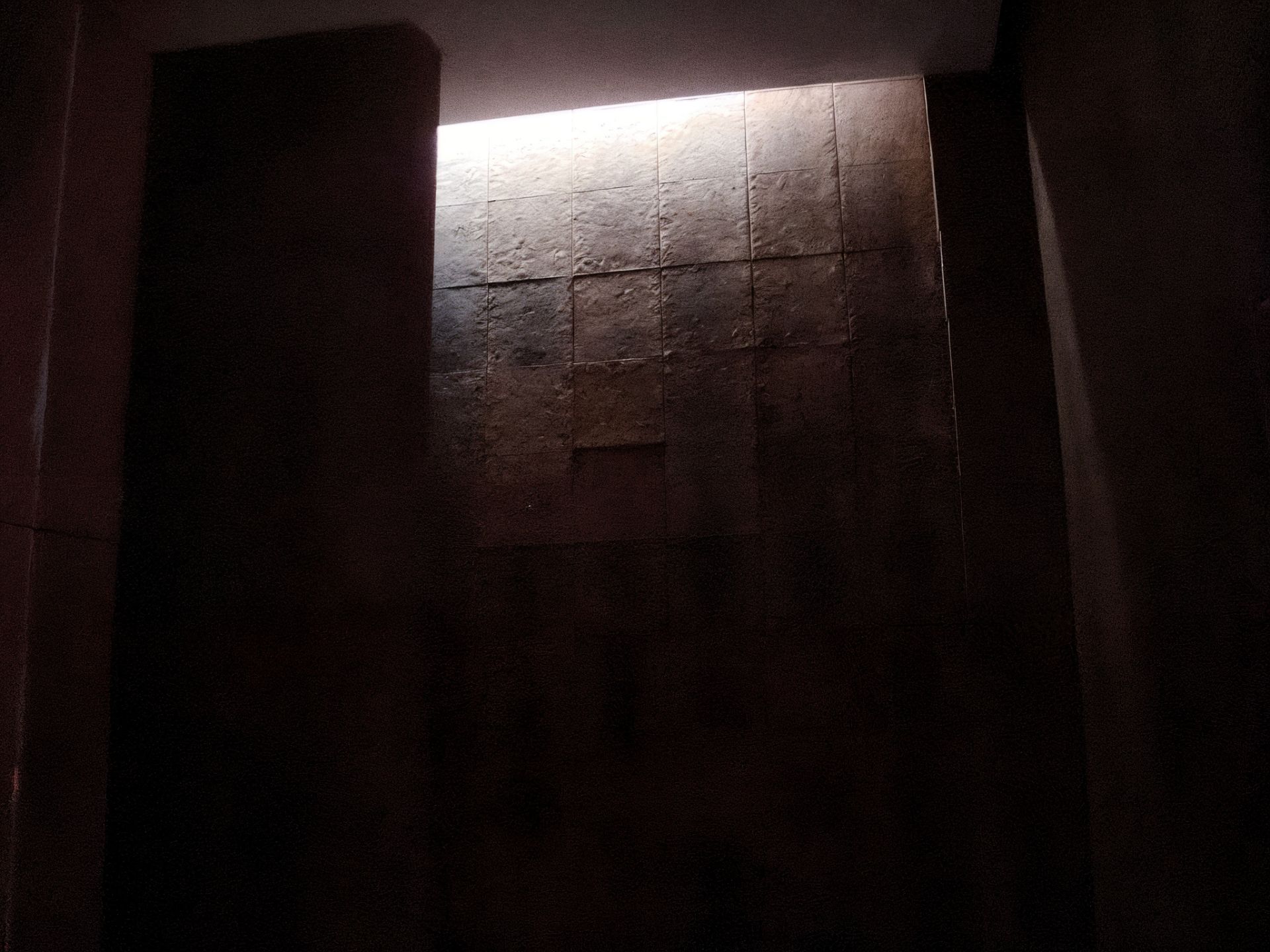
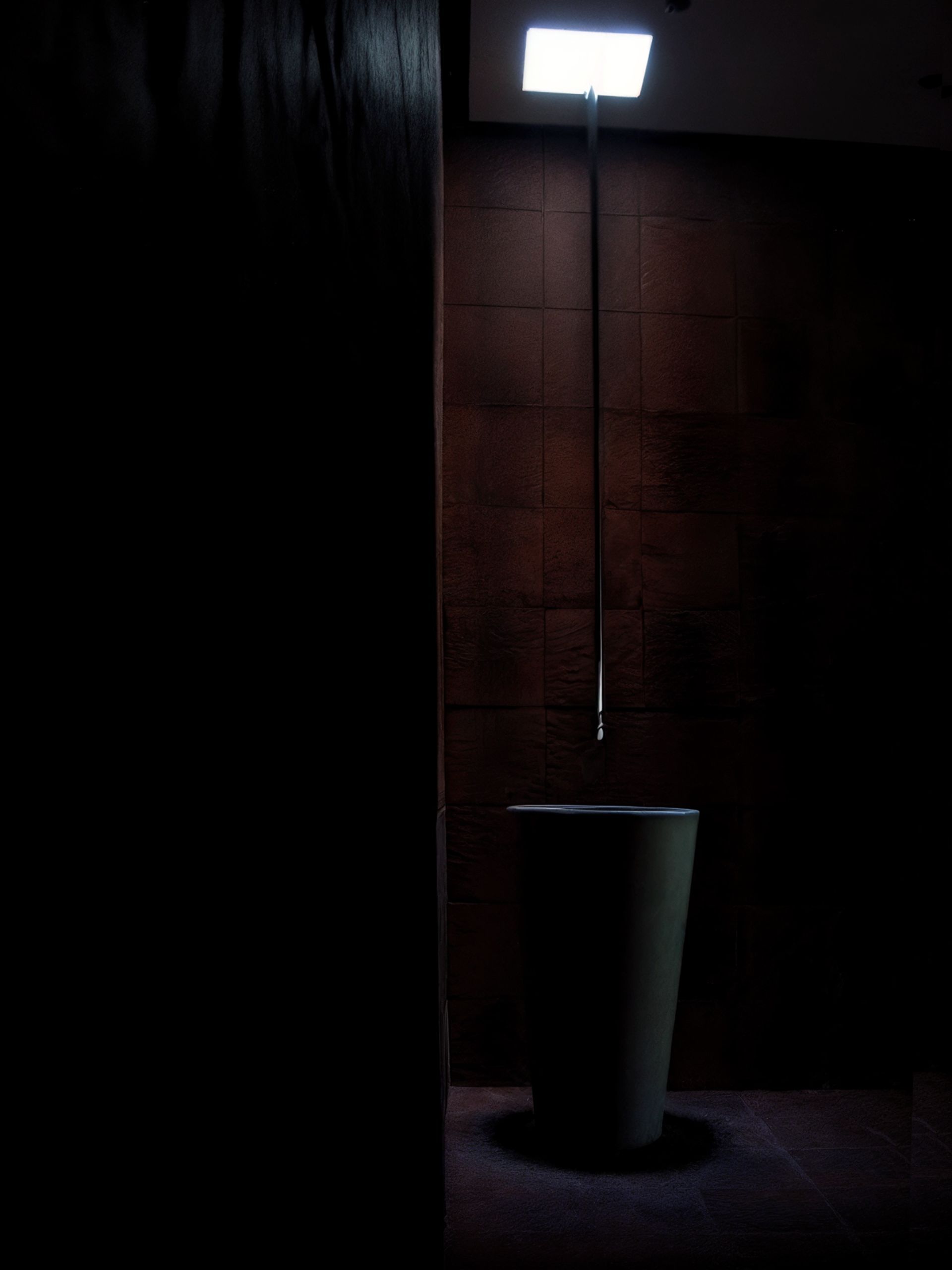
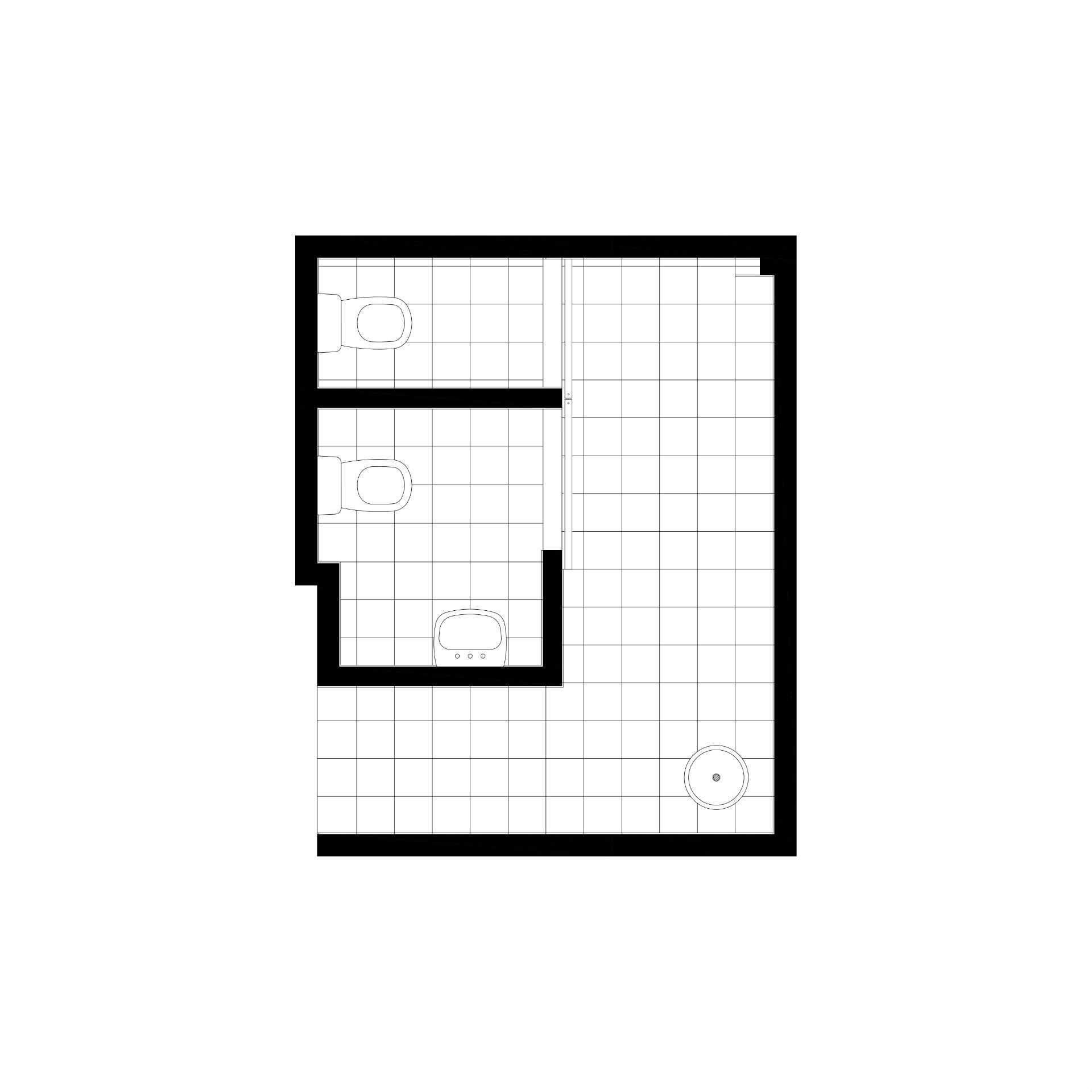
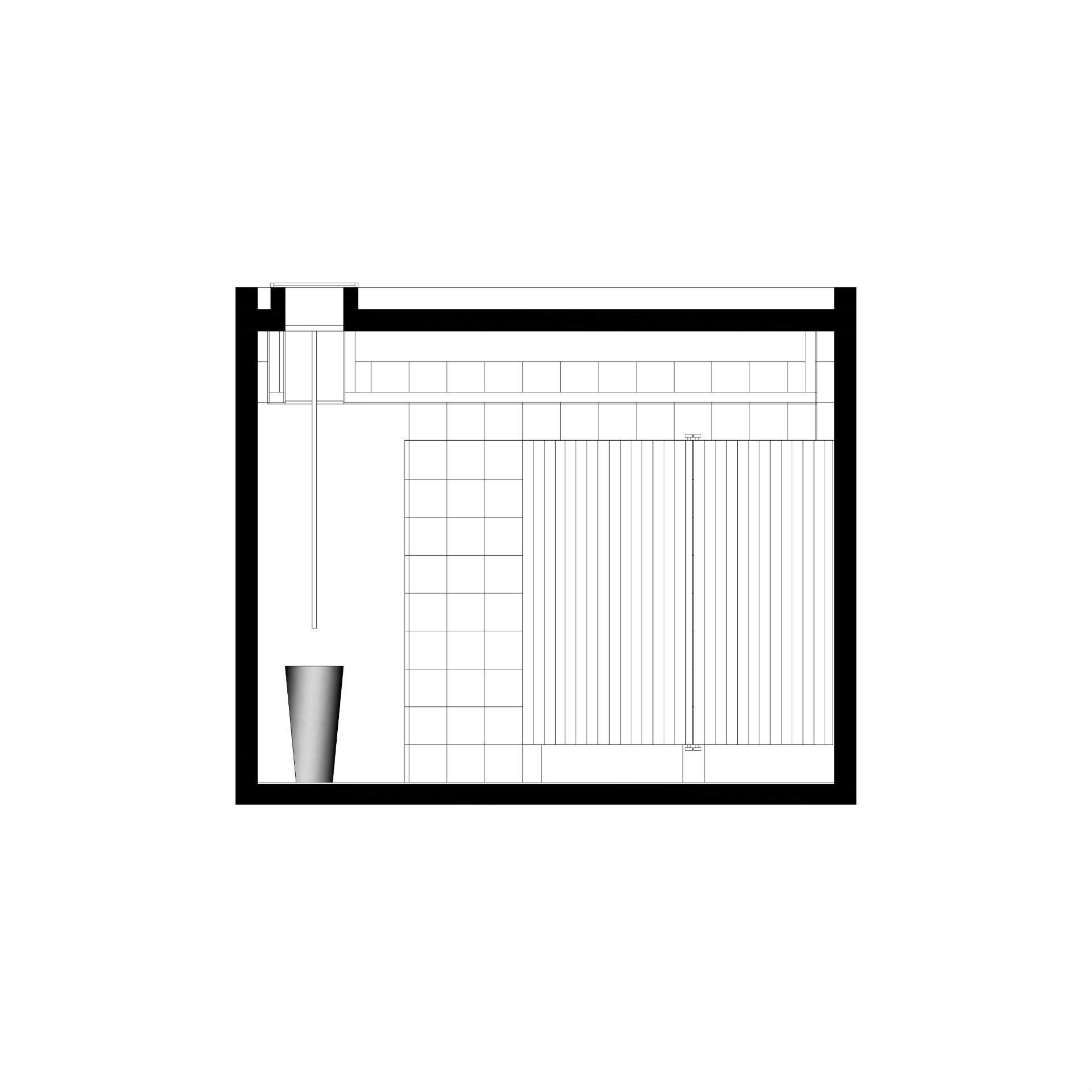
El proyecto del baño de la capilla Santa Monica, realizado en 2013, parte de una reflexión sobre la austeridad como lenguaje y sobre la capacidad de ciertos espacios para convocar significados que trascienden la función inmediata. Se buscó recuperar un clima primitivo, casi fundacional, que dialogara con una espiritualidad temprana, anterior a las complejidades institucionales y más cercana a lo elemental. El uso de un revestimiento que remite al barro no intenta una recreación literal, sino la construcción de una atmósfera vinculada con las primeras arquitecturas de reuniones iniciales del cristianismo en cavernas. La intención fue proponer un entorno donde la materia, en su condición más básica, vuelva a adquirir protagonismo. La atmósfera oscura, densa y contenida favorece esta idea de recogimiento, invitando a un uso más introspectivo del espacio. Desde lo alto, un haz de luz desciende y establece un eje vertical que articula el lugar. La luz cae sobre un elemento que funciona como una suerte de pila bautismal contemporánea, donde el agua adquiere un rol simbólico claro: purificación, renacer, tránsito. Este gesto transforma un acto cotidiano en un pequeño ritual, incorporando a la experiencia una dimensión espiritual sin necesidad de ornamento. La ausencia de espejos responde a ese mismo pensamiento. En lugar de un espacio centrado en la identidad reflejada, se propone un ambiente liberado de la mirada sobre uno mismo. La operación remueve la lógica del baño convencional y habilita la posibilidad de un uso más silencioso y menos autorreferencial. La decisión de plantear un baño mixto surge como una crítica directa a la rigidez con la que la institución eclesiástica aborda, aún hoy, las cuestiones de género y sexualidad. La eliminación de la segmentación por sexos, manteniendo únicamente la privacidad estrictamente necesaria, busca instalar un gesto arquitectónico capaz de cuestionar modelos que persisten más por hábito que por sentido. El espacio visible desde la entrada de la iglesia no es casual. Se entiende como un umbral donde la luz, el agua y la materia forman un sistema mínimo, pero cargado de significado. Allí, la arquitectura se propone no sólo como contenedor, sino como dispositivo capaz de sugerir una experiencia más honesta, más esencial y, en definitiva, más humana.
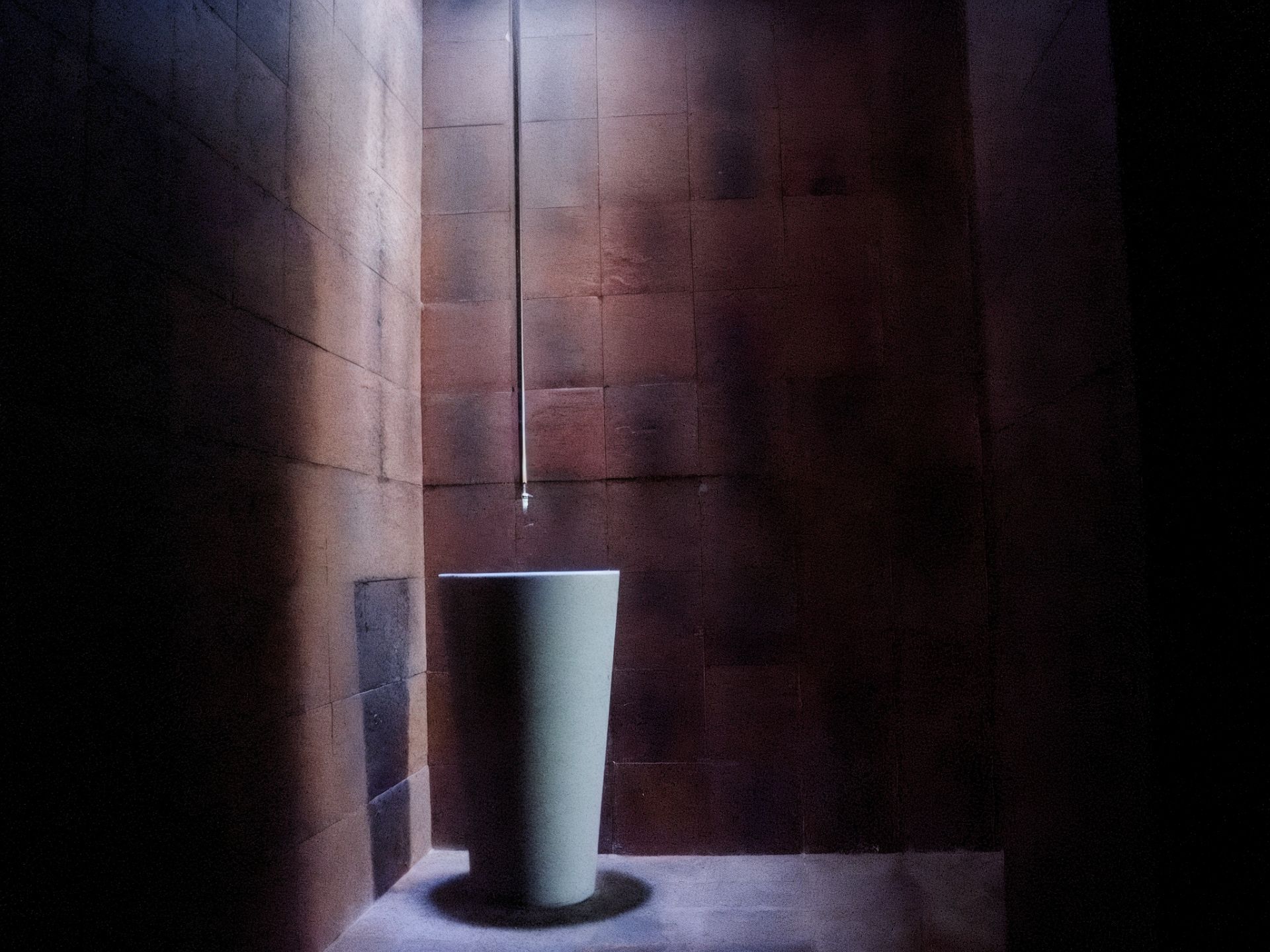
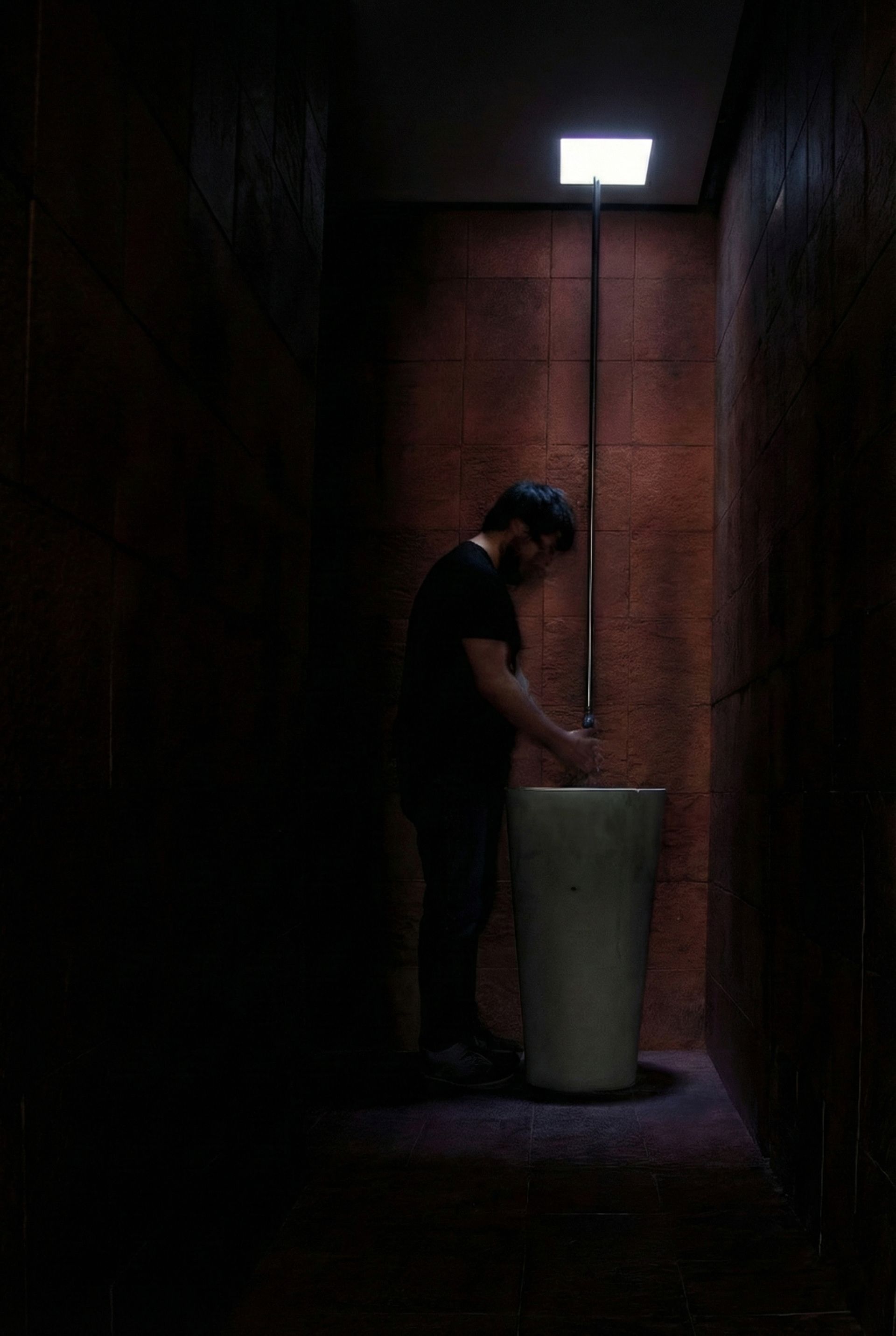
The bathroom project for the Santa Monica Chapel, completed in 2013, stems from a reflection on austerity as a language and on the capacity of certain spaces to evoke meanings that transcend their immediate function. The aim was to recapture a primitive, almost foundational atmosphere, one that resonated with an early spirituality, predating institutional complexities and closer to the elemental. The use of a clay-like cladding is not intended as a literal recreation, but rather as the construction of an atmosphere linked to the earliest architecture of early Christian gatherings in caves. The intention was to create an environment where matter, in its most basic form, once again takes center stage. The dark, dense, and contained atmosphere fosters this sense of contemplation, inviting a more introspective use of the space. From above, a beam of light descends, establishing a vertical axis that articulates the space. The light falls upon an element that functions as a kind of contemporary baptismal font, where water acquires a clear symbolic role: purification, rebirth, transition. This gesture transforms an everyday act into a small ritual, incorporating a spiritual dimension into the experience without the need for ornamentation. The absence of mirrors reflects this same idea. Instead of a space centered on a reflected identity, an environment freed from self-reflection is proposed. This approach disrupts the logic of the conventional bathroom and enables a quieter, less self-referential use. The decision to create a gender-neutral bathroom arises as a direct critique of the rigidity with which the Church, even today, addresses issues of gender and sexuality. Eliminating gender segregation, while maintaining only the strictly necessary privacy, seeks to establish an architectural gesture capable of challenging models that persist more out of habit than meaning. The space visible from the church entrance is not accidental. It is understood as a threshold where light, water, and matter form a minimal system, yet one laden with meaning. There, architecture is proposed not only as a container, but as a device capable of suggesting a more honest, more essential, and ultimately, more human experience.
Fecha -Date - 2013
Ubicación -Location - Caseros, Buenos Aires
Tipo -Typology -ReformaRenovation
Equipo -Team -
Martín CaparrozMartín Caparroz
Estado -Status -TerminadaCompleted
Fotos -Photos - Martín Caparroz